
The Shepherdess — History & Facts
When The Shepherdess was first exhibited at the Salon of 1870, it drew crowds not for its subject, but for the way Jules Breton transformed a humble rural scene into a national symbol. In a France shaken by political upheaval and on the brink of war, critics saw in Breton’s shepherdess an emblem of the enduring French countryside—steady, resilient, and quietly proud. The painting’s popularity was such that it inspired engravings, copies, and even posed young women in rural dress for photographers across Europe.
Breton himself would revisit the theme of peasant women many times, but this work stands out for the sensation it caused in its own day. The painting captures a young woman standing alone in an open field, staff in hand, her gaze meeting the viewer’s with a calm, steady directness. The sky behind her glows with the last light of day, casting her figure in gentle relief and lending a sense of dignity to her simple posture. Her clothing is practical, the staff a mark of her trade, yet the careful rendering of her features and the golden light elevate her beyond mere laborer to a kind of rural heroine.
Unlike the idealized peasants of Jean-François Millet, Breton’s shepherdess is individualized—her cheeks flushed, her eyes alert—suggesting both the hardship and the pride of her work. The distant flock and the wide, empty landscape reinforce her solitude and responsibility. Though the exact medium of The Shepherdess is not always specified in records, it is typical of Breton’s large-scale oils from this period. The painting was likely acquired soon after its Salon debut by a private collector, as was common with Breton’s most celebrated works, which were in high demand among both French and international buyers.
Over time, The Shepherdess has appeared in several major exhibitions of 19th-century French art, cementing its status as a key example of Jules Breton’s rural realism. Today, it remains a touchstone for understanding how artists of the Realist movement sought to dignify everyday life, and how their images became entwined with national identity.
More Artworks by Jules Breton

The Song of the Lark
Jules Breton
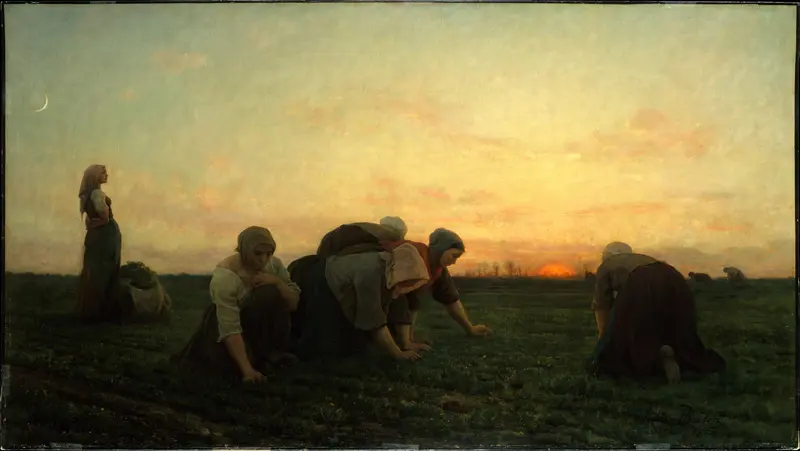
The Weeders
Jules Breton
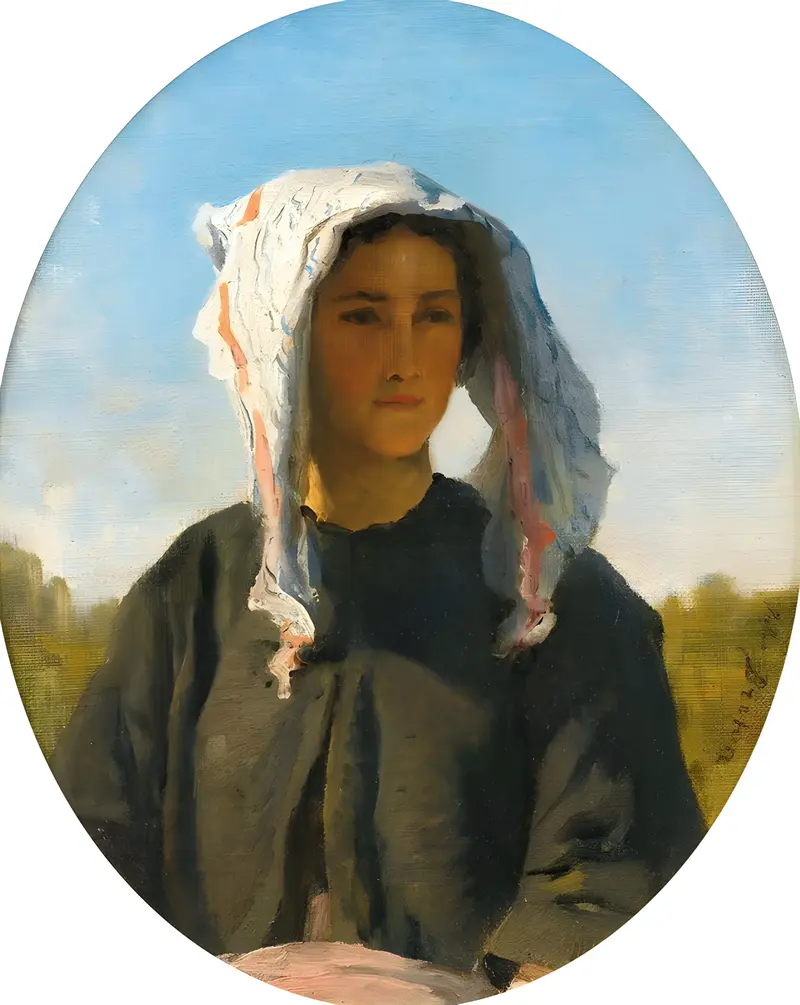
Portrait de jeune Paysanne Bordelaise
Jules Breton
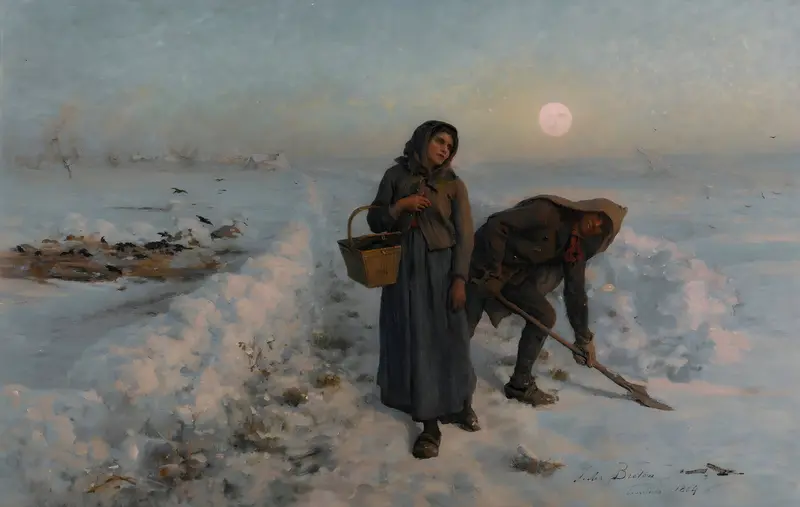
Sur la route en hiver; artois
Jules Breton
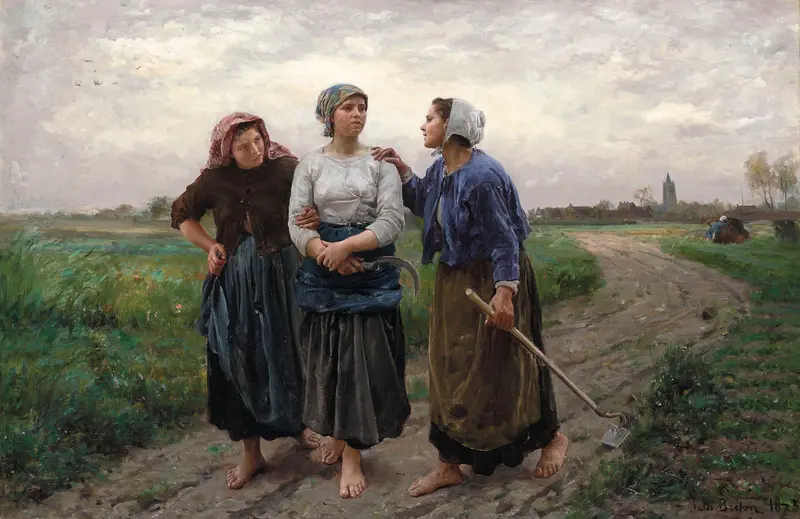
Les amies
Jules Breton
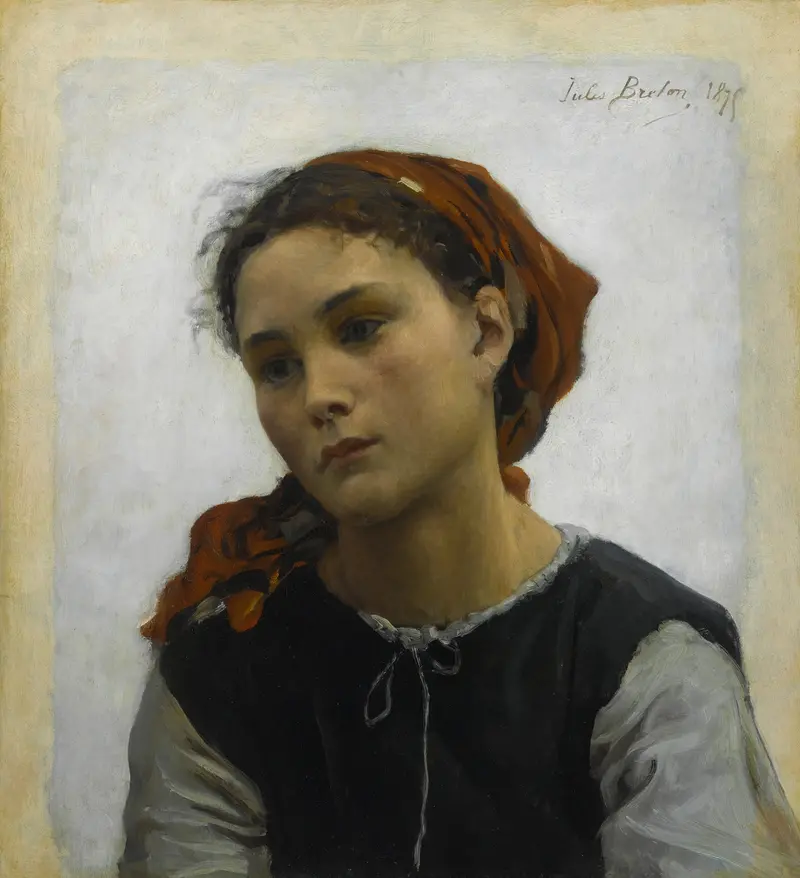
Innocente
Jules Breton
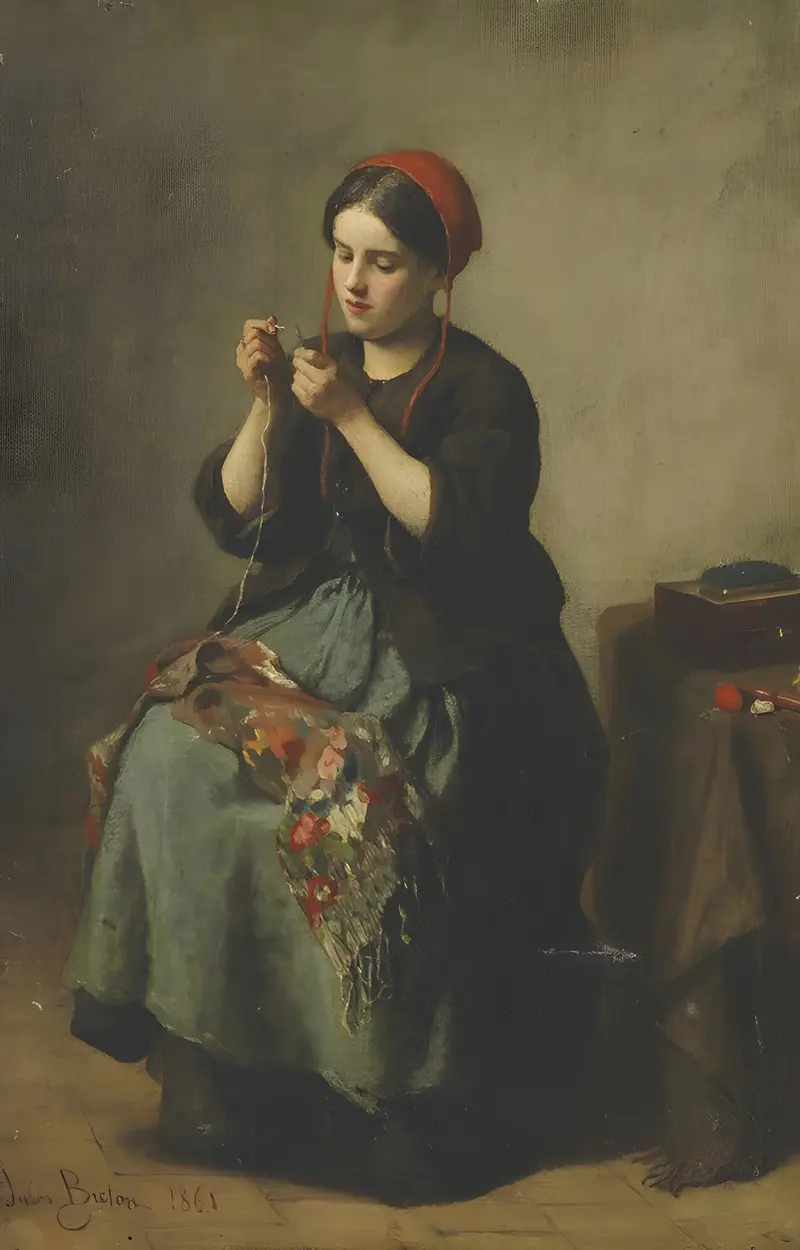
Peasant woman threading a needle
Jules Breton
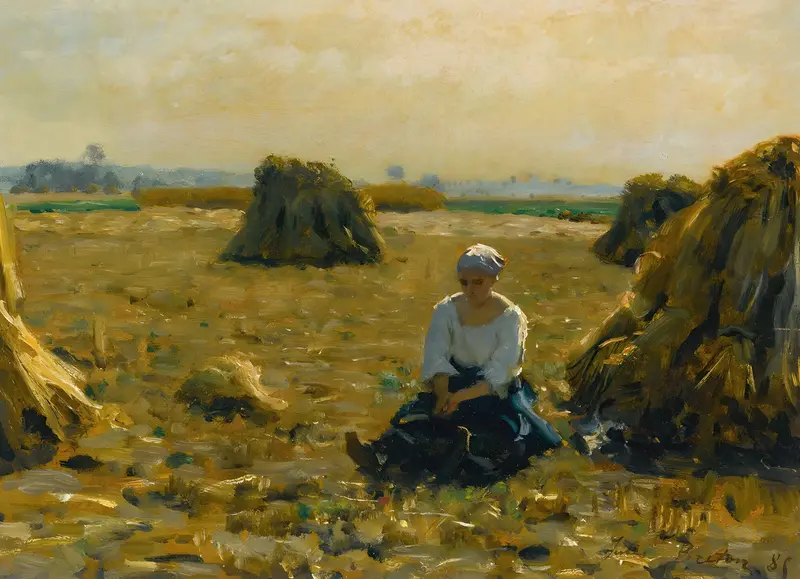
Jeune femme dans les champs
Jules Breton
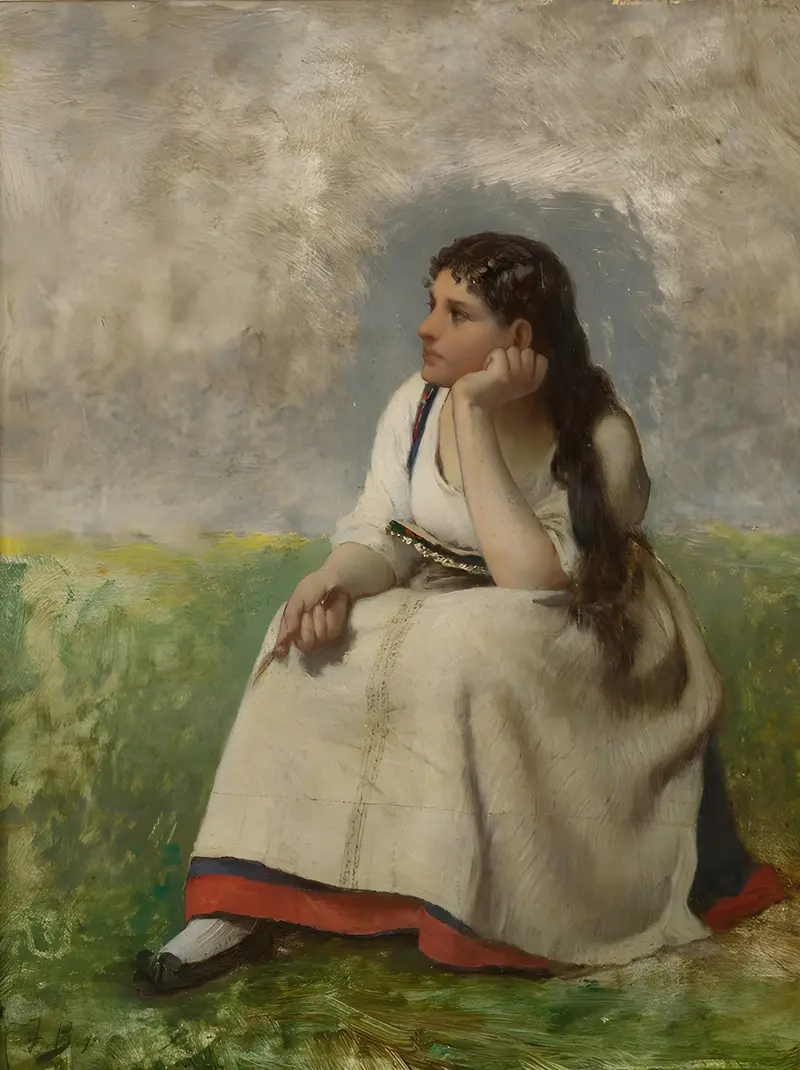
Jeune Fille Pensive
Jules Breton
Returning from the Fields
Jules Breton
More Genre Scene Art

Banquet of the Officers of the St George Civic Guard
Frans Hals

Rembrandt and Saskia in the Scene of the Prodigal Son
Rembrandt van Rijn

Bal du moulin de la Galette
Pierre-Auguste Renoir

Quadrille at the Moulin Rouge
Henri de Toulouse-Lautrec

A Burial at Ornans
Gustave Courbet

When Will You Marry?
Paul Gauguin