
The Shop Sign of Gersaint — History & Facts
The Shop Sign of Gersaint was painted by Jean-Antoine Watteau in 1720, near the end of the artist’s career. Created as a shop sign for the Parisian art dealer Edme-François Gersaint, the work reflects both the commercial and social worlds of early eighteenth-century Paris. The painting is executed in oil on canvas and is considered one of Watteau’s last major works, produced shortly before his death. The composition presents the interior of an art dealer’s shop, bustling with elegantly dressed figures engaged in viewing, packing, and discussing paintings.
On the left, assistants are seen packing a portrait into a crate, while to the right, clients examine jewelry and paintings under the watchful eye of the dealer. The shop’s walls are densely hung with framed paintings, rendered in warm, muted tones that create a sense of depth and opulence. Watteau’s characteristic use of soft, diffused light and fluid brushwork is evident throughout, lending the scene a lively yet refined atmosphere. Commissioned by Gersaint as a decorative shop sign, the work quickly became celebrated for its sophisticated depiction of Parisian society and the art market.
After its brief use as a shop sign, the painting was acquired by private collectors and passed through several hands over the centuries. Today, The Shop Sign of Gersaint is recognized as a significant example of early eighteenth-century French painting and is widely studied for its insights into the period’s artistic and commercial practices.
More Artworks by Jean-Antoine Watteau
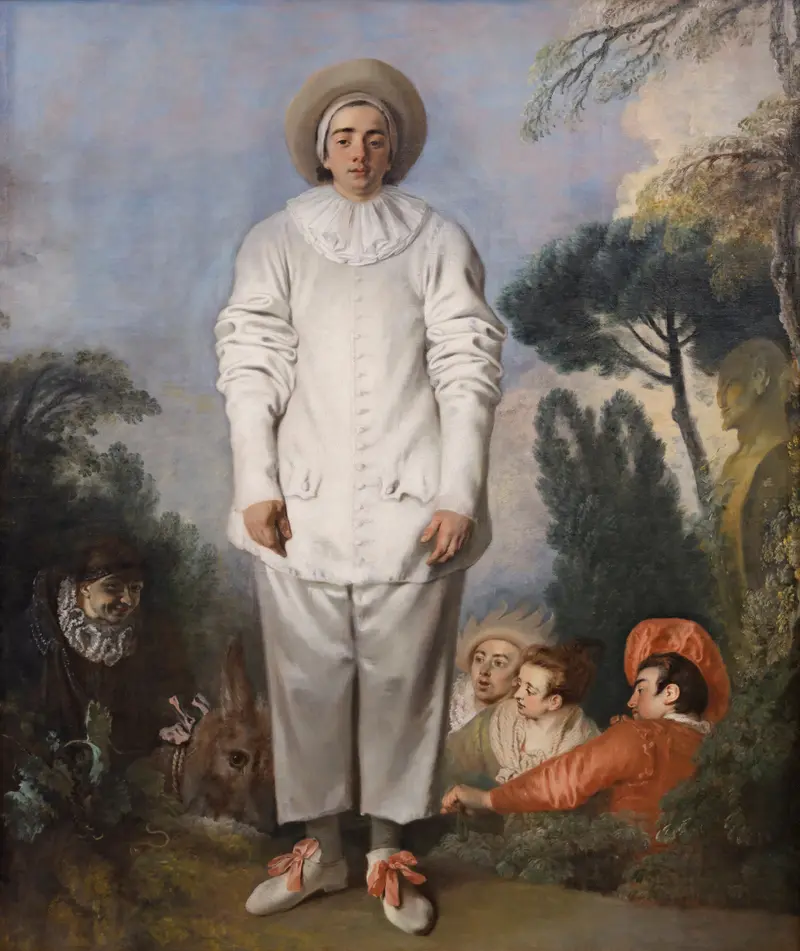
Pierrot (Gilles)
Jean-Antoine Watteau
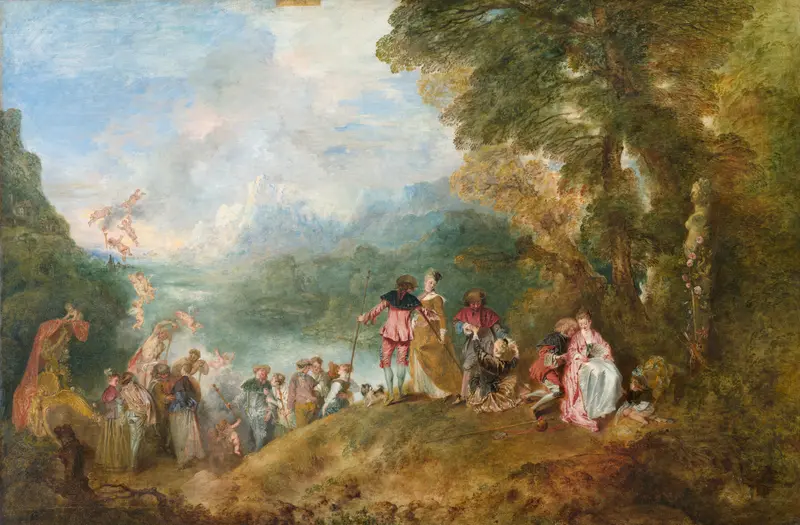
The Embarkation for Cythera
Jean-Antoine Watteau
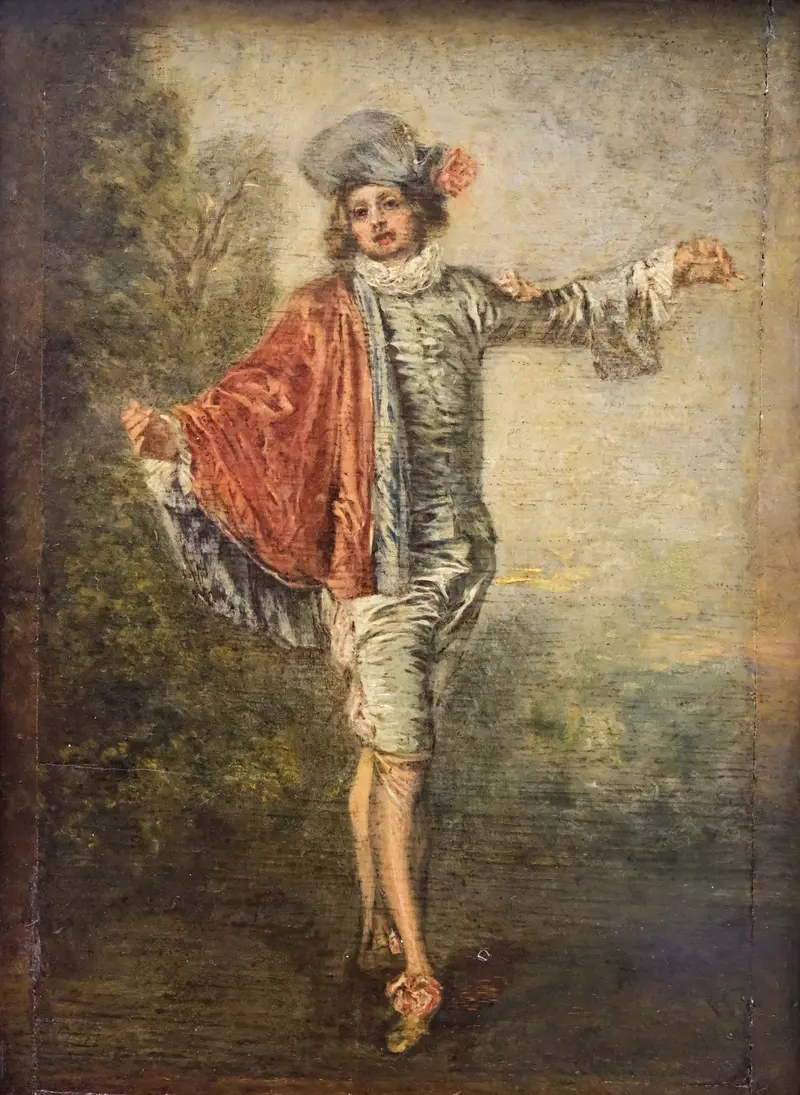
L'Indifférent
Jean-Antoine Watteau
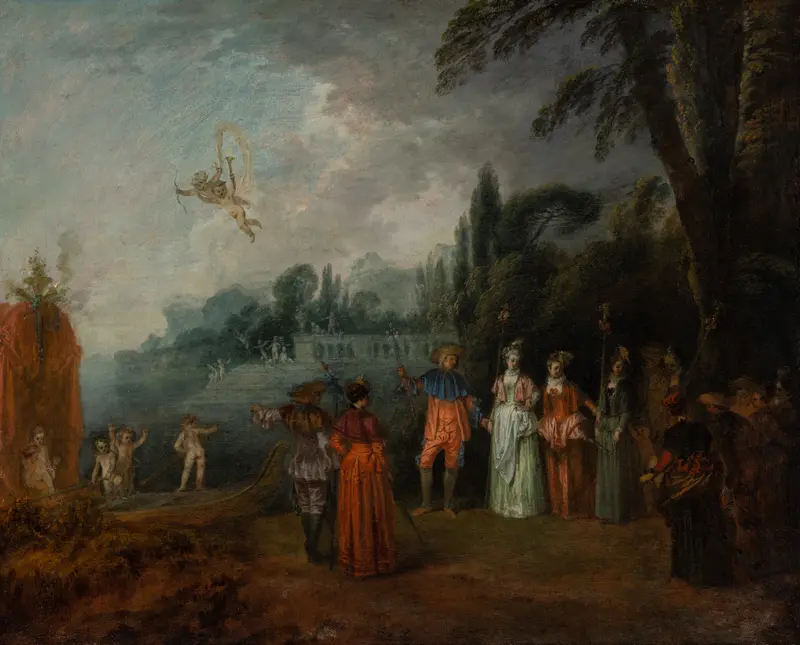
The Island of Cythera
Jean-Antoine Watteau
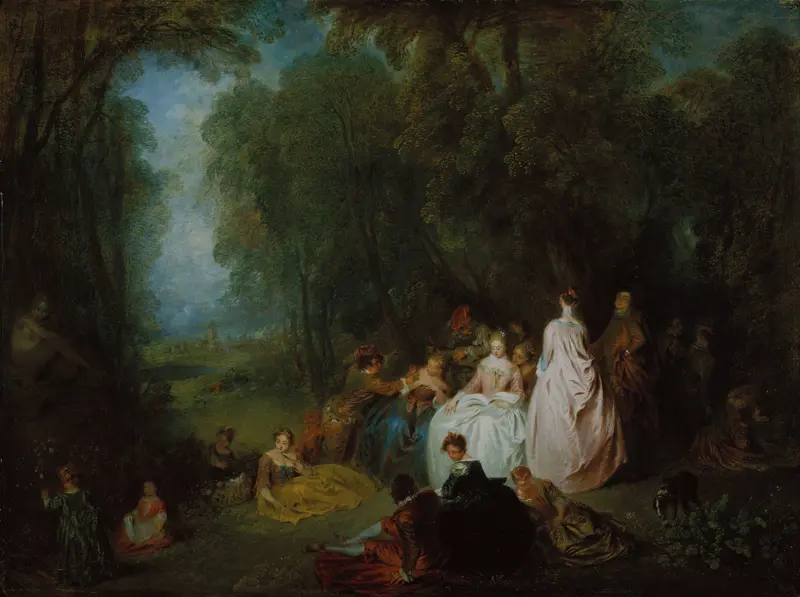
Fête champêtre (Pastoral Gathering)
Jean-Antoine Watteau
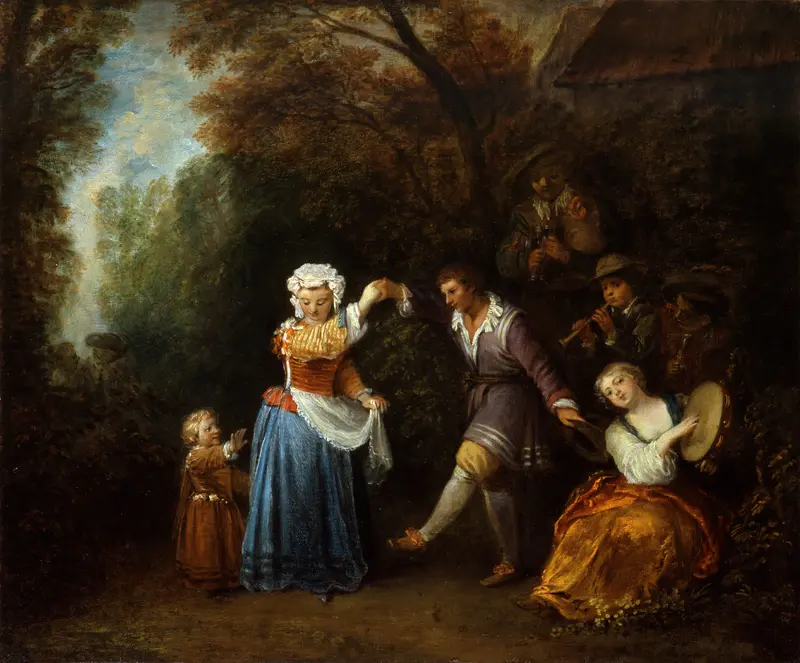
The Country Dance
Jean-Antoine Watteau

The French Comedians
Jean-Antoine Watteau
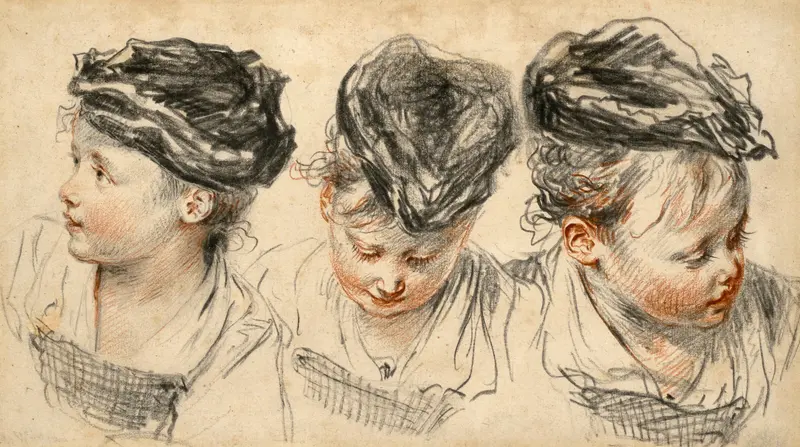
Three head studies of a girl wearing a hat
Jean-Antoine Watteau
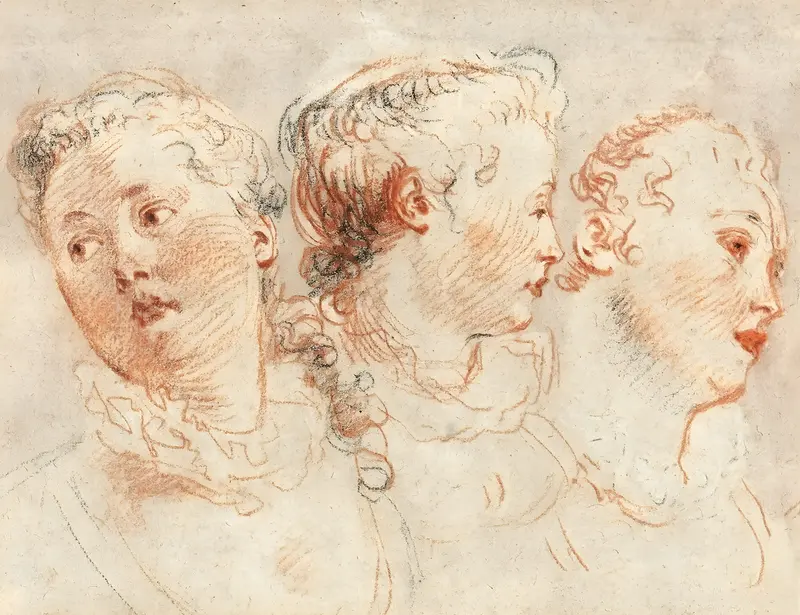
Three Studies Of The Head Of A Woman
Jean-Antoine Watteau

Portret van een dame met harlekijn
Jean-Antoine Watteau
More Genre Scene Art

Banquet of the Officers of the St George Civic Guard
Frans Hals

Rembrandt and Saskia in the Scene of the Prodigal Son
Rembrandt van Rijn

Bal du moulin de la Galette
Pierre-Auguste Renoir

Quadrille at the Moulin Rouge
Henri de Toulouse-Lautrec

A Burial at Ornans
Gustave Courbet

When Will You Marry?
Paul Gauguin