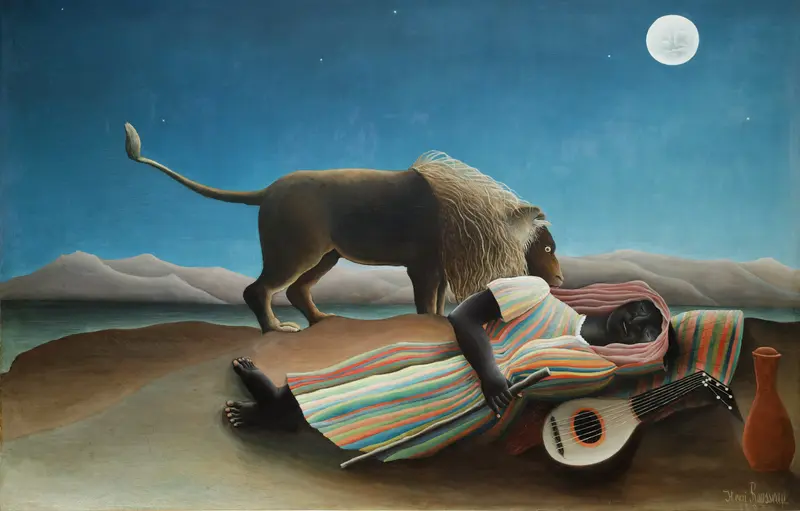
Pierrot (Gilles) — History & Facts
Pierrot (Gilles) by Jean-Antoine Watteau was painted between 1718 and 1719 in oil on canvas. The work dates from the later period of Watteau’s career, when he was known for his scenes inspired by the Italian commedia dell’arte and the fêtes galantes genre. The painting’s large scale and central, full-length figure distinguish it within the artist’s oeuvre. The composition centers on a life-sized figure of Pierrot, also known as Gilles, dressed in a loose white costume with a ruffled collar and soft hat.
Pierrot stands facing forward, his expression subdued and his posture relaxed, dominating the foreground. To the right, a group of four other theatrical characters, including Harlequin and a figure in red, are partially obscured by foliage. The background features a softly rendered landscape with trees and a pale sky, painted in muted greens and blues, while the figures are modeled with delicate, smooth brushwork typical of Watteau’s technique. The painting is recognized as one of Watteau’s most significant interpretations of commedia dell’arte themes.
Its early provenance is not fully documented, but it is known to have been in France by the mid-eighteenth century and has since become one of the most celebrated works attributed to the artist. Today, Pierrot (Gilles) is widely studied for its innovative composition and psychological depth, and it remains a key work in the history of early eighteenth-century French painting.
More Artworks by Jean-Antoine Watteau
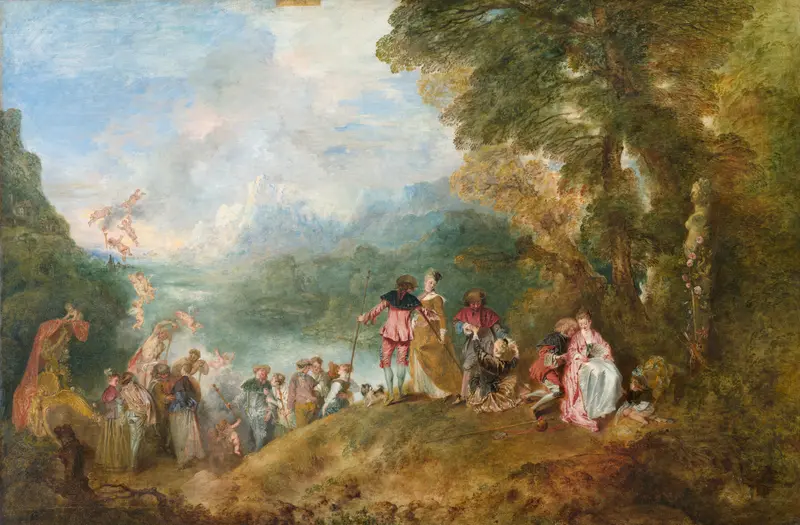
The Embarkation for Cythera
Jean-Antoine Watteau
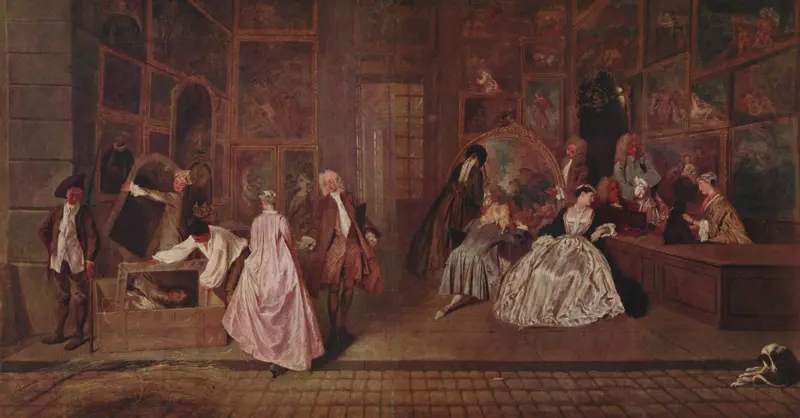
The Shop Sign of Gersaint
Jean-Antoine Watteau
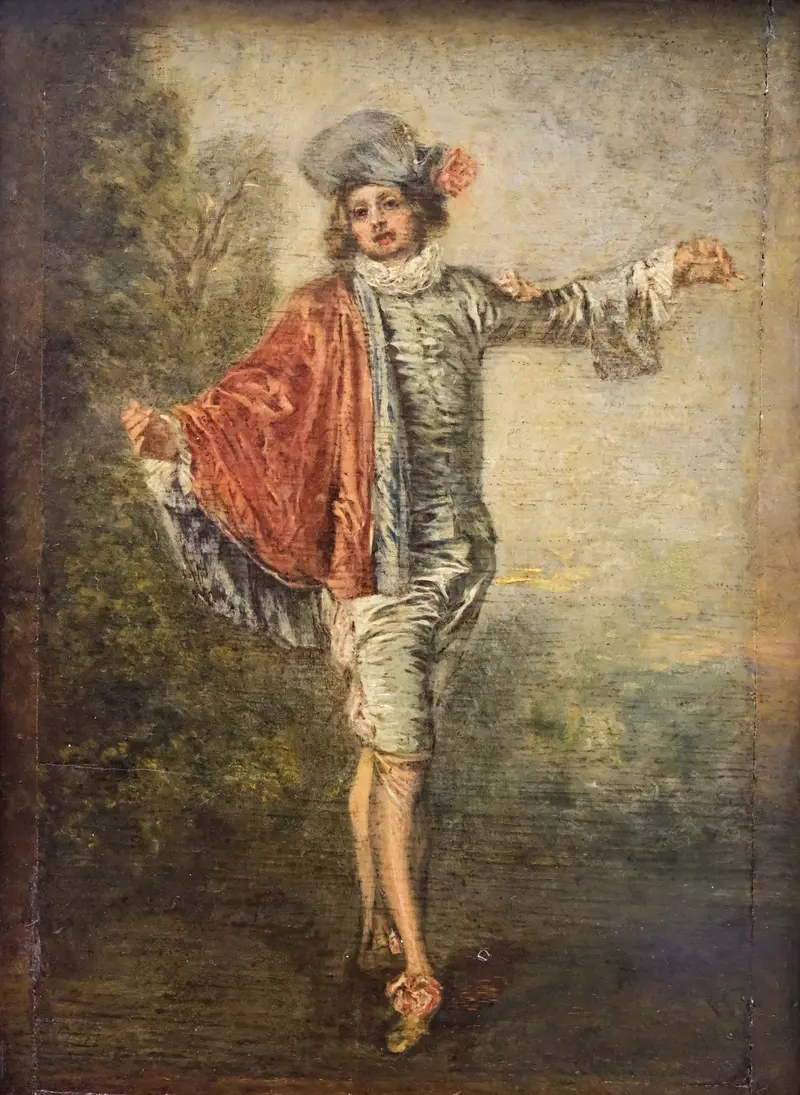
L'Indifférent
Jean-Antoine Watteau
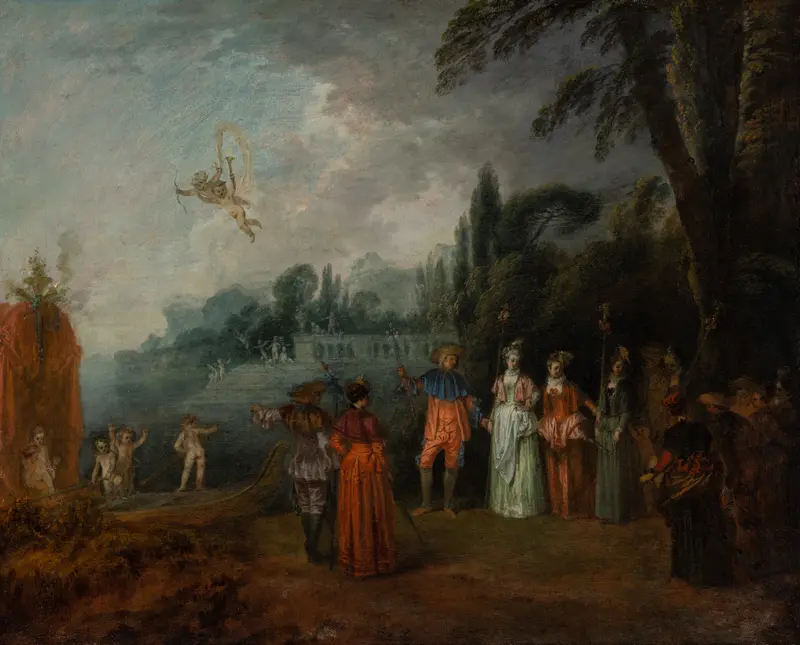
The Island of Cythera
Jean-Antoine Watteau
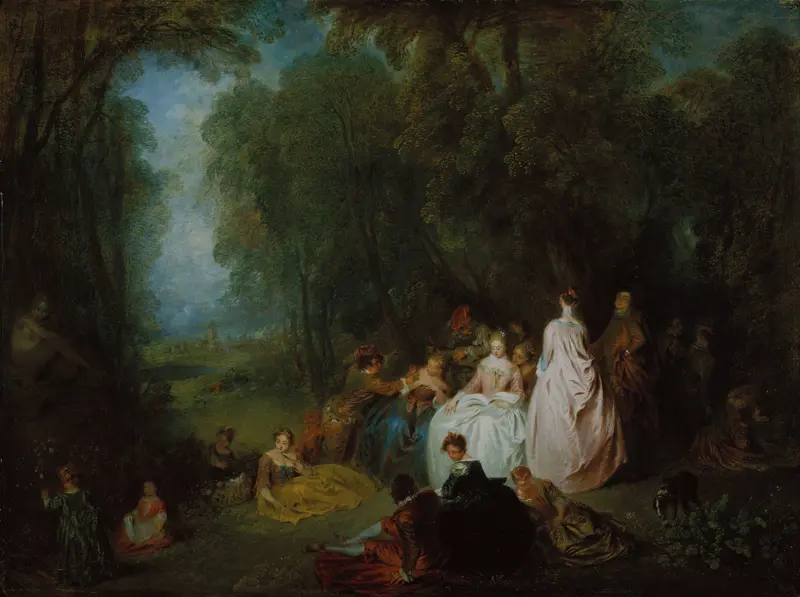
Fête champêtre (Pastoral Gathering)
Jean-Antoine Watteau
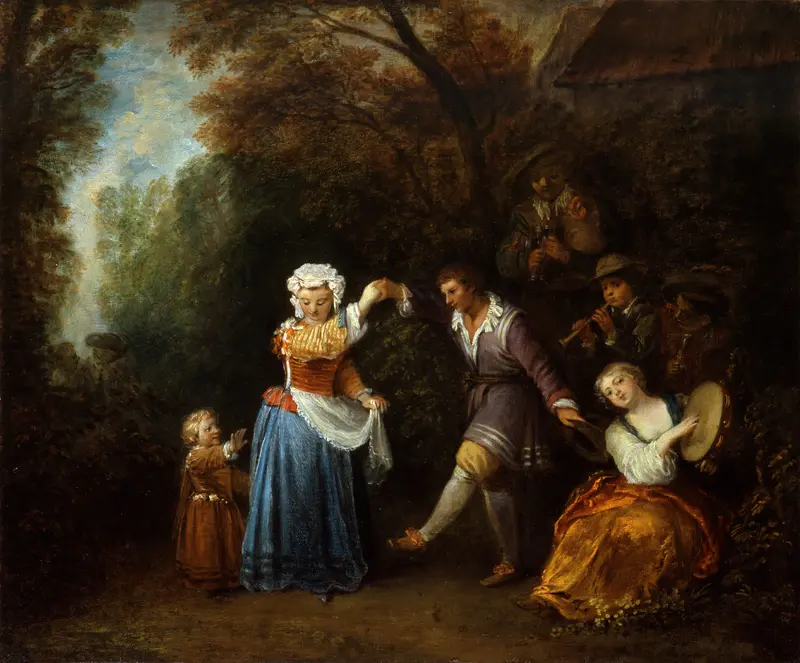
The Country Dance
Jean-Antoine Watteau

The French Comedians
Jean-Antoine Watteau
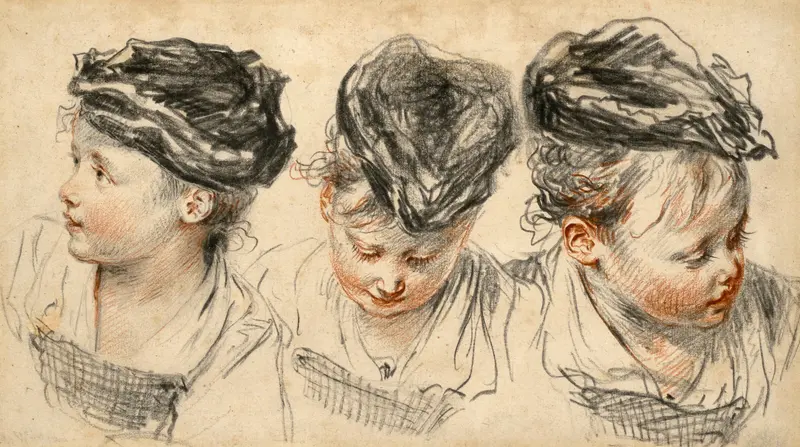
Three head studies of a girl wearing a hat
Jean-Antoine Watteau
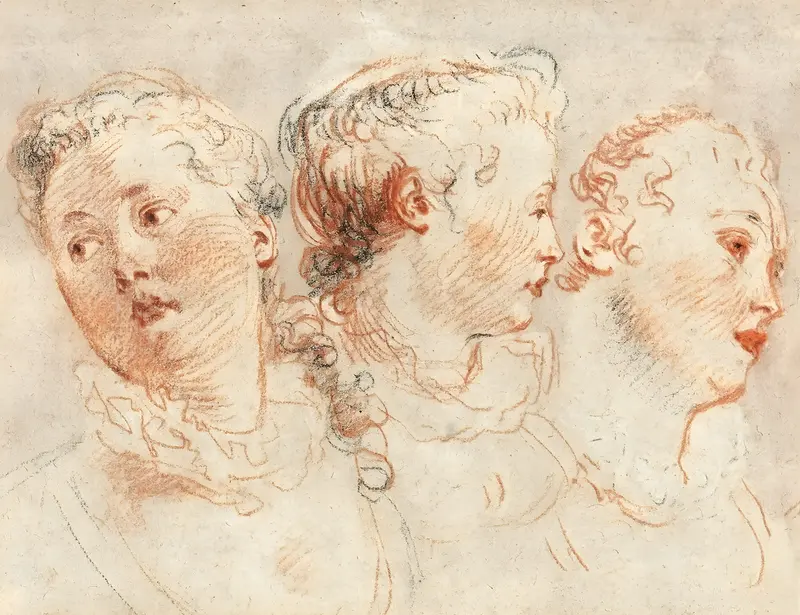
Three Studies Of The Head Of A Woman
Jean-Antoine Watteau

Portret van een dame met harlekijn
Jean-Antoine Watteau