Discover insights about this artwork
The Sick Girl — History & Facts
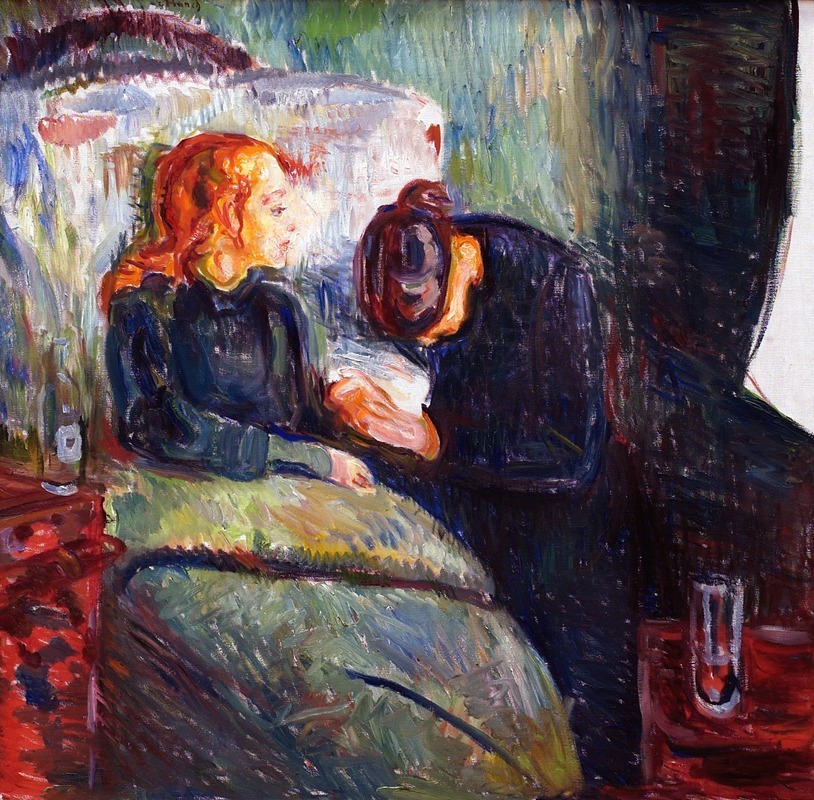
In The Sick Girl, Edvard Munch presents a young woman lying in bed, surrounded by a muted color palette of greens and browns. Her pale face contrasts sharply with the darker background, emphasizing her frailty. The setting is intimate, suggesting a personal space filled with illness and despair.
The brushstrokes are loose and expressive, contributing to the emotional weight of the scene. The painting is executed in oil on canvas, a medium that allows for rich texture and depth. Munch uses a combination of soft and harsh lines to convey the girl's vulnerability and the oppressive atmosphere surrounding her. The dimensions are approximately 60 x 80 cm, making it a medium-sized work that invites close inspection.
The emotional intensity is palpable, drawing viewers into the girl's experience. Edvard Munch was a key figure in the Expressionist movement, known for exploring themes of anxiety and existential dread. The Sick Girl reflects his personal experiences with illness and loss, as Munch often painted from his own life. An interesting fact about this work is that it was inspired by the illness of his sister, who suffered from tuberculosis.
This connection adds a layer of personal tragedy to the painting.