
The Sleeping Beauty in the Wood (Perrault) — History & Facts
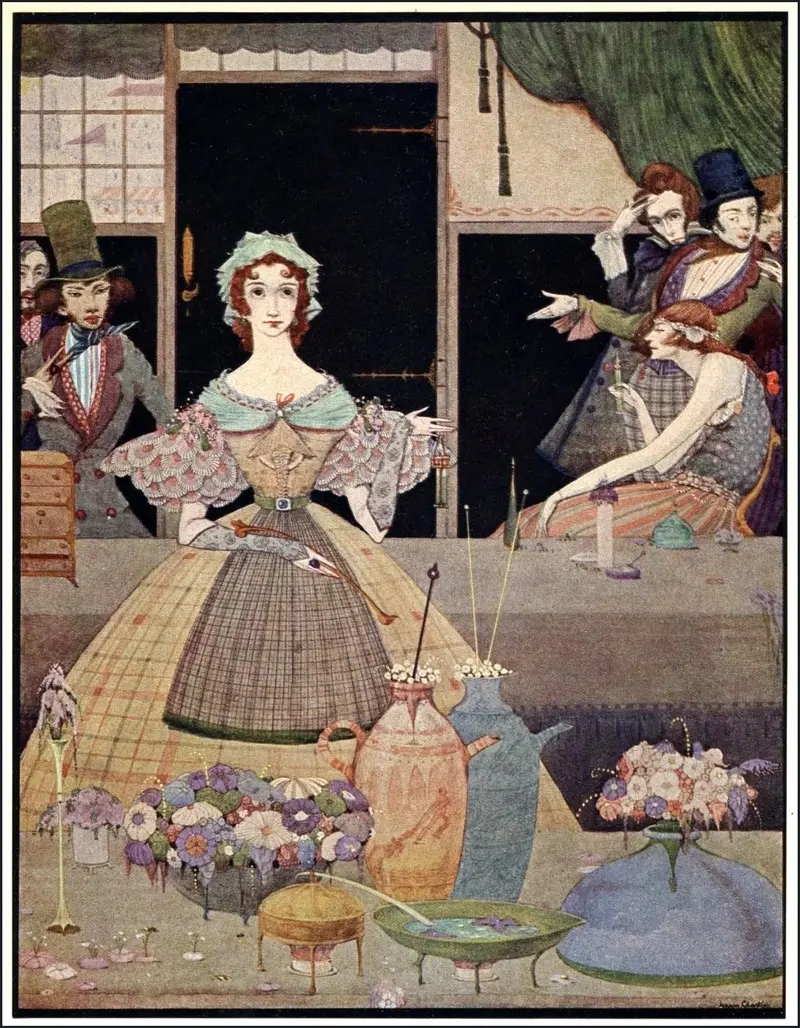
The first thing to catch the eye is the dreamlike elegance of the figures, suspended as if in a world between waking and sleep. The central figure, unmistakably the sleeping beauty herself, reclines languidly on a canopied bed, her pale, elongated form echoed by the delicate, almost spectral prince who approaches her. The artist, Harry Clarke, fills the scene with a sense of theatricality: the heavy curtains frame the action like a stage, while the muted, powdery palette lends the image a hushed, enchanted air.
Every gesture is deliberate—the prince’s poised foot, the outstretched arms of the attendants, the strange, watchful figure in the corner—each one heightening the sense that we are witnessing a moment of profound transformation. Created in 1922 as an illustration for The fairy tales of Charles Perrault, this work belongs to a world where fairy tales were not just stories for children, but a source of inspiration for artists, writers, and designers remaking the look of books and interiors. In this era, illustrators like Clarke were celebrated for their ability to conjure entire worlds from ink and watercolor, their works prized by publishers eager to bring new life to old tales. The copy preserved at the New York Public Library is a testament to the enduring appeal of these illustrated volumes and the skill of artists who, like Clarke, could turn a familiar story into a scene that feels both strange and newly alive.
Look again at the faces, the fabrics, the way the light seems to shimmer on the prince’s coat—each detail is an invitation to linger in this enchanted moment.
More Artworks by Harry Clarke
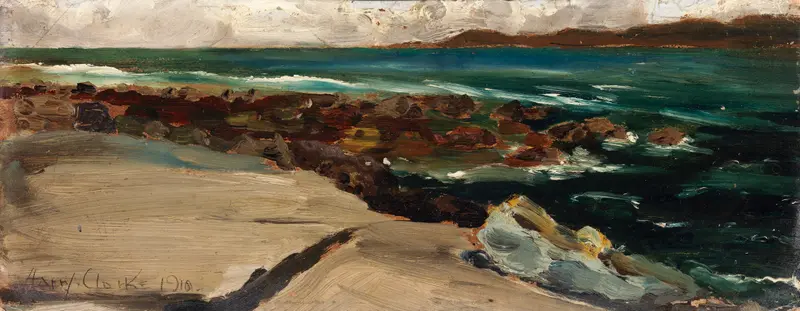
Landscape by the Coast
Harry Clarke
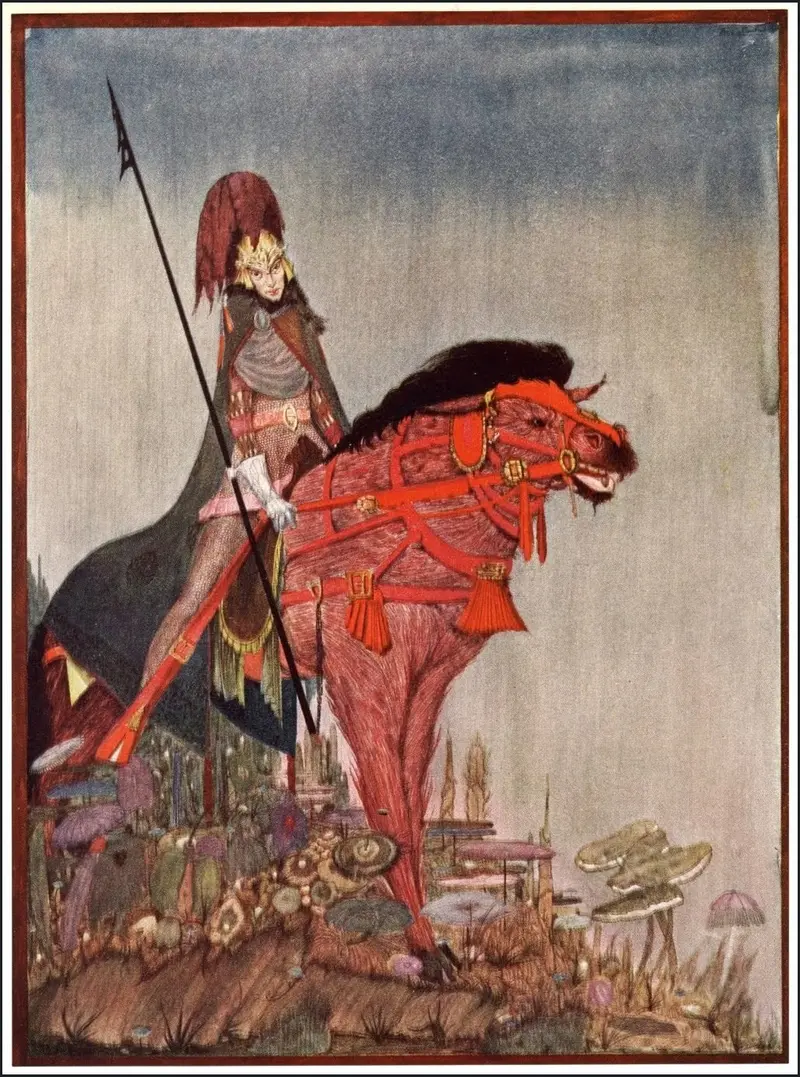
Metzengerstein (Poe)
Harry Clarke
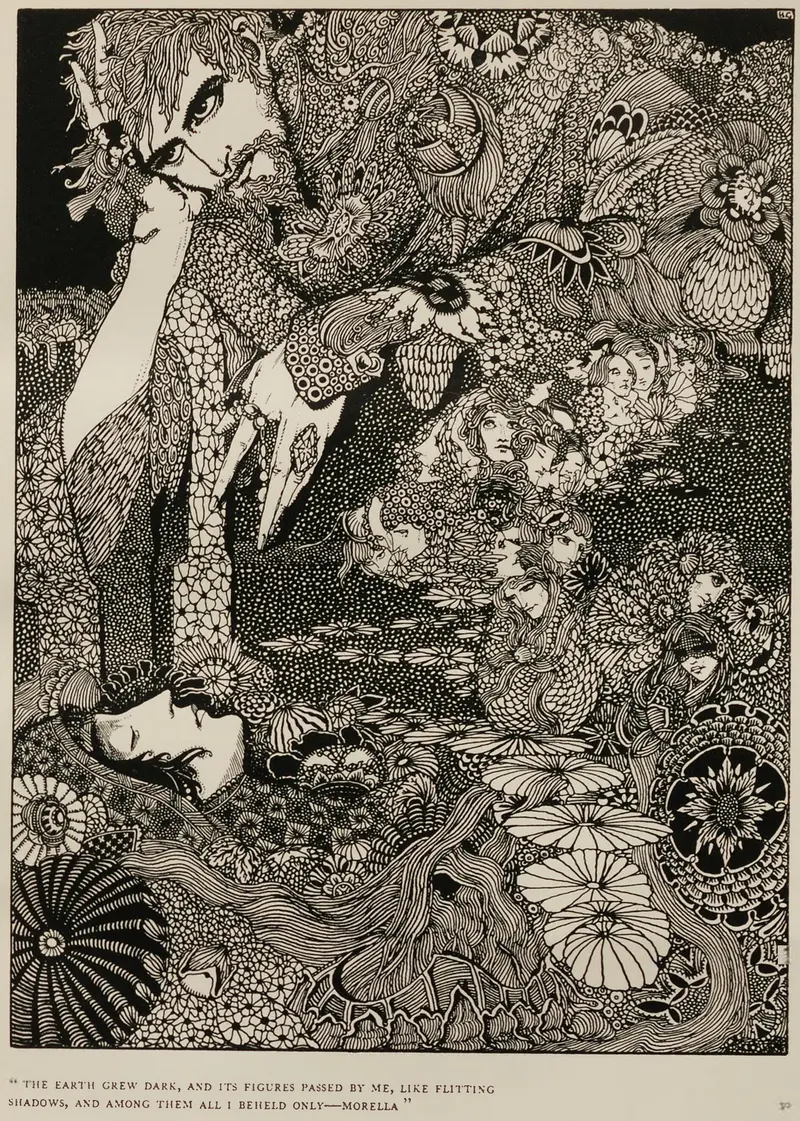
Morella (Poe)
Harry Clarke
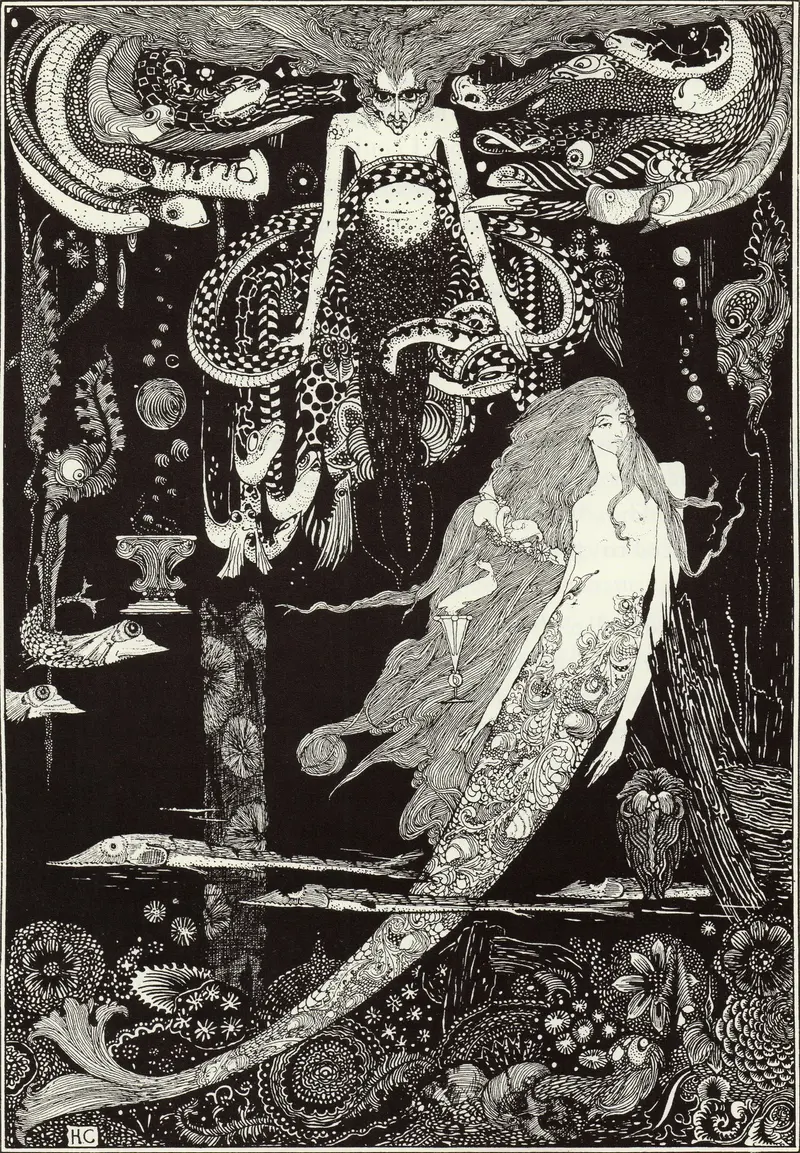
The Little Mermaid (Andersen)
Harry Clarke
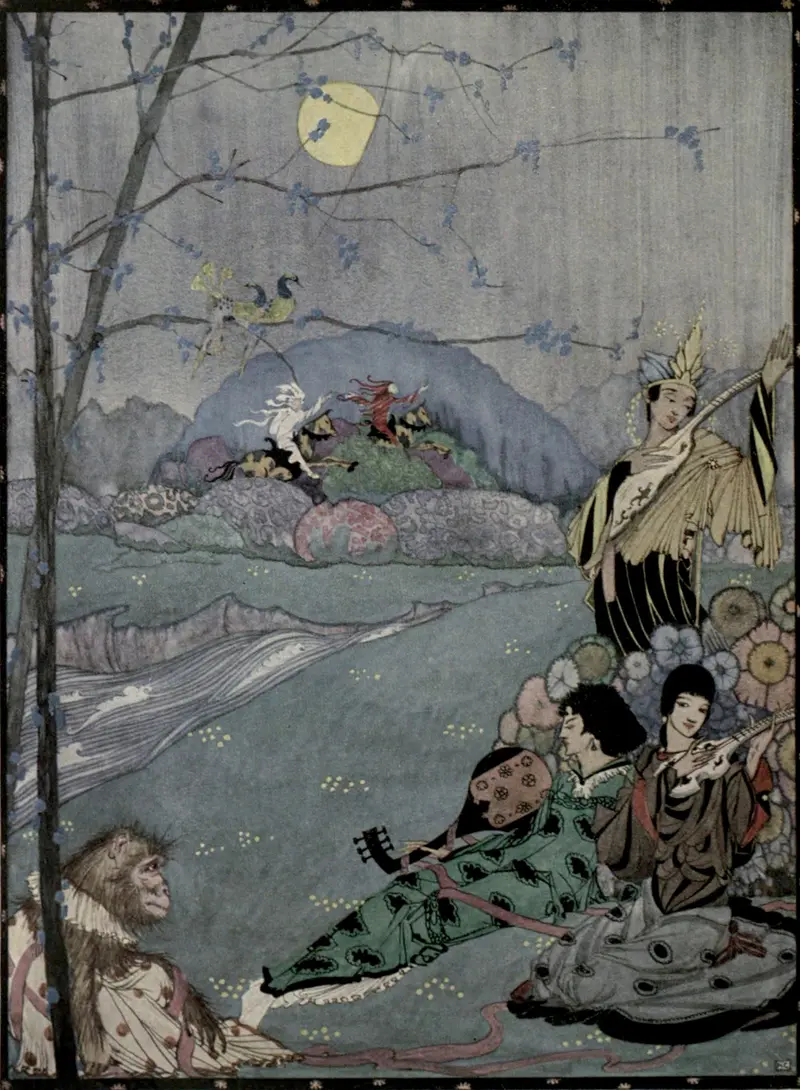
Arabia (The Year's at the Spring)
Harry Clarke
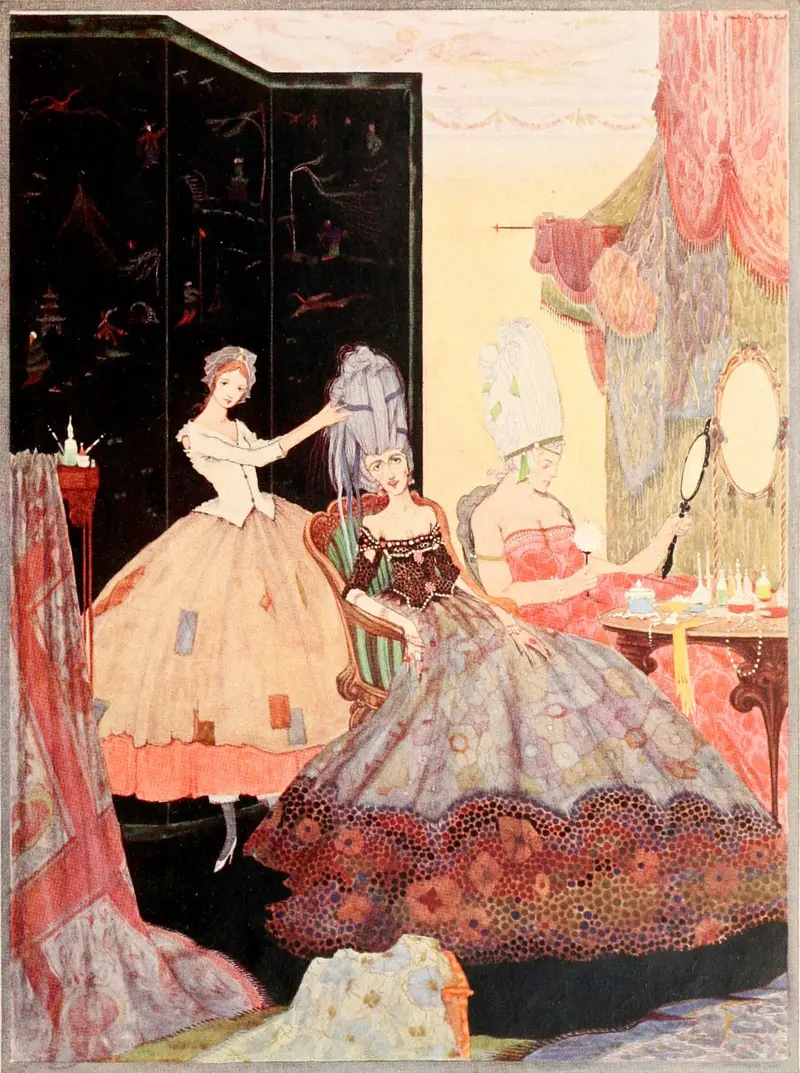
Cinderella (Perrault)
Harry Clarke
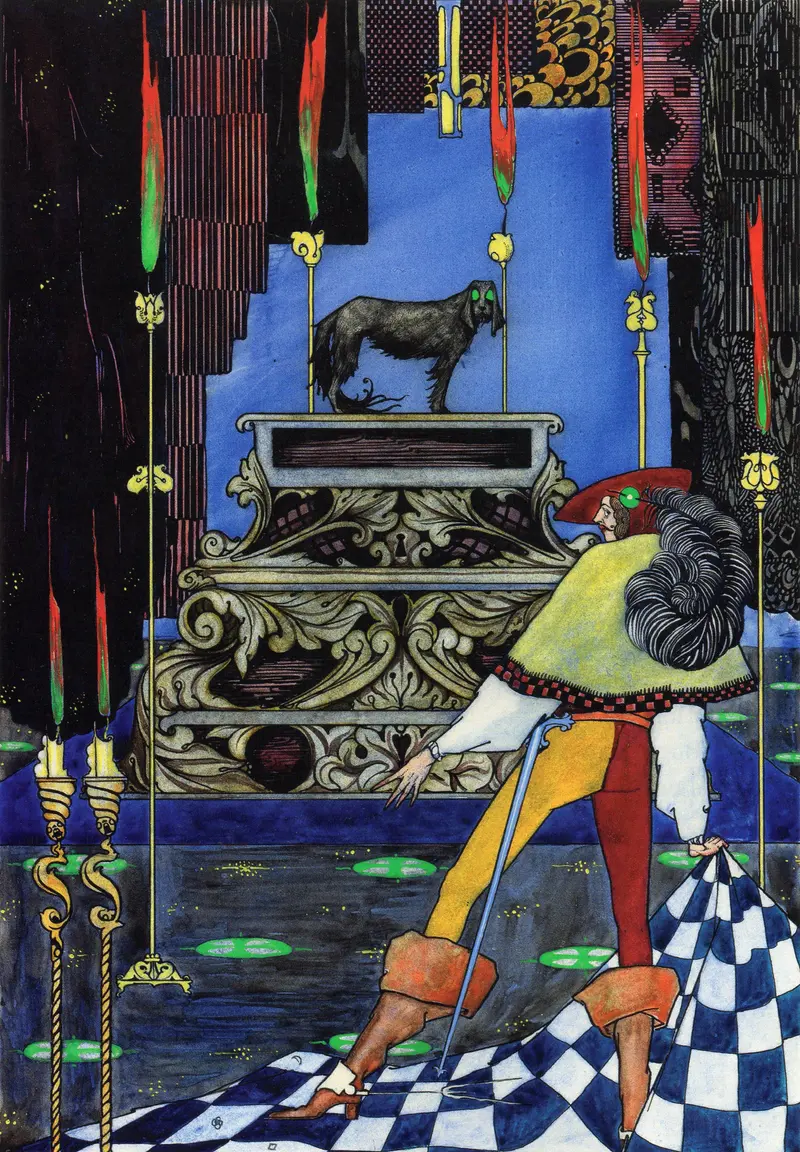
The Tinder Box (Andersen)
Harry Clarke
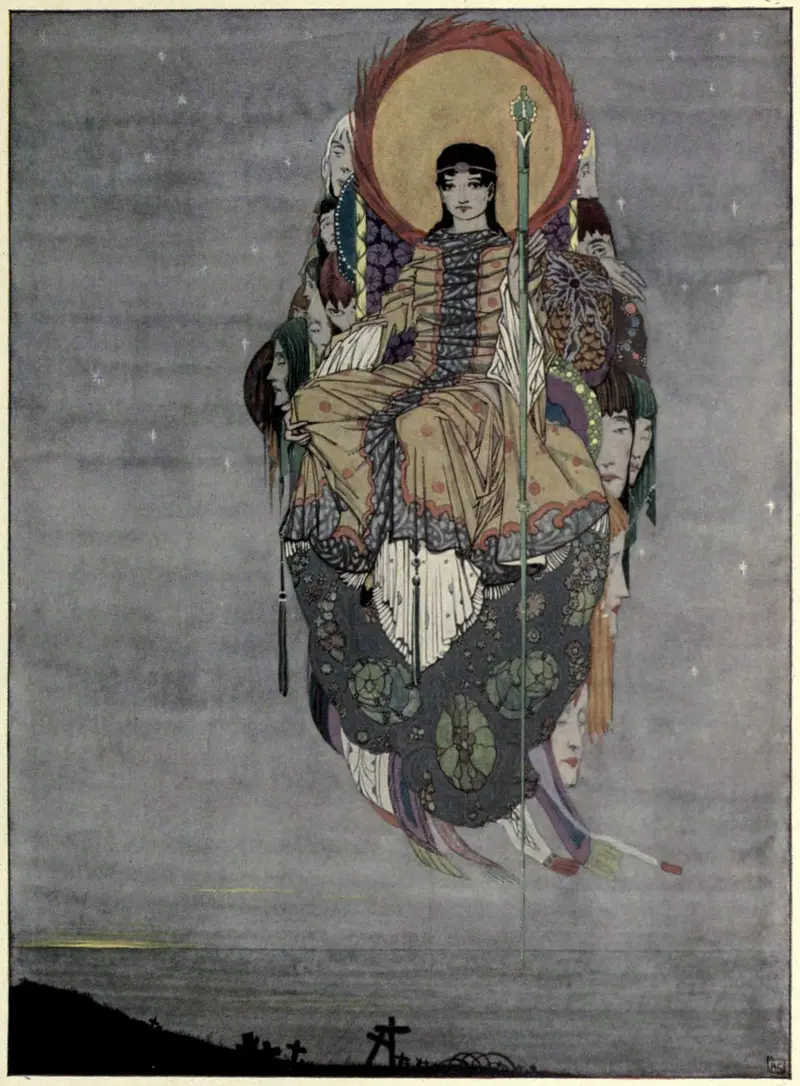
The Dead (The Year's at the Spring)
Harry Clarke
The Mystery of Marie Roget (Poe)
Harry Clarke

The Travelling Companion (Andersen)
Harry Clarke





