
The Spiritual Form of Pitt guiding Behemoth — History & Facts
When William Blake exhibited The Spiritual Form of Pitt guiding Behemoth in 1805, he paired it with a handwritten description that left visitors in awe and confusion: “The Giant Albion, in Chains, is guided by Pitt, whose spiritual form is seen directing the monster.” Painted during the Napoleonic Wars, the work was a direct response to the political turmoil of the time, with Blake using his visionary art to comment on the powers shaping Britain. The painting’s subject—Prime Minister William Pitt the Younger—was still alive, making this a rare case of a living statesman cast in mythic terms. Few artists dared such a blend of politics and prophecy, and Blake’s own contemporaries struggled to decipher his allegory. In the painting, Pitt stands as a radiant, almost angelic figure, his arm outstretched as he attempts to command the monstrous Behemoth—a creature from the Book of Job, symbolizing chaos and brute force.
The chains that bind Behemoth glint in the light, suggesting the fragile hold of government over the forces of war and revolution. Pitt’s gaze is fixed, not on the beast, but upward, as if seeking guidance from a higher realm. The swirling, turbulent forms around them recall the energy of Michelangelo’s figures, but where Michelangelo gave his prophets physical grandeur, Blake infuses Pitt with a spectral intensity.
The entire scene pulses with tension: is Pitt truly guiding Behemoth, or is he himself at the mercy of powers beyond his control? The precise medium of this work remains uncertain—some describe it as tempera, others as a form of mixed media on canvas or panel—reflecting Blake’s experimental approach. Unlike many of his watercolours and engravings, The Spiritual Form of Pitt guiding Behemoth stands alone, with no known preparatory drawings or replicas. Its early history is obscure; it was likely exhibited at Blake’s own private show in his brother’s shop in 1809, but its whereabouts for much of the nineteenth century are not well documented.
Today, the painting is held in the Tate collection, recognized as a key example of Blake’s visionary political art and a testament to his unique position at the crossroads of Romanticism, mysticism, and radical dissent.
More Artworks by William Blake
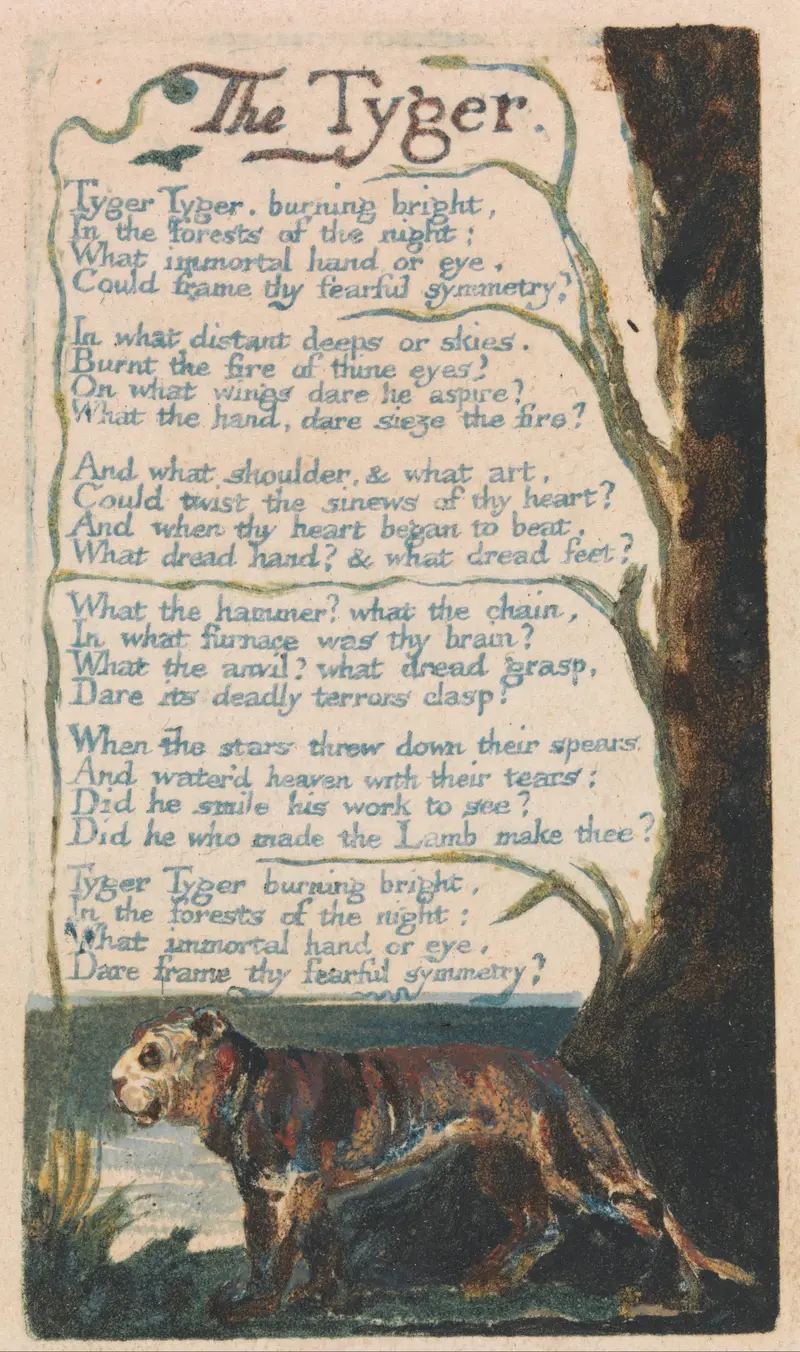
The Tyger
William Blake

Christ Blessing
William Blake
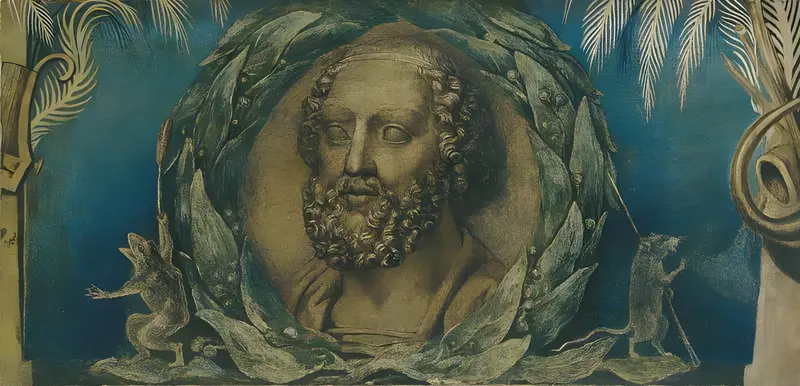
Homer
William Blake
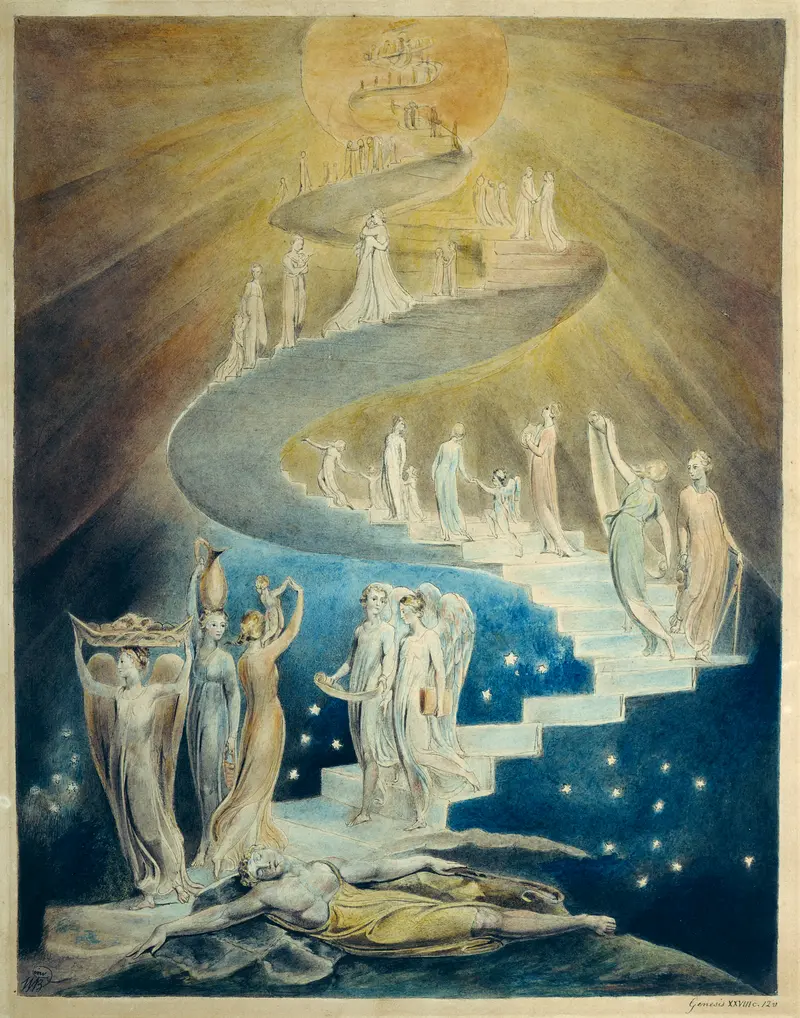
Jacob's Ladder
William Blake
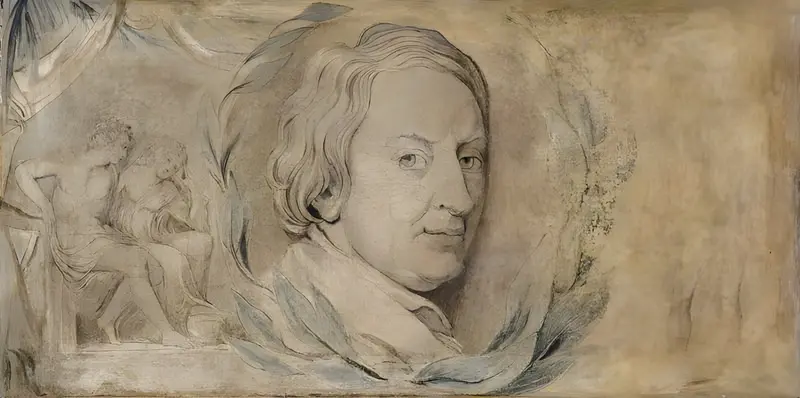
John Dryden (1631–1700)
William Blake

Landscape near Felpham
William Blake
Sacrifice of Job
William Blake
Christ's Entry into Jerusalem
William Blake
The Ancient of Days
William Blake
Adam Naming the Beasts
William Blake





