
The Tarō Inari Shrine in the Asakusa Ricefields — History & Facts
Can beauty exist without sorrow? In the tranquil embrace of an evening sky, the landscape reveals layers of unspoken stories, where reflection becomes a bridge between joy and melancholy. Look to the foreground, where the rich greens of the ricefields meet the delicate hues of the setting sun. Notice how the artist employs short, deliberate brushstrokes to create a sense of movement in the swaying crops, while the vibrant oranges and subtle purples of twilight wash over the scene like a warm embrace. The shrine stands resolute against the backdrop, its silhouette etched in darker tones, signifying both reverence and the enduring passage of time. As you explore deeper, consider the juxtaposition of the shrine’s sacredness and the fleeting nature of the day, suggesting a transient beauty.
The ricefields symbolize sustenance and life, yet their seasonal cycle hints at inevitability—a reminder of the sorrow that accompanies all growth. The reflective waters lapping at the edges of the fields suggest a duality; they mirror the sky’s brilliance while also absorbing the fading light, embodying the harmony of joy intertwined with loss. Created in 1877, this piece emerged during a period of profound change in Japan as the country was opening to Western influences. Kobayashi Kiyochika, a pivotal figure in the ukiyo-e movement, painted this work in Tokyo, capturing a moment of serenity in a rapidly modernizing world.
His ability to blend traditional techniques with innovative perspectives showcases not just his artistic skill but also the emotional complexity of a nation balancing heritage and progress.
More Artworks by Kobayashi Kiyochika
Browse all →
Thunder and Lightning at Oumaya Bridge
Kobayashi Kiyochika

Shinkyō, Sacred Bridge at Nikkō
Kobayashi Kiyochika

Daybreak at Shrine, Kanda
Kobayashi Kiyochika

The Great Fire at Ryōgoku Bridge, Viewed from Asakusa Bridge on the 26th of January, 1881
Kobayashi Kiyochika

The Moon At Shinagawa
Kobayashi Kiyochika
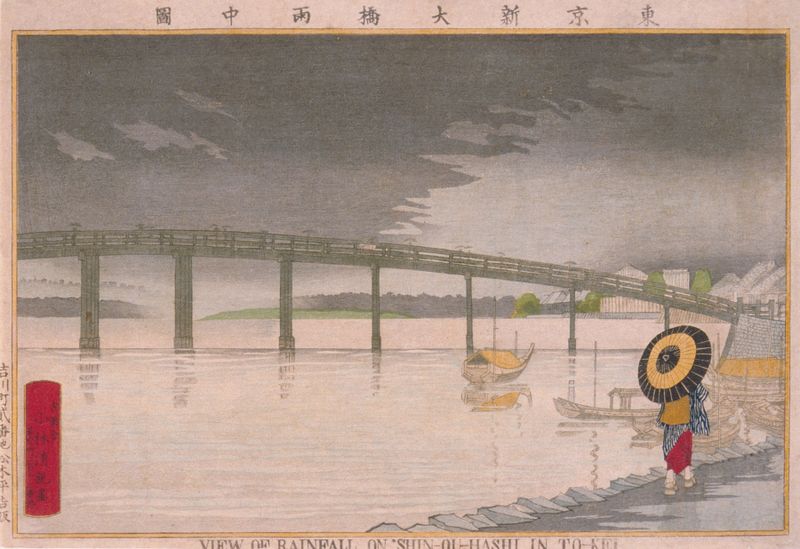
View of Rainfall on Shin-Ou-hashi in To-kei
Kobayashi Kiyochika

Evening at Tōshōgū Shrine, Ueno, Tokyo
Kobayashi Kiyochika

Snow at Ochanomizu
Kobayashi Kiyochika
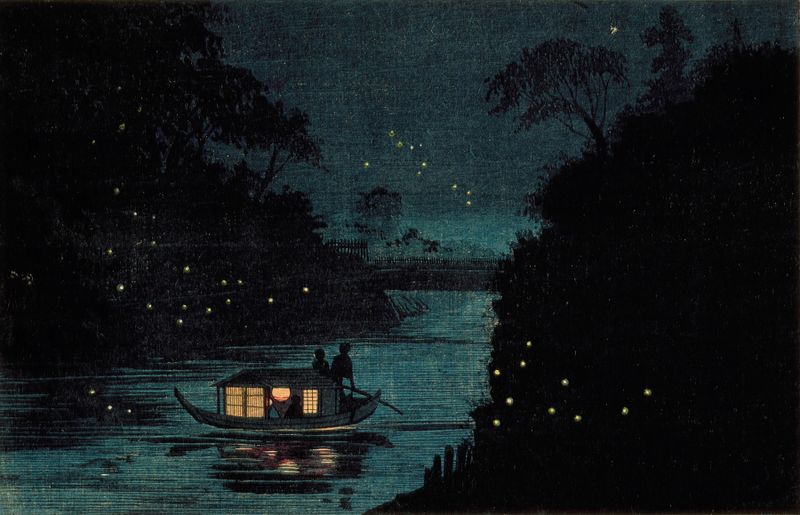
Fireflies at Ochanomizu
Kobayashi Kiyochika
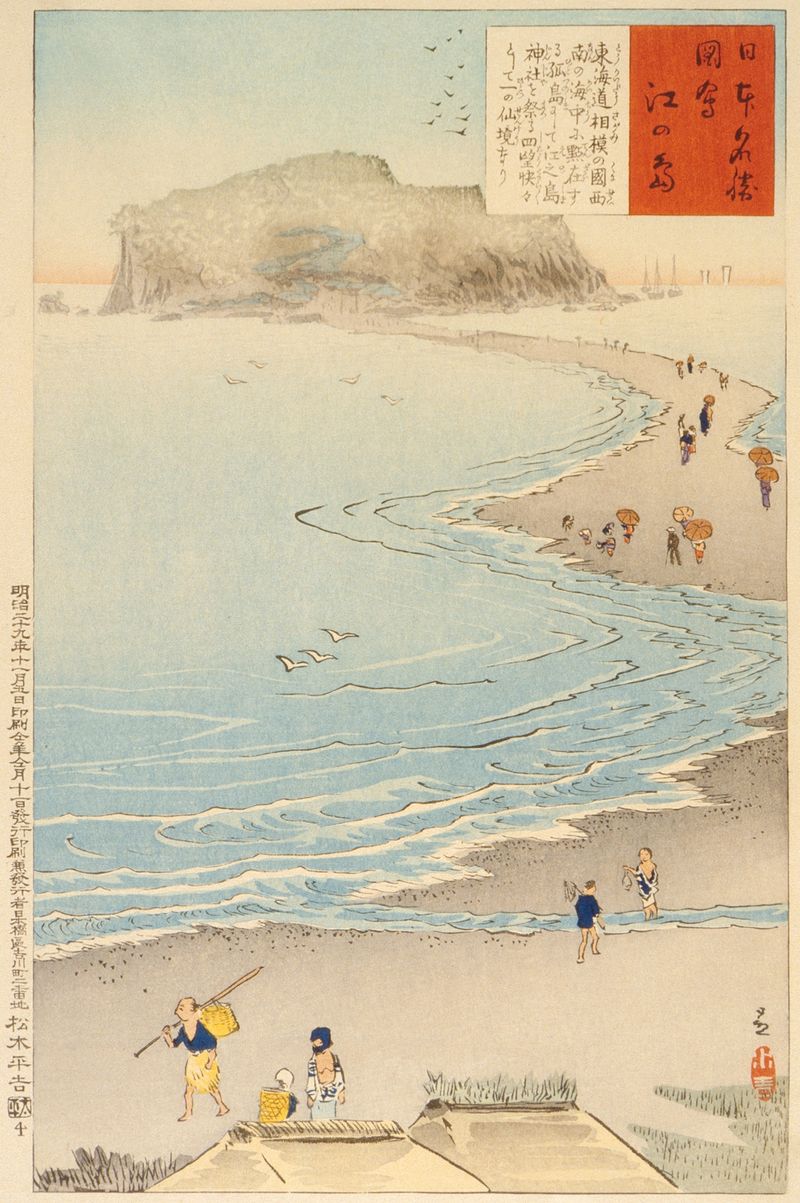
The Island Enoshima
Kobayashi Kiyochika





