
The Taro Inari Shrine In The Rice Fields At Asakusa — History & Facts
When did color learn to lie? In a world where nature’s hues often speak truths, this piece captures an essence that transcends mere representation, suggesting a deeper, divine whisper hidden within the landscape. Look closely at the vibrant greens and subtle earth tones that dance across the canvas, inviting you into the rice fields. Notice how the sunlight bathes the Taro Inari Shrine, creating a striking contrast against the lush surroundings. The delicate brushstrokes and carefully layered colors draw the viewer’s eye to the shrine's intricate details, as if beckoning you to explore its spiritual significance.
Each stroke carries a weight, a gentle invitation to meditate on the space between the physical and the ethereal. At first glance, the painting celebrates the beauty of the landscape, yet it holds layers of meaning that speak to the divinity interwoven in daily life. The shrine stands resolute, a bastion of faith amidst the rippling fields, symbolizing the connection between the sacred and the mundane. Simultaneously, the interplay of light and shadow suggests an underlying tension, hinting at the fleeting nature of both life and devotion.
The vibrant colors may mislead the eye, yet they resonate with higher truths, drawing on personal and collective histories. Kobayashi Kiyochika created this work between 1877 and 1882, during a time of significant transition in Japan, as the Meiji Restoration redefined the nation’s identity. It was a period marked by the influx of Western influences in art and culture, yet Kiyochika remained dedicated to illustrating the beauty of traditional Japanese landscapes. Working in Tokyo, he sought to capture the serene coexistence of nature and spirituality, bridging past and present through his luminous vision.
More Artworks by Kobayashi Kiyochika
Browse all →
Thunder and Lightning at Oumaya Bridge
Kobayashi Kiyochika

Shinkyō, Sacred Bridge at Nikkō
Kobayashi Kiyochika

Daybreak at Shrine, Kanda
Kobayashi Kiyochika

The Great Fire at Ryōgoku Bridge, Viewed from Asakusa Bridge on the 26th of January, 1881
Kobayashi Kiyochika

The Moon At Shinagawa
Kobayashi Kiyochika
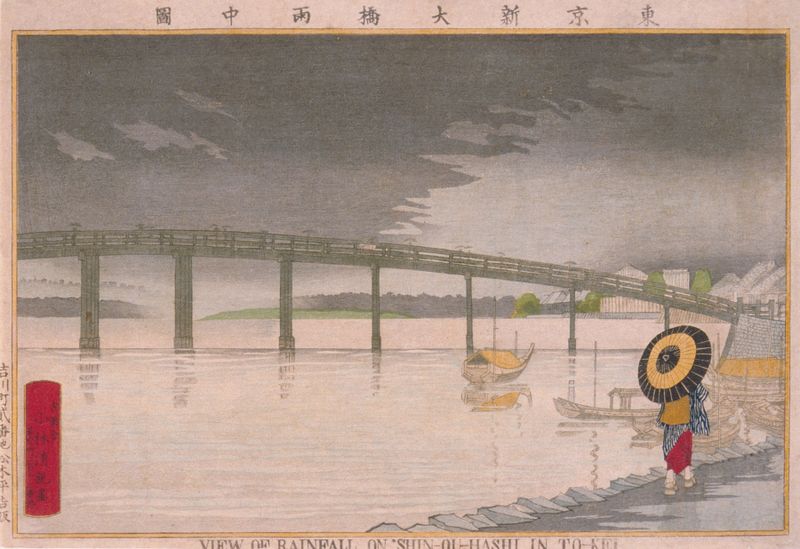
View of Rainfall on Shin-Ou-hashi in To-kei
Kobayashi Kiyochika

Evening at Tōshōgū Shrine, Ueno, Tokyo
Kobayashi Kiyochika

Snow at Ochanomizu
Kobayashi Kiyochika
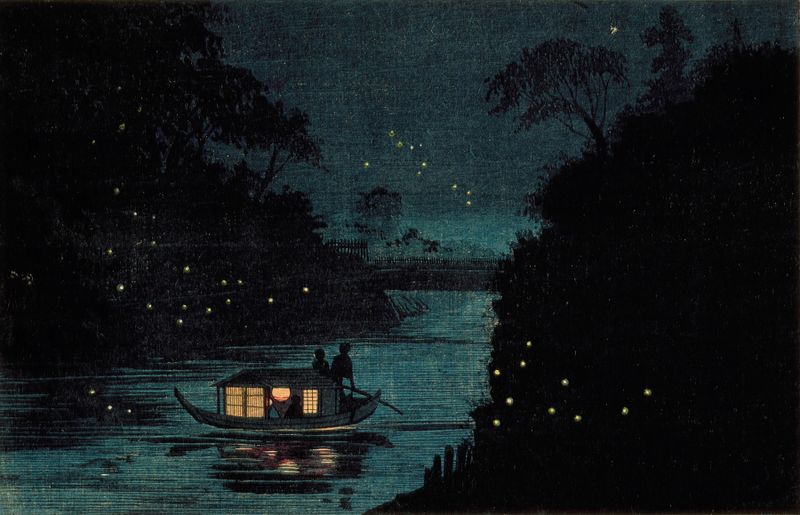
Fireflies at Ochanomizu
Kobayashi Kiyochika
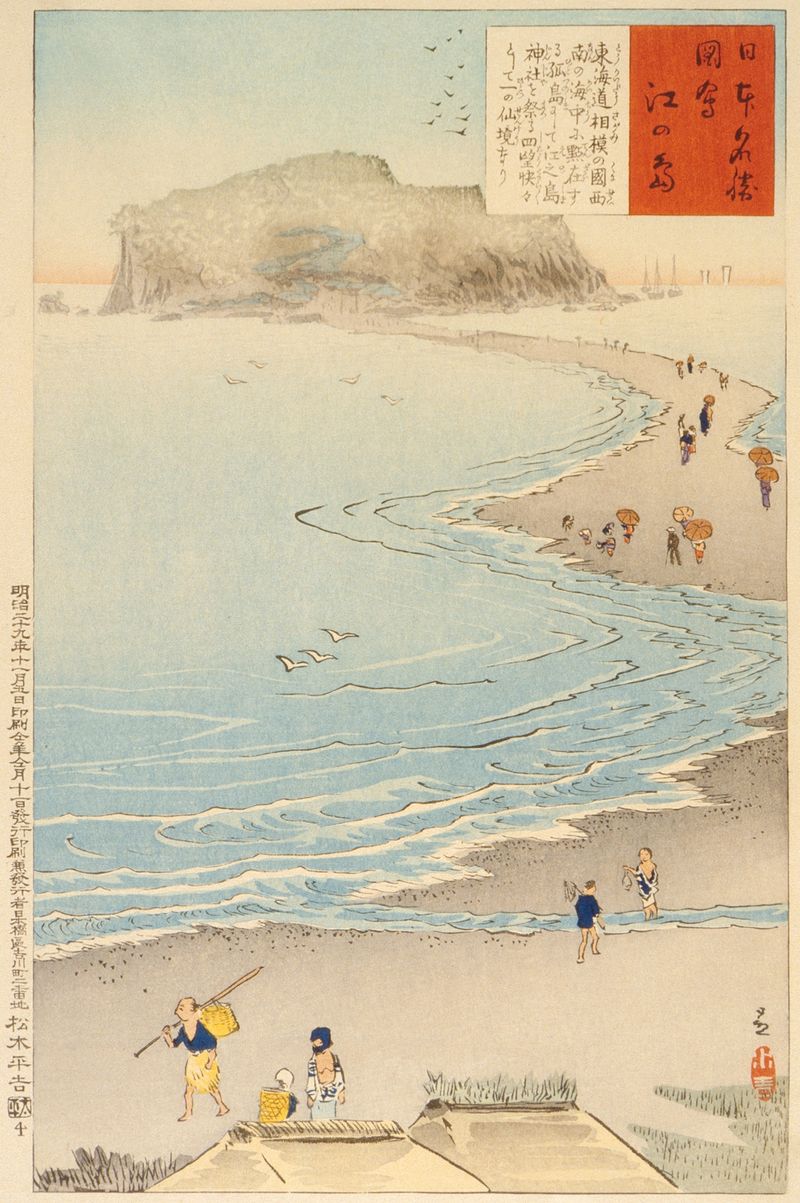
The Island Enoshima
Kobayashi Kiyochika





