
The Tell-Tale Heart (Poe) — History & Facts
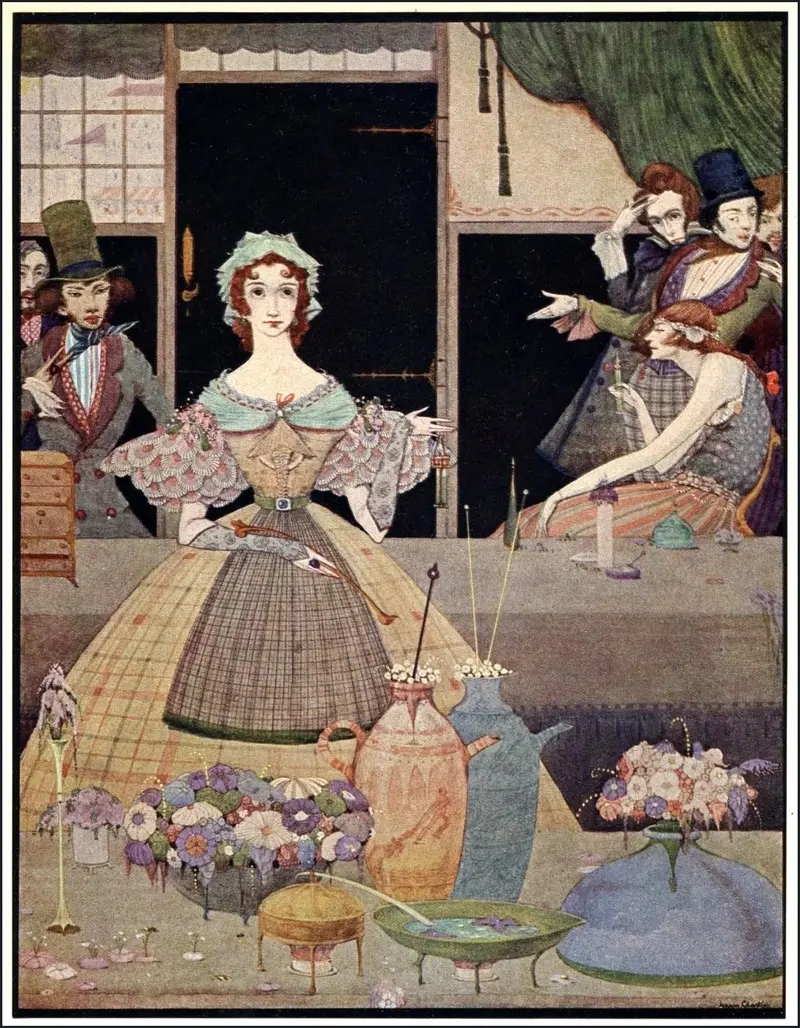
What first seizes the eye in The Tell-Tale Heart (Poe) by Harry Clarke is the feverish intensity of the figure at the center—limbs stretched, fingers splayed, eyes wide with a gaze that is both hunted and hunting. The entire scene is hemmed in by heavy drapery and shadow, as if the world itself is holding its breath. The figure's angular, almost marionette-like body seems to slice through the gloom, drawing the viewer’s attention to the helpless form beneath, whose face is frozen in a mask of terror.
Light pools at the bottom of the image, thrown from a single lantern, serving not as comfort but as a spotlight for the unfolding horror. Every detail—the exaggerated hands, the twisted posture, the haunted eyes—works together to trap the viewer in a moment of unbearable suspense. Created around 1919 and published in 1923 in Poe’s Tales of Mystery and Imagination, this illustration belongs to a world where artists like Harry Clarke brought literature’s darkest visions to life for a new generation of readers. In the early twentieth century, the illustrated book was a prized object, often commissioned by publishers eager to elevate popular tales with images as vivid as the words themselves.
Clarke’s work, with its intricate lines and theatrical sense of drama, stands at the crossroads of Art Nouveau and Gothic Revival—a style that matched Poe’s psychological horror with its own fevered imagination. History has kept few traces of the precise journey of this particular drawing, but its presence in the Victoria and Albert Museum’s collection invites us to look again, and to let our eyes linger in the shadows Clarke so carefully conjured.
More Artworks by Harry Clarke
Landscape by the Coast
Harry Clarke
Metzengerstein (Poe)
Harry Clarke
Morella (Poe)
Harry Clarke
The Little Mermaid (Andersen)
Harry Clarke
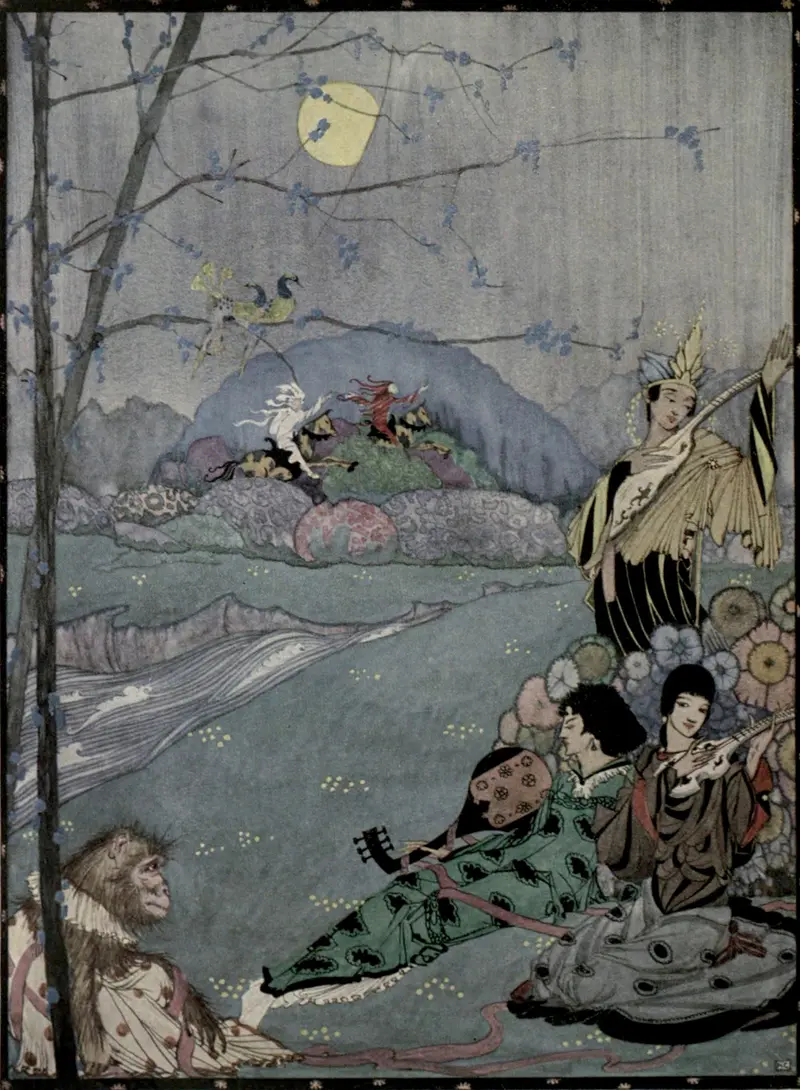
Arabia (The Year's at the Spring)
Harry Clarke
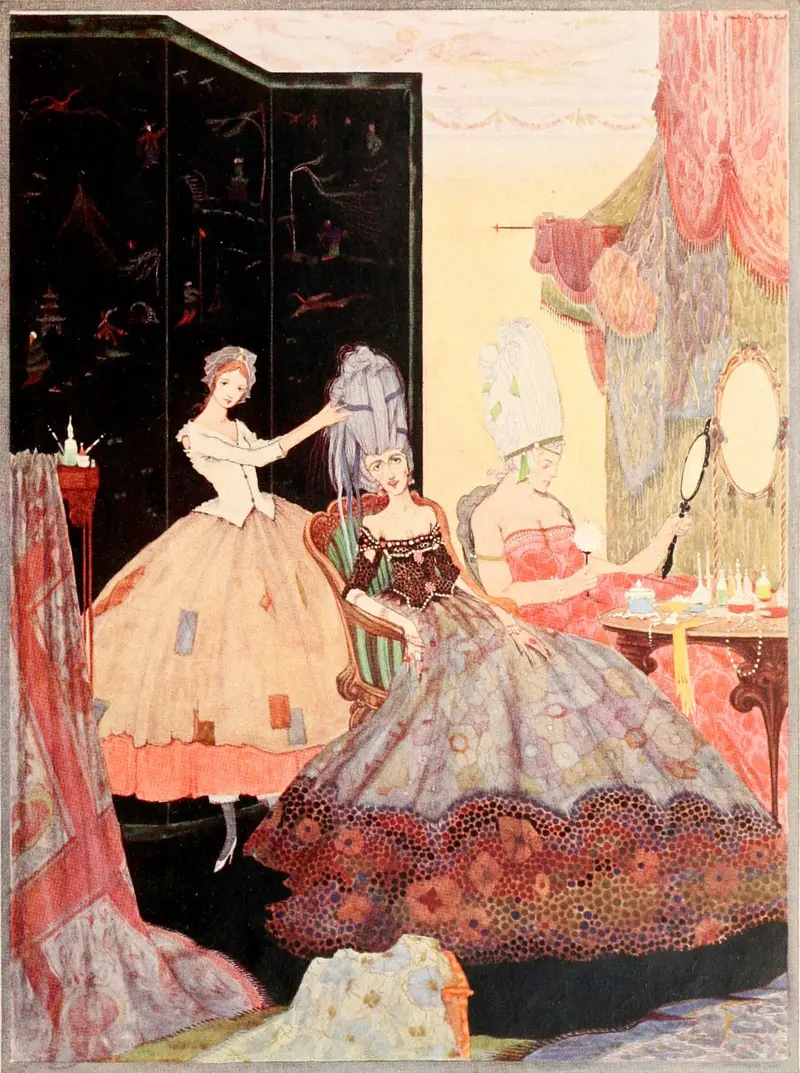
Cinderella (Perrault)
Harry Clarke
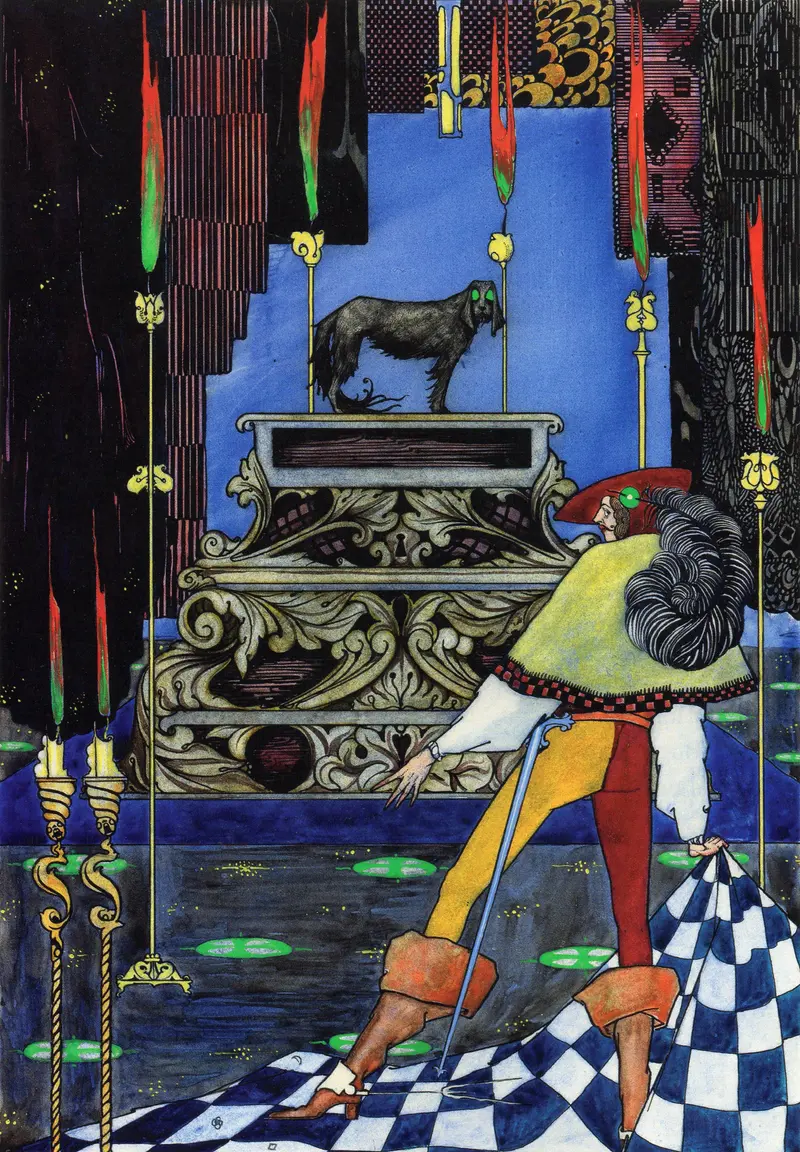
The Tinder Box (Andersen)
Harry Clarke
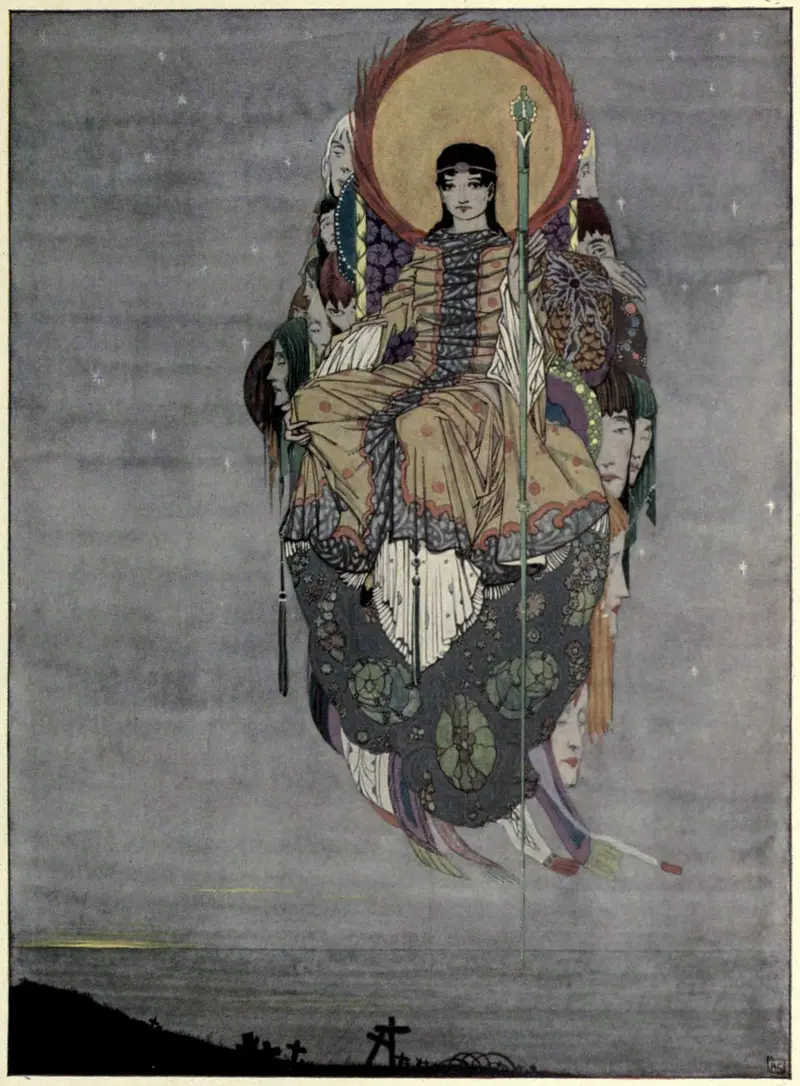
The Dead (The Year's at the Spring)
Harry Clarke
The Mystery of Marie Roget (Poe)
Harry Clarke

The Travelling Companion (Andersen)
Harry Clarke





