
Third Princess from the Tale of Genji — History & Facts
When Katsushika Hokusai turned his attention from landscapes and waves to the courtly world of classical Japanese literature, he entered a centuries-old conversation. His Third Princess from the Tale of Genji is part of a rare group of works in which Hokusai, famed for The Great Wave off Kanagawa, reimagined scenes from The Tale of Genji—the 11th-century novel by Lady Murasaki Shikibu that has enchanted readers and artists alike. The exact date and circumstances of this piece remain uncertain, yet it stands as a testament to Hokusai’s fascination with the aristocratic Heian period, a subject less common in his prolific career.
Unlike his more famous prints, this work delves into the delicate emotional world of courtly women, a theme that resonated deeply in Edo-period Japan. The scene captures the Third Princess at a moment of quiet vulnerability, likely after the infamous "cat incident" that forever altered her fate in the novel. In The Tale of Genji, the princess’s pet cat lifts a bamboo blind, inadvertently revealing her to Genji and setting in motion a chain of events that leads to scandal and sorrow. Hokusai’s composition lingers on the princess’s introspective gaze, her delicate robes pooling around her, the subtle play of patterned fabric and gentle posture expressing both innocence and melancholy.
The restrained palette and elegant lines recall the yamato-e tradition, yet Hokusai’s hand is unmistakable in the lively brushwork. Compared to the more formal, static interpretations by earlier Tosa school artists, Hokusai’s princess feels caught in a fleeting, human moment. The physical journey of this artwork is less documented than many of Hokusai’s iconic prints. It likely originated as part of a series or album, intended for a literate, cultured audience fascinated by Genji imagery.
While its medium—possibly ink and color on paper or silk—remains uncertain, its style places it within Hokusai’s later period, when he explored a wide range of genres beyond his celebrated landscapes. Today, works like this are prized by collectors and museums for their rare glimpse into Hokusai’s literary imagination, and for their role in keeping the spirit of The Tale of Genji alive across centuries. The piece remains a bridge between the worlds of literature and art, and between the personal vision of Katsushika Hokusai and the universal themes of longing and chance.
More Artworks by Katsushika Hokusai

The Great Wave off Kanagawa
Katsushika Hokusai
Fine Wind, Clear Morning (Red Fuji)
Katsushika Hokusai
South Wind, Clear Dawn
Katsushika Hokusai
Rainstorm Beneath the Summit
Katsushika Hokusai
Clear Weather with a Southerly Wind
Katsushika Hokusai
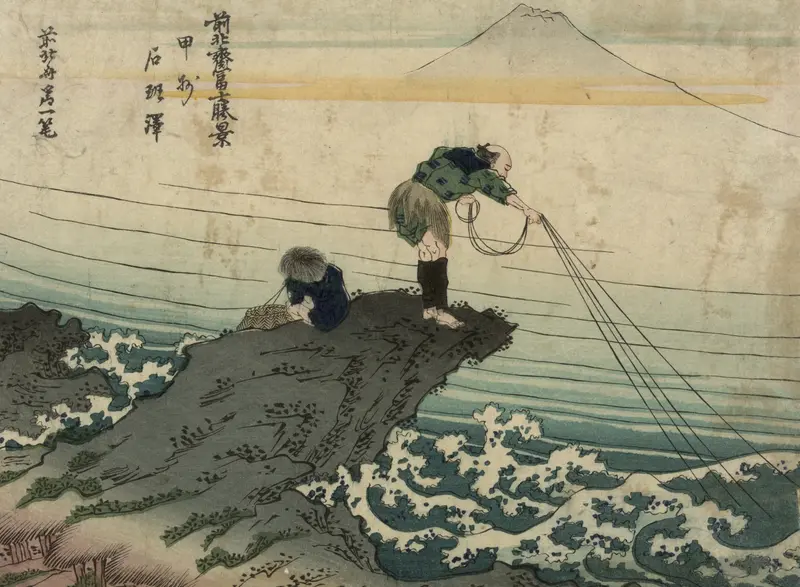
Kōshū kajikazawa
Katsushika Hokusai
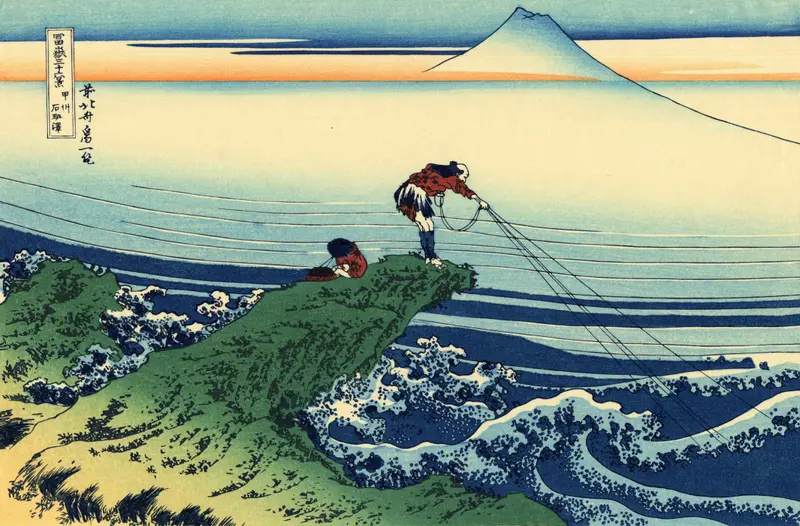
Kōshū kajikazawa 2
Katsushika Hokusai
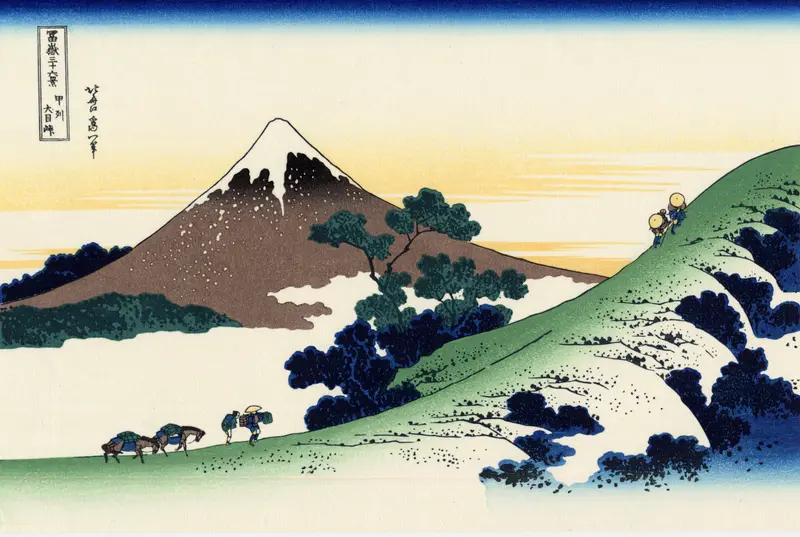
Inume Pass in Kai Province (Kôshû inume-tôge)
Katsushika Hokusai

Yoro Falls in Mino Province (Mino no Yoro no taki), from the series "A Tour of Waterfalls in Various Provinces (Shokoku taki meguri)"
Katsushika Hokusai
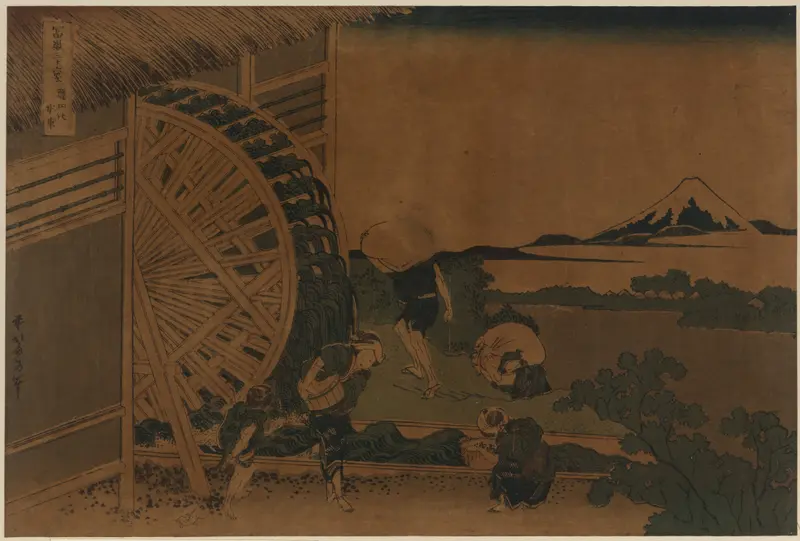
Onden no suisha
Katsushika Hokusai



