
Tsukuba Mountain Seen from Sakura River at Hitachi — History & Facts
Could beauty survive in a century of chaos? Tsukuba Mountain Seen from Sakura River at Hitachi encapsulates a serene moment that whispers hope amid the tumult of the late 19th century. The tranquil landscape invites contemplation, as if suggesting that even in dark times, nature’s grace remains untouched. Focus on the gentle curves of the river as it winds its way through the foreground, reflecting the soft hues of dusk. Notice the delicate brushwork that defines the distant mountain, its majesty rendered with a subtle blending of blues and greens.
The palette evokes a sense of calm, while the interplay of light and shadow creates depth, drawing the viewer's eye toward the horizon where the mountain meets the sky. Beyond the surface beauty, the painting signifies resilience. The Sakura River, often associated with fleeting moments and the ephemeral nature of life, contrasts with the steadfast presence of Tsukuba Mountain, symbolizing enduring strength. The layers of clouds above hint at changing weather, a metaphor for life's unpredictability, yet the scene remains serene, suggesting that hope persists amid uncertainty. In 1897, Kobayashi Kiyochika painted this piece during a time of significant transition in Japan, as the country was grappling with modernization after the Meiji Restoration.
Shifting from traditional to contemporary themes, Kiyochika sought to bridge the past and present, creating a visual language that honored nature while resonating with contemporary sentiments. This work reflects his dedication to capturing the beauty of Japanese landscapes, even as the world around him changed dramatically.
More Artworks by Kobayashi Kiyochika
Browse all →
Thunder and Lightning at Oumaya Bridge
Kobayashi Kiyochika

Shinkyō, Sacred Bridge at Nikkō
Kobayashi Kiyochika

Daybreak at Shrine, Kanda
Kobayashi Kiyochika

The Great Fire at Ryōgoku Bridge, Viewed from Asakusa Bridge on the 26th of January, 1881
Kobayashi Kiyochika

The Moon At Shinagawa
Kobayashi Kiyochika
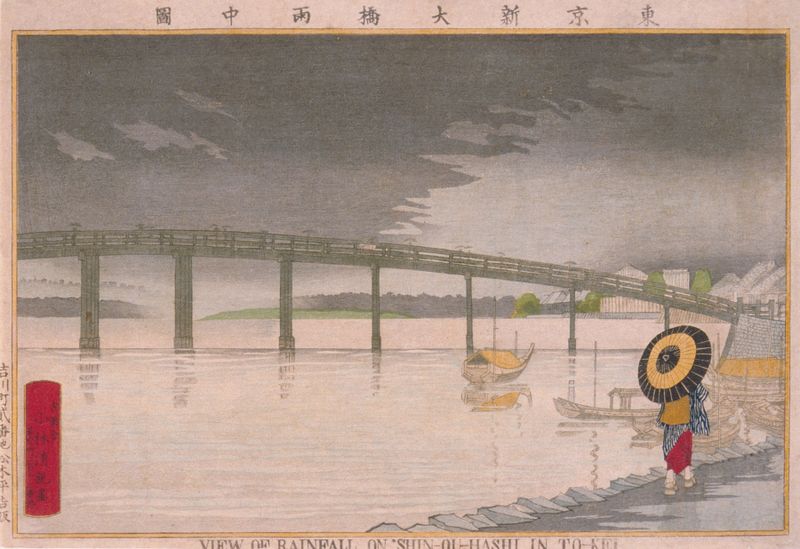
View of Rainfall on Shin-Ou-hashi in To-kei
Kobayashi Kiyochika

Evening at Tōshōgū Shrine, Ueno, Tokyo
Kobayashi Kiyochika

Snow at Ochanomizu
Kobayashi Kiyochika
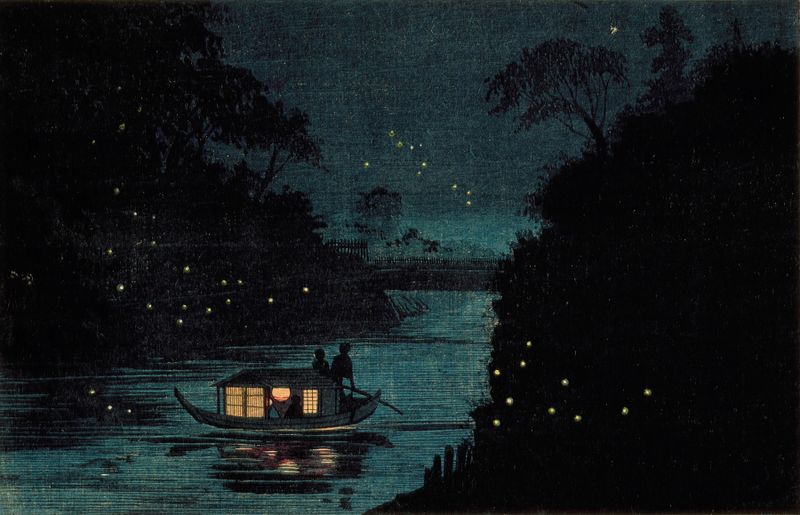
Fireflies at Ochanomizu
Kobayashi Kiyochika
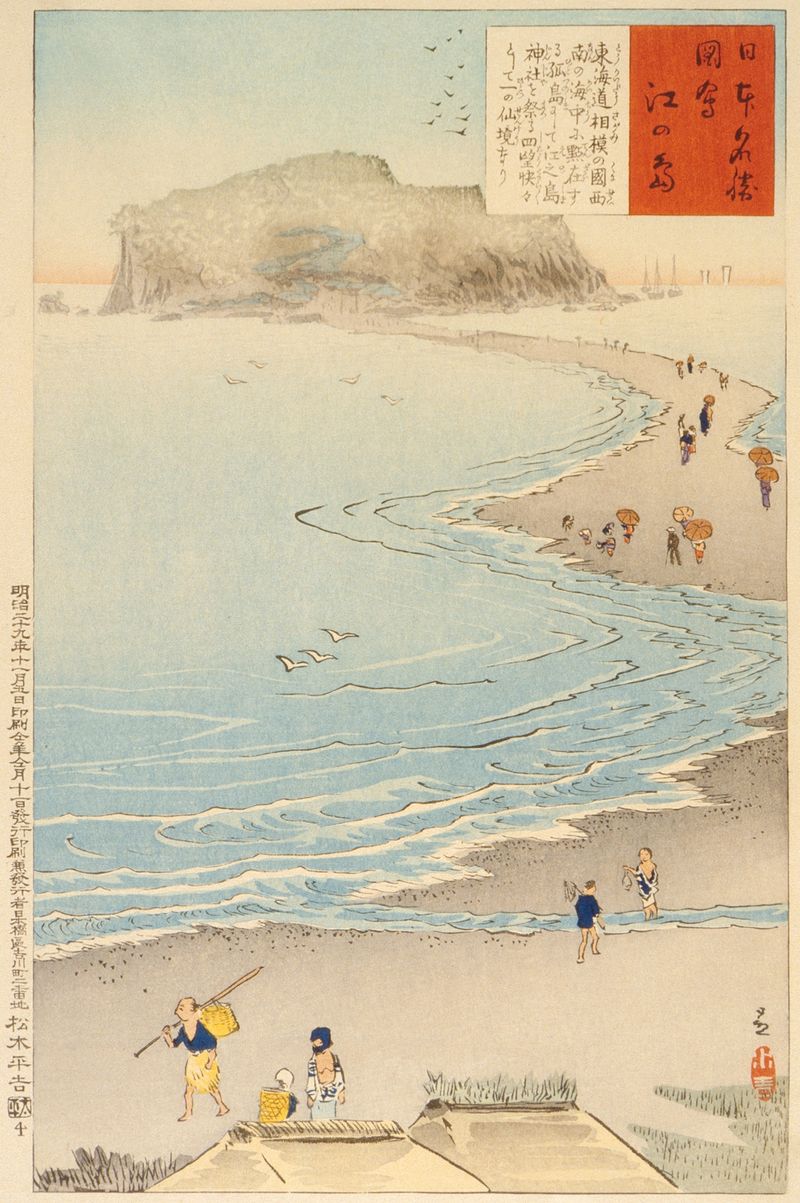
The Island Enoshima
Kobayashi Kiyochika





