
Two Beauties — History & Facts
No one knows exactly when Two Beauties by Katsushika Hokusai was created, nor for whom it was made, but the image has become one of the most recognized examples of the bijin-ga (pictures of beautiful women) tradition in Japanese art. What makes this work especially intriguing is that it survives in several variations, each subtly different, suggesting that Hokusai himself may have revisited the theme more than once. The lack of a date or commission has led to lively debate among scholars, who try to place it within the shifting styles of Hokusai's long career, which spanned the late Edo period. In Two Beauties, the artist captures a fleeting moment between two elegant women, likely courtesans or fashionable townspeople, their elaborate hairpins and layered kimonos rendered with delicate lines and careful color.
One woman turns slightly toward the other, her lips parted as if in conversation, while her companion lowers her gaze, hands folded demurely. The subtle play of gesture and glance hints at an intimate exchange, perhaps a shared secret or a moment of gossip. The background is left unadorned, focusing all attention on the figures and their intricate costumes—a hallmark of Hokusai's bijin-ga, in contrast to the more crowded scenes of his contemporary Utamaro, who often set his beauties in bustling interiors. As with many of Hokusai's prints and paintings, the precise history of Two Beauties is unclear.
It likely circulated as a woodblock print, a popular and affordable art form in Edo Japan, making it accessible to a wide audience. Over time, versions have appeared in both Japanese and Western collections, sometimes under different titles or attributed to Hokusai's followers. Today, the work is celebrated as a classic example of Hokusai's skill beyond his famous landscapes, showing his sensitivity to human expression and fashion.
Its survival in multiple versions is a testament to the enduring appeal of the subject and the artist's influence on the ukiyo-e genre.
More Artworks by Katsushika Hokusai

The Great Wave off Kanagawa
Katsushika Hokusai
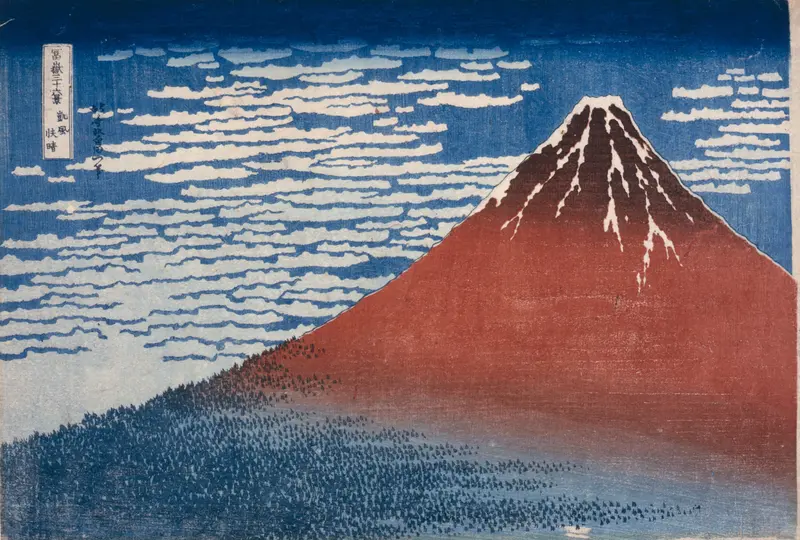
Fine Wind, Clear Morning (Red Fuji)
Katsushika Hokusai
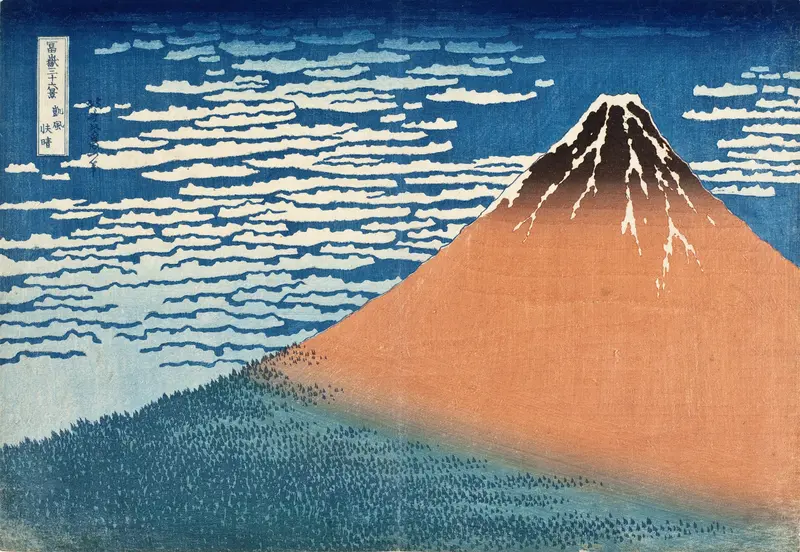
South Wind, Clear Dawn
Katsushika Hokusai
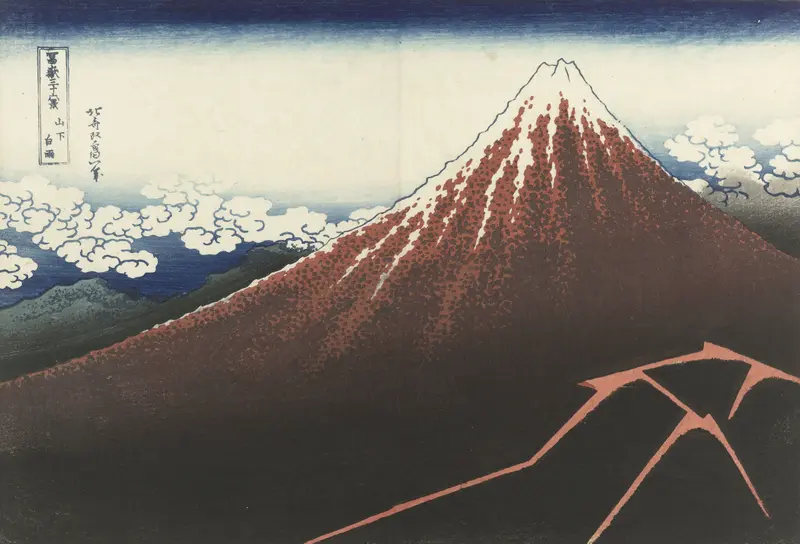
Rainstorm Beneath the Summit
Katsushika Hokusai
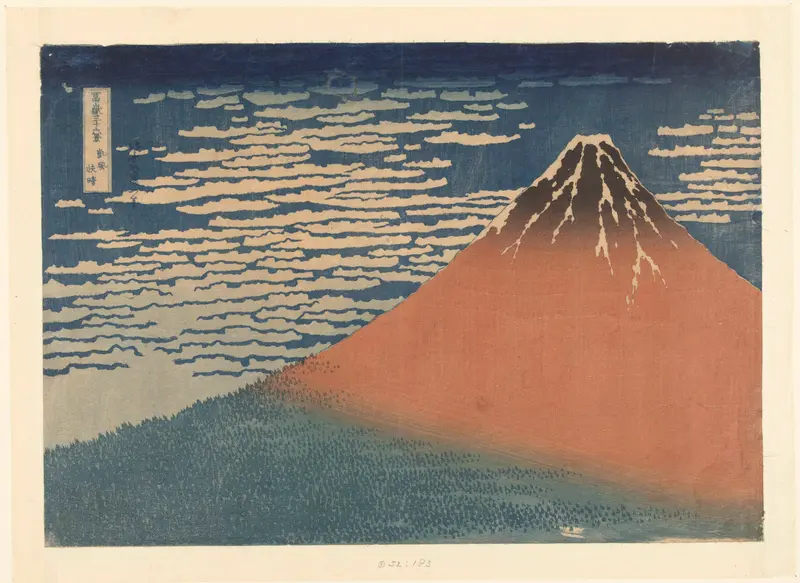
Clear Weather with a Southerly Wind
Katsushika Hokusai
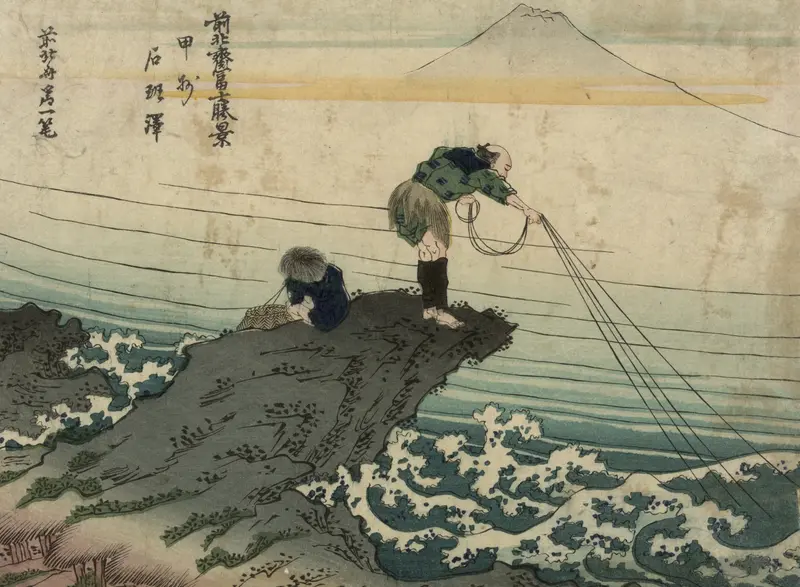
Kōshū kajikazawa
Katsushika Hokusai
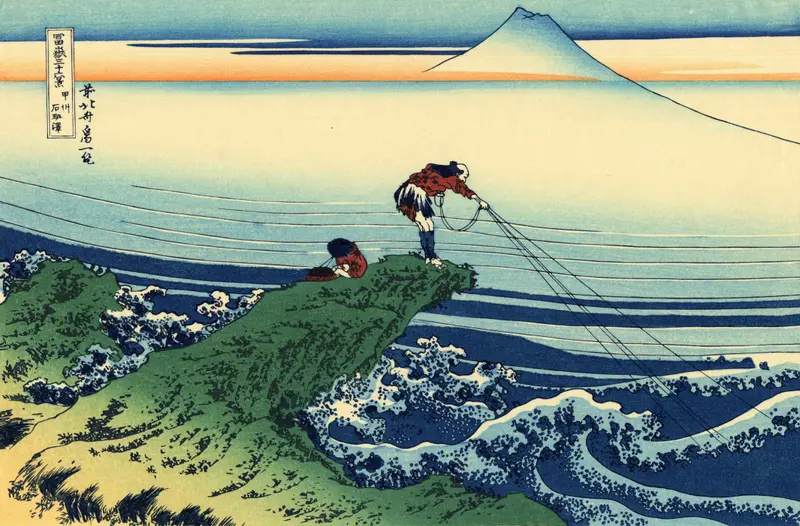
Kōshū kajikazawa 2
Katsushika Hokusai
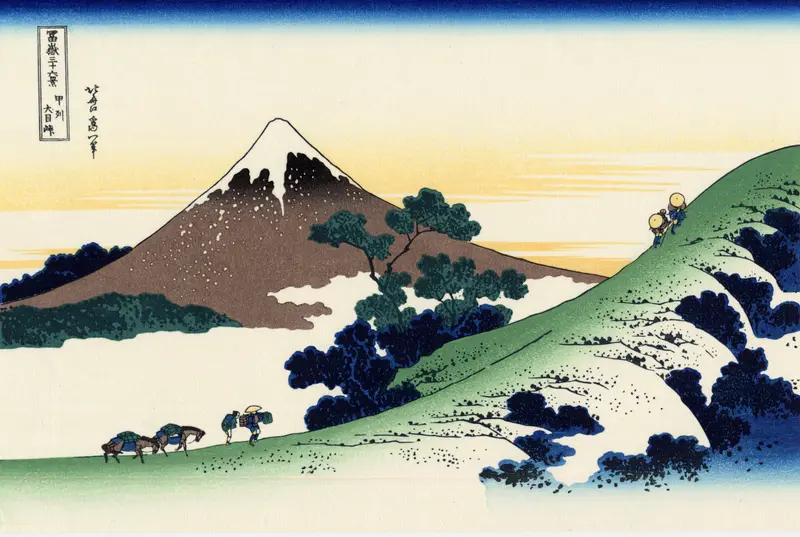
Inume Pass in Kai Province (Kôshû inume-tôge)
Katsushika Hokusai

Yoro Falls in Mino Province (Mino no Yoro no taki), from the series "A Tour of Waterfalls in Various Provinces (Shokoku taki meguri)"
Katsushika Hokusai
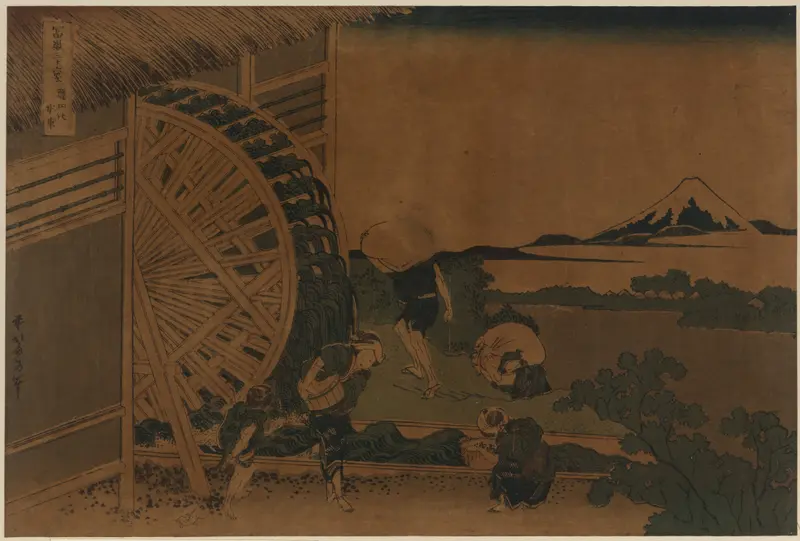
Onden no suisha
Katsushika Hokusai



