
Two Cows with a Shepherd and Shepherdess — History & Facts
What first seizes the eye is the golden cow, its flank catching the last light of the day, anchoring the entire scene in a moment that feels both tranquil and quietly monumental. The shepherdess stands with a staff, her gesture inviting the viewer to follow her gaze across the landscape, while her companion, seated and shaded by a broad hat, seems lost in thought or perhaps simply at rest. The second cow, darker and more alert, stands as a sentinel at the edge of the composition, its gaze direct and unflinching.
The light pours in from the left, illuminating the river valley and distant sails, drawing the viewer’s attention outward before circling back to the intimacy of the figures and their charges. Every detail — from the curling branches in the foreground to the shifting clouds above — serves to balance the calm of rural life with the grandeur of the Dutch countryside. Painted in 1650, this work belongs to a moment in the Dutch Golden Age when scenes of everyday rural life became prized by collectors eager to celebrate their land’s prosperity and peace. Artists like Aelbert Cuyp were known for their ability to fuse landscape and genre, elevating humble subjects with the drama of Italianate light and sweeping vistas.
While little is recorded about the specific journey of Two Cows with a Shepherd and Shepherdess, its presence in a modern collection speaks to the enduring appeal of such images, which were often commissioned by wealthy burghers or landowners. In an age when the Dutch Republic was asserting its identity through art, paintings like this one offered a vision of harmony between people, animals, and the land — a vision that still invites us to linger and look again.
More Artworks by Aelbert Cuyp

The Maas at Dordrecht
Aelbert Cuyp
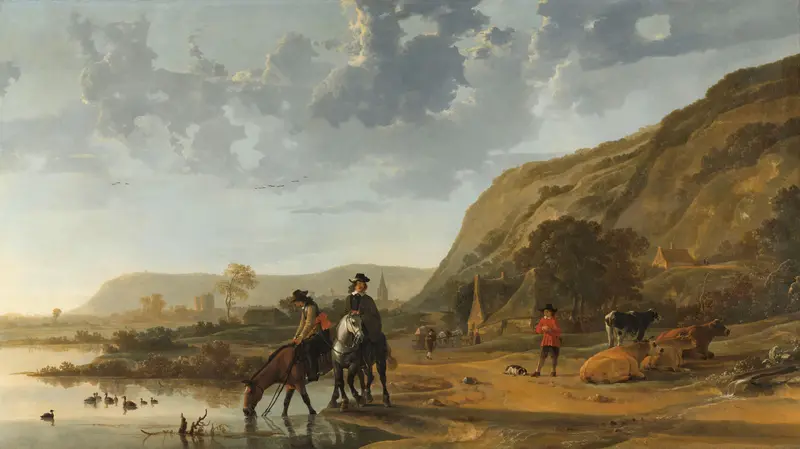
River Landscape with Riders
Aelbert Cuyp

The Maas at Dordrecht
Aelbert Cuyp
Gezicht op Dordrecht
Aelbert Cuyp
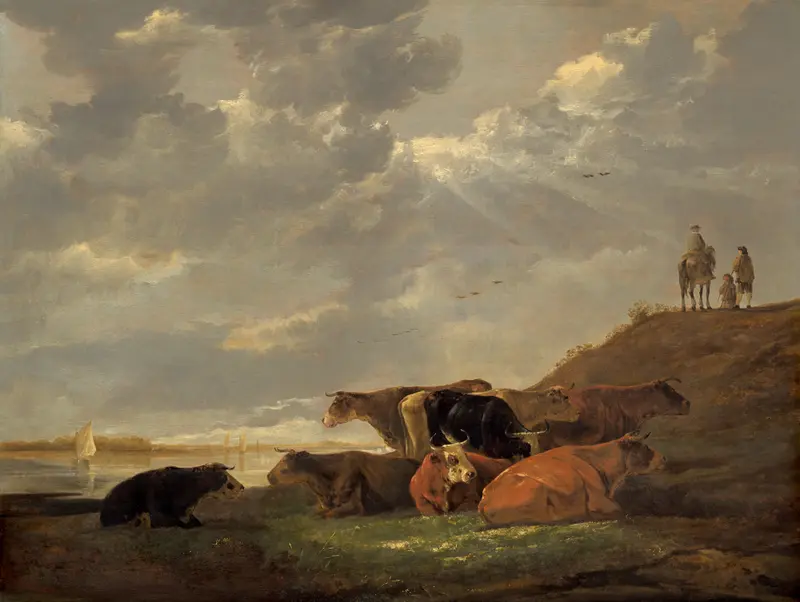
River Landscape with Cows
Aelbert Cuyp
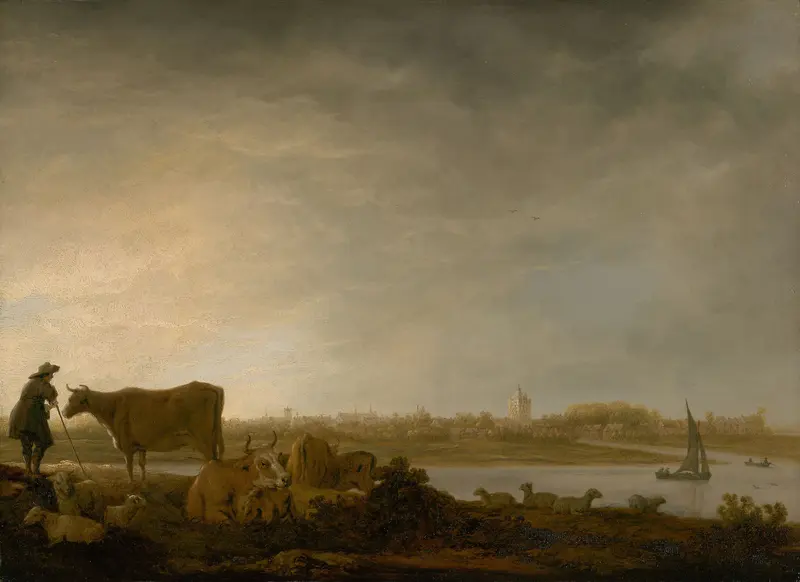
A View of Vianen with a Herdsman and Cattle by a River
Aelbert Cuyp
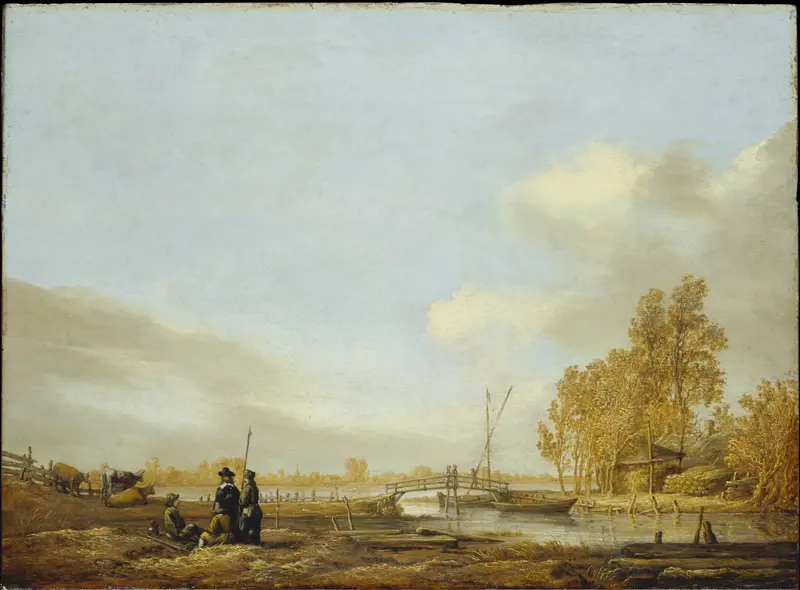
River Landscape with Footbridge
Aelbert Cuyp
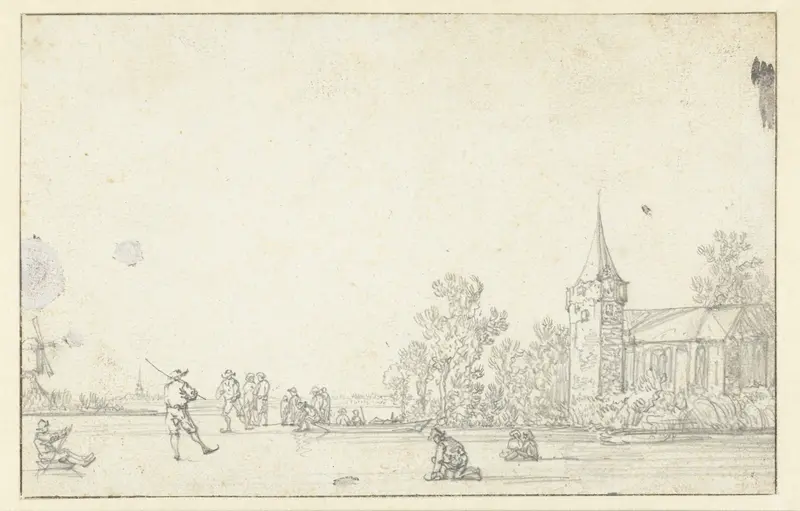
Bevroren rivier met schaatsers bij een kerk
Aelbert Cuyp

Cattle near a River
Aelbert Cuyp
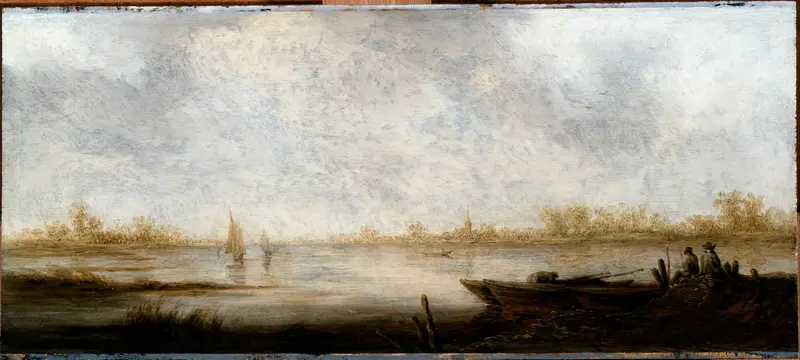
River Landscape
Aelbert Cuyp
More Genre Scene Art

Banquet of the Officers of the St George Civic Guard
Frans Hals

Rembrandt and Saskia in the Scene of the Prodigal Son
Rembrandt van Rijn

Bal du moulin de la Galette
Pierre-Auguste Renoir

Quadrille at the Moulin Rouge
Henri de Toulouse-Lautrec

A Burial at Ornans
Gustave Courbet

When Will You Marry?
Paul Gauguin