
Two Ladies at their Sewing — History & Facts
What first draws the eye in Two Ladies at their Sewing is the quiet intensity of concentration, as if the entire room has fallen silent but for the soft click of needles. The sweep of patterned fabric, rendered in creamy whites with scattered blossoms, tumbles from the lap of the woman on the right and catches the light, making it the true centerpiece of the scene. Both figures, dressed in modest, dark clothing and crisp white caps, are absorbed in their work—one with her head bowed, the other glancing up, perhaps pausing in thought or conversation.
The tabletop, cluttered with a teapot and cups, hints at a domestic world where the rituals of tea and handiwork are interwoven. The palette is restrained, the background pared down to a neutral haze, so that every detail—the curve of a chair, the glint of a thimble—becomes more pronounced. Painted between circa 1860 and 1882, this work by Alexander Hugo Bakker Korff belongs to a tradition of Dutch genre painting that cherished scenes of everyday life, especially those set within the home. In the Netherlands of the nineteenth century, such images resonated with a middle-class audience eager to see their own values—diligence, order, domestic harmony—reflected on canvas.
While little is recorded about this specific painting’s journey, its presence in the Rijksmuseum collection today links it to a broader story of national identity and the quiet heroism of ordinary women’s labor. The next time you look, notice how the artist’s brush lingers over the folds of cloth, as if to honor the care and patience sewn into every stitch.
More Artworks by Alexander Hugo Bakker Korff
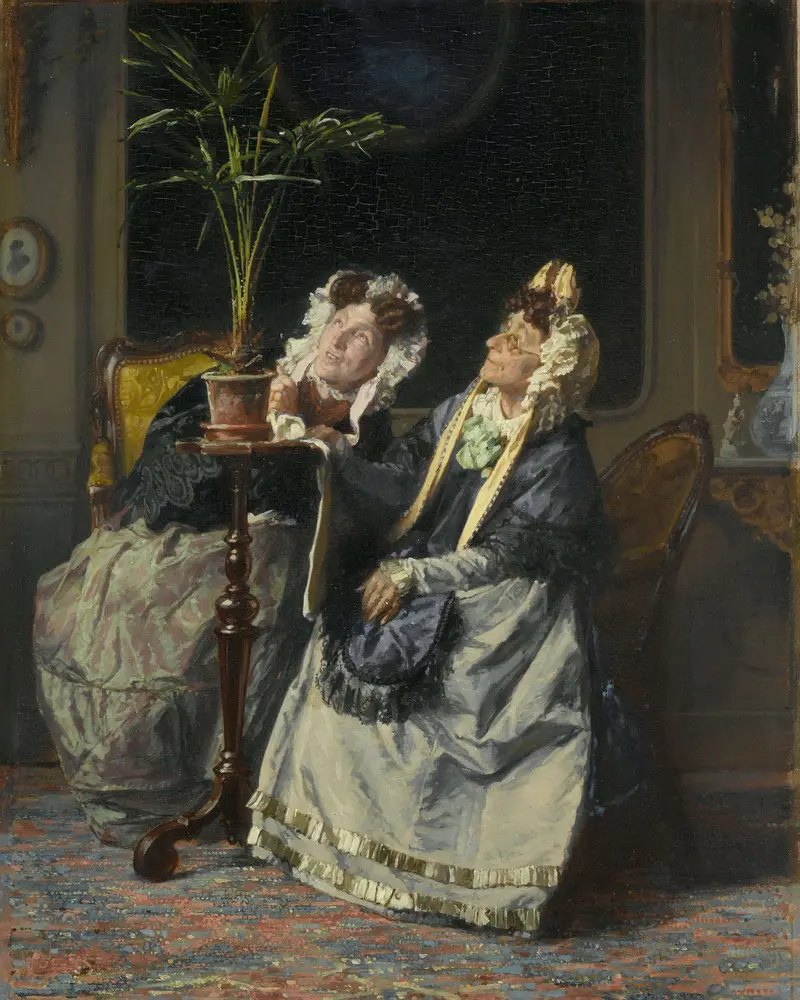
Under the Palms
Alexander Hugo Bakker Korff
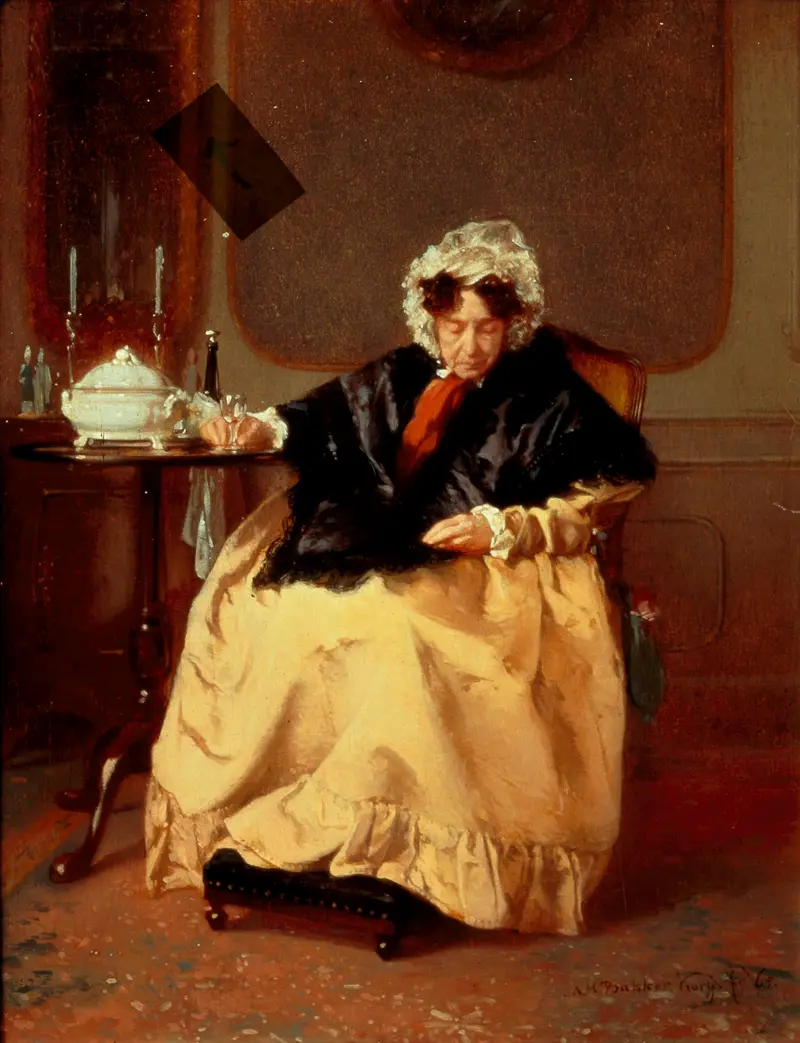
Bouillon en een glas port
Alexander Hugo Bakker Korff
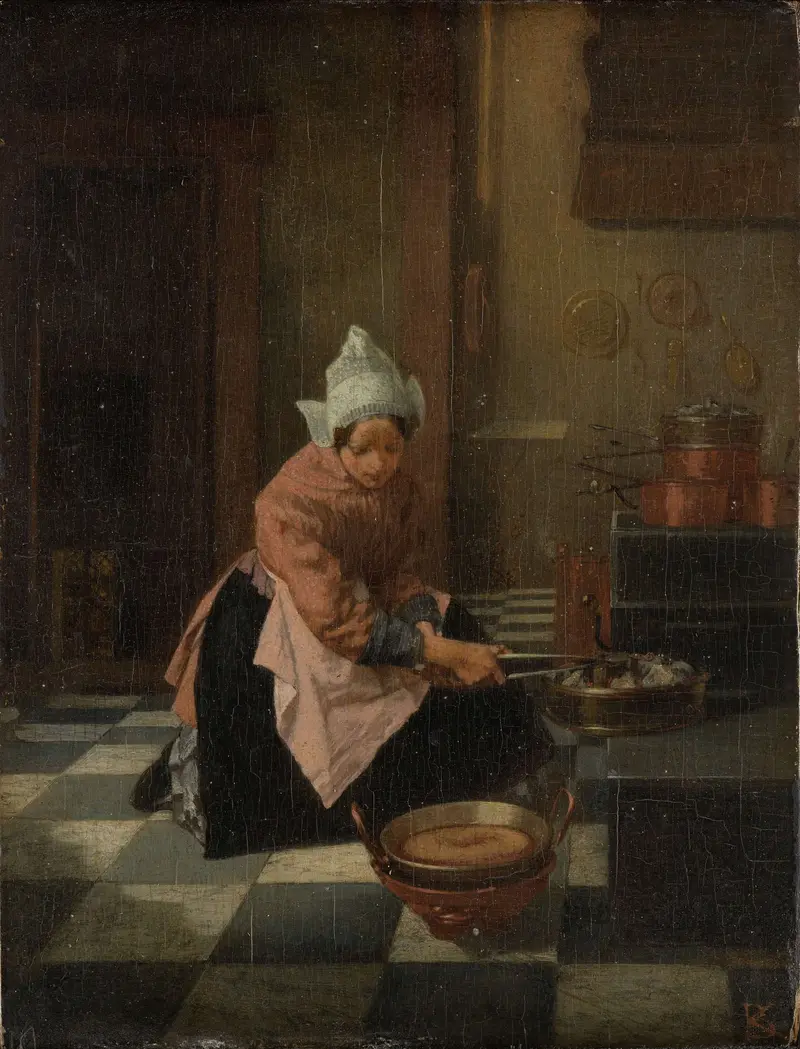
The Waffle Maker
Alexander Hugo Bakker Korff
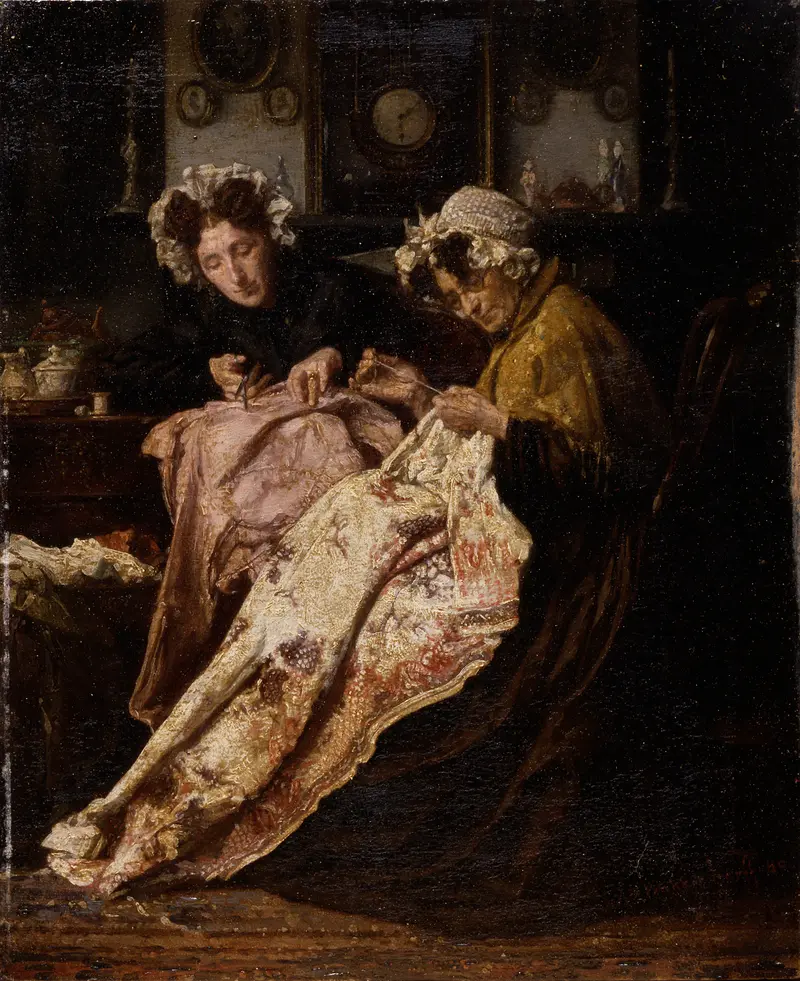
The Seamstress
Alexander Hugo Bakker Korff
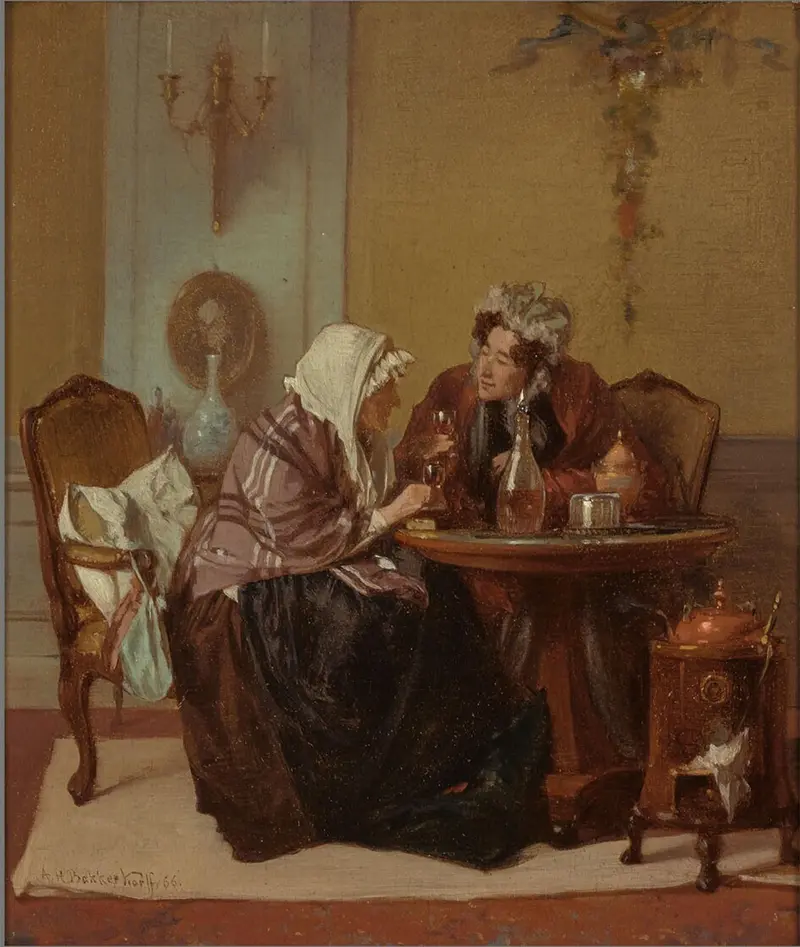
La convalescente
Alexander Hugo Bakker Korff
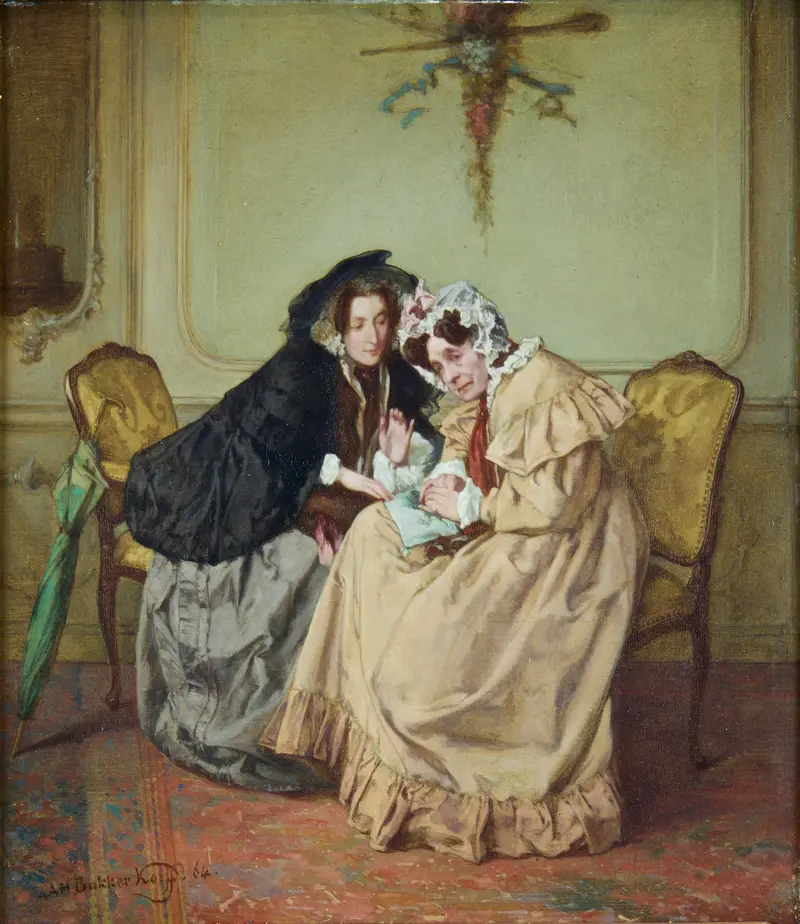
Het geheim DM 916 47 Dordrechts Museum
Alexander Hugo Bakker Korff
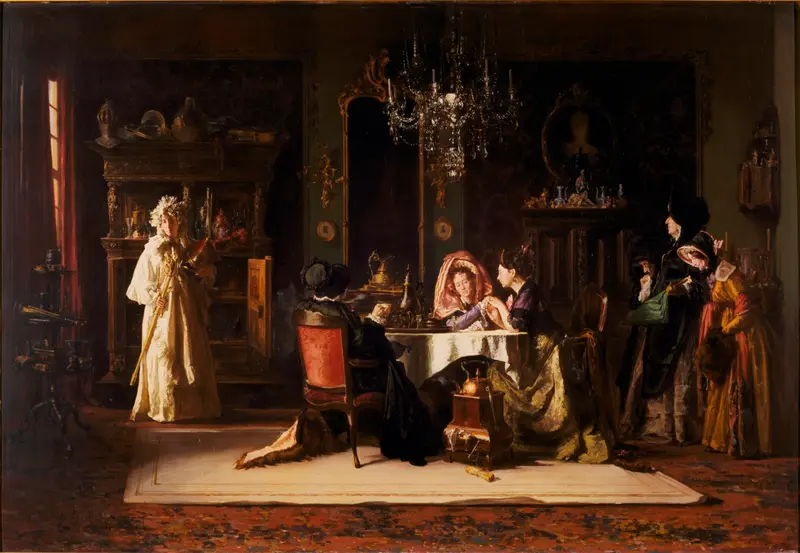
'La Fille du Héros' (The Hero's Daughter)
Alexander Hugo Bakker Korff
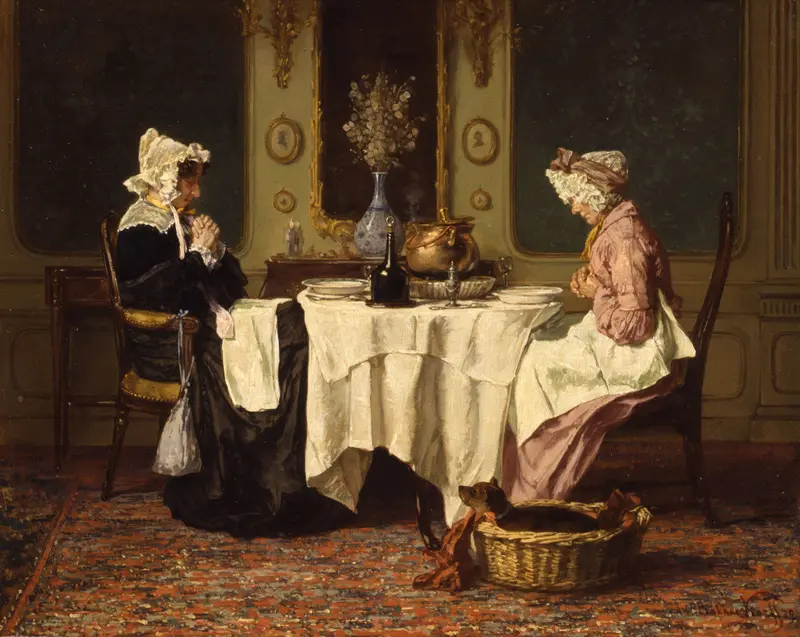
Drie oktober feest DM 938 48 Dordrechts Museum
Alexander Hugo Bakker Korff
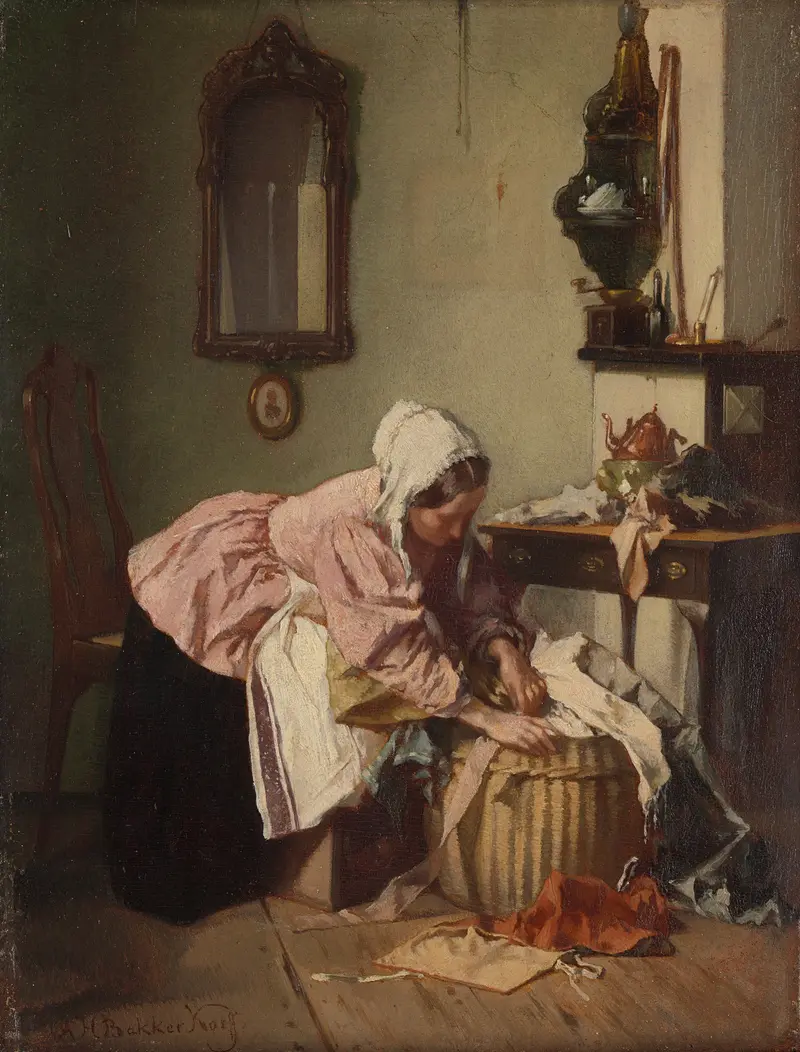
The Rag Basket
Alexander Hugo Bakker Korff
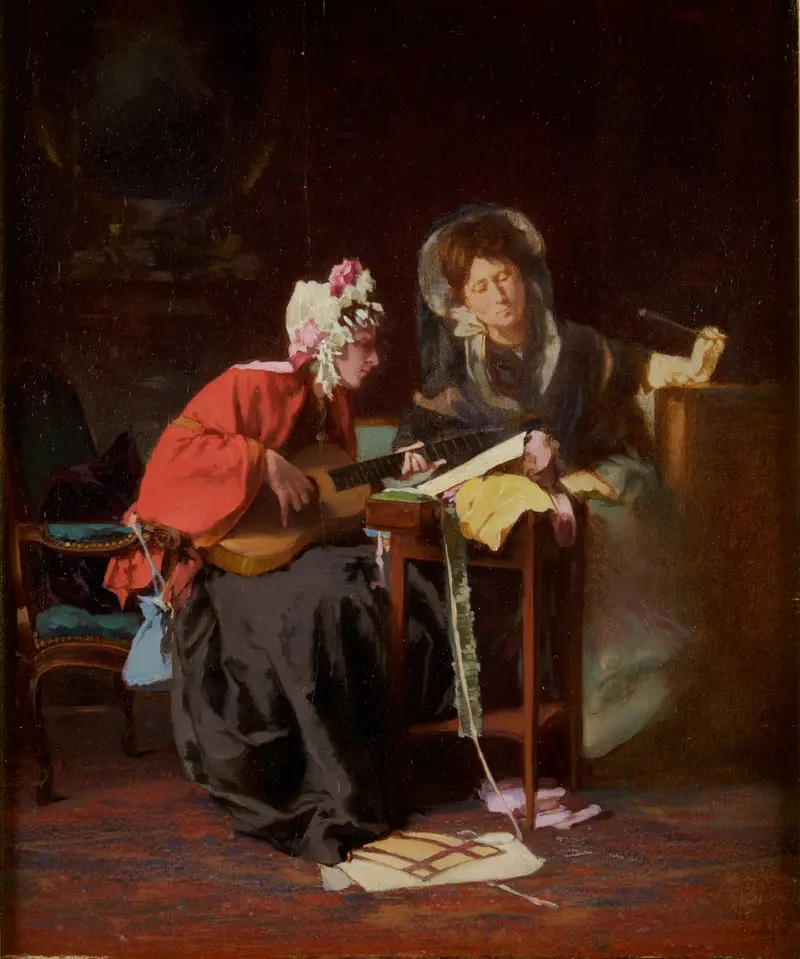
Gitaarles VBL 8 Dordrechts Museum
Alexander Hugo Bakker Korff
More Genre Scene Art

Banquet of the Officers of the St George Civic Guard
Frans Hals

Rembrandt and Saskia in the Scene of the Prodigal Son
Rembrandt van Rijn

Bal du moulin de la Galette
Pierre-Auguste Renoir

Quadrille at the Moulin Rouge
Henri de Toulouse-Lautrec

A Burial at Ornans
Gustave Courbet

When Will You Marry?
Paul Gauguin