
Venetian Canal — History & Facts
Sunlight pools across the facades and water, drawing your eye to the quiet theatre of daily life unfolding along the canal. The first surprise is how the scene refuses spectacle: instead of gondolas in motion or grand ceremonies, we find a handful of figures absorbed in their own rhythms—talking, tending to chores, feeding pigeons. The bridge, perfectly arched, becomes a gentle stage for crossing, while the reflections in the canal double the world above in rippling color.
The palette is soft and clear, with blue sky and creamy stone, setting a mood of calm observation rather than drama. Every window and awning invites the viewer to imagine the lives within, while the distant dome anchors the city in a sense of place and history. Painted before 1937 by Antonio María de Reyna Manescau, this view belongs to a long tradition of vedute—cityscapes prized by travelers and collectors since the eighteenth century, when Venice became a destination for the Grand Tour. Such works were often commissioned as souvenirs, tokens of memory and longing for a place both real and dreamlike.
By the early twentieth century, when this painting was made, the genre had shifted: artists like Reyna Manescau balanced fidelity to local detail with a more personal, atmospheric touch. Now housed in the collection of the Museo Carmen Thyssen Málaga, this painting stands as a quiet witness to the enduring fascination of Venice’s everyday beauty—inviting us to linger, as if we too had nowhere else to be.
More Artworks by Antonio María de Reyna Manescau
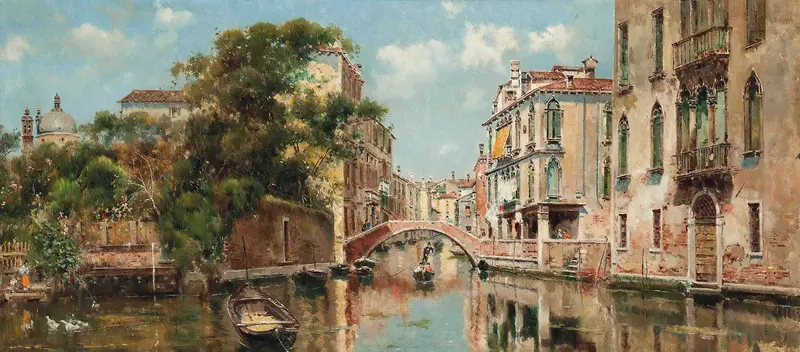
A gondolier before a Venetian bridge
Antonio María de Reyna Manescau
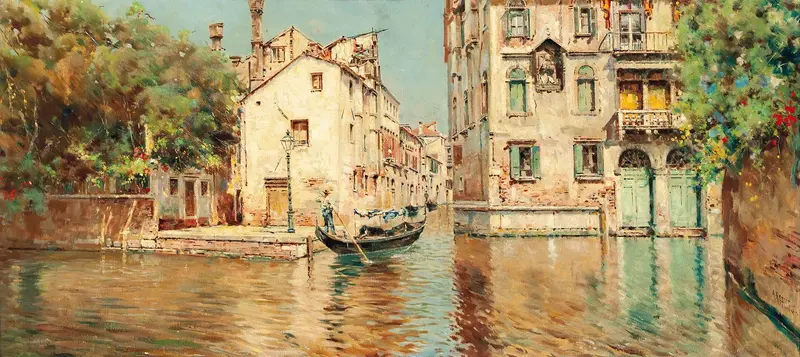
A gondolier on a Venetian backwater
Antonio María de Reyna Manescau
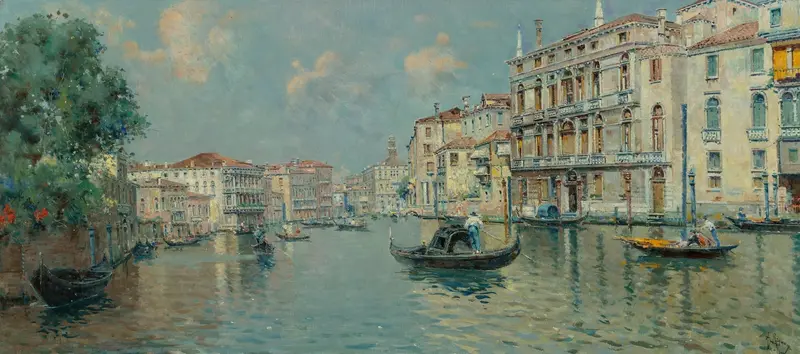
Grand Canal, Venice
Antonio María de Reyna Manescau
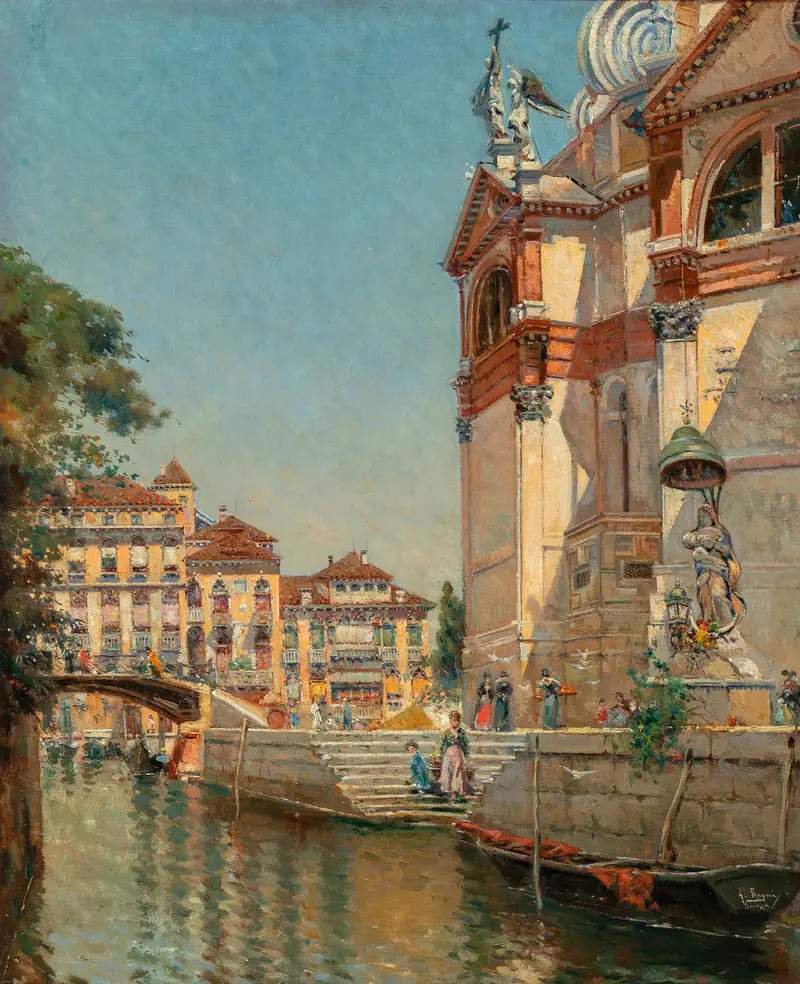
Santa Maria della Salute, Venice, seen from the side
Antonio María de Reyna Manescau
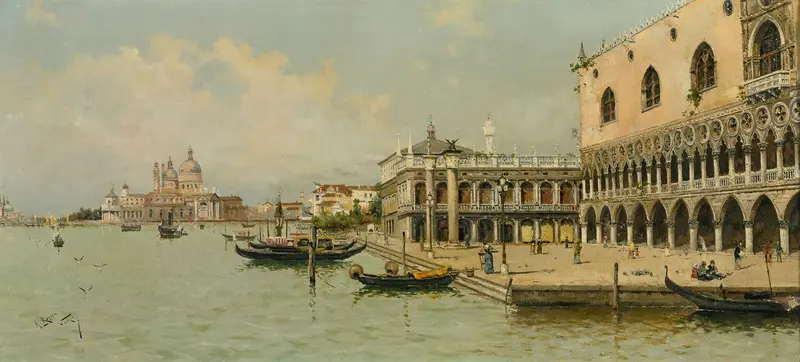
Gondolas By The Doge’s Palace
Antonio María de Reyna Manescau
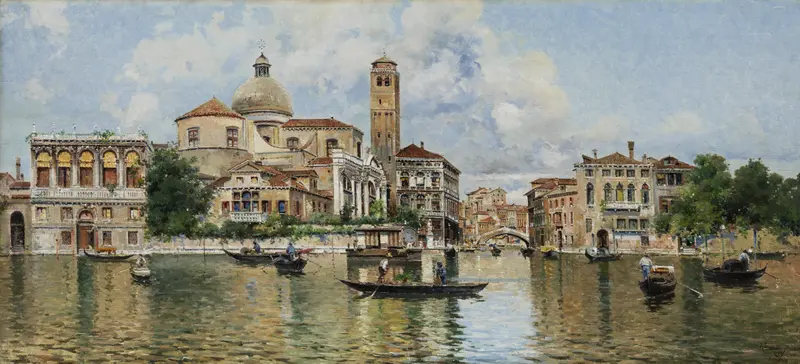
Vedute von Venedig
Antonio María de Reyna Manescau
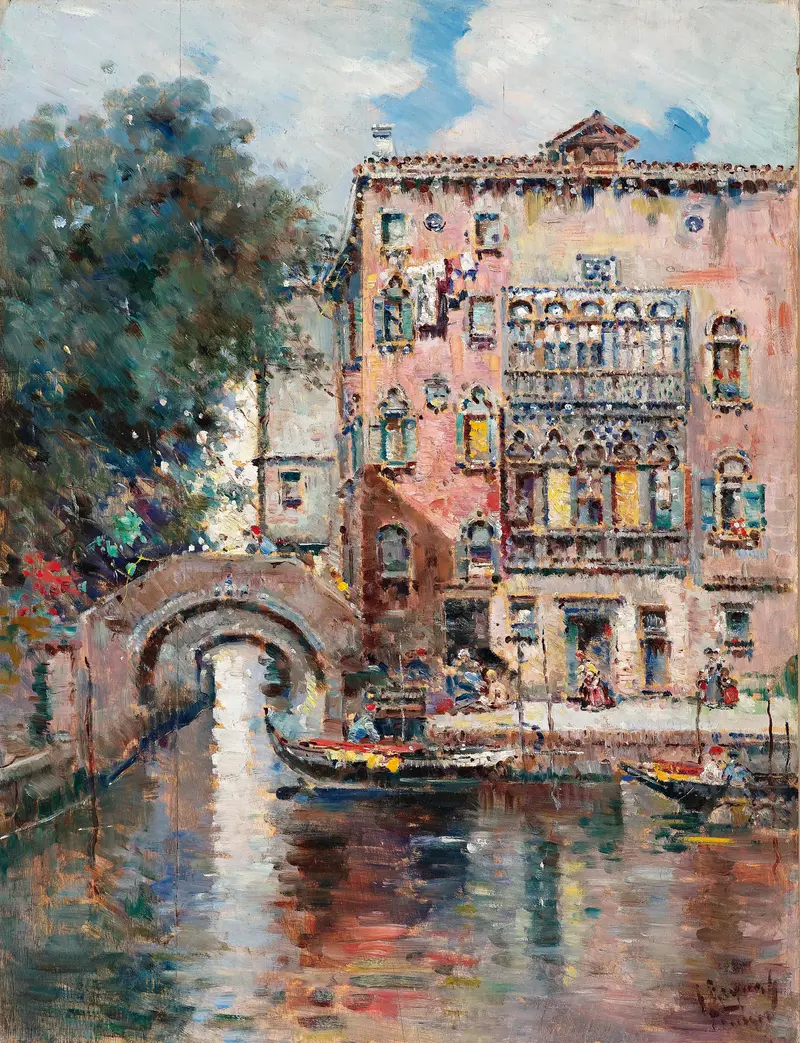
Gondeln in Venedig
Antonio María de Reyna Manescau
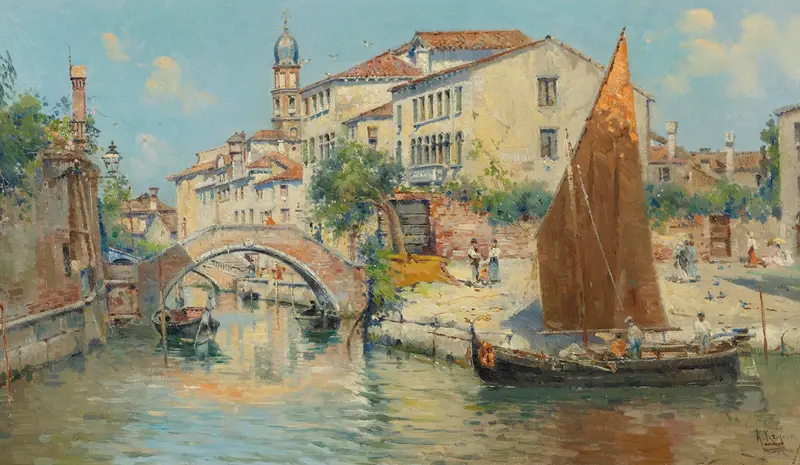
Venice
Antonio María de Reyna Manescau
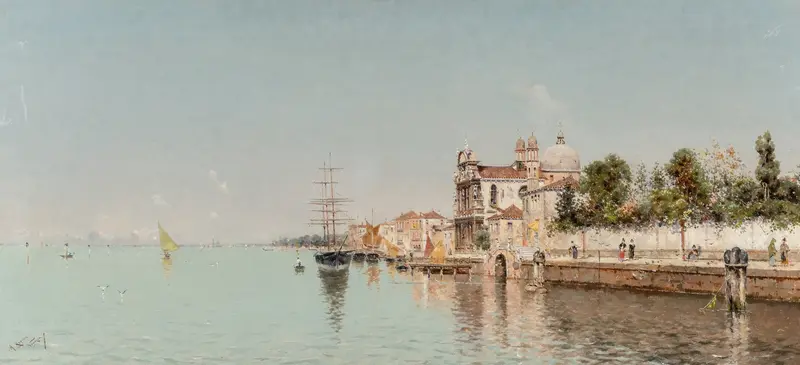
A Venetian waterfront
Antonio María de Reyna Manescau
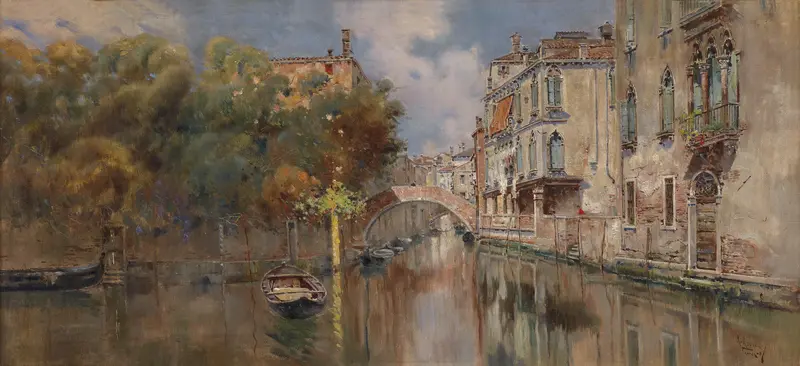
Blick auf einen Kanal in Venedig
Antonio María de Reyna Manescau
More Genre Scene Art

Banquet of the Officers of the St George Civic Guard
Frans Hals

Rembrandt and Saskia in the Scene of the Prodigal Son
Rembrandt van Rijn

Bal du moulin de la Galette
Pierre-Auguste Renoir

Quadrille at the Moulin Rouge
Henri de Toulouse-Lautrec

A Burial at Ornans
Gustave Courbet

When Will You Marry?
Paul Gauguin