
View Of The Fuji In The Hakone Mountains — History & Facts
Did the painter know this moment would outlive them? In a world where impermanence reigns, the act of capturing a fleeting scene becomes an intimate dance with memory itself. Look to the horizon where Mount Fuji rises majestically, its snow-capped peak piercing the soft, pastel sky. The delicate strokes of blues and pinks blend seamlessly, evoking a sense of tranquility. Focus on the foreground, where lush greenery and wispy trees frame the view, guiding your gaze toward the revered mountain.
The composition is balanced, yet dynamic, revealing Kiyochika's mastery of light and shadow that enhances the scene's serenity. Beneath this idyllic landscape lies a complex interplay of nostalgia and nature's grandeur. The contrast between the calmness of the foreground and the towering presence of Fuji invokes a sense of both reverence and insignificance. The play of light reflects fleeting moments—perhaps a reminder of the transient beauty of life itself, urging viewers to ponder their own memories.
Each brushstroke is a whisper of recollection, inviting the audience to connect with the past. Created between 1877 and 1882, this work emerged during a time of profound change in Japan, as the country transitioned from isolation to modernity. Kiyochika, influenced by ukiyo-e traditions, sought to modernize landscape painting while maintaining a connection to nature's essence. His work reflects a nation grappling with its identity, marking a significant period in the evolution of Japanese art.
More Artworks by Kobayashi Kiyochika
Browse all →
Thunder and Lightning at Oumaya Bridge
Kobayashi Kiyochika

Shinkyō, Sacred Bridge at Nikkō
Kobayashi Kiyochika

Daybreak at Shrine, Kanda
Kobayashi Kiyochika

The Great Fire at Ryōgoku Bridge, Viewed from Asakusa Bridge on the 26th of January, 1881
Kobayashi Kiyochika

The Moon At Shinagawa
Kobayashi Kiyochika
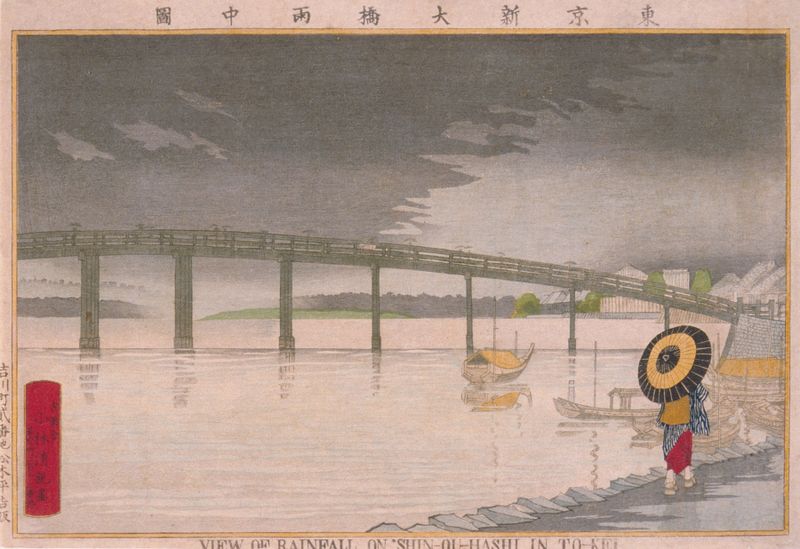
View of Rainfall on Shin-Ou-hashi in To-kei
Kobayashi Kiyochika

Evening at Tōshōgū Shrine, Ueno, Tokyo
Kobayashi Kiyochika

Snow at Ochanomizu
Kobayashi Kiyochika
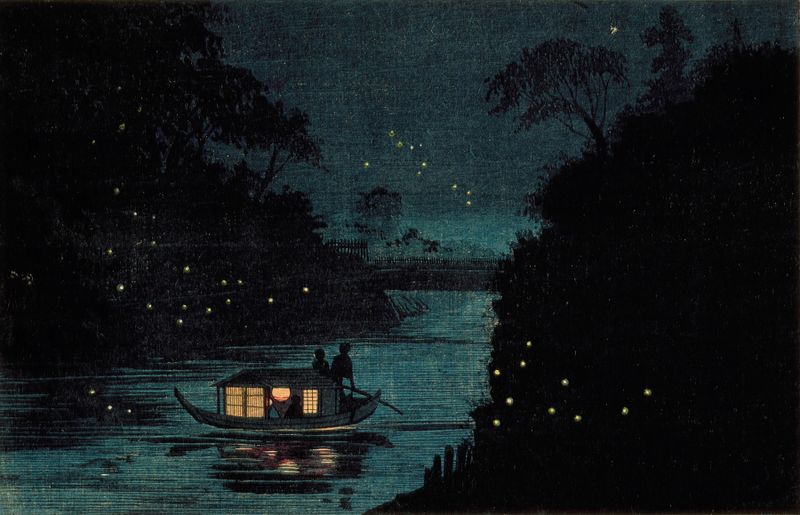
Fireflies at Ochanomizu
Kobayashi Kiyochika
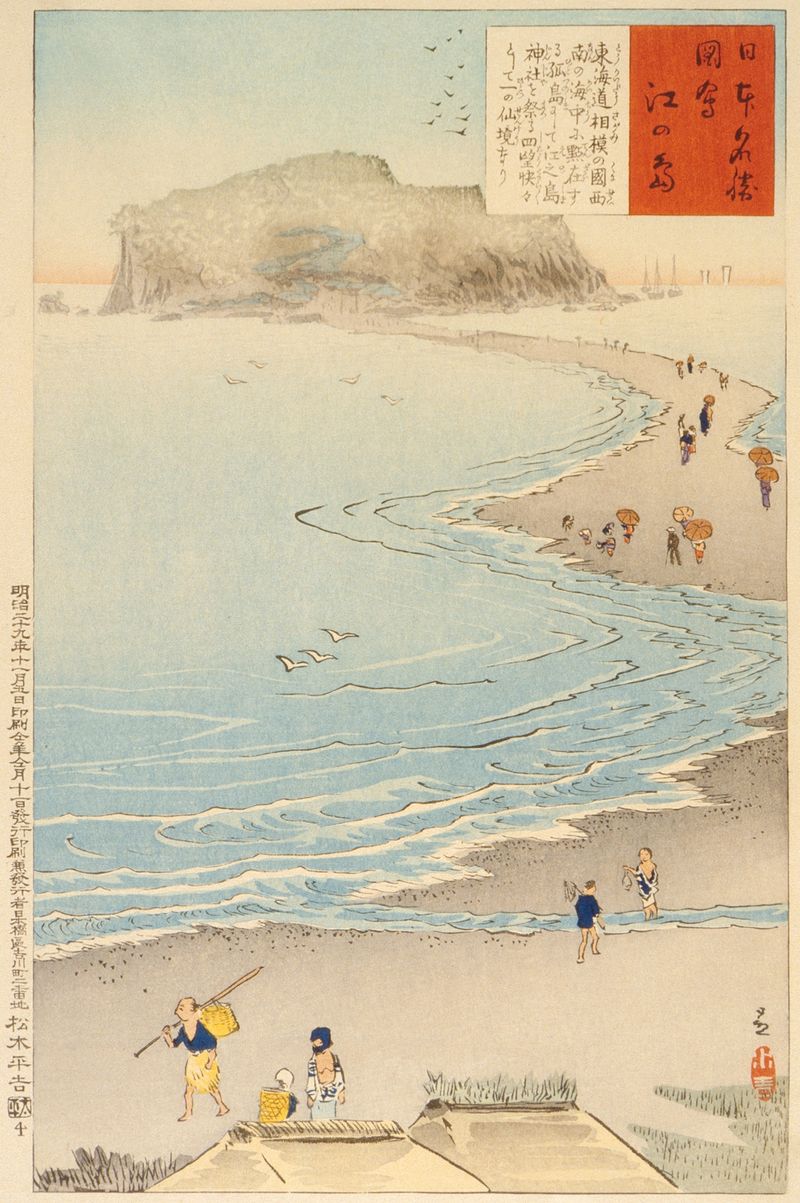
The Island Enoshima
Kobayashi Kiyochika





