
View of the Garden of the Villa Medici — History & Facts
Few paintings by Diego Velázquez have sparked as much scholarly intrigue as View of the Garden of the Villa Medici. For centuries, its authorship was doubted—so unlike his grand portraits, so intimate and atmospheric, that some attributed it to a later French hand. Only in the twentieth century did technical analysis confirm that this small, quietly radical canvas was indeed painted by Velázquez himself, during his first trip to Italy around 1630.
Its loose brushwork and fleeting impression of light led some to call it a precursor to Impressionism, centuries ahead of its time. The scene captures a tranquil moment in the gardens of the Villa Medici in Rome, a place famed for its classical statuary and lush greenery. Two figures stand near a wall, one gazing through a barred opening, the other turned away—perhaps artists themselves, or caretakers pausing in their duties. The garden is rendered with remarkable immediacy: dappled sunlight flickers across stone and foliage, while the rough, almost sketch-like handling of paint suggests a fleeting afternoon.
Unlike the formal, architectural views of Rome painted by Claude Lorrain or Poussin, Velázquez’s focus is on atmosphere and lived experience, not on grand narrative or idealized landscape. Little is known about the commission or early history of View of the Garden of the Villa Medici. It likely served as a study or personal record for Velázquez during his Italian sojourn, a period when he absorbed the lessons of the Renaissance and the emerging Baroque. The painting remained in Spain, eventually entering the collection of the Spanish royal family and, later, the Museo del Prado, where it hangs today.
Its daring technique and quiet poetry have made it a touchstone for artists and historians alike, marking a turning point in Velázquez’s approach to both nature and paint.
More Artworks by Diego Velázquez

Las Meninas
Diego Velázquez

The Triumph of Bacchus
Diego Velázquez

Rokeby Venus
Diego Velázquez

Equestrian Portrait of Prince Balthasar Charles
Diego Velázquez

Bacchus
Diego Velázquez

Don Gaspar de Guzmán (1587–1645), Count-Duke of Olivares
Diego Velázquez
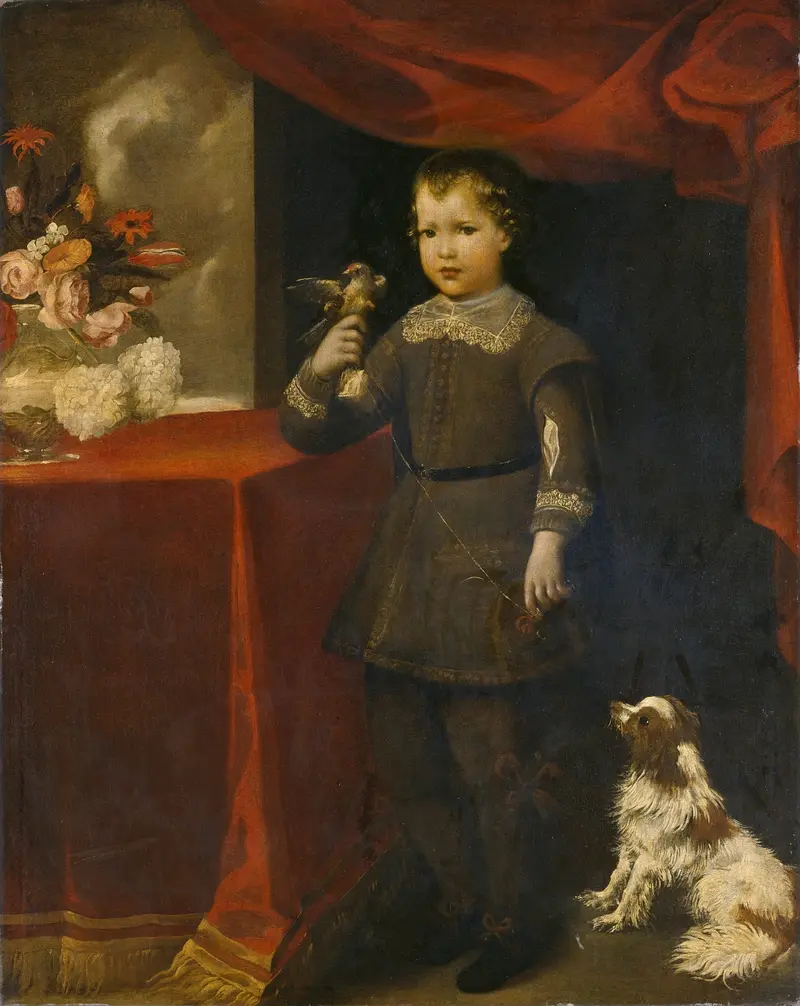
El príncipe Baltasar Carlos de Austria
Diego Velázquez

Equestrian Portrait of Philip III
Diego Velázquez

Equestrian Portrait of Margarita of Austria
Diego Velázquez
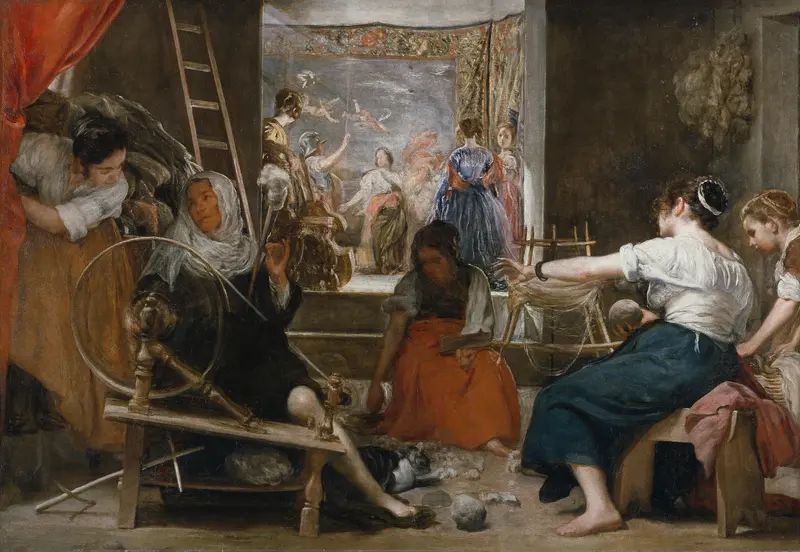
Las Hilanderas
Diego Velázquez
More Landscape Art

The Starry Night
Vincent van Gogh

View of Delft
Johannes Vermeer

Water Lilies
Claude Monet

The Grand Canal, Venice, looking north-west from the Ca' Corner to the Ca' Contarini degli Scrigni, with the campanile of Santa Maria della Carità
Canaletto

Windsor Castle
Canaletto

The Grand Canal looking North-East from the Palazzo Dolfin-Manin to the Rialto Bridge
Canaletto