
Virtue and Nobility — History & Facts
In Virtue and Nobility, Giovanni Battista Tiepolo presents a vibrant scene filled with rich colors. The painting features allegorical figures representing virtue and nobility, adorned in elaborate garments. The background is lush and ornate, typical of the Rococo style, creating a sense of grandeur.
The use of light and shadow enhances the figures, drawing the viewer's eye to their expressions and gestures. The painting is executed in oil on canvas, a common medium for Tiepolo's works. It measures approximately 150 x 200 cm, making it a large and impactful piece. The brushwork is fluid and dynamic, characteristic of the Rococo style, with an emphasis on movement and elegance.
The color palette is bright and varied, showcasing Tiepolo's skill in creating depth and vibrancy. Giovanni Battista Tiepolo was a prominent Italian painter of the 18th century, known for his grand frescoes and allegorical works. Virtue and Nobility reflects his mastery of the Rococo style, which emphasizes ornate detail and playful themes. An interesting fact about this work is that it was likely commissioned for a noble patron, highlighting the social context in which Tiepolo operated.
His ability to blend narrative with decorative elements made him a sought-after artist in his time.
More Artworks by Giovanni Battista Tiepolo
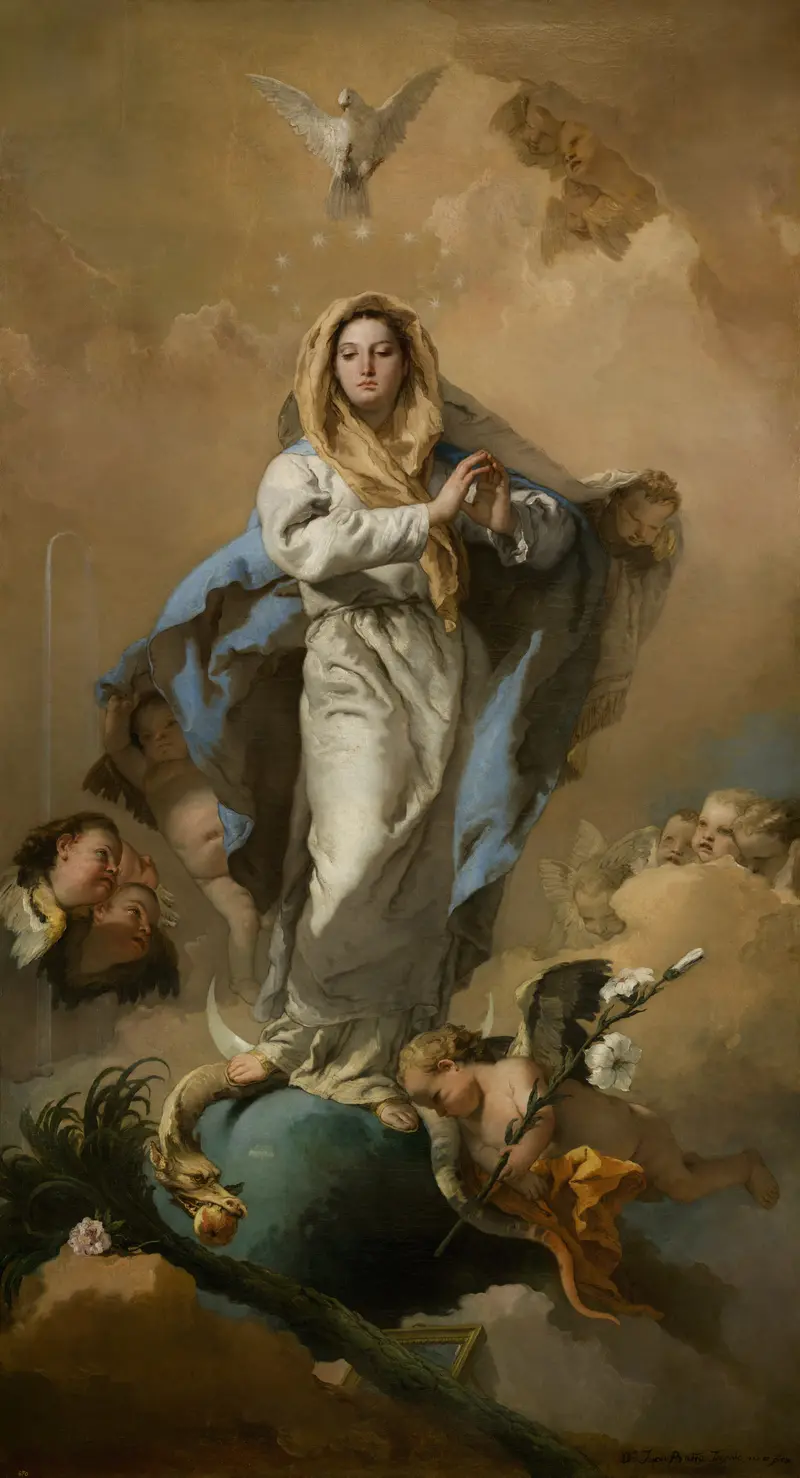
The Immaculate Conception
Giovanni Battista Tiepolo
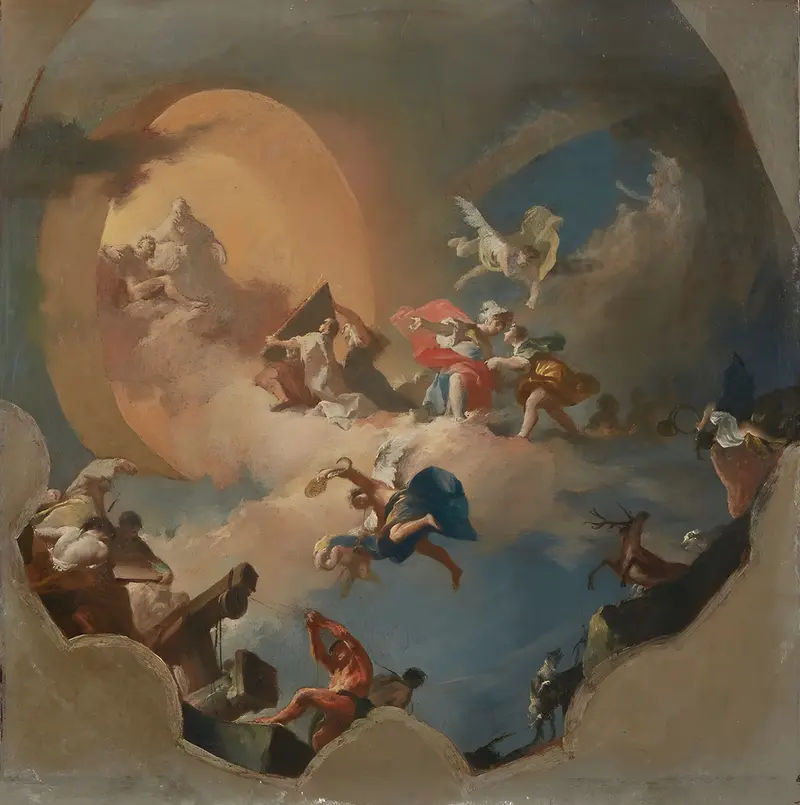
The Apotheosis of the Arts
Giovanni Battista Tiepolo
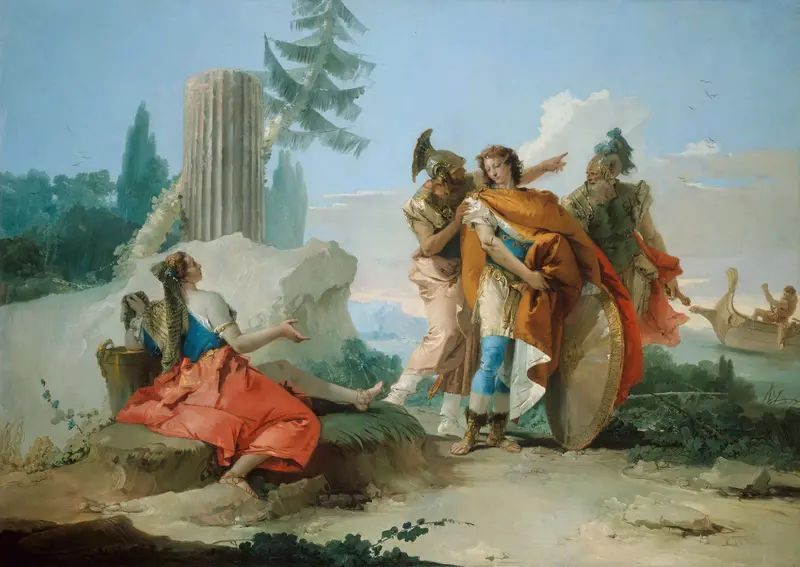
Armida Abandoned by Rinaldo
Giovanni Battista Tiepolo
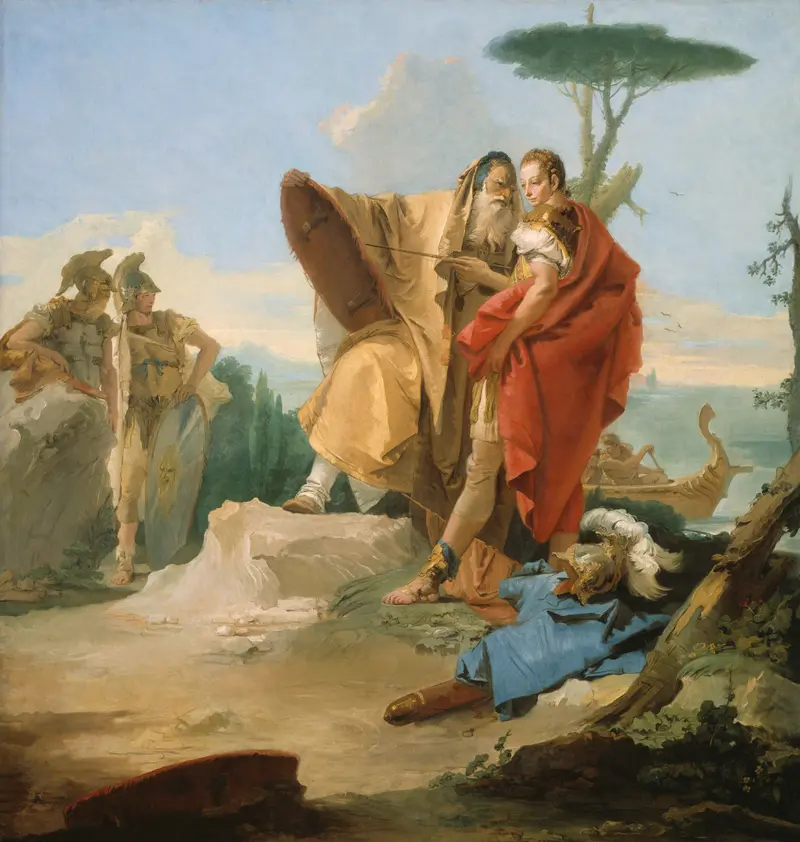
Rinaldo and the Magus of Ascalon
Giovanni Battista Tiepolo
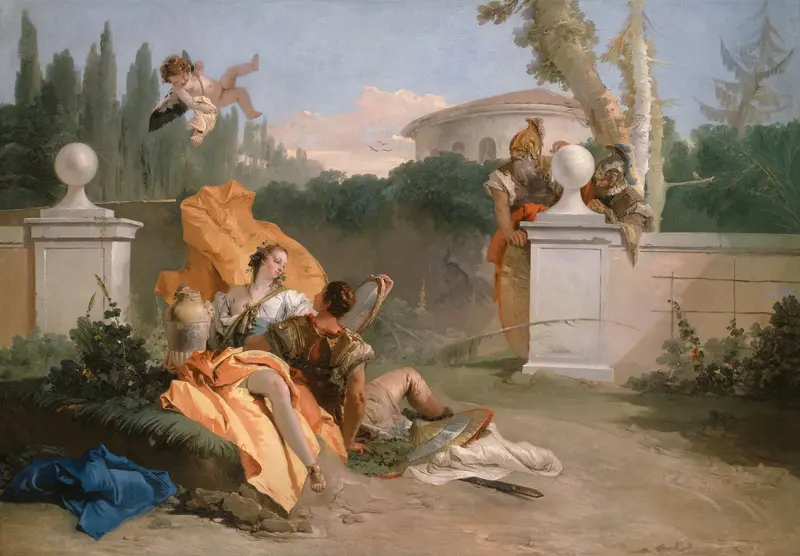
Rinaldo and Armida in Her Garden
Giovanni Battista Tiepolo
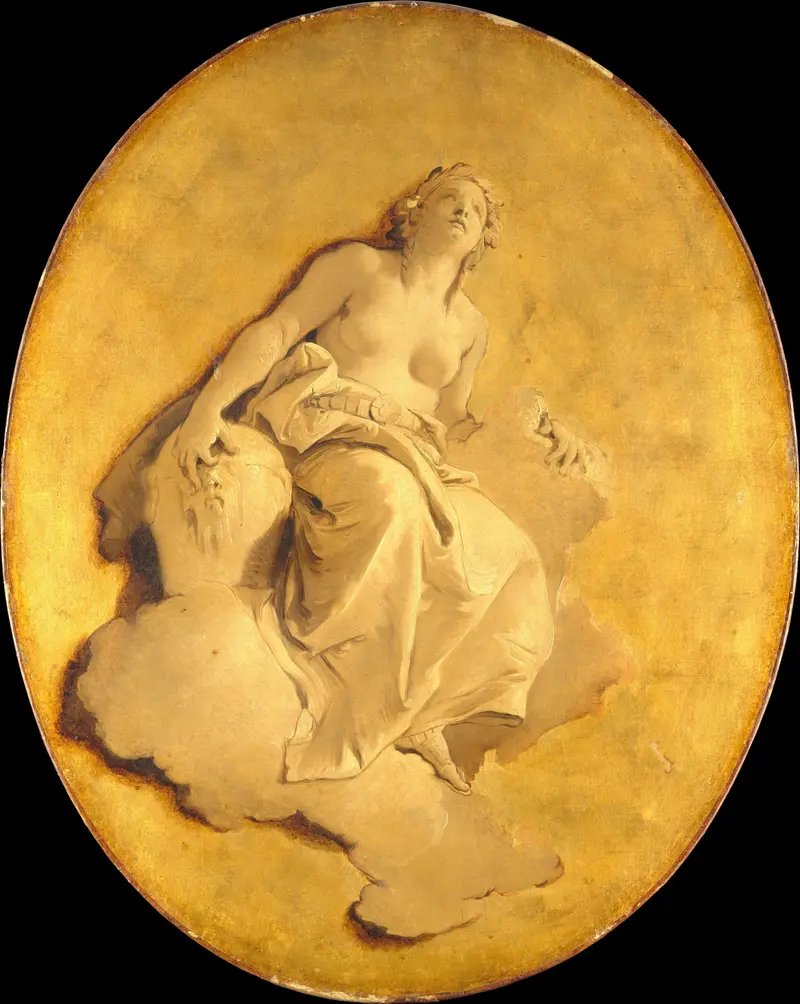
A Female Allegorical Figure
Giovanni Battista Tiepolo
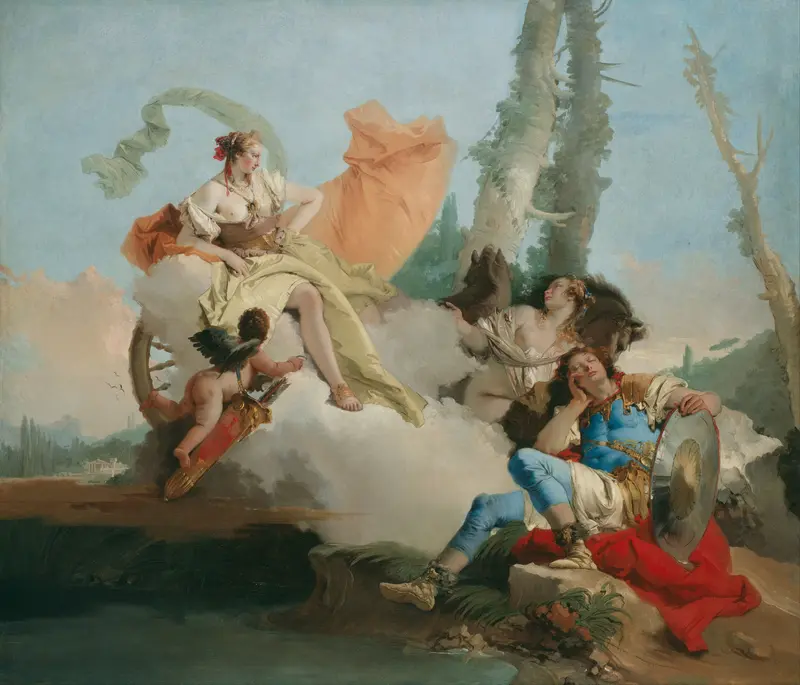
Armida Encounters the Sleeping Rinaldo
Giovanni Battista Tiepolo
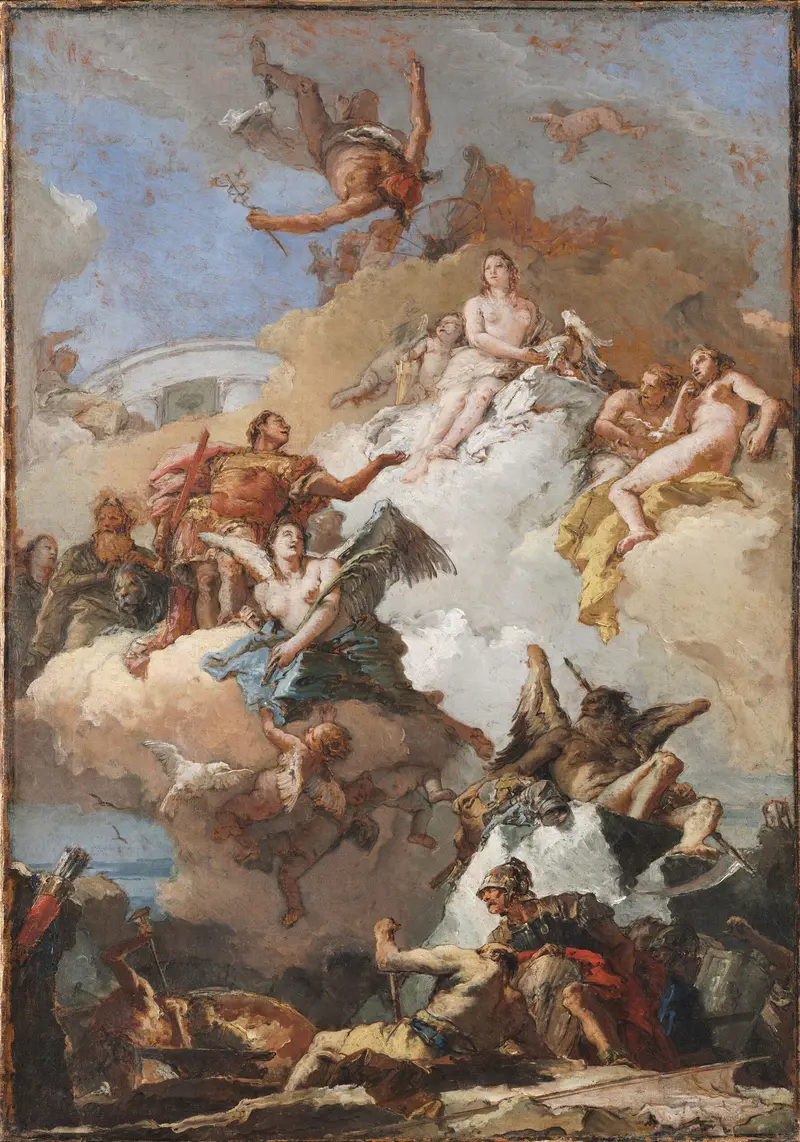
The Apotheosis of Aeneas
Giovanni Battista Tiepolo
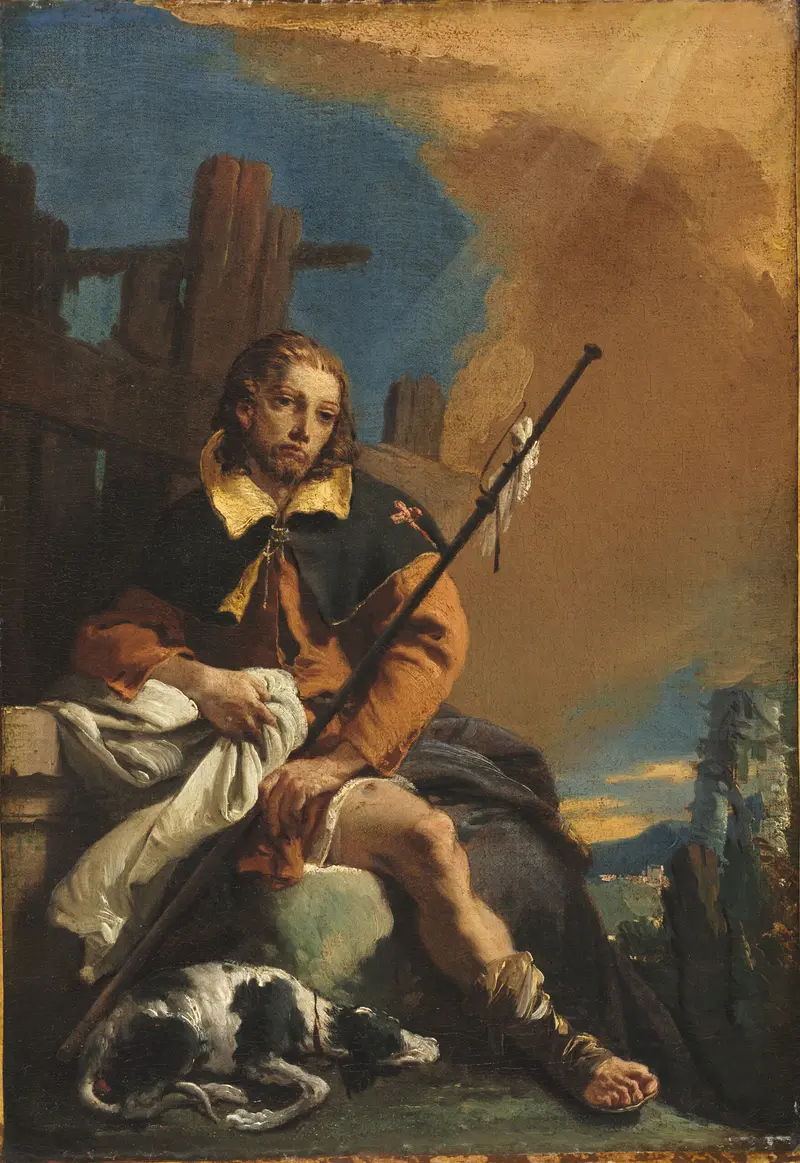
Saint Roch as a Pilgrim
Giovanni Battista Tiepolo
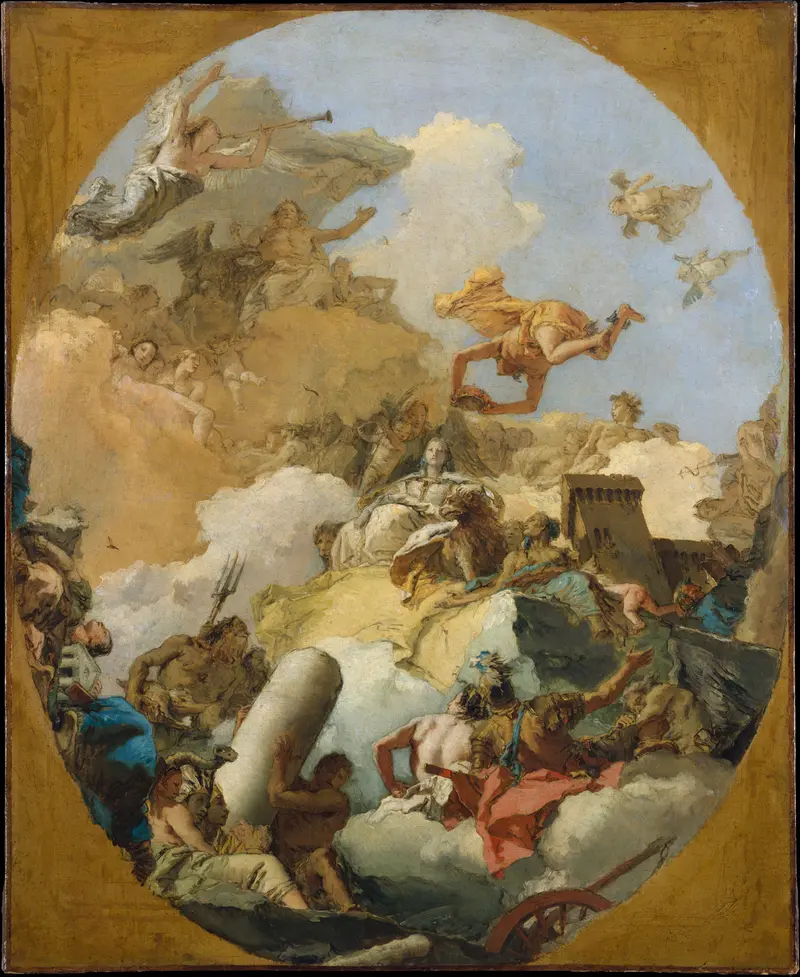
The Apotheosis of the Spanish Monarchy
Giovanni Battista Tiepolo





