
Washerwomen at the River — History & Facts
What first draws the eye in Washerwomen at the River is the sheer bustle of communal labor, the riverbank alive with figures bent in concentration, hands and skirts in motion. The artist, Francisco Pradilla, orchestrates a scene where the daily task of washing clothes becomes a kind of choreography, each figure absorbed in her own rhythm yet woven into the larger pattern of village life. The sweep of the river leads the gaze from the foreground, where reflections shimmer and ripple around sturdy legs and wooden washboards, to the distant curve of the bank, dotted with more women, laundry, and the flutter of white birds.
The palette is earthy and damp, with flashes of red kerchiefs and blue sleeves punctuating the muted greens and browns, while the cloudy sky presses low, enclosing the scene in a hush of labor and water. Painted in 1913, this work belongs to a moment when Spanish artists often turned to scenes of rural life, capturing traditions on the cusp of change as industrialization crept closer. Such images were rarely commissioned by the washerwomen themselves; instead, they appealed to urban collectors and institutions eager to preserve—or romanticize—the rhythms of the countryside. Today, Washerwomen at the River resides in the Museo Carmen Thyssen in Málaga, its quiet realism a reminder of the countless hands that shaped daily life before machines and laundries.
History has kept few traces of the individuals here, but the painting invites us to linger, to notice the dignity and camaraderie in even the most ordinary of days.
More Artworks by Francisco Pradilla

Spring Mist in Italy
Francisco Pradilla
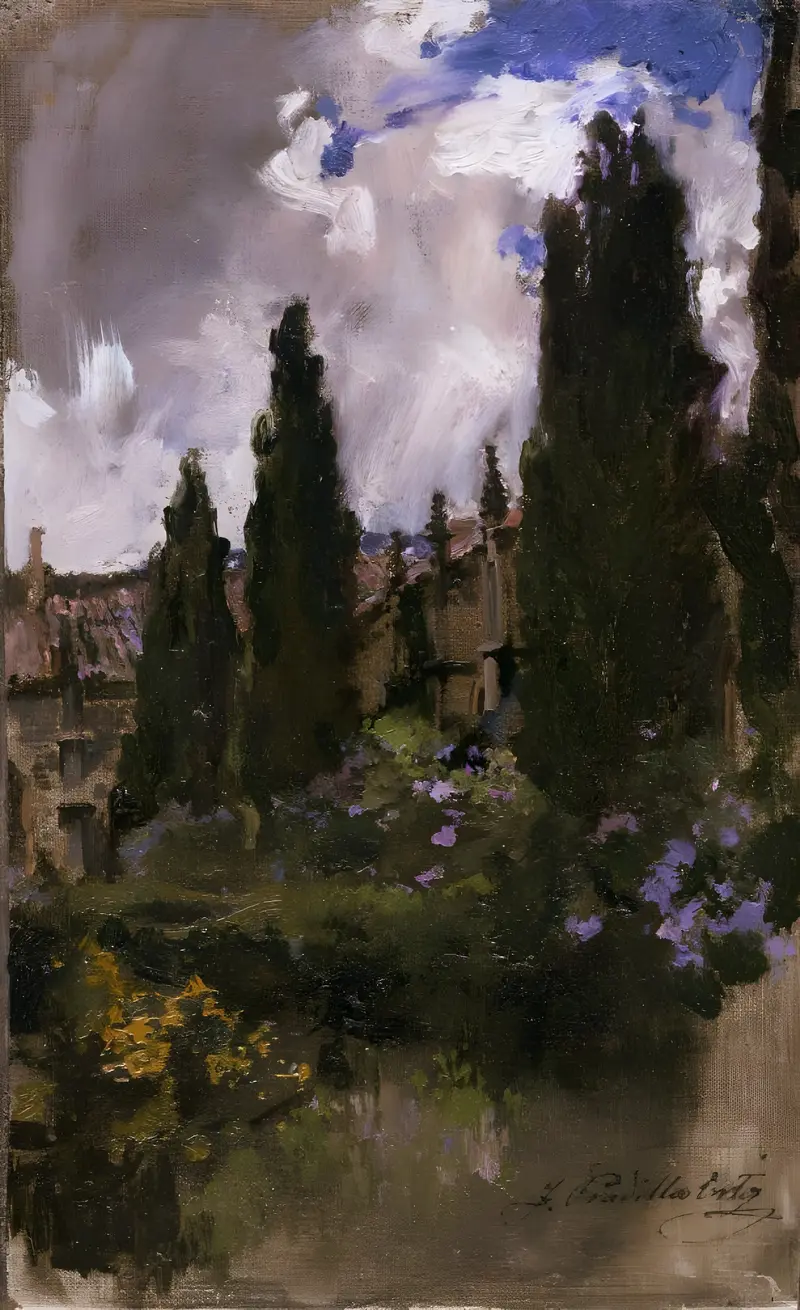
Among the Bulls of Guisando
Francisco Pradilla
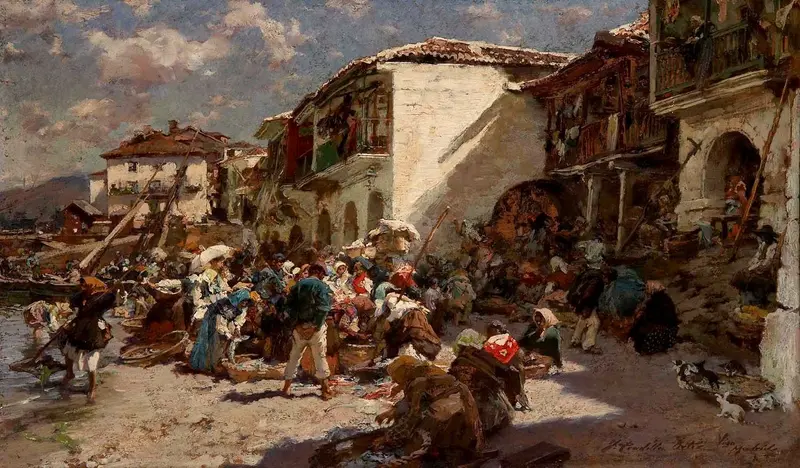
Selling Fish on Vigo Beach
Francisco Pradilla
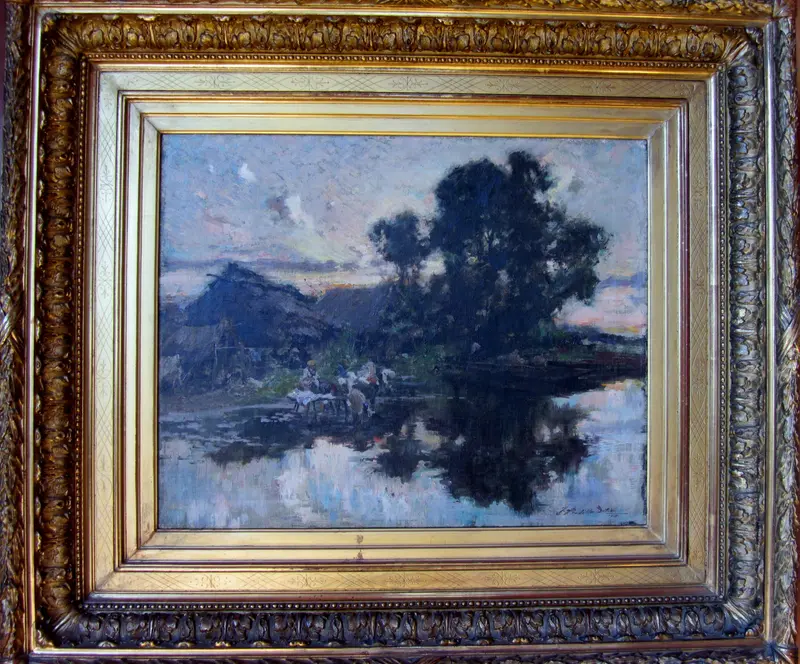
On the Riverbank
Francisco Pradilla

Raimunda Osorio, Marchioness of Linares
Francisco Pradilla
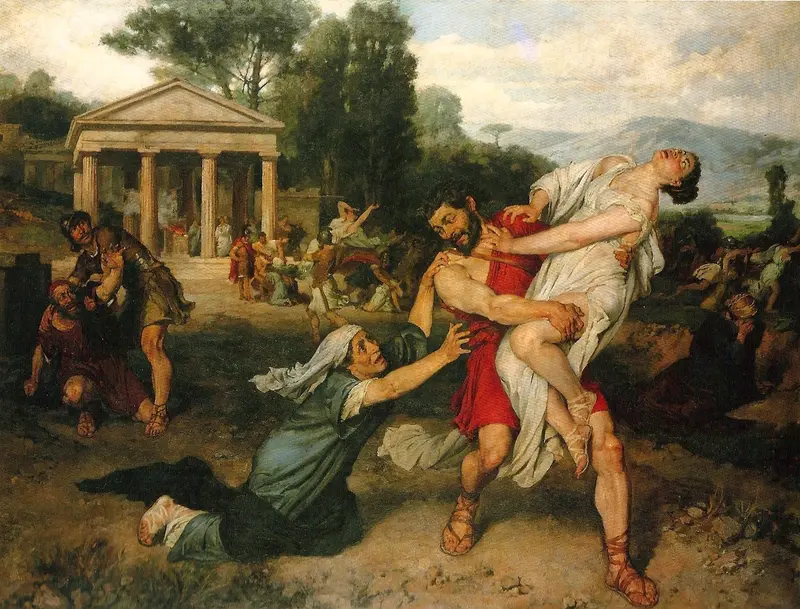
The Rape of the Sabine Women
Francisco Pradilla
The Shipwrecked
Francisco Pradilla
Impression
Francisco Pradilla
Lovesickness
Francisco Pradilla
José María de Murga, Marquis of Linares
Francisco Pradilla
More Genre Scene Art

Banquet of the Officers of the St George Civic Guard
Frans Hals

Rembrandt and Saskia in the Scene of the Prodigal Son
Rembrandt van Rijn

Bal du moulin de la Galette
Pierre-Auguste Renoir

Quadrille at the Moulin Rouge
Henri de Toulouse-Lautrec

A Burial at Ornans
Gustave Courbet

When Will You Marry?
Paul Gauguin