
Wooded Landscape — History & Facts
What draws the eye first in Wooded Landscape is the sheer density of green, the way the trees arch overhead like a living cathedral, their branches weaving a canopy that both shelters and shadows the world below. The path leads you in—past a humble thatched cottage, a shepherd tending his flock, and a cart trundling along, its driver lost in thought. The figures are small, almost swallowed by the grandeur of the forest, yet each gesture is purposeful: the shepherd’s crook raised in mid-action, the cart horse plodding patiently, the distant walkers half-glimpsed in the gloom.
Light pools in the clearing, picking out the cottage roof and the dusty road, while the deeper woods remain a tangle of mystery. Govaerts’ brushwork lingers over every leaf and bramble, inviting you to lose yourself in the layered depths. This kind of scene flourished in the seventeenth-century Low Countries, when artists like Abraham Govaerts made a specialty of wooded vistas threaded with the quiet drama of daily life. Such paintings were prized by urban collectors who longed for a vision of rural peace and abundance, a counterpoint to the bustling cities of their own experience.
Created around 1650, as documented by the Web Gallery of Art, this work belongs to a tradition where landscape was more than a backdrop—it was a world in itself, rich with human and natural detail. History has kept few traces of the specific journey of this painting, but its careful observation and gentle storytelling still reward a slow, attentive gaze.
More Artworks by Abraham Govaerts

Forest landscape
Abraham Govaerts
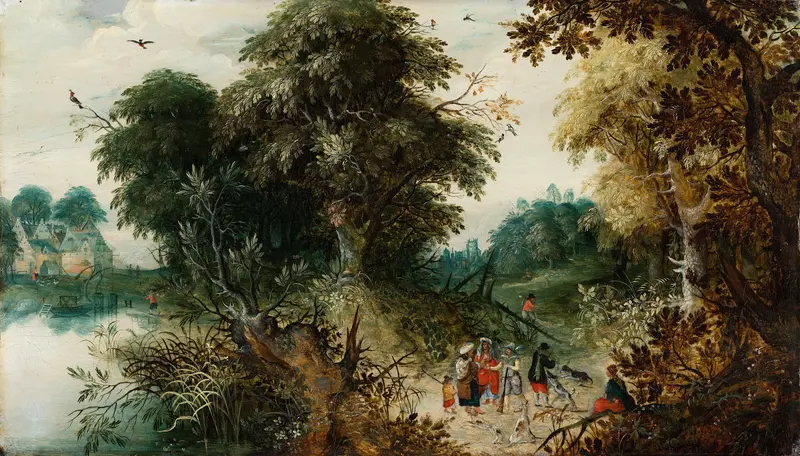
Forest View with Travellers
Abraham Govaerts
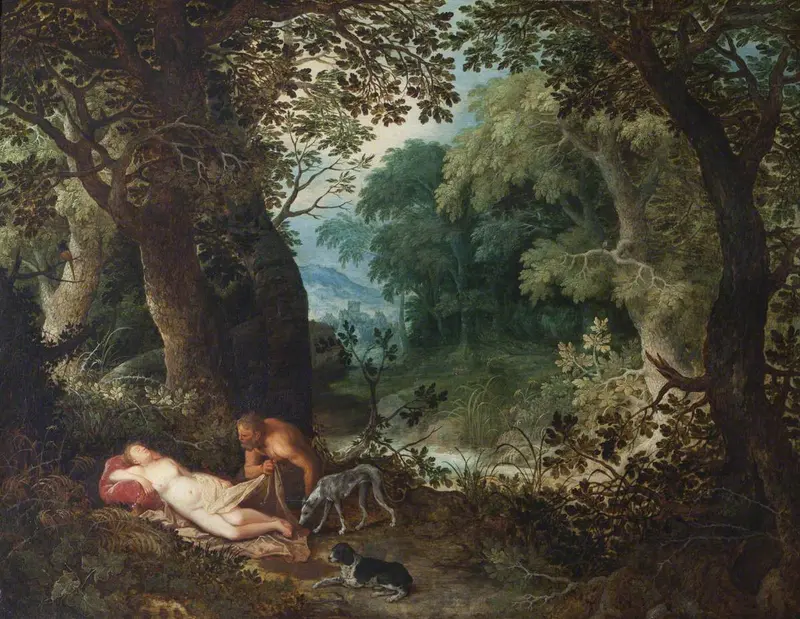
A Nymph and a Satyr
Abraham Govaerts
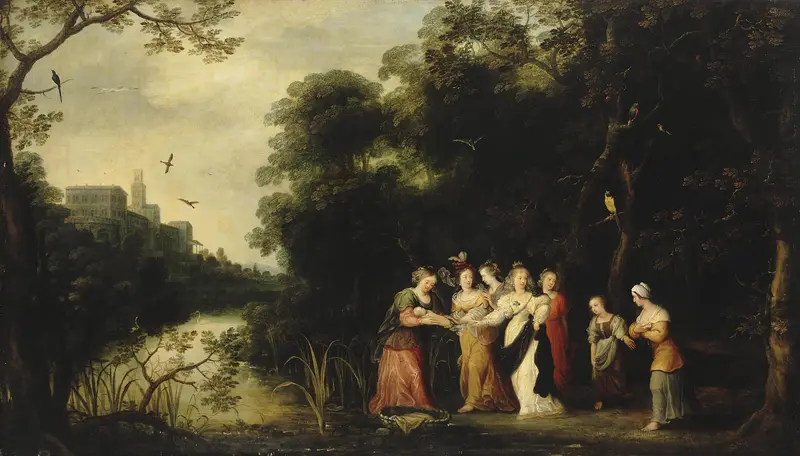
Finding of Moses
Abraham Govaerts
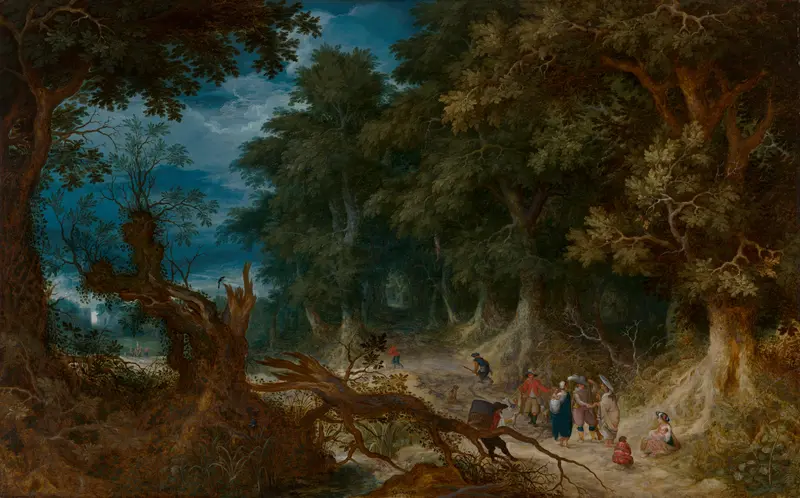
Wooded Landscape with Gipsy Women
Abraham Govaerts
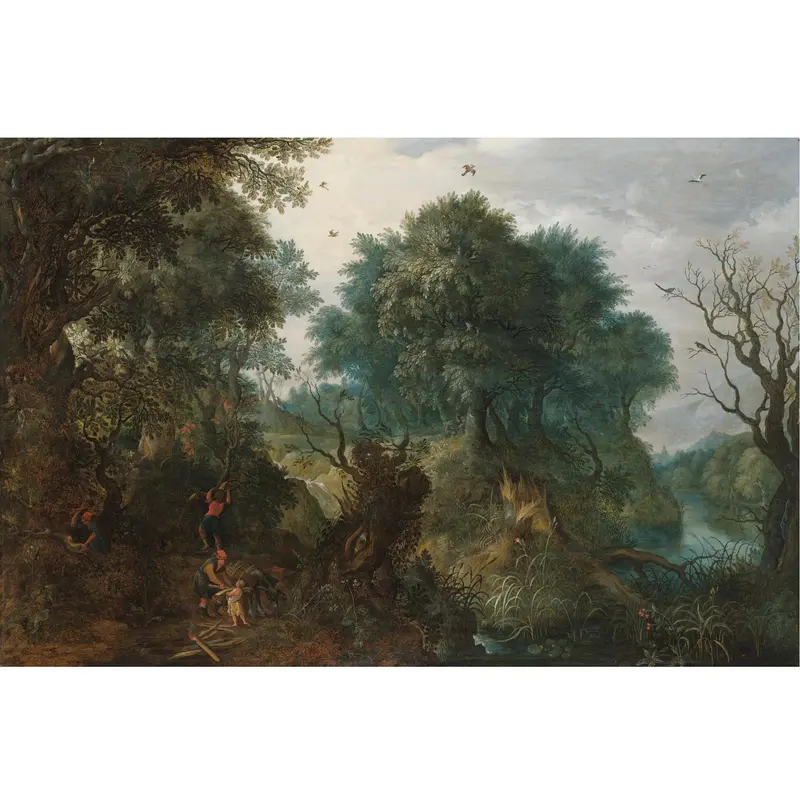
A Wooded Landscape with Woodcutters near a River
Abraham Govaerts
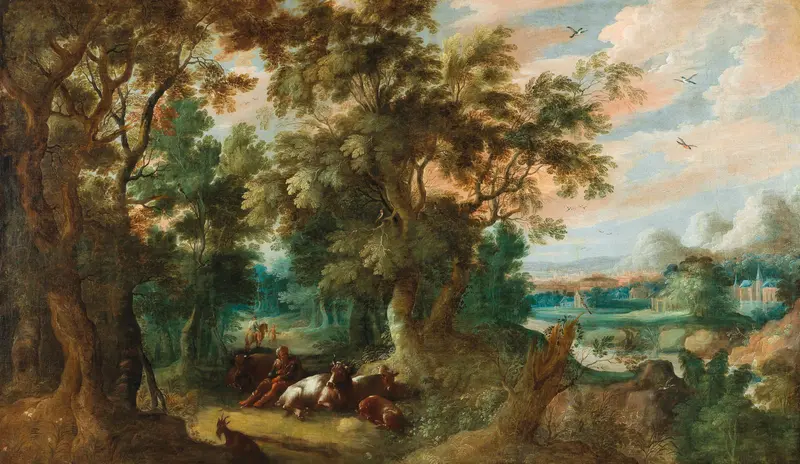
Wooded landscape with shepherds and their flock
Abraham Govaerts
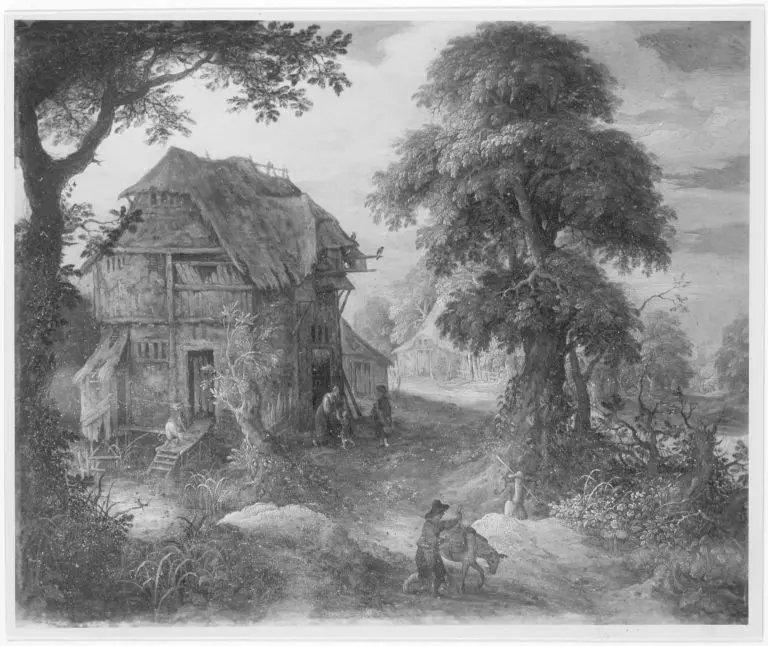
Dorf unter Bäumen
Abraham Govaerts
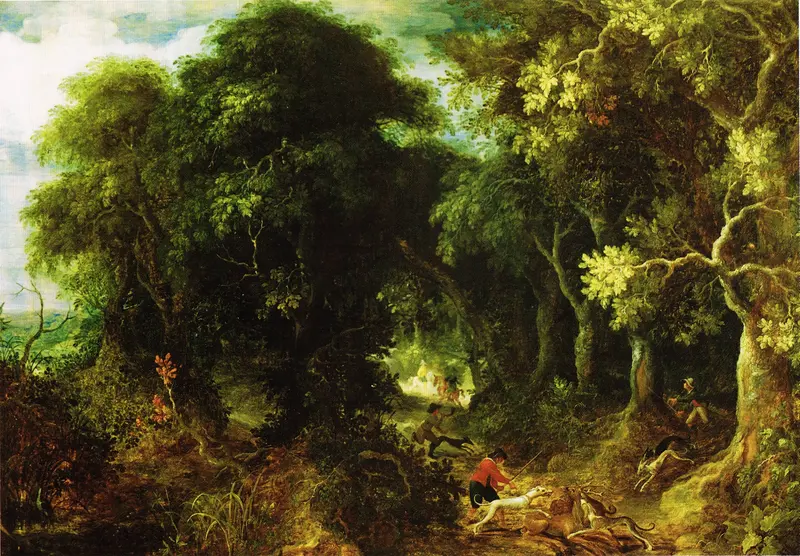
The Eternal Forest / Deer hunting
Abraham Govaerts
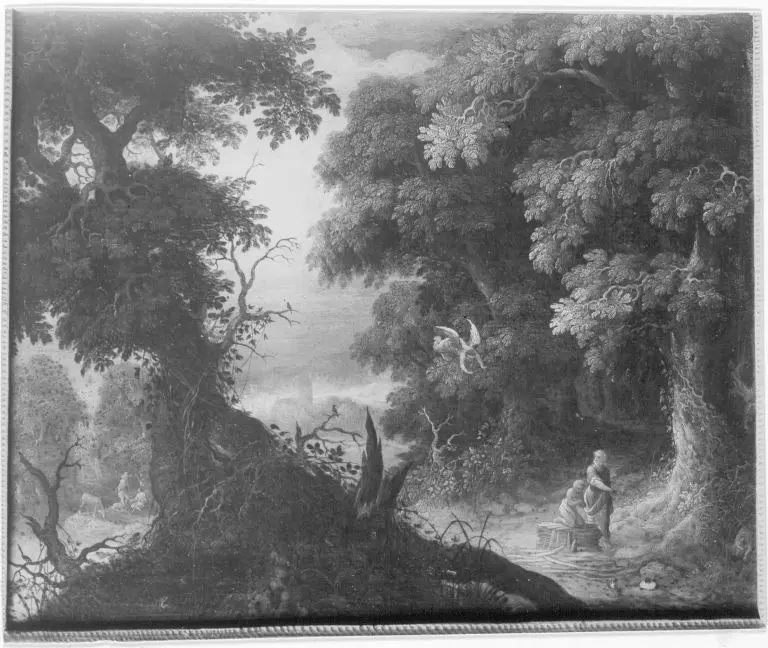
Wooded landscape with the sacrifice of Isaac (Genesis 22)
Abraham Govaerts
More Landscape Art

The Starry Night
Vincent van Gogh

View of Delft
Johannes Vermeer

Water Lilies
Claude Monet

The Grand Canal, Venice, looking north-west from the Ca' Corner to the Ca' Contarini degli Scrigni, with the campanile of Santa Maria della Carità
Canaletto

Windsor Castle
Canaletto

The Grand Canal looking North-East from the Palazzo Dolfin-Manin to the Rialto Bridge
Canaletto