
Wooded landscape with peasants crossing the ford. — History & Facts
What first draws the eye is not the peasants or their humble cart, but the towering, intricate architecture of the forest itself—a cathedral of green that seems to pulse with quiet life. The artist, Abraham Govaerts, leads the viewer along a winding path where sunlight flickers through dense foliage, catching on the edges of leaves and the backs of sheep. The peasants, dwarfed by the ancient trees, are absorbed in the ordinary labor of crossing a shallow stream, their presence almost incidental to the grandeur of the landscape.
Look closely: the careful play of shadow and light guides you from the shadowed foreground, where a child and dog pause, into the luminous blue distance, where the forest recedes into mist. This is a world where nature is not backdrop but protagonist, and every branch and glade is rendered with attentive, almost loving detail. Painted around 1619, this work belongs to the flourishing tradition of early seventeenth-century Flemish landscape painting, a genre that celebrated the untamed beauty of the countryside at a time when cities were swelling and courtly tastes were shifting. Artists like Govaerts responded to a growing appetite for scenes that offered both escape and reflection, often created for prosperous burghers or collectors eager to display their appreciation for nature’s variety.
The precise date and journey of this particular painting remain obscure, its present appearance on a digital platform a reminder of how many such works have slipped quietly through the centuries. Yet the spirit of its age lingers in every brushstroke, inviting viewers to lose themselves in the forest’s depths and imagine the world as it once was—vast, mysterious, and full of hidden paths.
More Artworks by Abraham Govaerts

Forest landscape
Abraham Govaerts
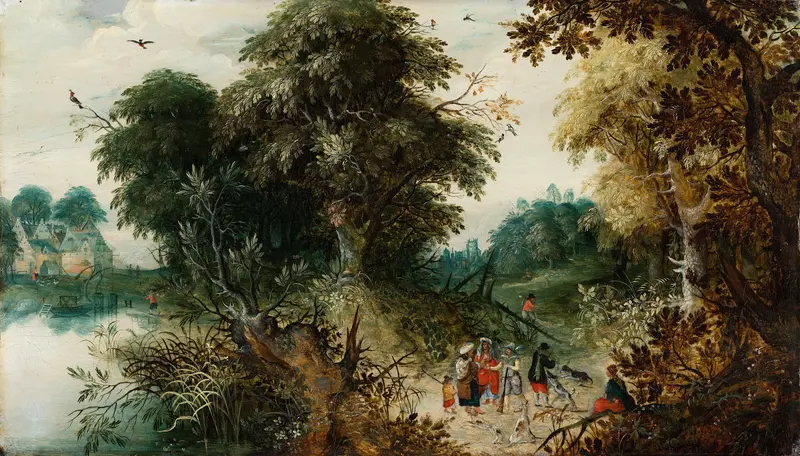
Forest View with Travellers
Abraham Govaerts
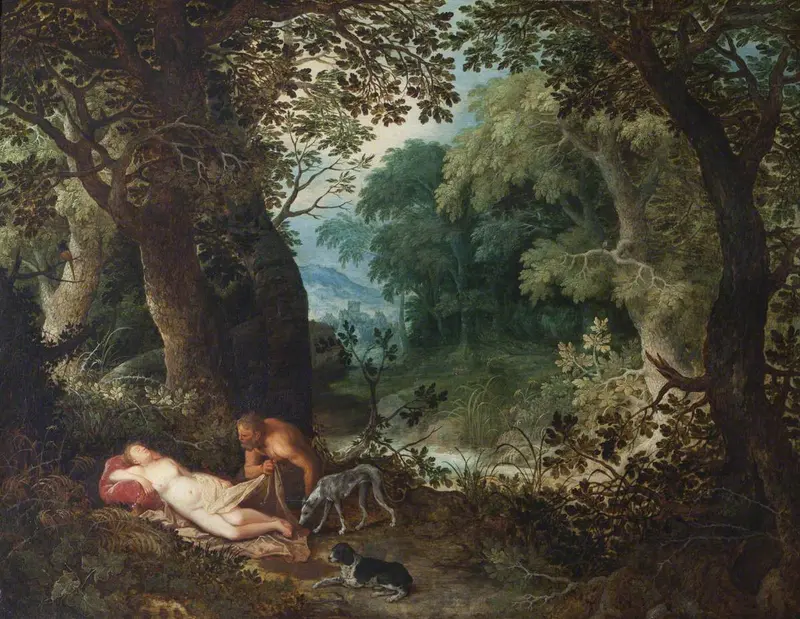
A Nymph and a Satyr
Abraham Govaerts
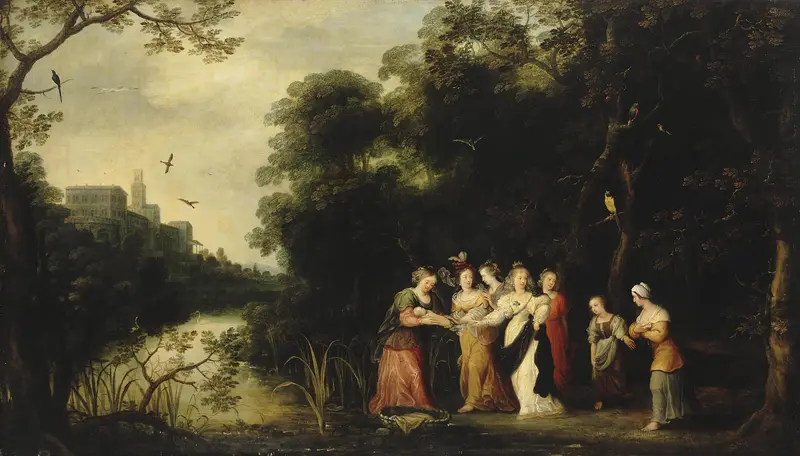
Finding of Moses
Abraham Govaerts
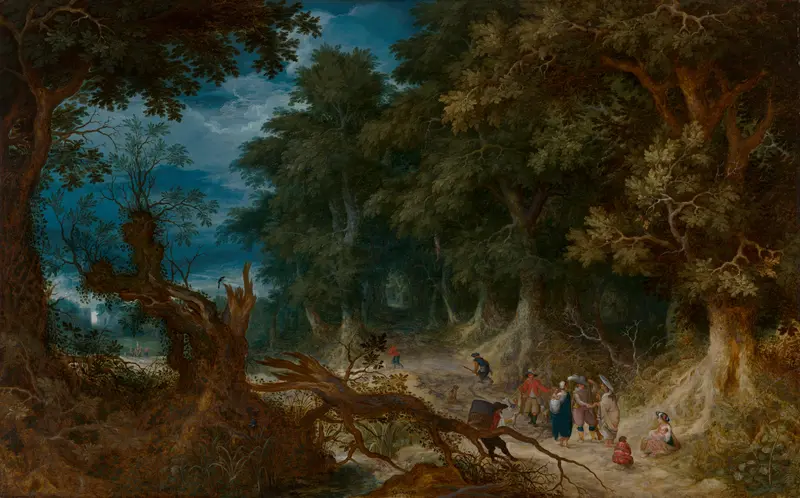
Wooded Landscape with Gipsy Women
Abraham Govaerts
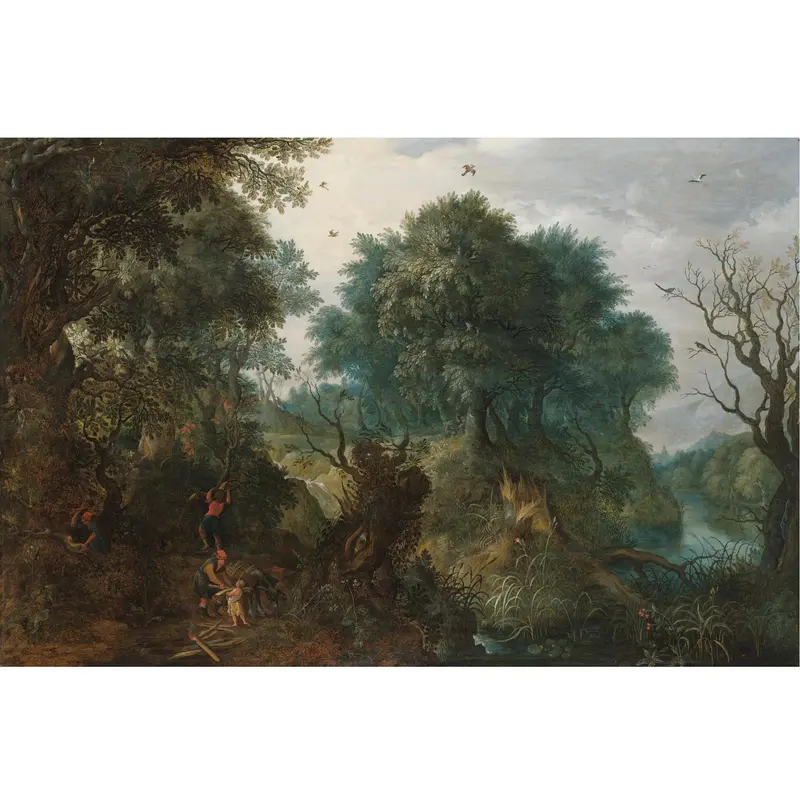
A Wooded Landscape with Woodcutters near a River
Abraham Govaerts
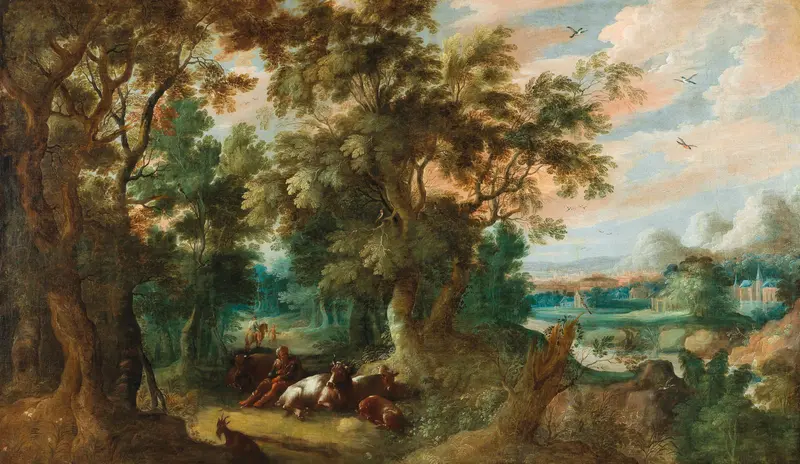
Wooded landscape with shepherds and their flock
Abraham Govaerts
Dorf unter Bäumen
Abraham Govaerts
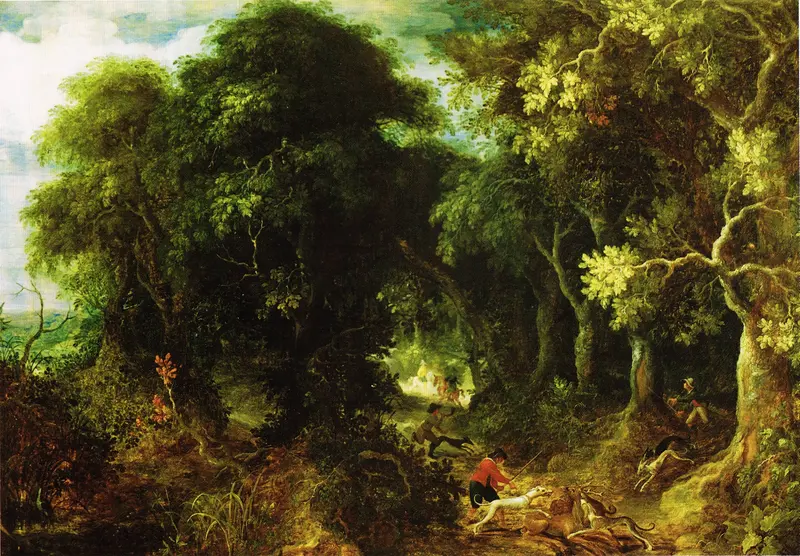
The Eternal Forest / Deer hunting
Abraham Govaerts
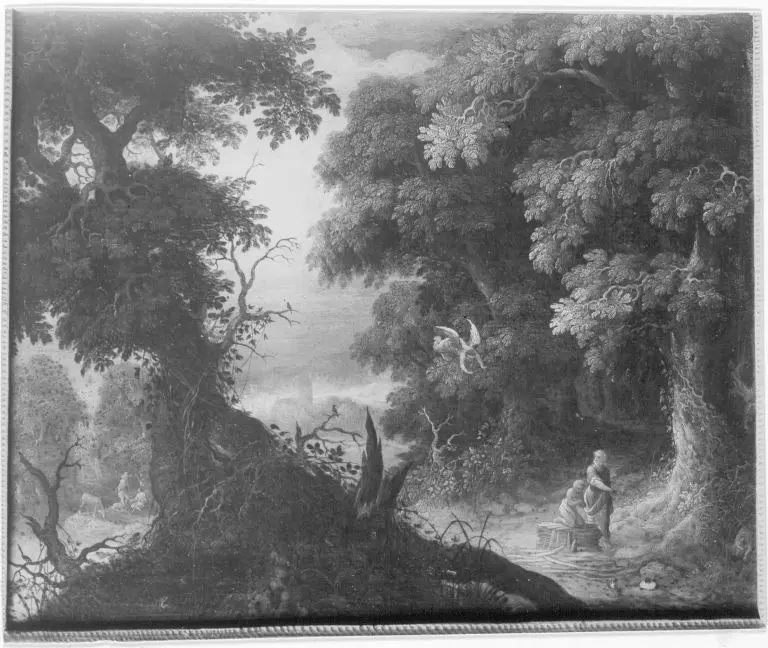
Wooded landscape with the sacrifice of Isaac (Genesis 22)
Abraham Govaerts
More Landscape Art

The Starry Night
Vincent van Gogh

View of Delft
Johannes Vermeer

Water Lilies
Claude Monet

The Grand Canal, Venice, looking north-west from the Ca' Corner to the Ca' Contarini degli Scrigni, with the campanile of Santa Maria della Carità
Canaletto

Windsor Castle
Canaletto

The Grand Canal looking North-East from the Palazzo Dolfin-Manin to the Rialto Bridge
Canaletto