
A Fat Man — History & Facts
What first catches the eye in A Fat Man by Adriaen Brouwer is the immediacy of the sitter’s presence—his ruddy face turned in half-profile, mouth slightly open as if caught mid-sentence or mid-thought. Brouwer’s brushwork is loose and energetic, the paint almost sketch-like in places, as if the artist was more interested in capturing the fleeting mood than the polished finish. The man’s gaze is sidelong, wary or perhaps amused, and the rough handling of his coat and hair only sharpens the sense of a life lived outside the world of formal portraiture.
Light falls from the left, catching the cheek and brow, while the background dissolves into a swirl of earthy tones, leaving the figure to emerge with a raw, almost unfinished vitality. Painted between circa 1634 and circa 1637, this work belongs to the world of seventeenth-century Flanders, where genre painting flourished in taverns, studios, and collectors’ cabinets alike. Artists like Brouwer specialized in scenes of everyday life, often with a comic or satirical edge, catering to a growing urban audience hungry for images of their own world. The rough, expressive handling seen here was prized for its honesty and immediacy, a sharp contrast to the polished portraits of the elite.
Now in the collection of the Mauritshuis, A Fat Man stands as a vivid reminder of an age when art was as much about character and moment as about status or ideal beauty—look again, and the sitter might just start speaking.
More Artworks by Adriaen Brouwer

The Smokers
Adriaen Brouwer
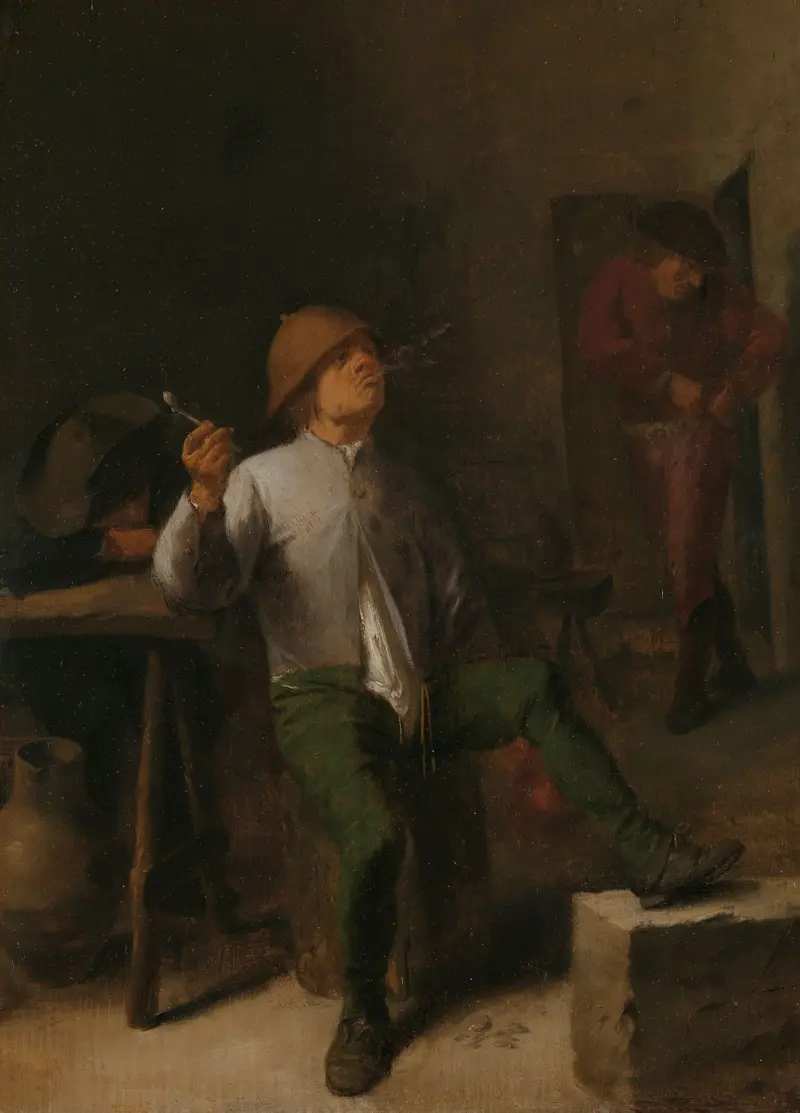
The Smoker
Adriaen Brouwer
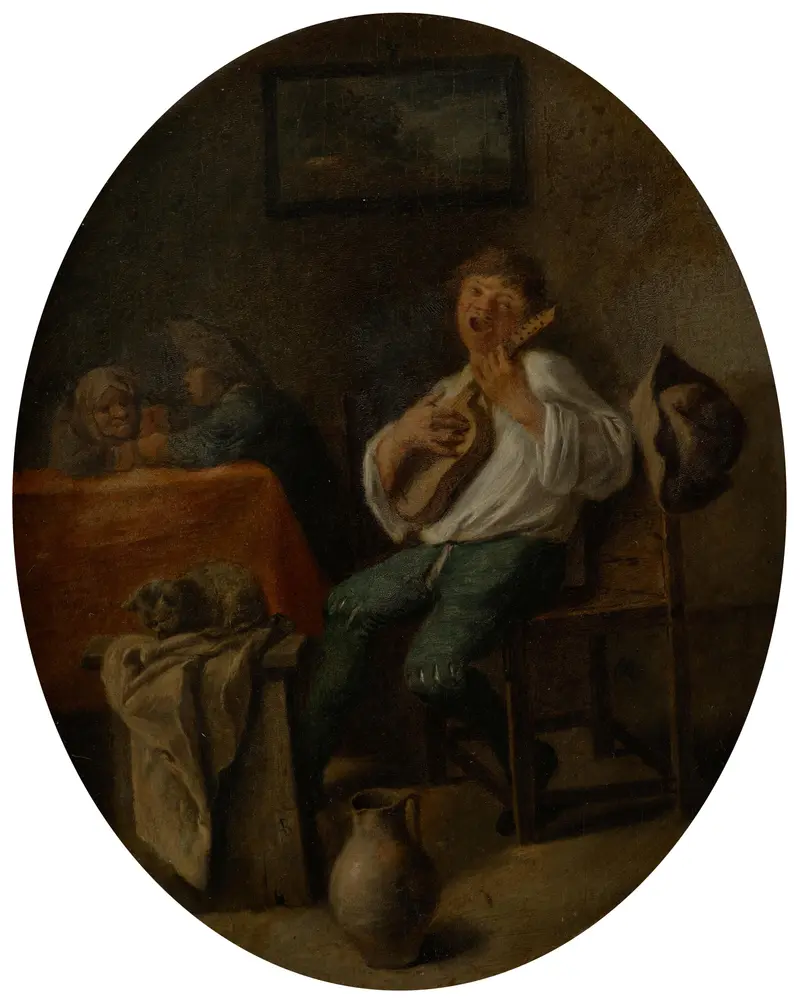
The Guitar Player
Adriaen Brouwer
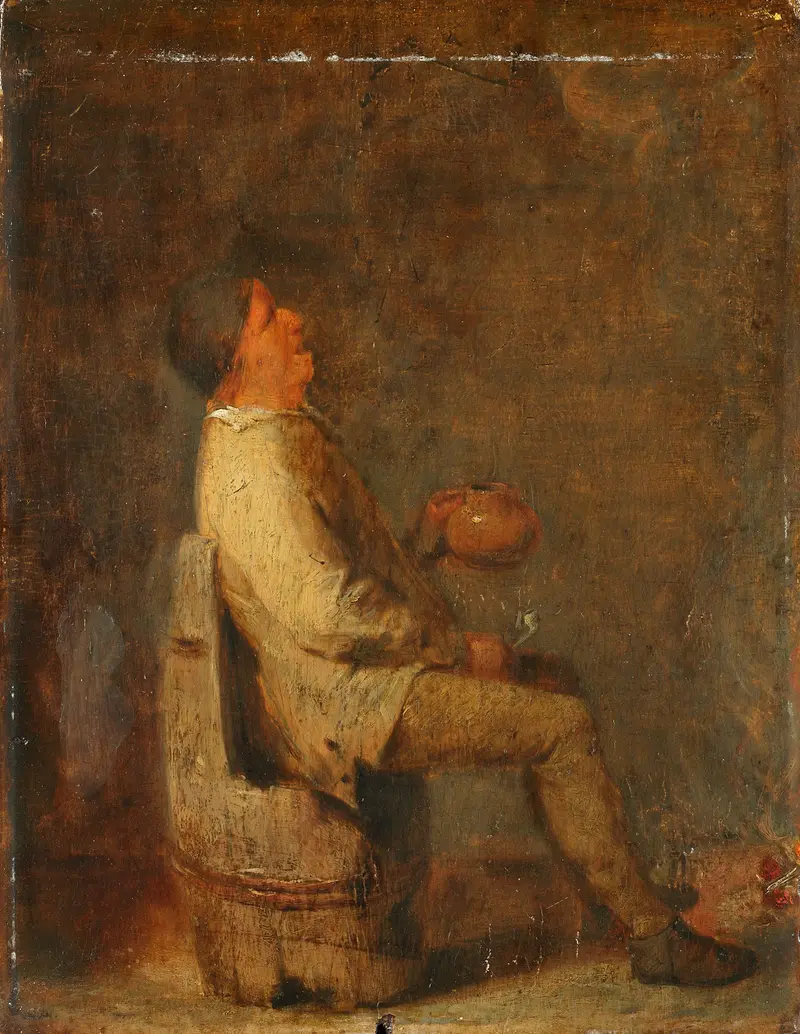
A Peasant Singing
Adriaen Brouwer
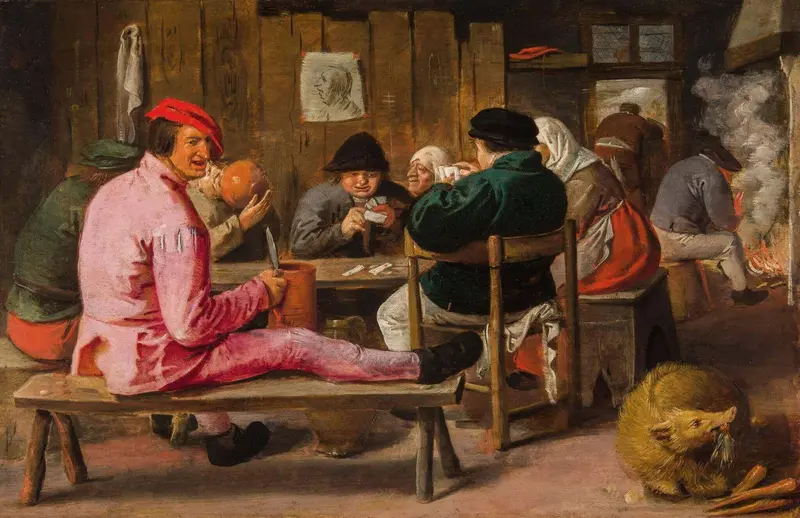
Merry Peasants in an Inn
Adriaen Brouwer
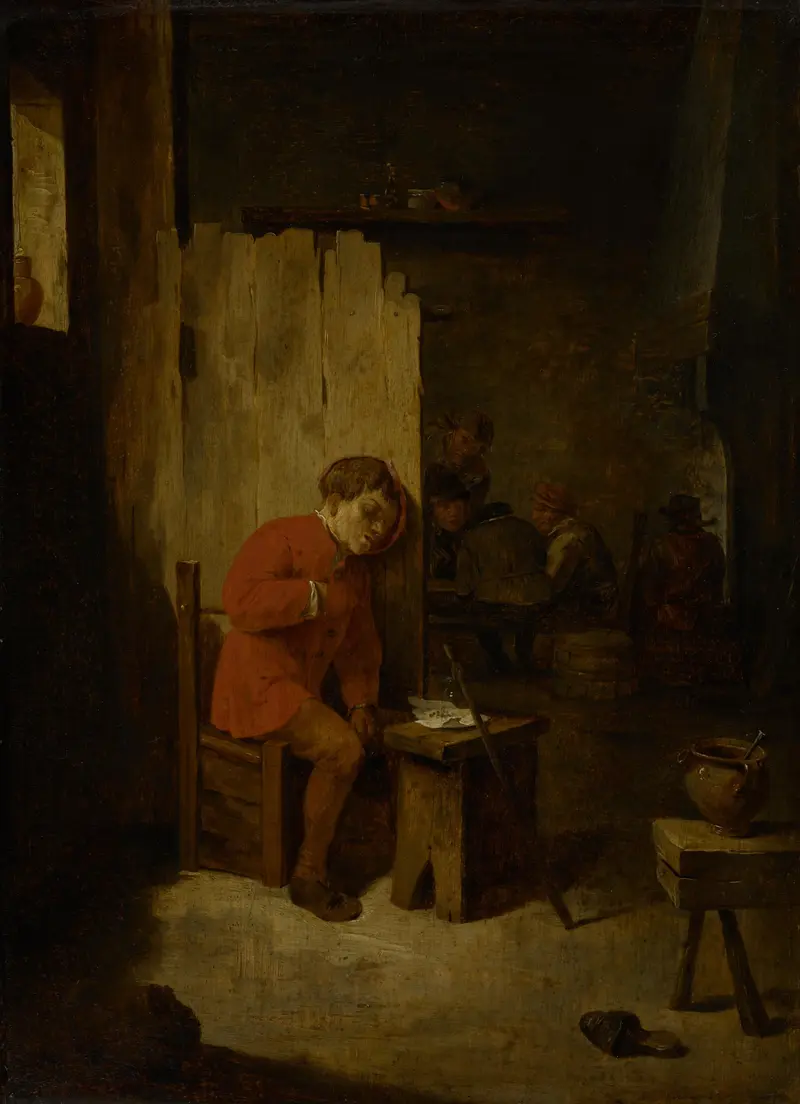
Nachahmer, Schlafender Bauer 853G Gemäldegalerie
Adriaen Brouwer
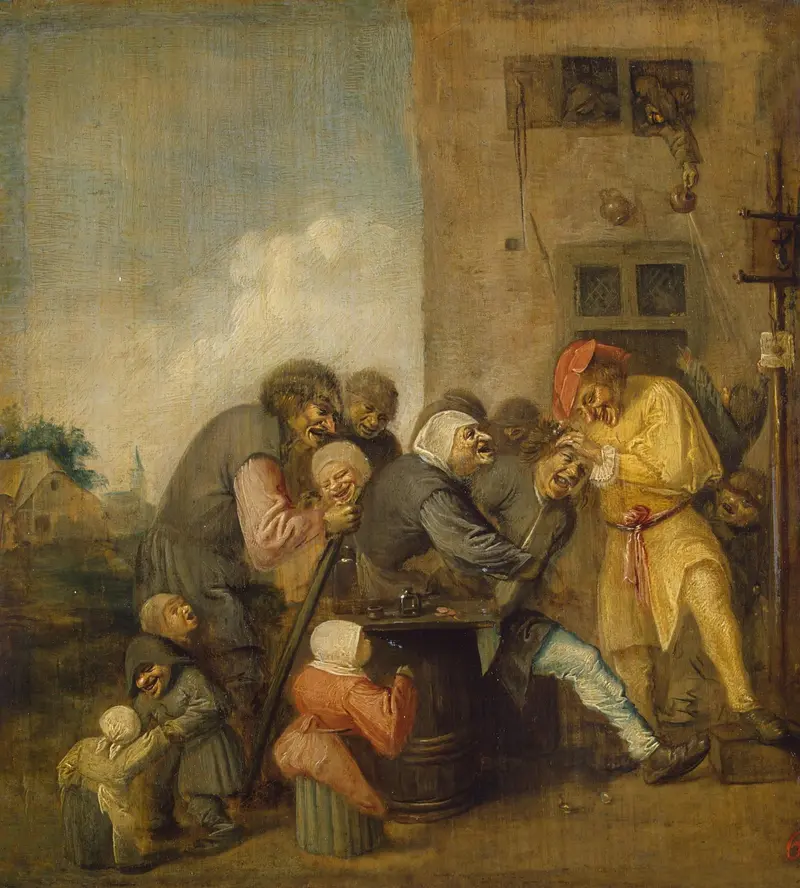
Village Charlatan (The Operation for Stone in the Head)
Adriaen Brouwer
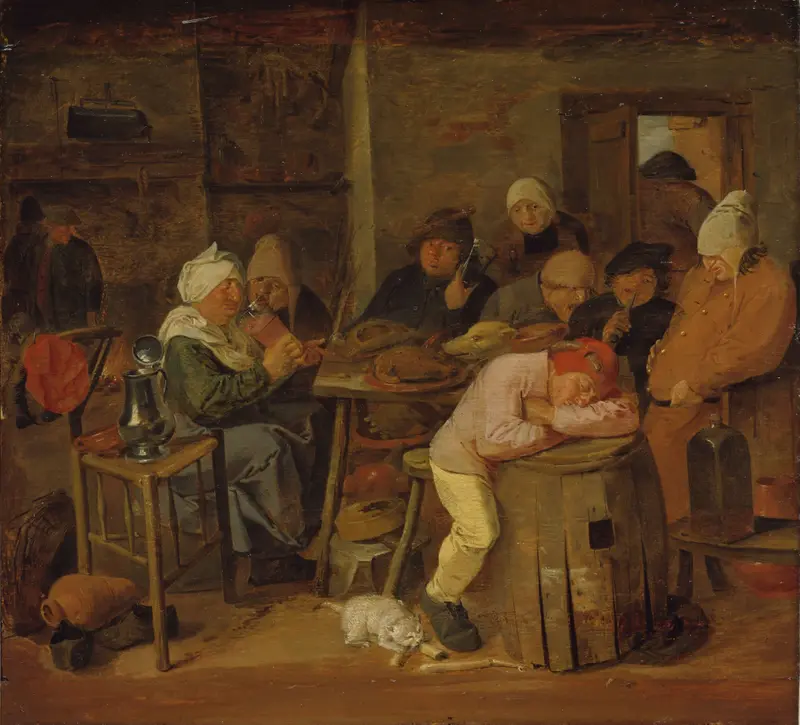
Peasants in an interior (The slaughter feast)
Adriaen Brouwer
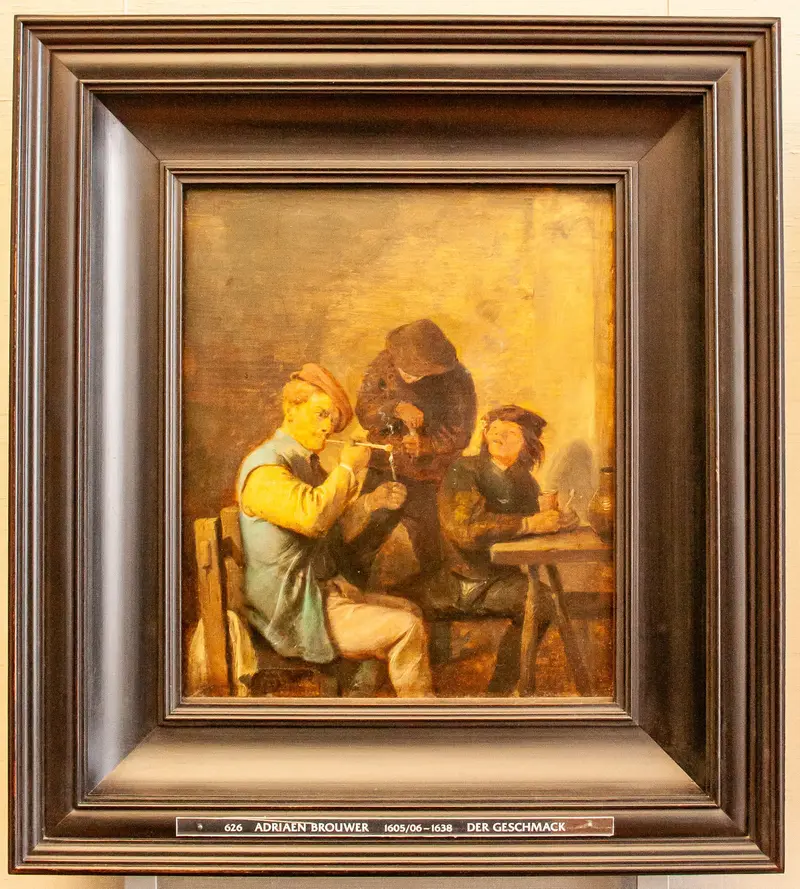
The Taste
Adriaen Brouwer
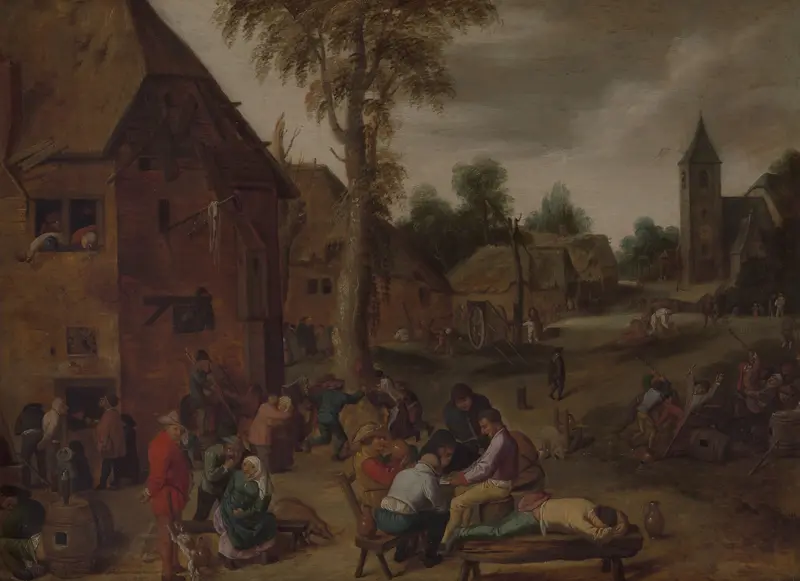
A Fair
Adriaen Brouwer
More Genre Scene Art

Banquet of the Officers of the St George Civic Guard
Frans Hals

Rembrandt and Saskia in the Scene of the Prodigal Son
Rembrandt van Rijn

Bal du moulin de la Galette
Pierre-Auguste Renoir

Quadrille at the Moulin Rouge
Henri de Toulouse-Lautrec

A Burial at Ornans
Gustave Courbet

When Will You Marry?
Paul Gauguin