
A Highlander Woman on Horseback — History & Facts
It is the woman’s glance—curious, cautious, and quietly commanding—that first draws the viewer into A Highlander Woman on Horseback. Draped in a vivid red cloak that cuts through the muted earth tones of the scene, she sits side-saddle atop a sturdy horse, her yellow scarf catching the mountain light. The moment is intimate but not private: a man stands before her, leaning on a walking stick, his posture suggesting both respect and familiarity.
Behind them, another figure—half-shadowed—tends to a rustic fence, anchoring the scene in the daily rhythms of rural life. The viewer’s eye is led from the woman’s bright attire to the rugged terrain and distant blue-grey peaks, the whole composition humming with the quiet tension of a story just out of reach. Works like this, painted by Aleksander Kotsis, belong to a 19th-century tradition that found dignity and drama in the everyday lives of highland people. Artists of this era, particularly in Central and Eastern Europe, often turned to rural subjects as symbols of national character and endurance, especially as industrialization and political upheaval reshaped the landscape.
While little is recorded about the specific history of this painting, its presence in The National Museum in Kraków’s digital collection speaks to a wider appreciation for scenes that celebrate both the hardship and the resilience of mountain communities. The painting invites us to linger, to imagine the conversation unfolding, and to wonder what waits beyond the frame in those misty, silent hills.
More Artworks by Aleksander Kotsis

Trip in the Tatra Mountains
Aleksander Kotsis

Fair in Nowy Targ
Aleksander Kotsis
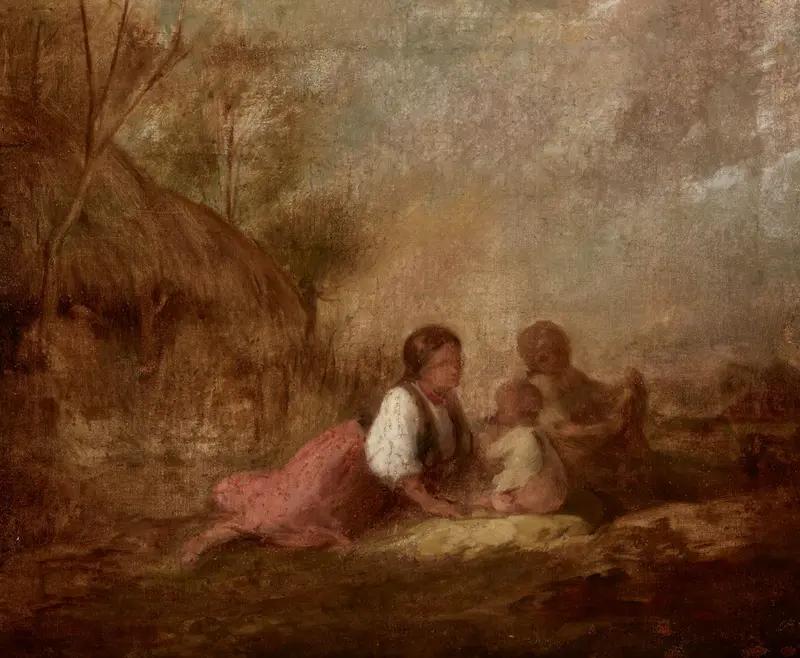
Pastoral Scene
Aleksander Kotsis
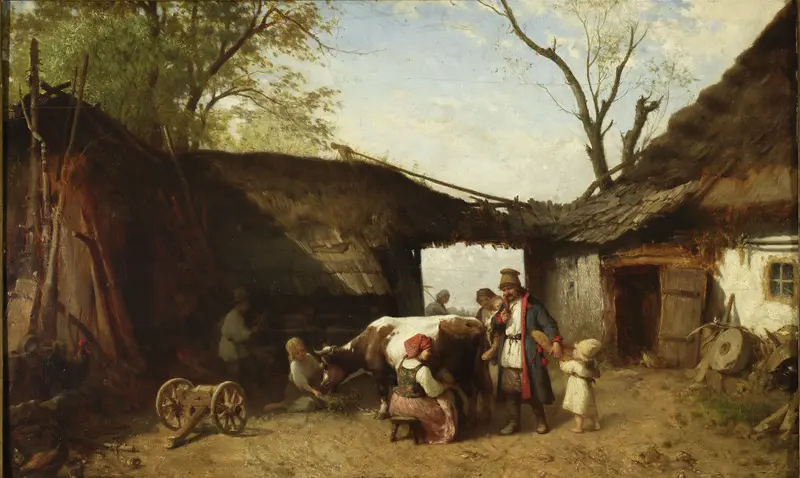
In the farmyard
Aleksander Kotsis
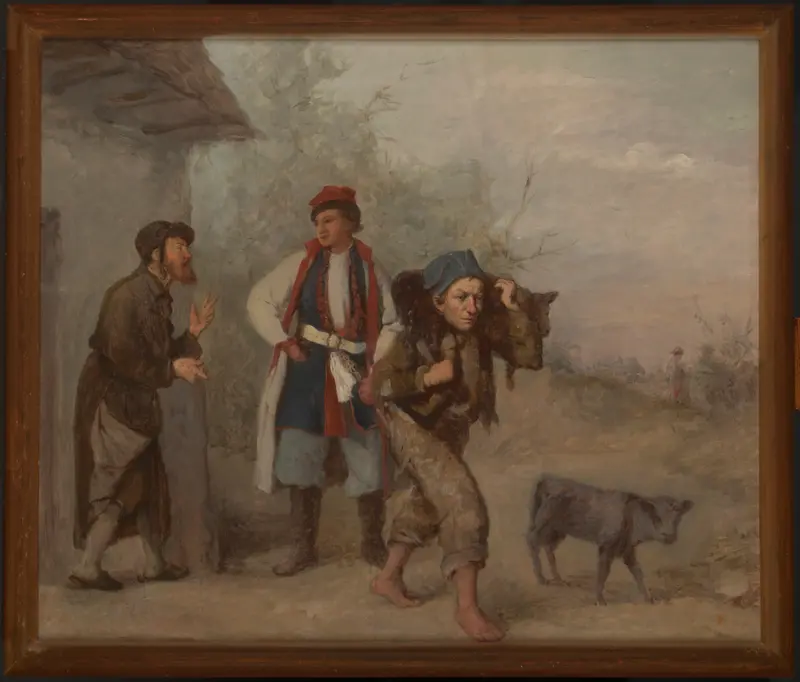
Haggling over a Calf
Aleksander Kotsis
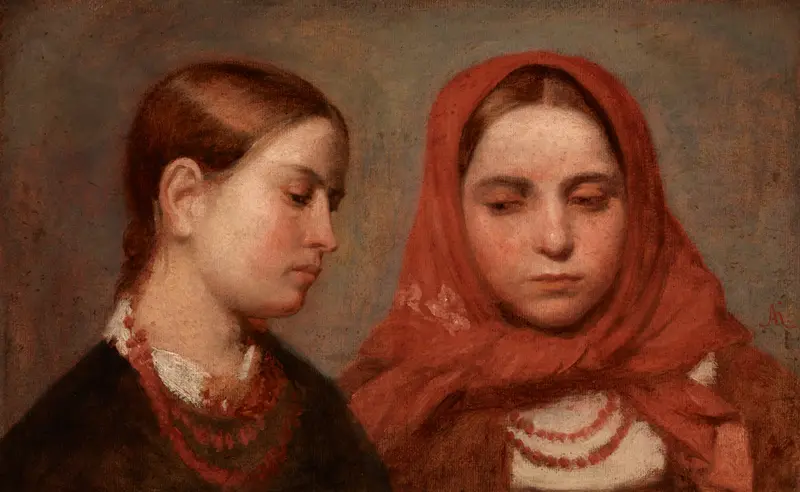
Heads of Two Young Girls
Aleksander Kotsis
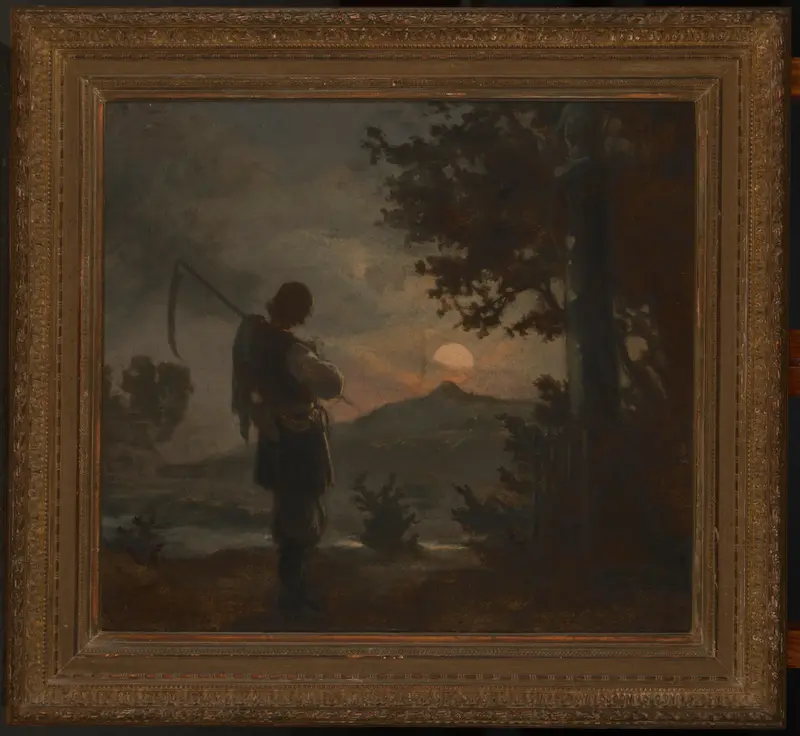
Haymaker
Aleksander Kotsis
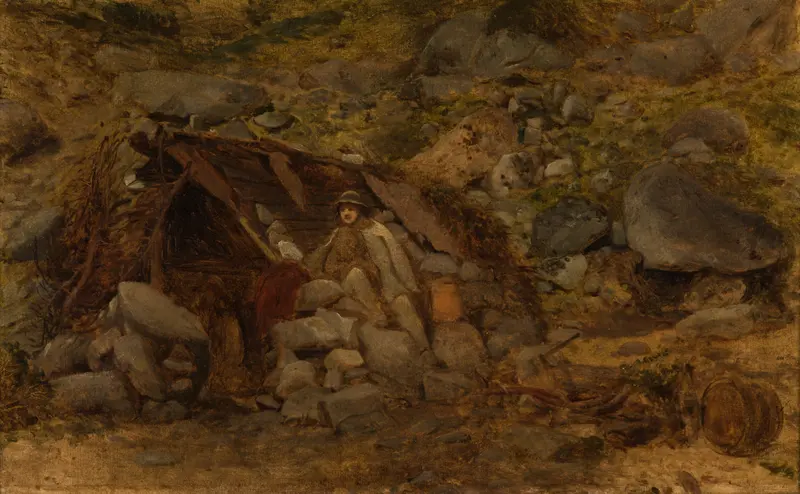
Highlander in Front of a Hut
Aleksander Kotsis
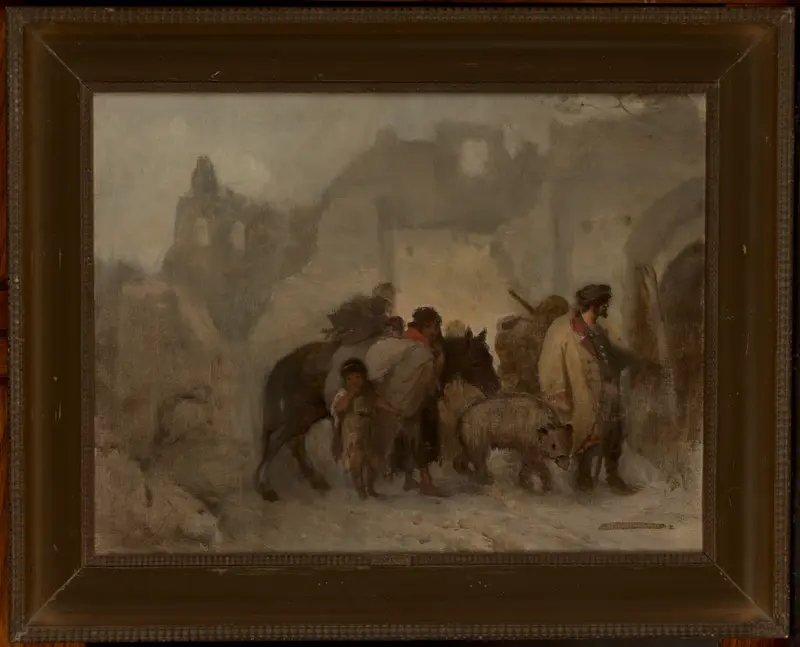
Gypsies
Aleksander Kotsis
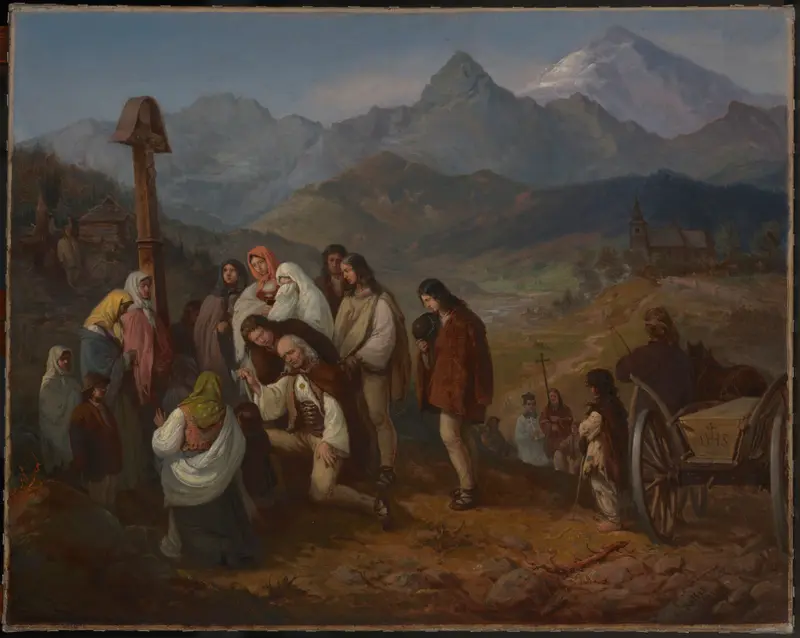
A Highlander's Funeral
Aleksander Kotsis
More Genre Scene Art

Banquet of the Officers of the St George Civic Guard
Frans Hals

Rembrandt and Saskia in the Scene of the Prodigal Son
Rembrandt van Rijn

Bal du moulin de la Galette
Pierre-Auguste Renoir

Quadrille at the Moulin Rouge
Henri de Toulouse-Lautrec

A Burial at Ornans
Gustave Courbet

When Will You Marry?
Paul Gauguin