
A Peasant with a Bird — History & Facts
A sly smile flickers across the peasant’s face, drawing the viewer into a private moment that feels almost conspiratorial. The man, slouched comfortably at a rustic table, holds a small bird with a tenderness that belies his rough appearance. The large jug anchoring the foreground hints at drink and everyday pleasures, while the peasant’s gaze—fixed on his feathered companion—suggests a fleeting amusement or secret trick.
Light catches on his cheek and the bird’s wing, pulling our attention to the intimate exchange at the heart of the scene, while the blurred church steeple in the background quietly reminds us of the world beyond this patch of earth. Painted between 1626 and 1638, A Peasant with a Bird belongs to a world where scenes of humble life were gaining new attention. In the Low Countries, artists like Adriaen Brouwer found inspiration in taverns, village greens, and the laughter of ordinary people—subjects once considered too coarse for serious art. Such paintings were often collected by prosperous townsfolk who delighted in their humor and humanity, and who saw in these images a mirror of their own world, both its follies and its warmth.
The work’s presence today in the Metropolitan Museum of Art’s open-access collection is a reminder that history has kept few traces of the individual lives depicted here, yet the moment endures—inviting us to lean in and share the joke.
More Artworks by Adriaen Brouwer

The Smokers
Adriaen Brouwer
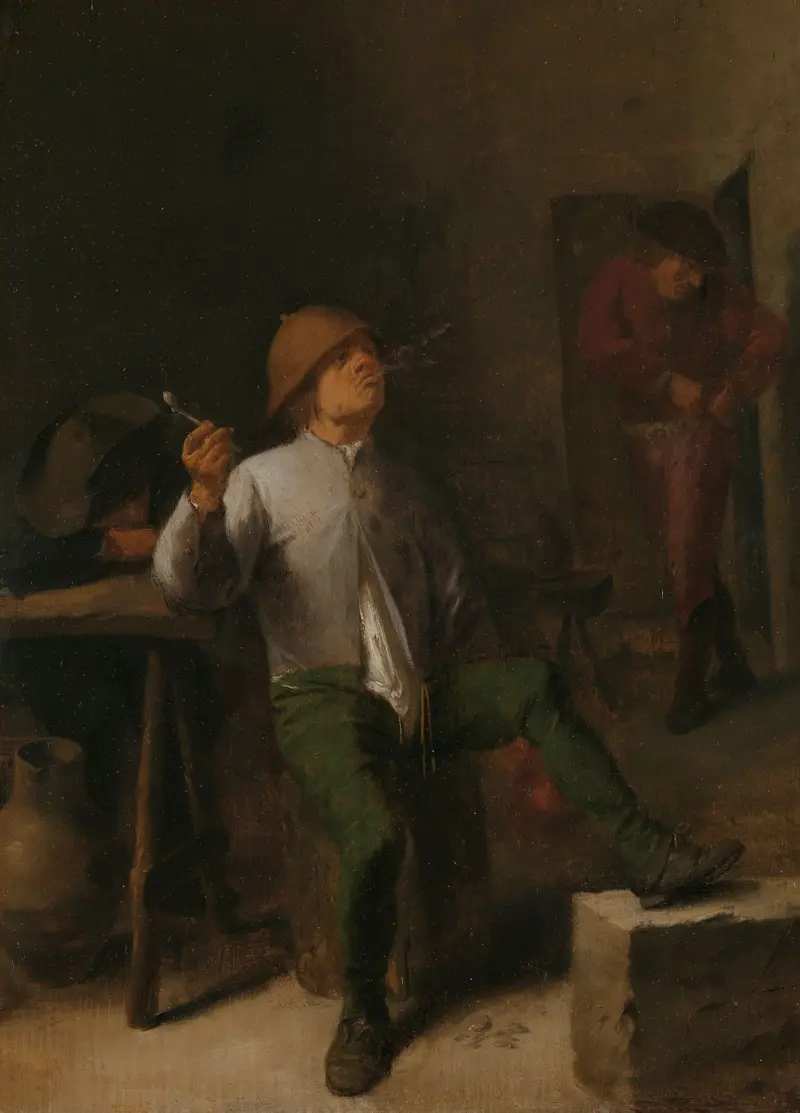
The Smoker
Adriaen Brouwer
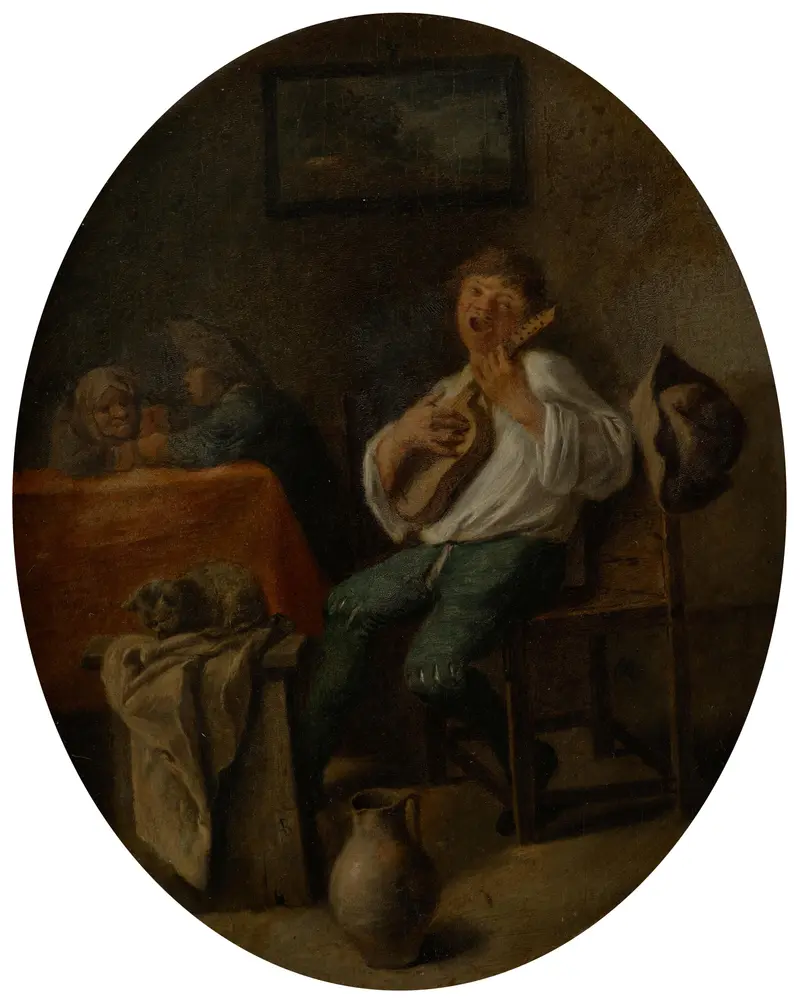
The Guitar Player
Adriaen Brouwer
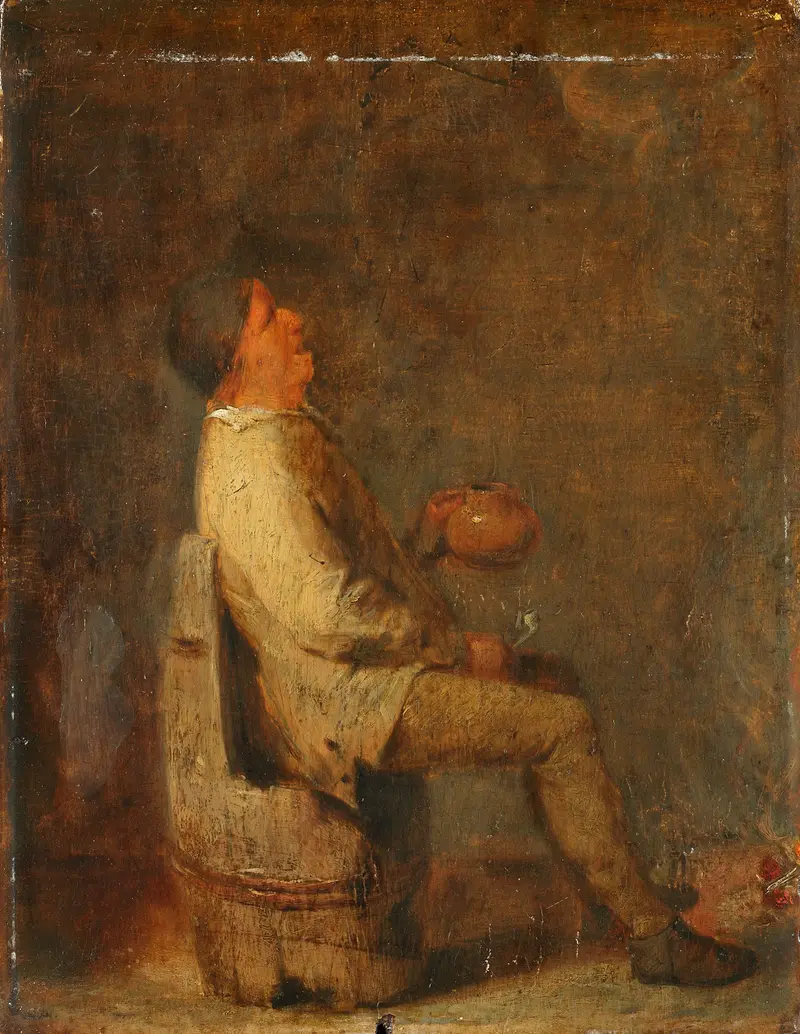
A Peasant Singing
Adriaen Brouwer
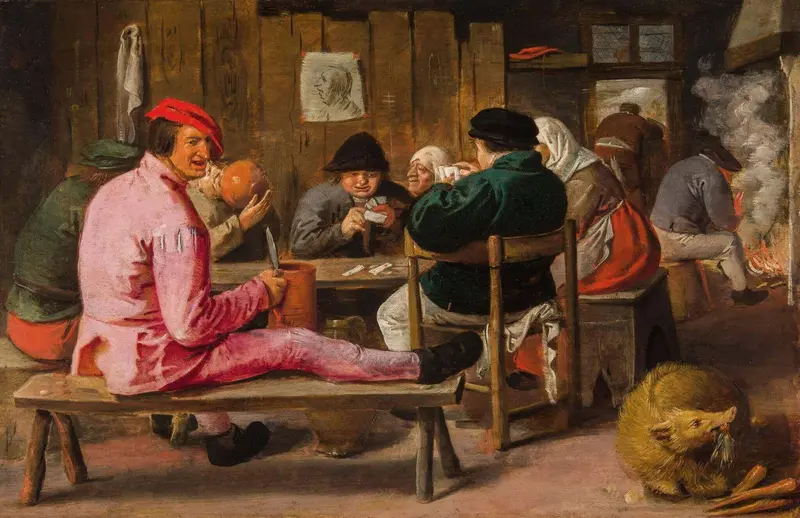
Merry Peasants in an Inn
Adriaen Brouwer
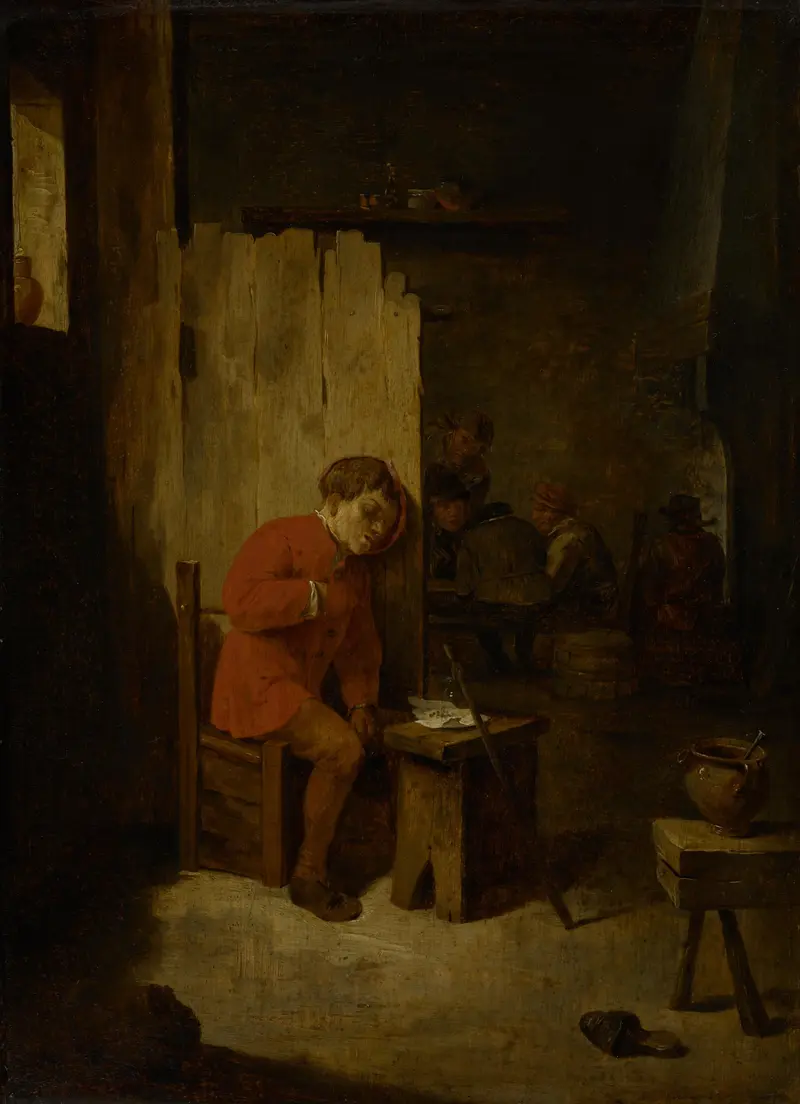
Nachahmer, Schlafender Bauer 853G Gemäldegalerie
Adriaen Brouwer
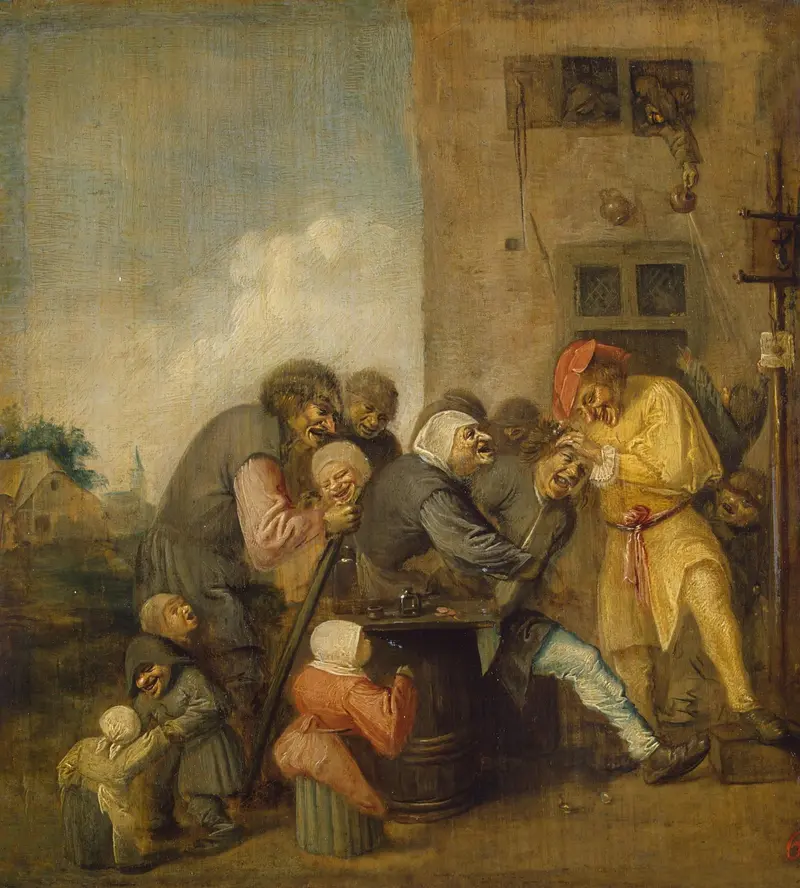
Village Charlatan (The Operation for Stone in the Head)
Adriaen Brouwer
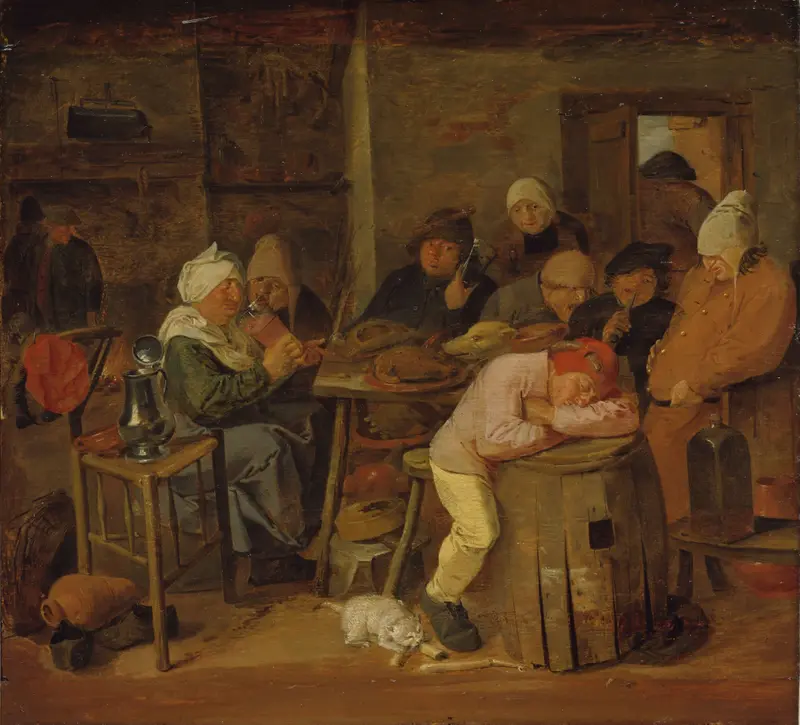
Peasants in an interior (The slaughter feast)
Adriaen Brouwer
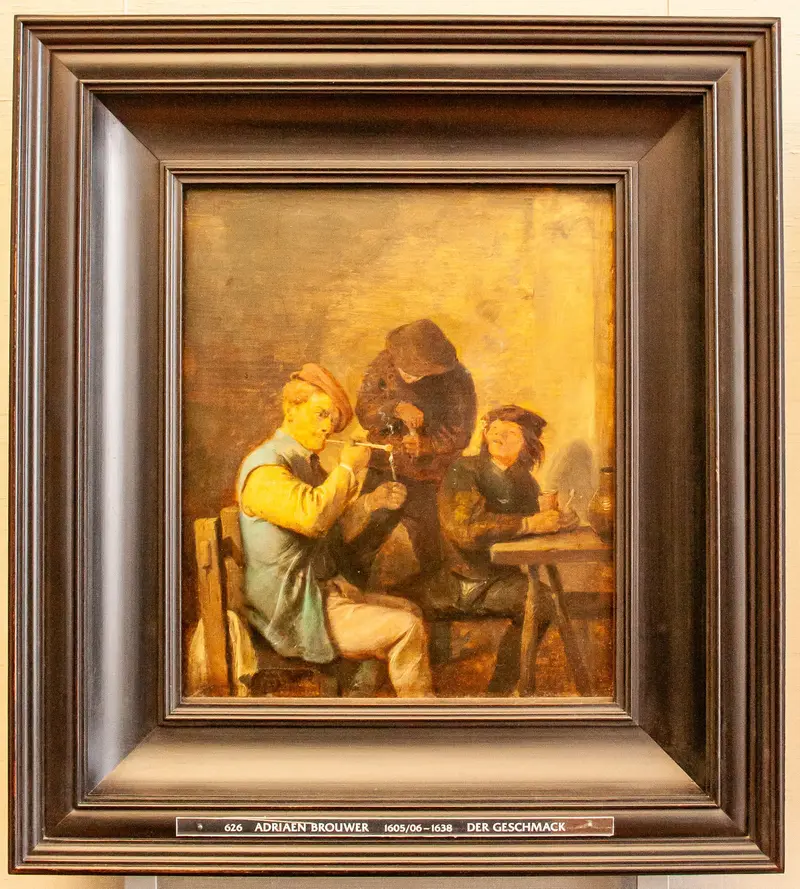
The Taste
Adriaen Brouwer
A Fair
Adriaen Brouwer
More Genre Scene Art

Banquet of the Officers of the St George Civic Guard
Frans Hals

Rembrandt and Saskia in the Scene of the Prodigal Son
Rembrandt van Rijn

Bal du moulin de la Galette
Pierre-Auguste Renoir

Quadrille at the Moulin Rouge
Henri de Toulouse-Lautrec

A Burial at Ornans
Gustave Courbet

When Will You Marry?
Paul Gauguin