
A Pompeian Bath — History & Facts
What first arrests the eye in A Pompeian Bath is the way the figure’s gesture—one arm lifted, the other drawn in as if to shield or steady herself—creates a private world within the marble rotunda. The light, cool and even, glides over her skin and the polished stone, drawing out the contrast between living flesh and the cold geometry of the bath. Every detail is a signal: the sculpted frieze of galloping horses above her head, the precise arc of water from the fountain, the folds of a curtain just entering the frame.
The composition leads you in a slow spiral from the woman’s thoughtful expression, down her body, and out to the edge of the pool, inviting the viewer to linger in this moment of quiet ritual. Painted in 1890, this work stands firmly in the tradition of late nineteenth-century classicism, when artists like John William Godward looked to ancient Rome for inspiration and escape. Such scenes were prized by Victorian collectors for their promise of beauty, order, and sensuality—yet always at a safe historical remove. The marble bathhouse, rendered with archaeological precision, reflects the era’s fascination with antiquity, while the model’s introspective pose hints at a more modern sense of individuality.
Little is recorded about this specific painting’s early history, but its survival into the present, as documented in the collection from which it comes, offers a glimpse into the dreams and ideals of its time—dreams still visible in the careful play of light on stone and skin.
More Artworks by John William Godward

Eighty and eighteen
John William Godward
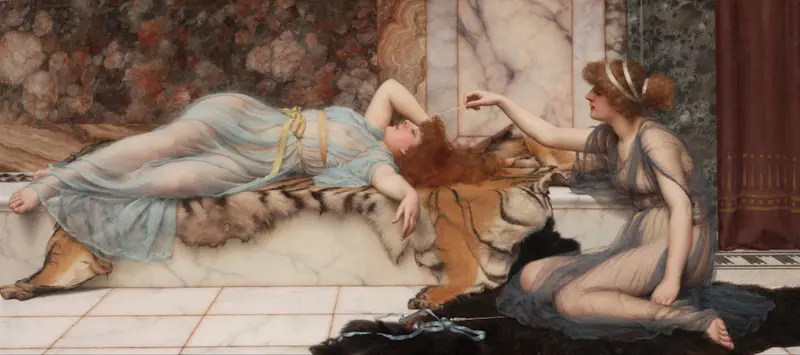
Mischief and Repose
John William Godward
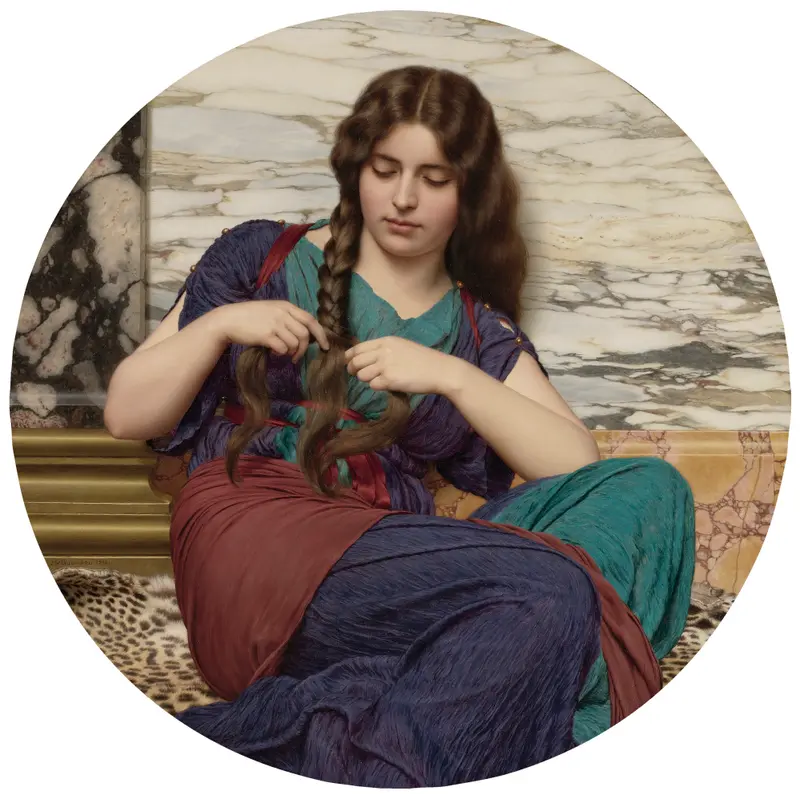
A Congenial Task
John William Godward
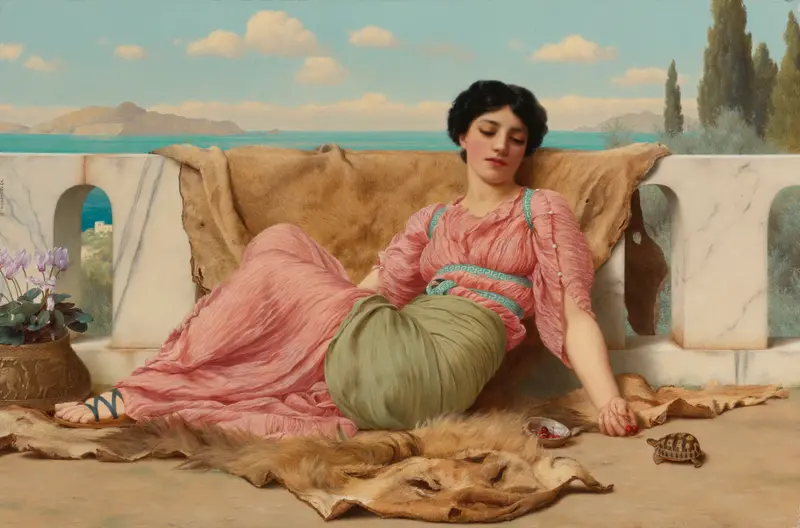
The Quiet Pet
John William Godward
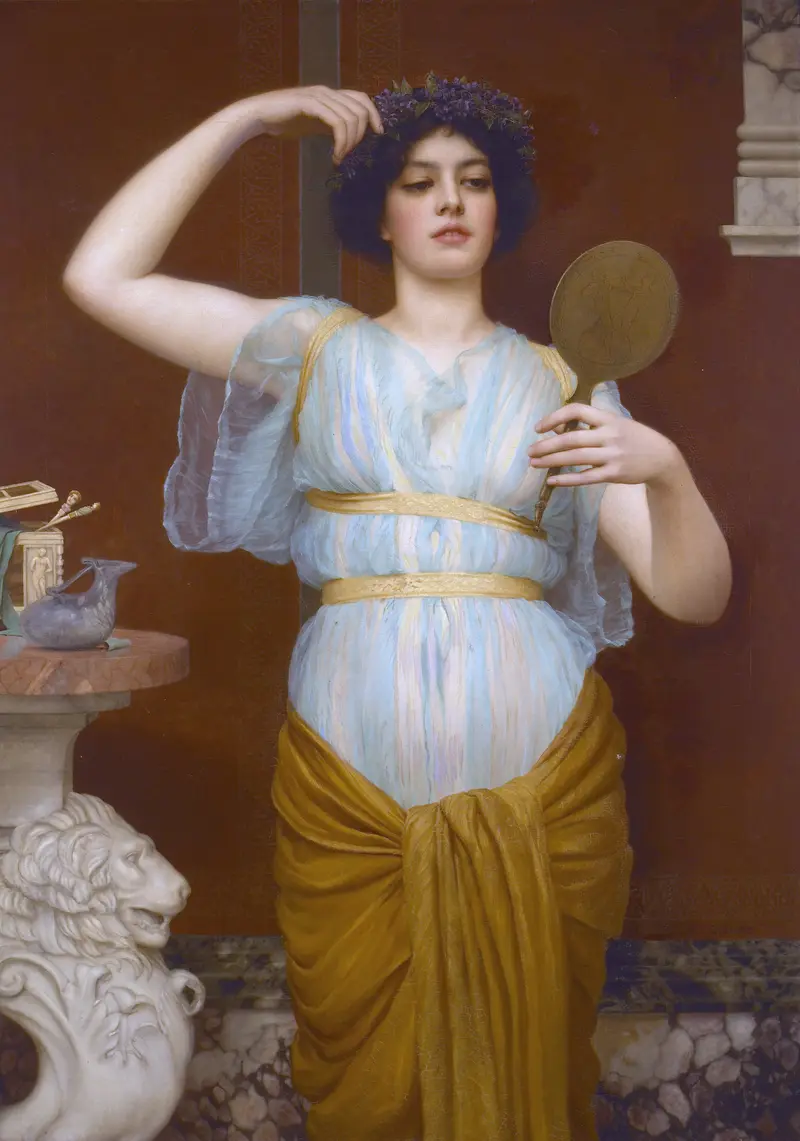
Ione
John William Godward
Sweet Dreams
John William Godward
A Fair Reflection
John William Godward
A Roman Beauty
John William Godward
A Dilettante
John William Godward
Reverie
John William Godward





