
A Pompeian Lady — History & Facts
What first catches the eye in A Pompeian Lady is the almost theatrical poise of the woman as she measures out a golden ribbon, her gaze intent and absorbed. The marble walls and mosaic floors set a stage of cool luxury, but it is the interplay of textures—her diaphanous purple and turquoise gown, the gleaming ribbon, the tiger pelt draped over the bench—that draws the viewer into a world of tactile richness. Every surface seems to invite touch, yet the woman's careful gesture holds us at a respectful distance, as if we are witnessing a private ritual.
The light, crisp and even, sculpts her profile and the folds of her dress, while the muted palette of stone and fabric gives the scene a hushed, contemplative mood. Even the curtain, half-drawn to one side, hints at a world beyond, but the composition keeps our attention firmly within this marble sanctuary. Painted in 1891 by John William Godward, this work belongs to the late Victorian fascination with the classical past—a genre that flourished in Britain as artists and collectors alike sought escape in the imagined elegance of ancient Rome and Greece. Such paintings were rarely about historical accuracy; instead, they conjured a fantasy of refinement and repose, often destined for the drawing rooms of the wealthy or the walls of exhibitions eager to display technical virtuosity.
Godward, a devotee of the Neoclassical style, was known for his almost obsessive attention to the textures of marble, fabric, and flesh, setting him apart from contemporaries who leaned toward looser brushwork or narrative drama. Though A Pompeian Lady now resides in the collection of Christie’s, history has kept few traces of its early journey—leaving us with the image itself, and the invitation to linger over every carefully rendered detail.
More Artworks by John William Godward

Eighty and eighteen
John William Godward
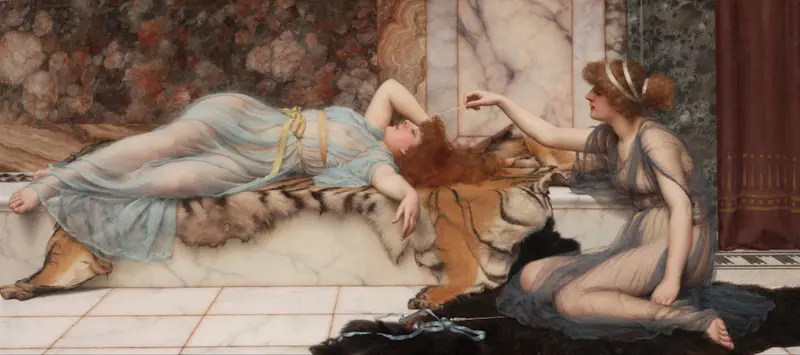
Mischief and Repose
John William Godward
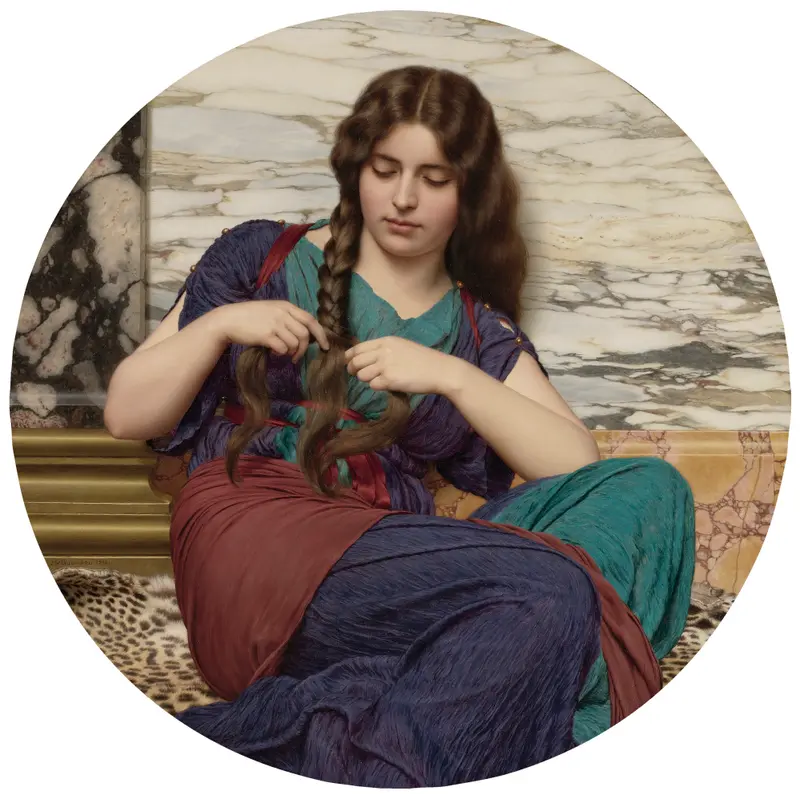
A Congenial Task
John William Godward
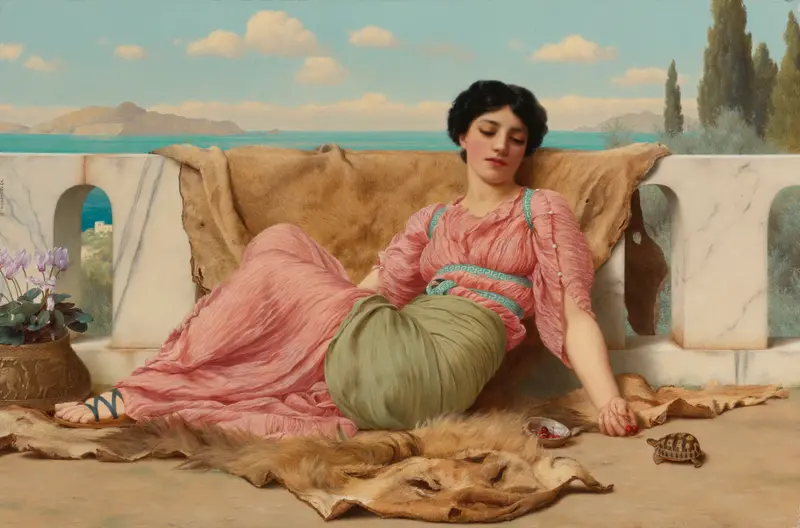
The Quiet Pet
John William Godward
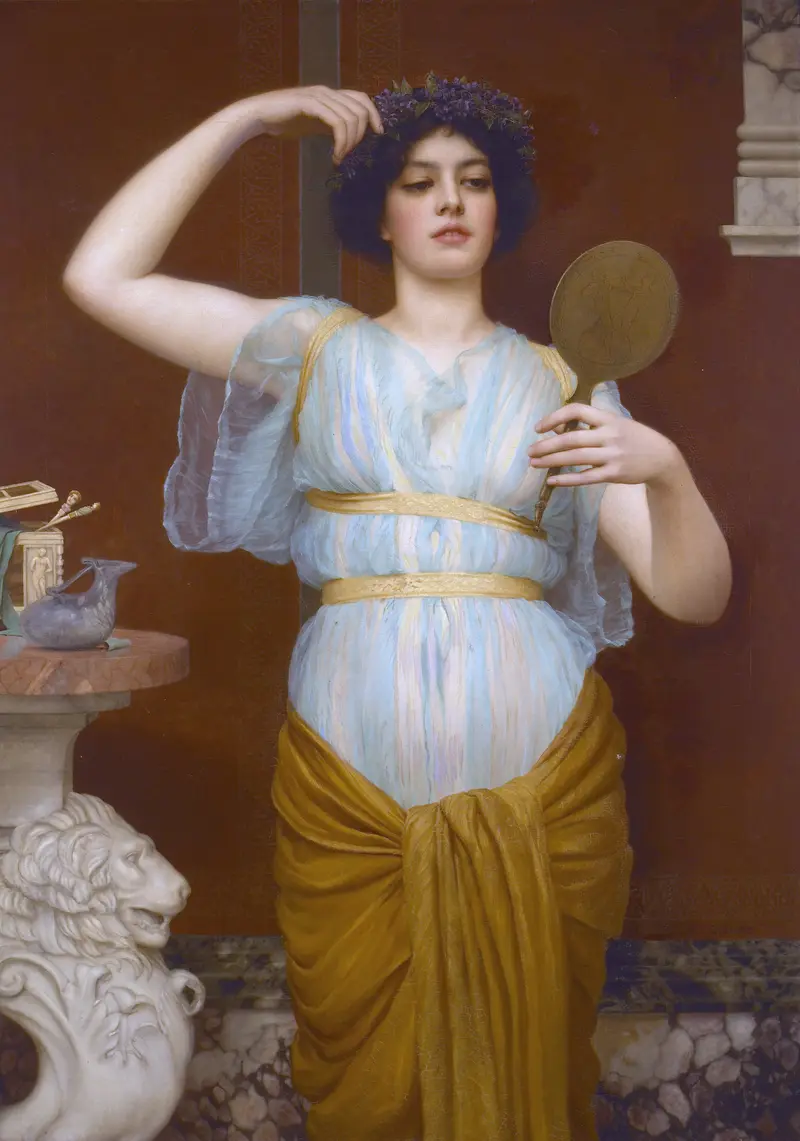
Ione
John William Godward
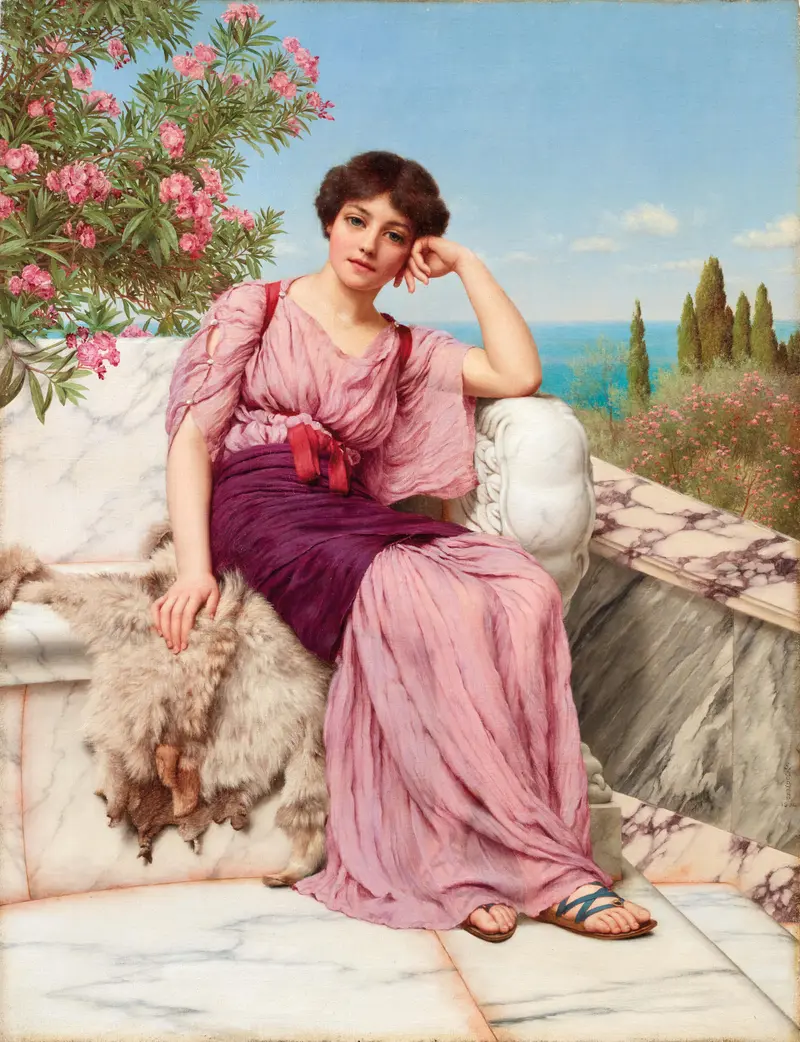
Sweet Dreams
John William Godward
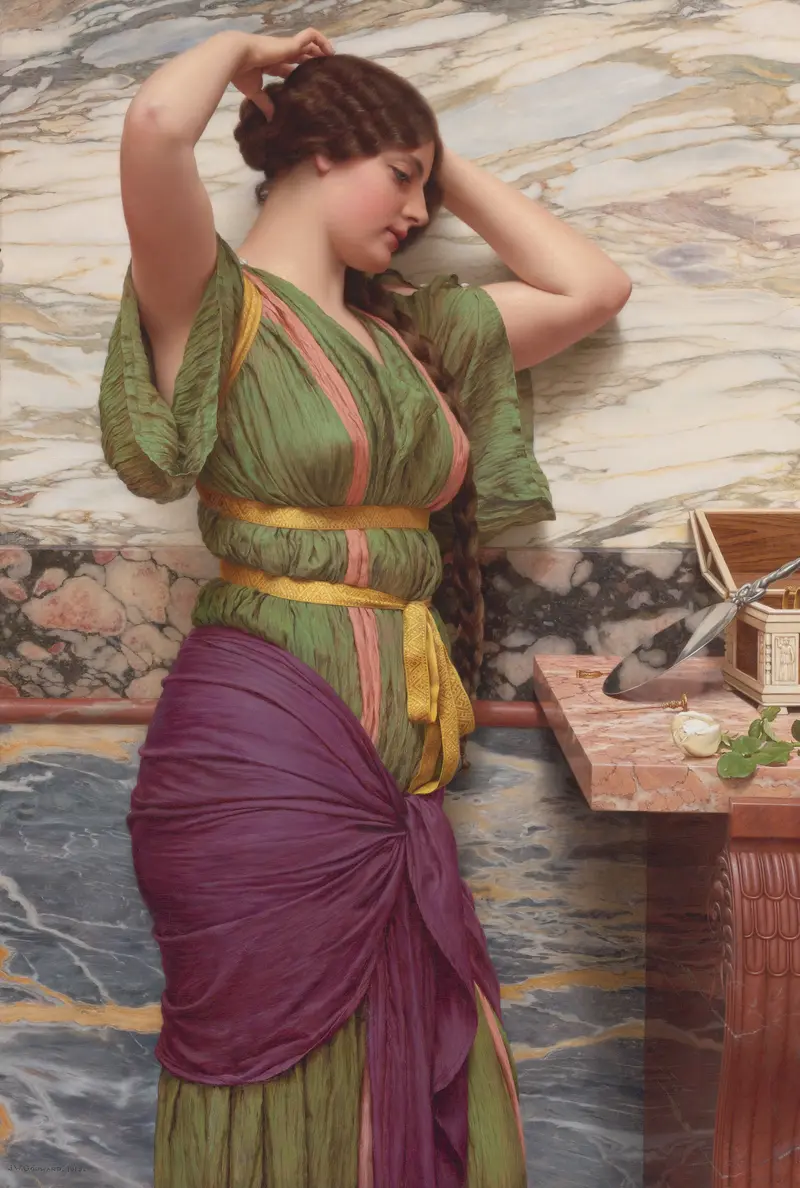
A Fair Reflection
John William Godward
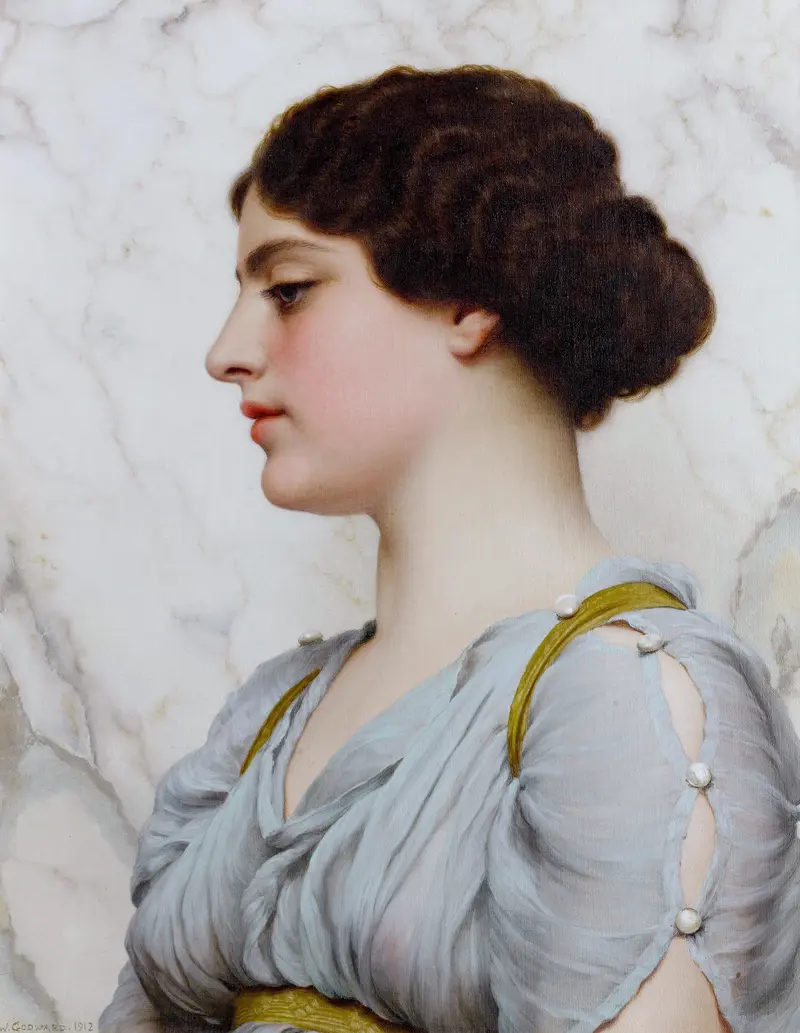
A Roman Beauty
John William Godward
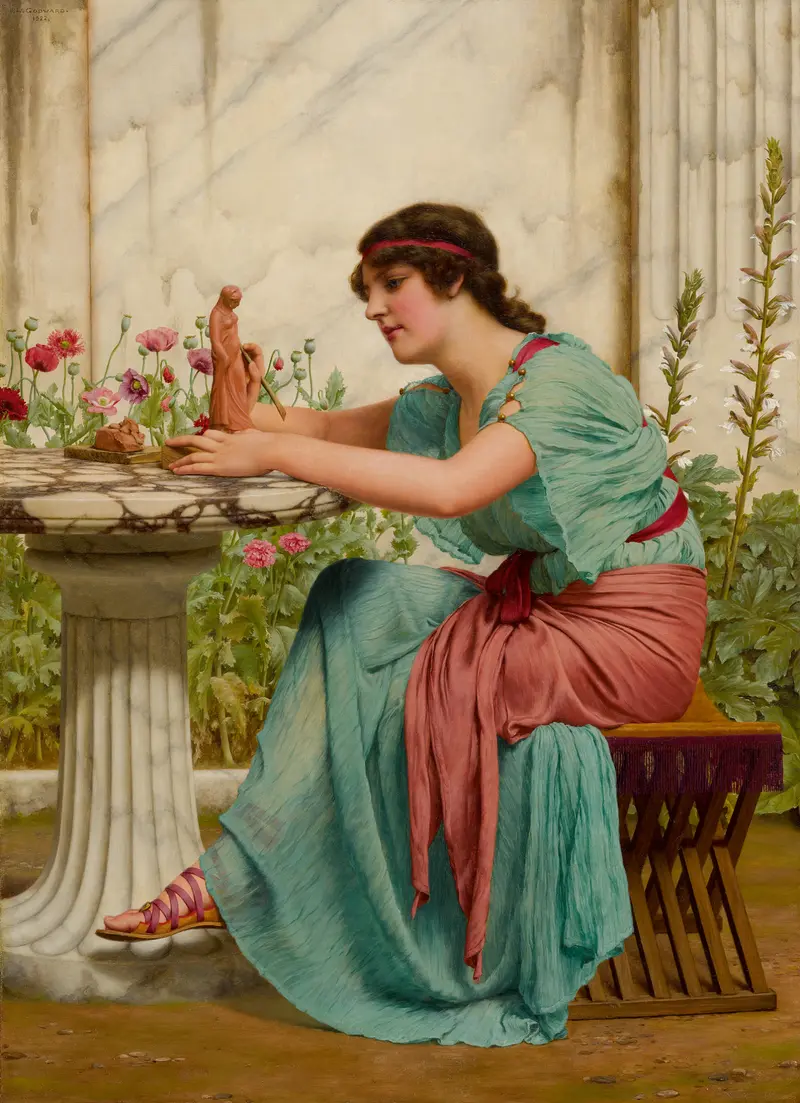
A Dilettante
John William Godward
Reverie
John William Godward
More Genre Scene Art

Banquet of the Officers of the St George Civic Guard
Frans Hals

Rembrandt and Saskia in the Scene of the Prodigal Son
Rembrandt van Rijn

Bal du moulin de la Galette
Pierre-Auguste Renoir

Quadrille at the Moulin Rouge
Henri de Toulouse-Lautrec

A Burial at Ornans
Gustave Courbet

When Will You Marry?
Paul Gauguin