
A priestess of Bacchus — History & Facts
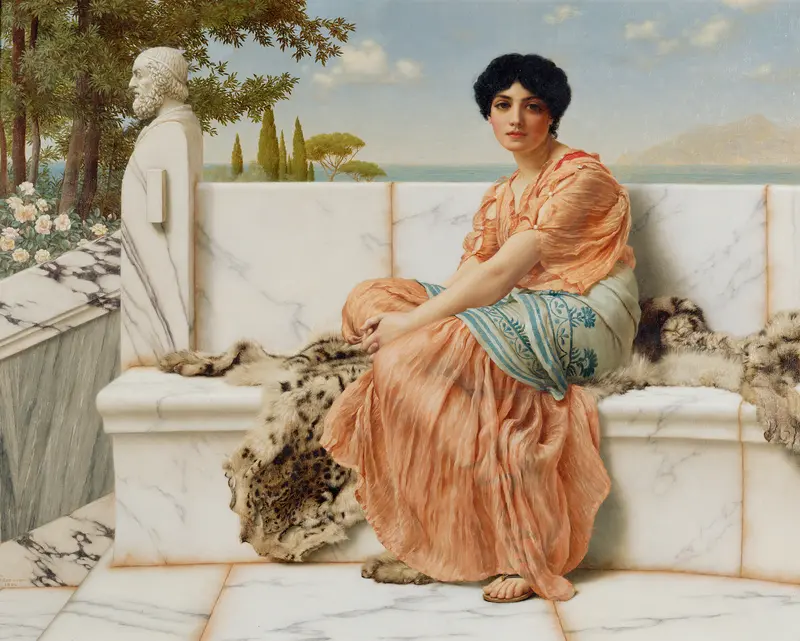
It is the languor of the priestess that first catches the eye—her body draped across the marble bench as if she has surrendered herself to the sun and the sea air. The softness of her ochre robe, the weight of her arm hanging over the carved inscription, and the thyrsus—crowned with a pinecone and ribbons—signal her role in the rites of Bacchus. Godward leads the viewer along the curve of the marble, from the priestess’s distant gaze to the couple at the water’s edge, their backs turned, absorbed in their own moment.
The Mediterranean light floods the scene, sharpening the white stone and casting the sea into a cool, inviting blue, while the roses at the edge of the frame hint at both ritual and leisure. The entire composition feels suspended between ceremony and repose, inviting us to wonder what devotion looks like after the revels have faded. Painted in 1890, A priestess of Bacchus belongs to the world of late Victorian classicism, a genre that delighted in reimagining the ancient Mediterranean with archaeological precision and a touch of dream. Artists like John William Godward found inspiration in the excavations of Pompeii and the writings of Winckelmann, producing works that adorned the homes of collectors eager for a taste of antiquity’s imagined grace.
This piece, now documented in the Sotheby’s collection, is a testament to the era’s fascination with ritual, beauty, and the private moments behind public myth. History has kept few traces of the individual stories behind such paintings, but their allure endures—drawing us back to the priestess’s languid pose, and the world she inhabits just beyond the marble balustrade.
More Artworks by John William Godward

Eighty and eighteen
John William Godward
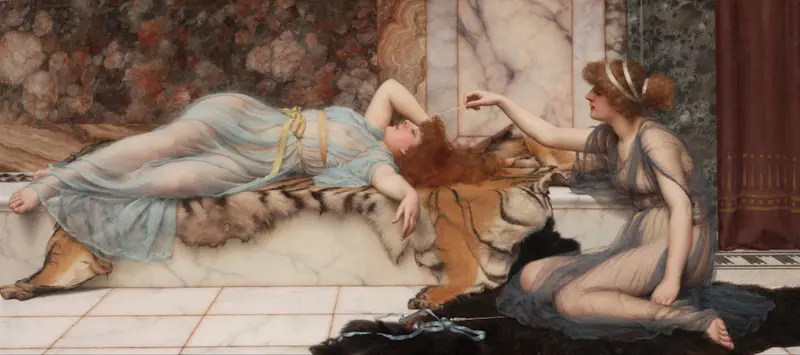
Mischief and Repose
John William Godward
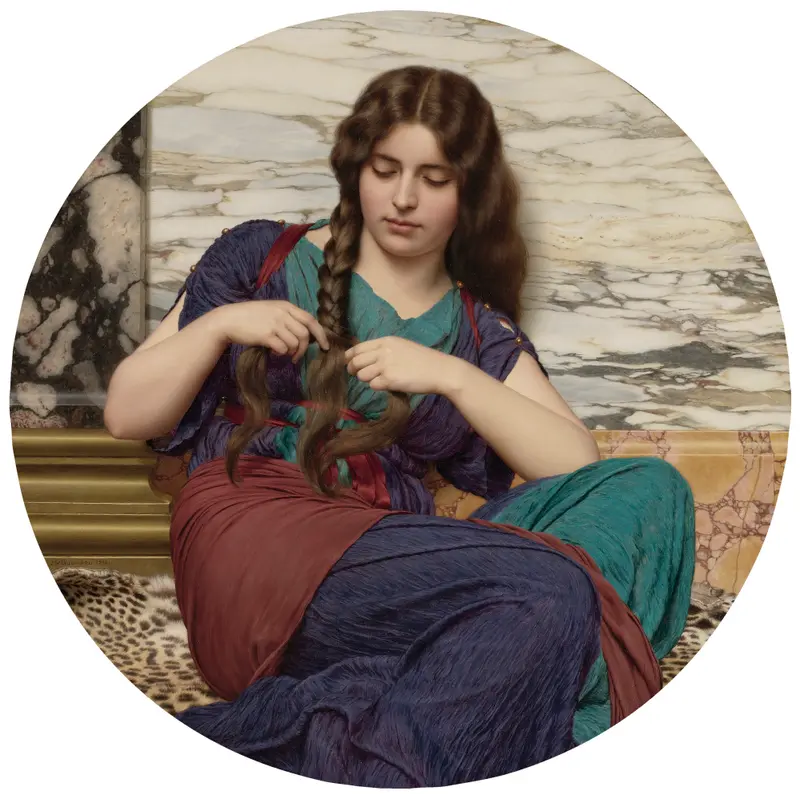
A Congenial Task
John William Godward
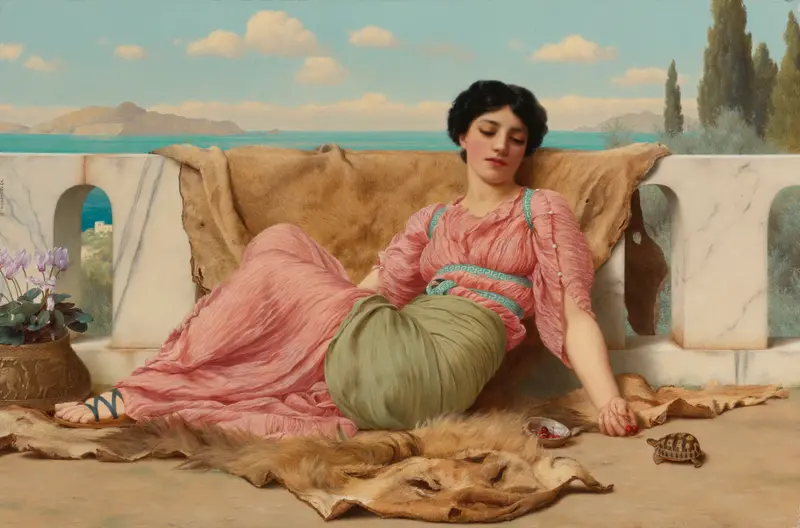
The Quiet Pet
John William Godward
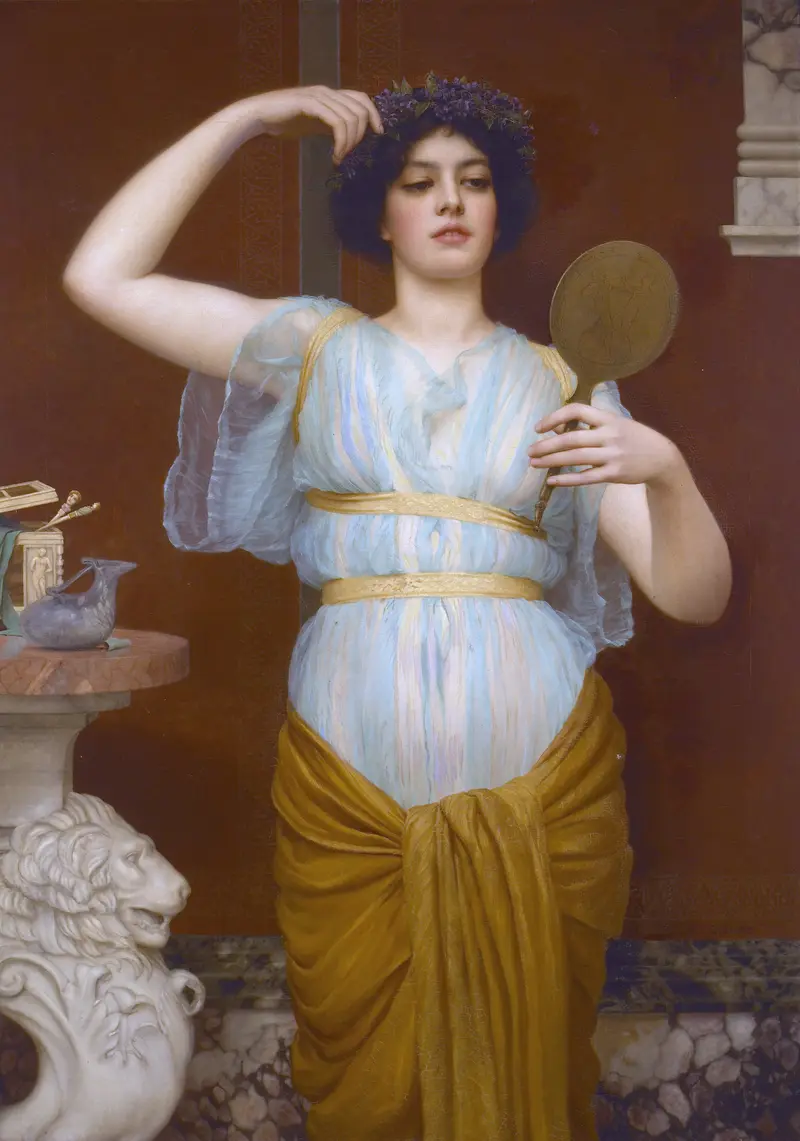
Ione
John William Godward
Sweet Dreams
John William Godward
A Fair Reflection
John William Godward
A Roman Beauty
John William Godward
A Dilettante
John William Godward
Reverie
John William Godward





