
After the grape harvest — History & Facts
What first catches the eye in After the grape harvest is the sense of revelry suspended, as if the laughter and chatter have only just faded. The central figure, crowned with vine leaves and berries, beams with the flush of celebration, his companion’s gaze drifting dreamily into the distance. The brushwork is loose, almost reckless, yet every gesture is deliberate: the tangle of foliage, the flushed cheeks, the way the young woman at right leans in, her hand resting on the table, her eyes meeting the viewer’s with a look that is both candid and weary.
The palette is earthy and autumnal, echoing the harvest’s abundance, while the background dissolves into a haze of ochre and green, pressing the figures forward. Even the objects—a terracotta basin, a bust, bottles—become part of the spectacle, tokens of festivity and memory. Painted in 1885, this work belongs to a world in flux, when artists like Antonio Mancini were pushing the boundaries of realism and impression, capturing not just the facts but the sensations of modern life. In Italy and beyond, scenes of rural labor and festivity were popular with collectors eager for both nostalgia and novelty, and painters responded with images that celebrated ordinary people and their rituals.
The Mesdag Collection, where this painting now resides, is a testament to the international appetite for such works in the late nineteenth century. History has kept few traces of this specific gathering, but the painting’s rough energy and crowded composition invite us to linger, searching for stories in every brushstroke and glance.
More Artworks by Antonio Mancini

Portrait of a lady
Antonio Mancini
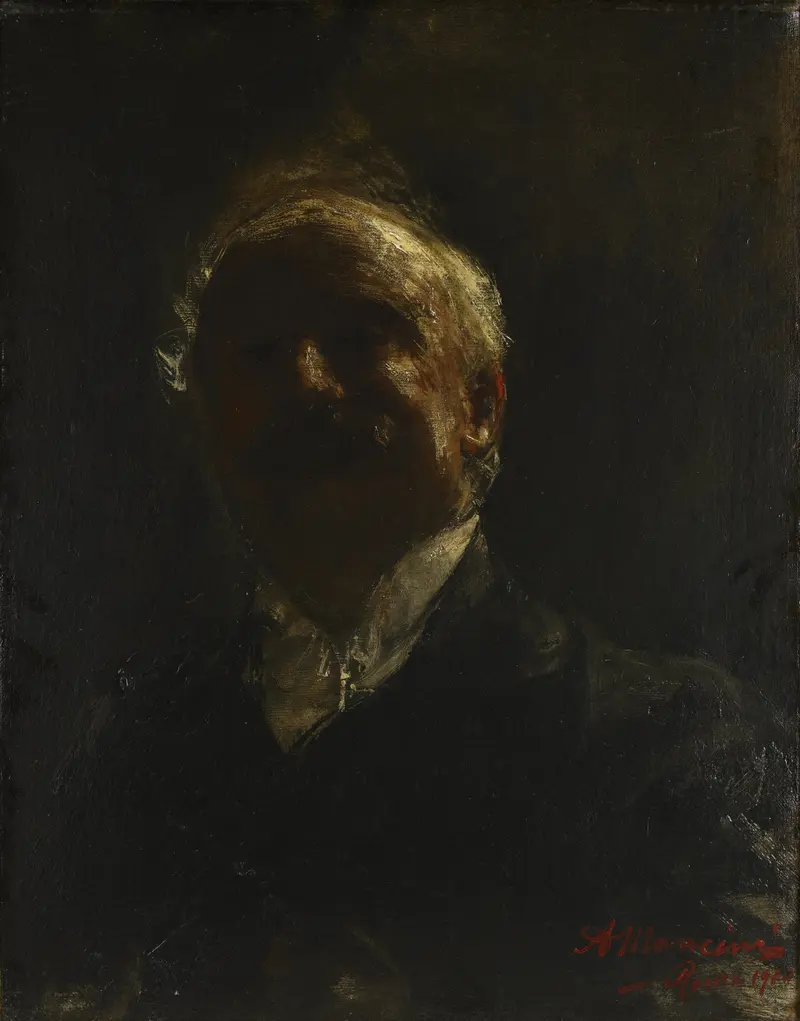
Self-Portrait
Antonio Mancini
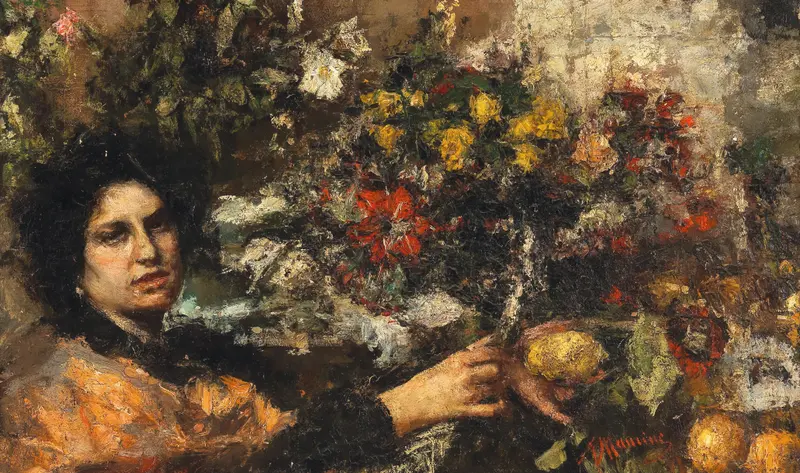
The Flower Seller
Antonio Mancini
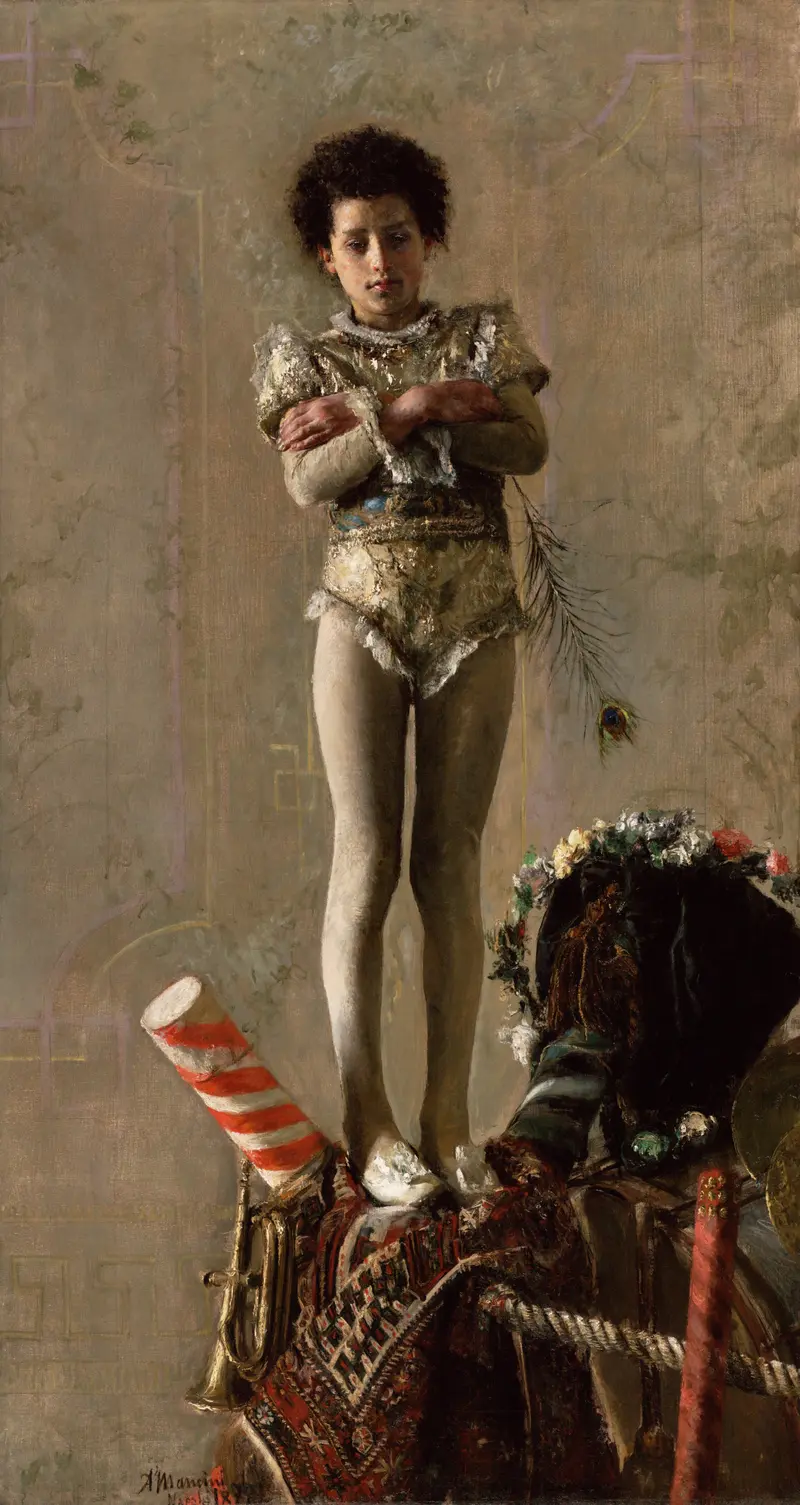
The Saltimbanco
Antonio Mancini
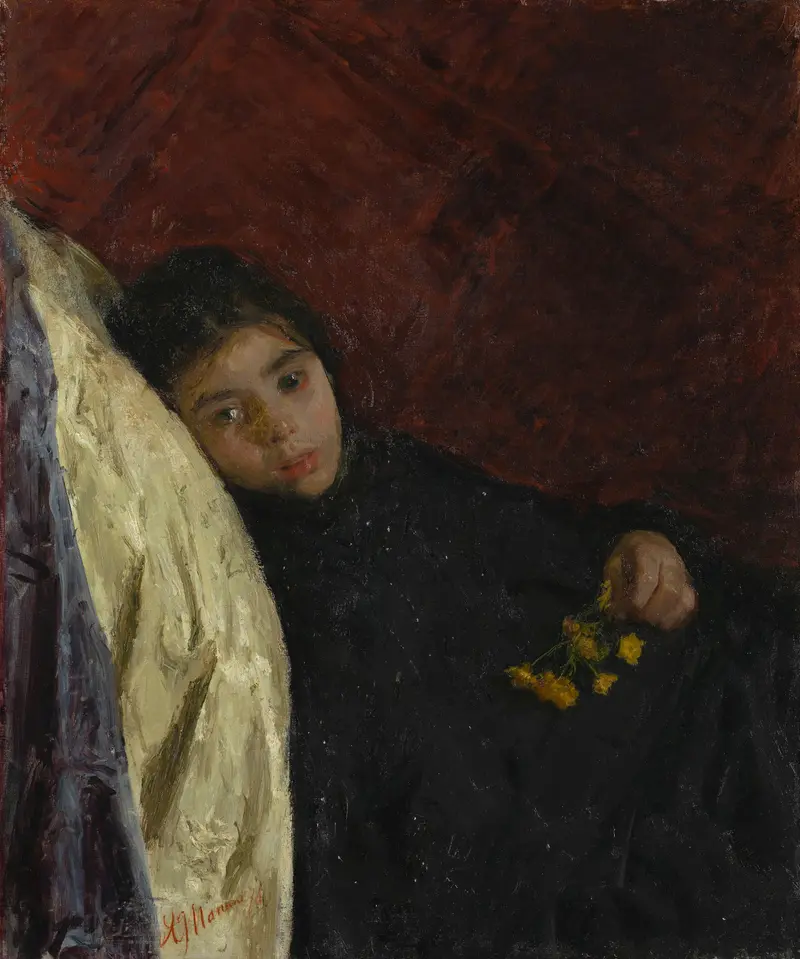
The sick child
Antonio Mancini
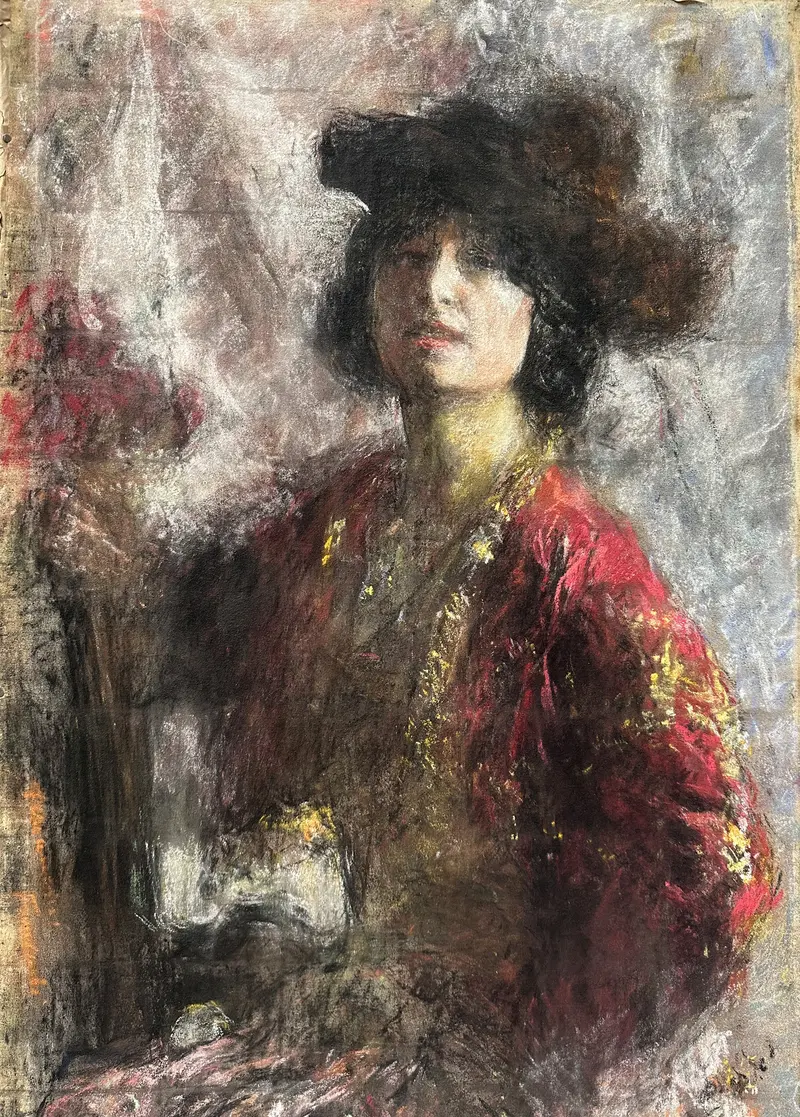
Bolero. Bullfighter
Antonio Mancini
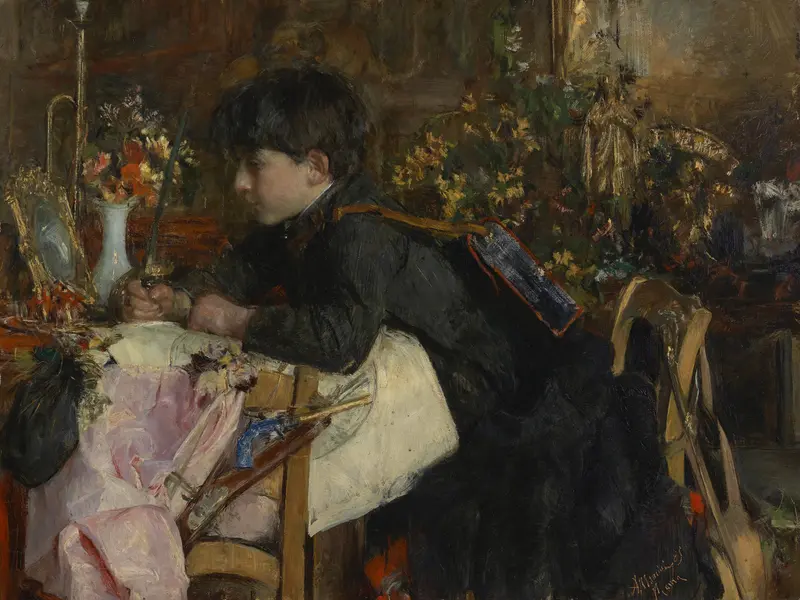
The birthday
Antonio Mancini
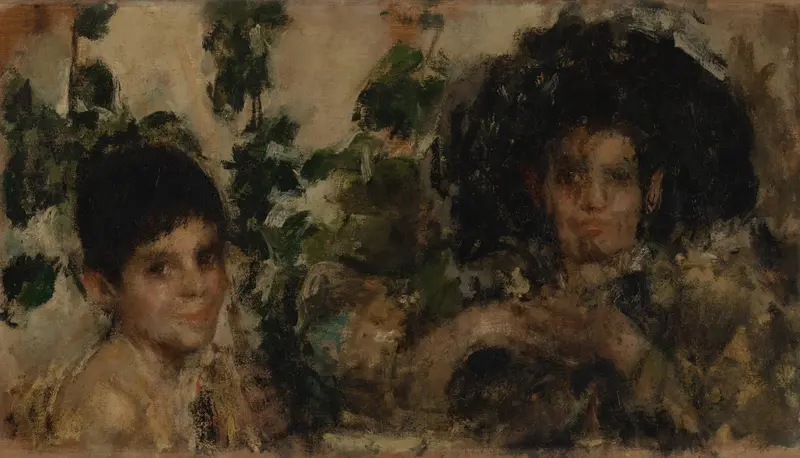
The brothers
Antonio Mancini
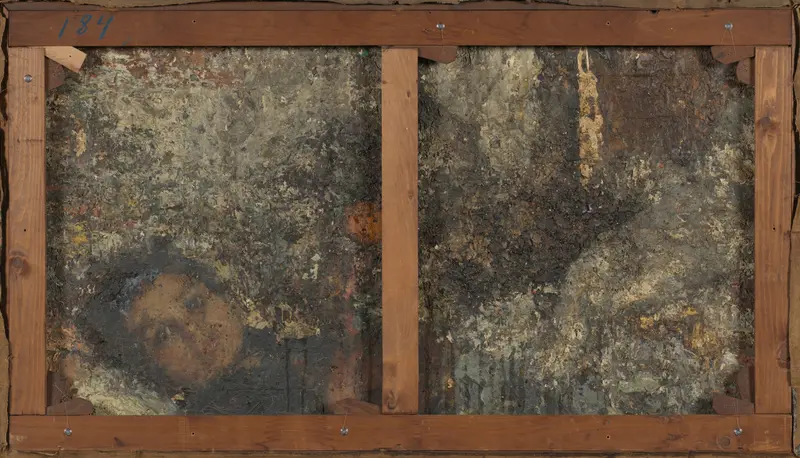
Liggend kind hwm0184v The Mesdag Collection
Antonio Mancini
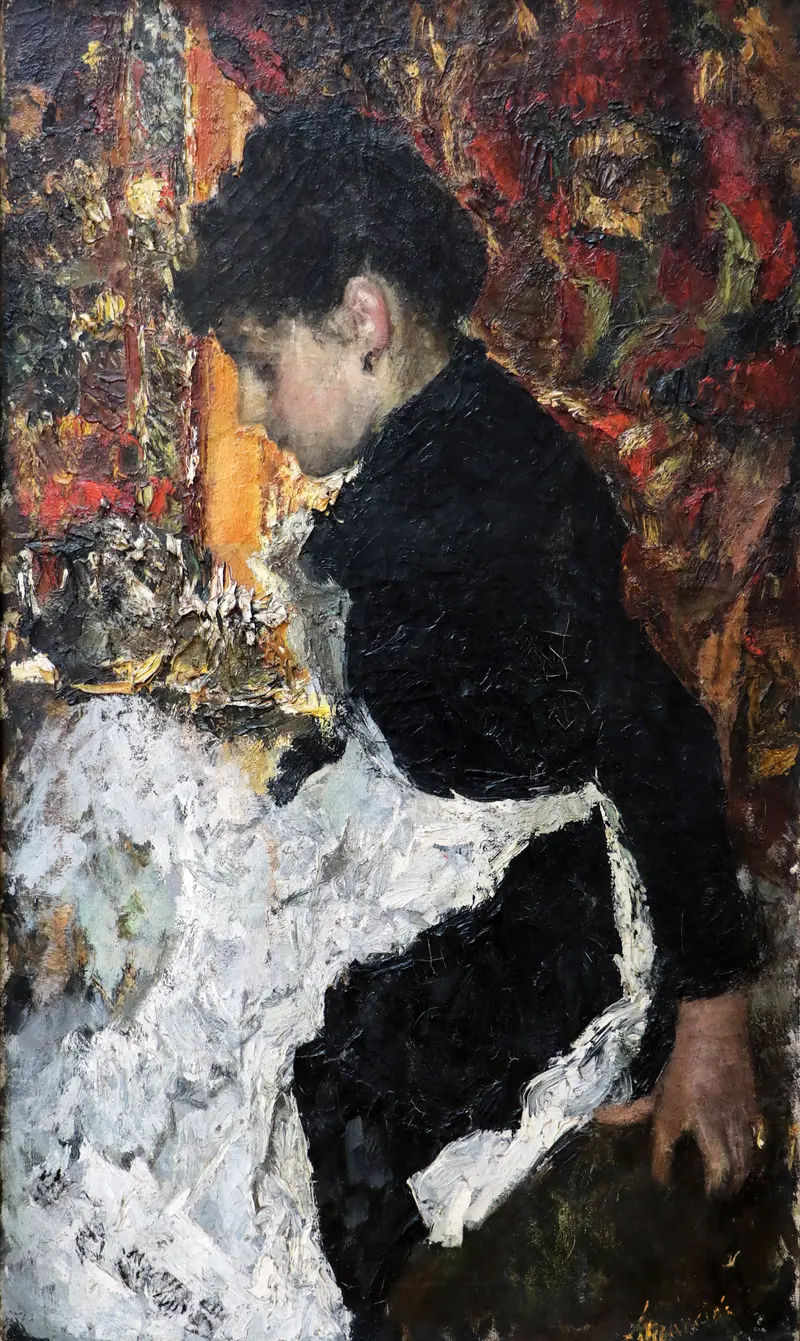
Servetta
Antonio Mancini
More Genre Scene Art

Banquet of the Officers of the St George Civic Guard
Frans Hals

Rembrandt and Saskia in the Scene of the Prodigal Son
Rembrandt van Rijn

Bal du moulin de la Galette
Pierre-Auguste Renoir

Quadrille at the Moulin Rouge
Henri de Toulouse-Lautrec

A Burial at Ornans
Gustave Courbet

When Will You Marry?
Paul Gauguin