
(Agen) Renaud et Armide - Domenico Tintoretto - Musée des Beaux-Arts d'Agen — History & Facts
In the late 16th century, the tale of Renaud and Armide was a favorite among Venetian painters, but Domenico Tintoretto’s version in the Musée des Beaux-Arts d’Agen stands out for its rare focus on the moment of enchantment, rather than battle or escape. Painted around 1580, this canvas captures a literary scene from Torquato Tasso’s Gerusalemme Liberata, a poem that had swept through Europe’s courts and studios since its publication in 1581. While his father, Jacopo Tintoretto, was known for grand biblical dramas, Domenico turned to this chivalric romance, possibly at the request of a learned patron eager to own a scene from the most fashionable epic of the day. The painting freezes the instant when the sorceress Armide, sent to destroy the Christian knight Renaud, instead finds herself overcome by love as he sleeps.
Armide, poised above the armored Renaud, holds a dagger in one hand and a garland in the other—a clear visual tension between vengeance and tenderness. The soft illumination on Renaud’s exposed chest draws the viewer’s eye to his vulnerability, while Armide’s troubled gaze betrays her inner conflict. The lush, shadowed garden setting, with its classical ruins, hints at both the magic and melancholy of the tale.
Unlike Nicolas Poussin’s later, more restrained treatment of the same subject, Domenico’s figures are caught in a swirl of emotion and movement, emphasizing the drama of choice. Little is known about the early history of Renaud et Armide, though its style and subject are typical of Venetian painting in the last decades of the 16th century, when artists often mixed literary themes with sensuous color. The painting’s journey to Agen is undocumented, but it likely entered the Musée des Beaux-Arts collection during the 19th century, a period when French museums actively acquired Italian Renaissance works. Today, it hangs as a testament to Domenico Tintoretto’s independent voice—distinct from his father, yet firmly rooted in the Venetian tradition of theatrical storytelling.
The work remains a rare example of Tasso’s epic interpreted by a Venetian hand, inviting viewers to linger over the moment when love and duty collide.
More Artworks by Tintoretto
The Last Supper
Tintoretto
The Miracle of the Slave
Tintoretto
Venus and Mars Surprised by Vulcan
Tintoretto

Adoration of the Shepherds
Tintoretto
Adoration of the Magi
Tintoretto
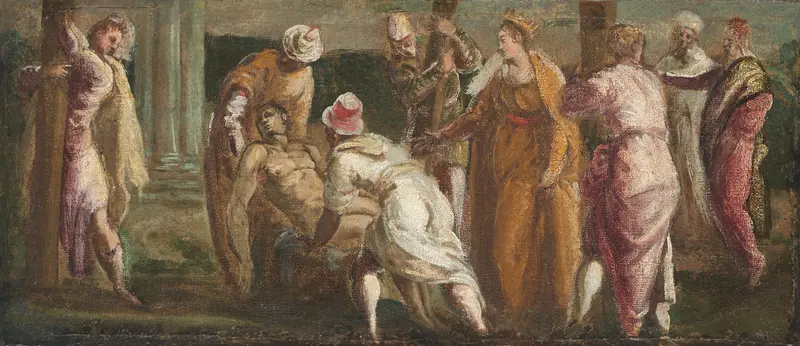
Saint Helen Testing the True Cross
Tintoretto
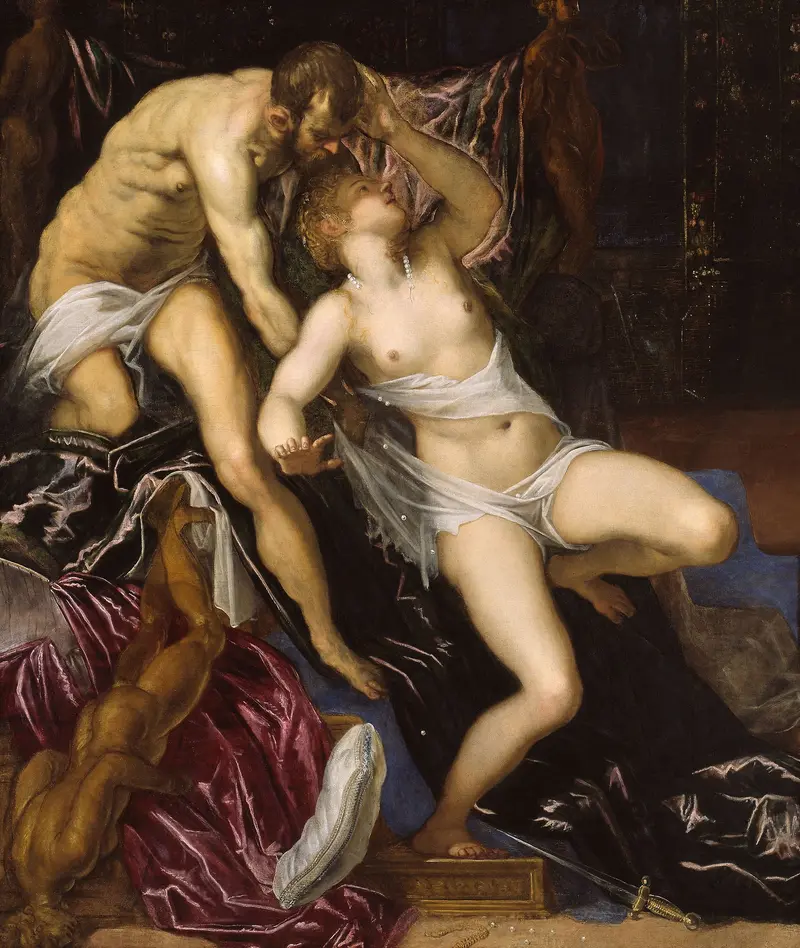
Tarquin and Lucretia
Tintoretto
Two Male Figures in Motion (verso)
Tintoretto
A Female Nude [verso]
Tintoretto
Veduta Kopra
Tintoretto





