
Akhtyrka, Framework for a Pile of Hay and Farm — History & Facts
A skeleton of timber rises at a sharp angle, casting blue shadows on a field of yellow that seems almost to vibrate with energy. The eye is drawn first to the open framework—unfinished or collapsing, it is hard to say—which stands as both shelter and puzzle at the heart of the scene. Behind and beneath it, a pile of hay glows with ochre and red, while the surrounding buildings huddle low along the horizon, their forms simplified into blocks of color.
The clouds above, outlined in bold strokes, echo the structure’s geometry, and the entire composition feels charged with a restless motion, as if the landscape itself is caught mid-transformation. Painted in 1917, during a period of upheaval both for Wassily Kandinsky and the world around him, this work belongs to a moment when the boundaries between representation and abstraction were dissolving. The rural subject—a farm, a haystack, a wooden frame—would have been familiar to viewers of the time, but Kandinsky twists the scene into something more psychological than pastoral. The brushwork is urgent, almost impatient, and the palette—acidic yellows, deep blues, flashes of red—suggests a world on the edge of change.
History has kept few traces of the everyday Russian countryside in this era, but here, the ordinary is made strange and unforgettable; the longer you look, the more the landscape seems to pulse with the artist’s own sense of uncertainty and possibility.
More Artworks by Wassily Kandinsky

Improvisation 35
Wassily Kandinsky
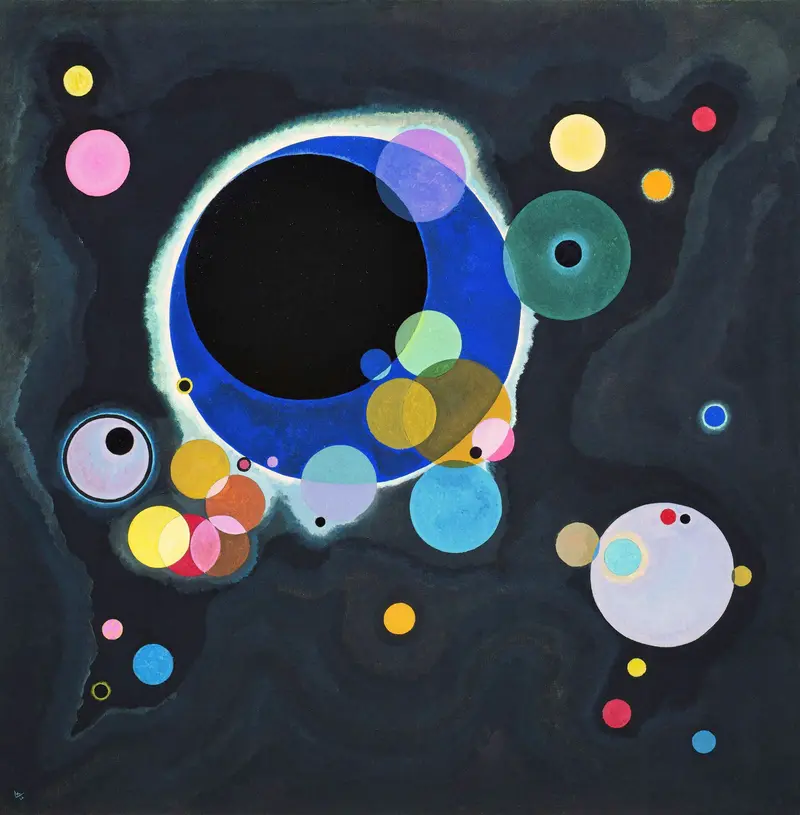
Several Circles
Wassily Kandinsky
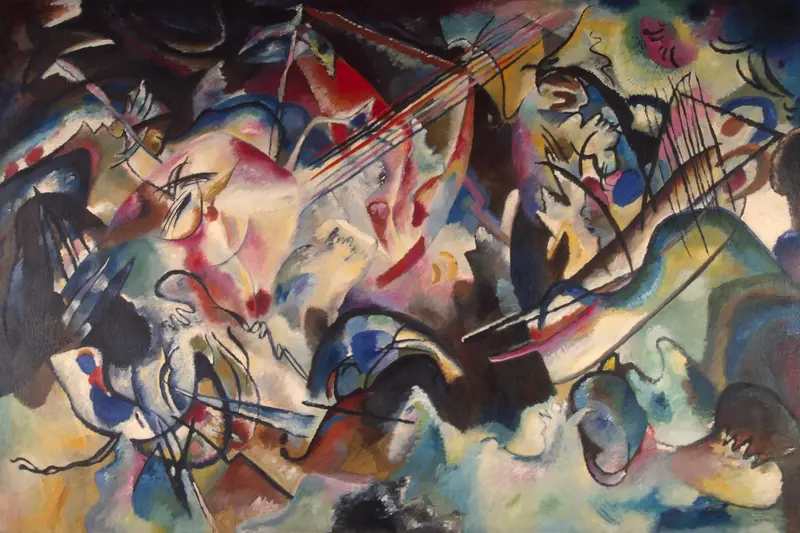
Composition VI
Wassily Kandinsky
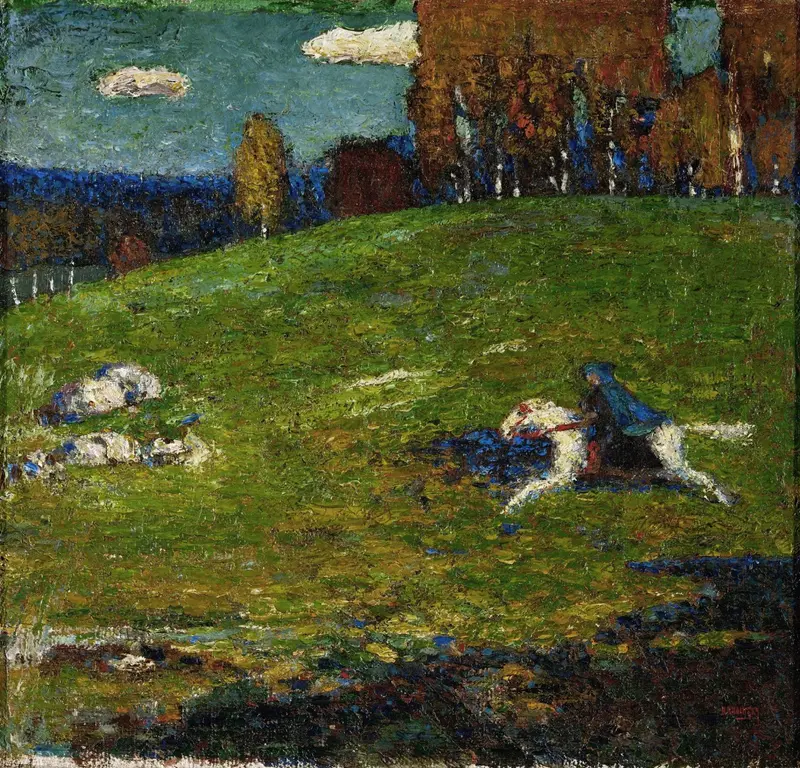
The Blue Rider
Wassily Kandinsky

Murnau
Wassily Kandinsky
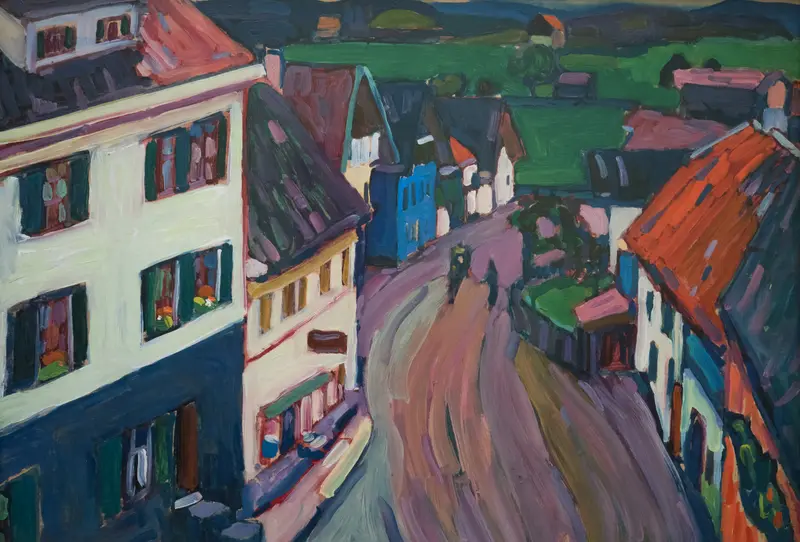
Murnau – View from the window of the Griesbräu
Wassily Kandinsky
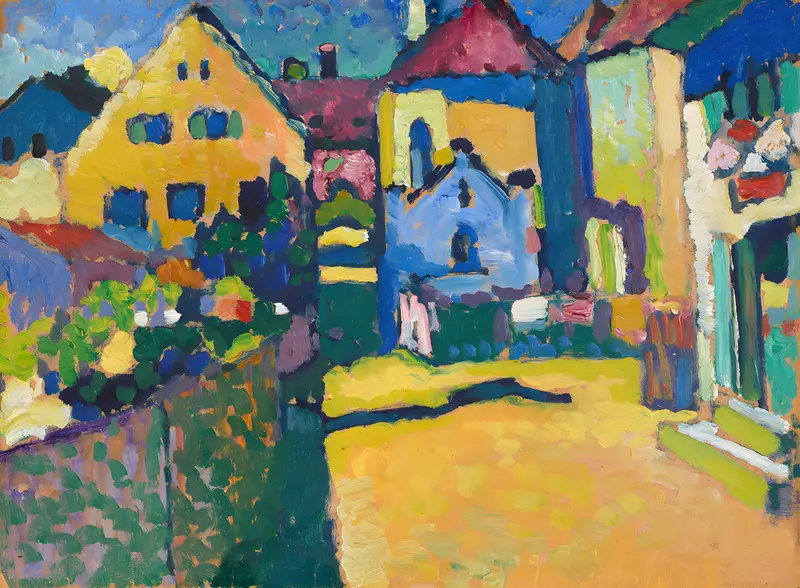
Green Lane in Murnau
Wassily Kandinsky
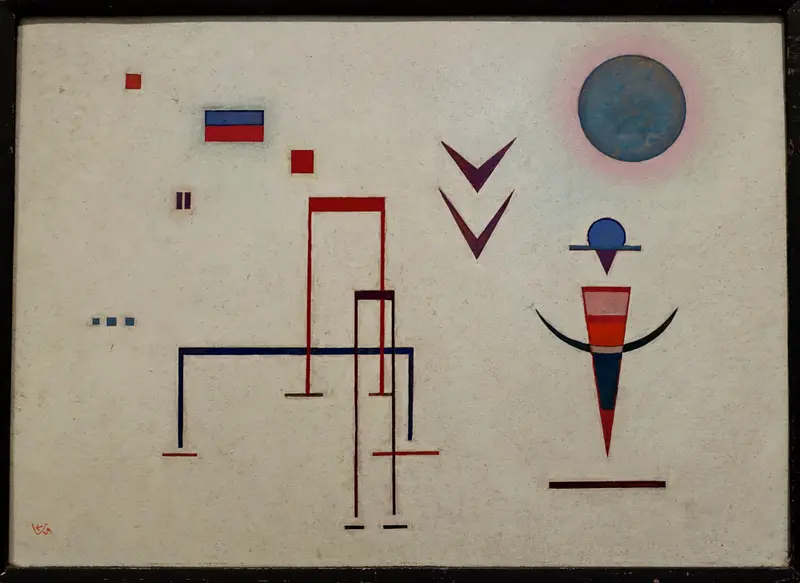
Jocular Sounds
Wassily Kandinsky

Zubovsky Platz
Wassily Kandinsky

Landscape with a yellow field
Wassily Kandinsky
More Landscape Art

The Starry Night
Vincent van Gogh

View of Delft
Johannes Vermeer

Water Lilies
Claude Monet

The Grand Canal, Venice, looking north-west from the Ca' Corner to the Ca' Contarini degli Scrigni, with the campanile of Santa Maria della Carità
Canaletto

Windsor Castle
Canaletto

The Grand Canal looking North-East from the Palazzo Dolfin-Manin to the Rialto Bridge
Canaletto