
Akhtyrka, Nina and Tatiana in the Veranda — History & Facts
What draws the eye first is the vivid play of color and the sense of a private summer ritual, caught in the dappled light of a Russian veranda. The thick, lively brushstrokes carve out the logs of the house, the crisp white of tablecloth and dresses, and the lush, almost riotous greenery beyond the railings. One figure, absorbed in her tea, sits at the table; the other, hat perched at an angle, gazes outward, her posture relaxed but alert to the world beyond.
The samovar gleams at the center, a silent witness to the moment’s intimacy, while the strong diagonal of the porch boards draws you into the scene, as if you might step forward and join them. Every detail—the shadows under the table, the bold red of the balustrade—serves to heighten the sense of a fleeting, sunlit pause. Painted in 1917, this work belongs to a world on the edge of transformation, when Russian artists like Wassily Kandinsky were exploring the boundaries between representation and abstraction. The veranda scene, anchored in the daily rituals of an upper-middle-class family, hints at the old rhythms of country life even as the world outside was shifting dramatically.
Such paintings were often cherished as tokens of memory, family, and place, sometimes commissioned or simply made as gifts, and today this one resides in the Centre Georges Pompidou. History has kept few traces of these quiet afternoons, but the painting’s energy invites us to linger and imagine the conversations and silences that once filled this sunlit space.
More Artworks by Wassily Kandinsky

Improvisation 35
Wassily Kandinsky
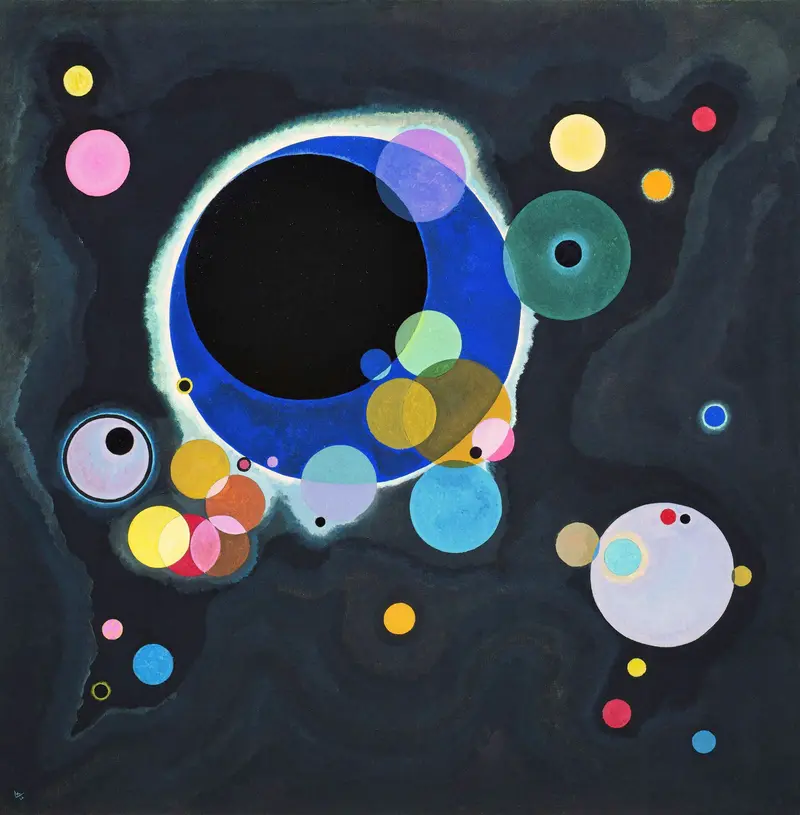
Several Circles
Wassily Kandinsky
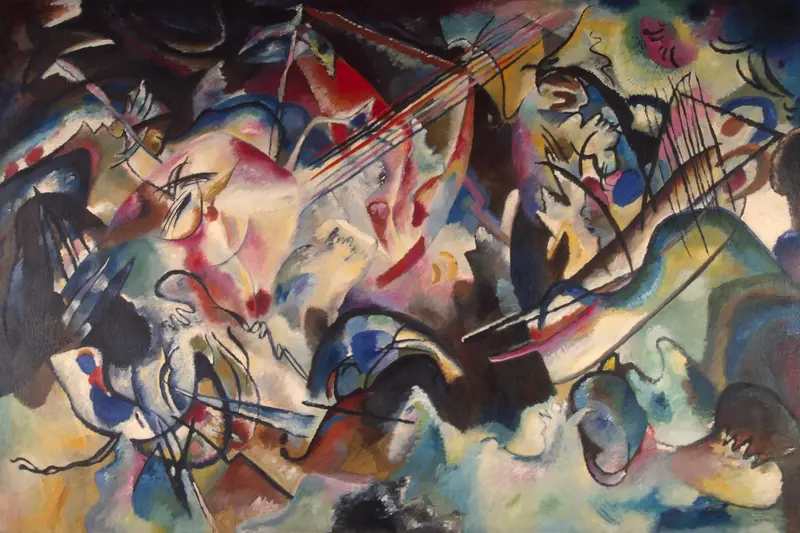
Composition VI
Wassily Kandinsky
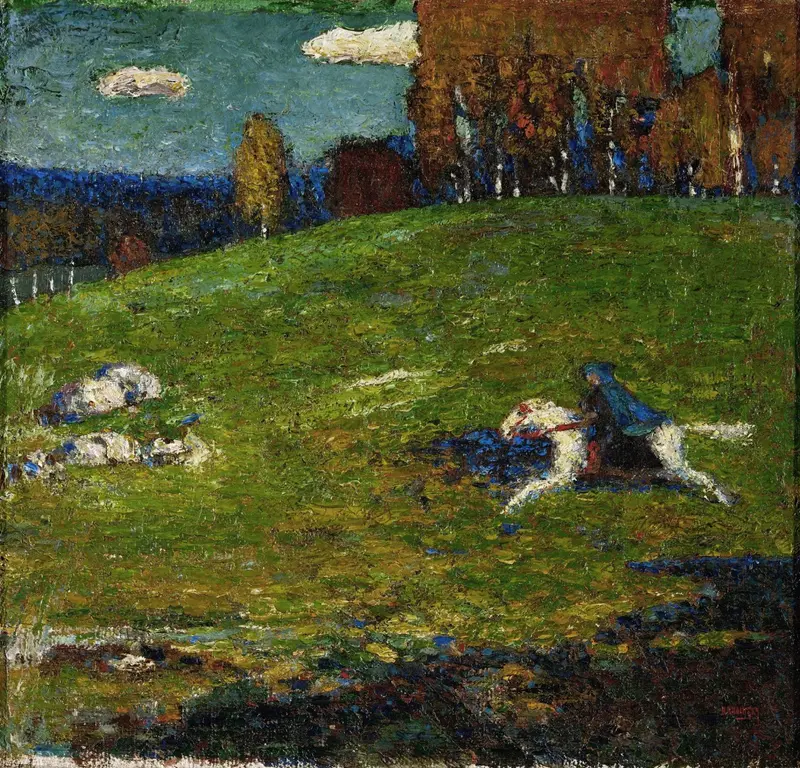
The Blue Rider
Wassily Kandinsky

Murnau
Wassily Kandinsky
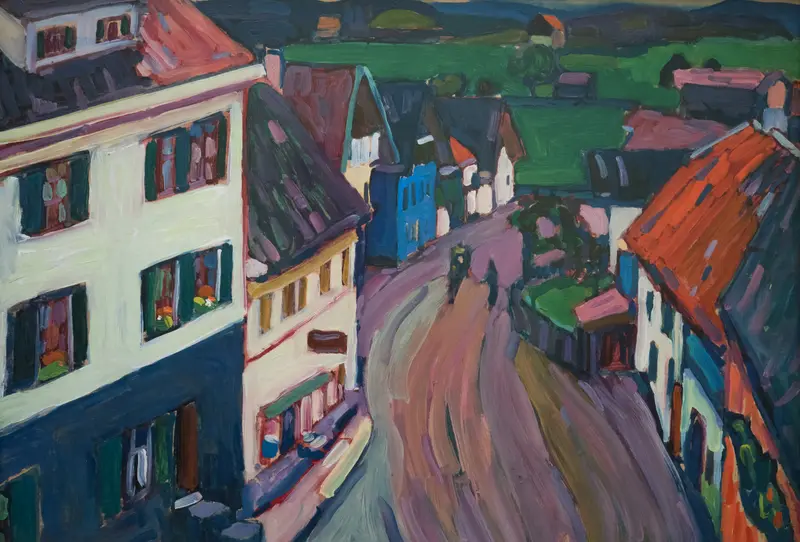
Murnau – View from the window of the Griesbräu
Wassily Kandinsky
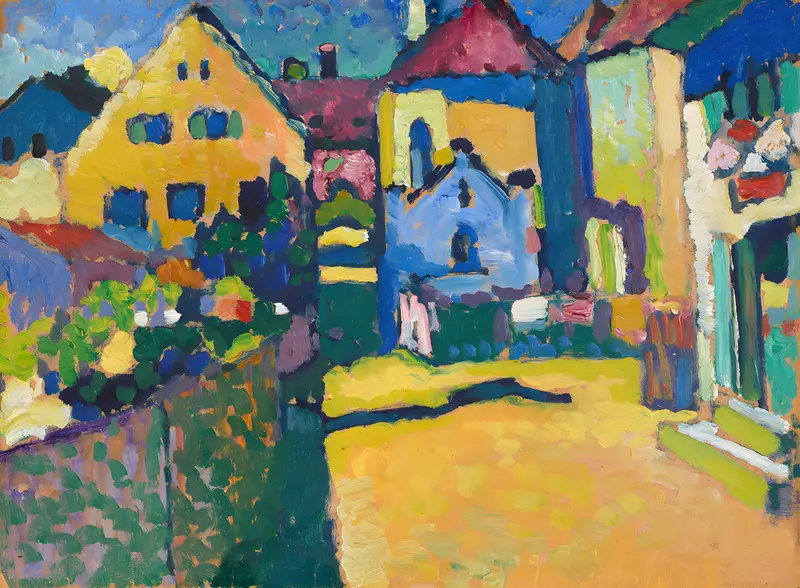
Green Lane in Murnau
Wassily Kandinsky
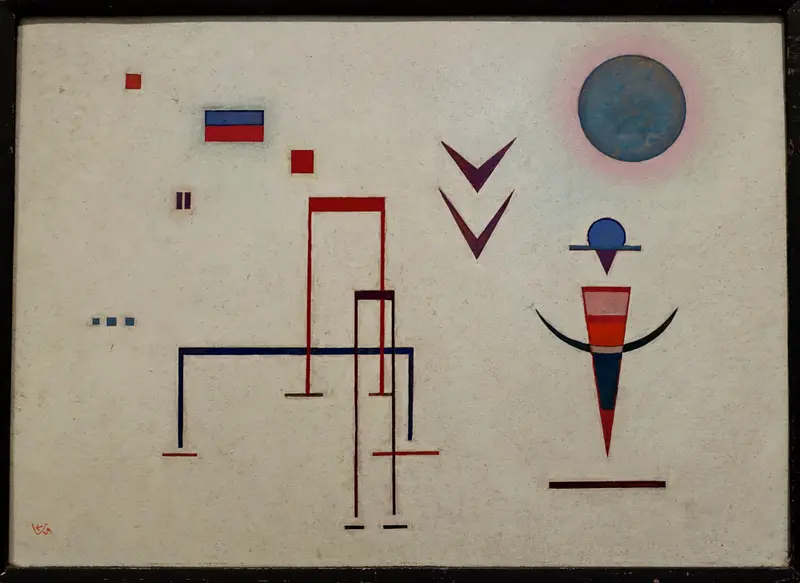
Jocular Sounds
Wassily Kandinsky

Zubovsky Platz
Wassily Kandinsky

Landscape with a yellow field
Wassily Kandinsky
More Genre Scene Art

Banquet of the Officers of the St George Civic Guard
Frans Hals

Rembrandt and Saskia in the Scene of the Prodigal Son
Rembrandt van Rijn

Bal du moulin de la Galette
Pierre-Auguste Renoir

Quadrille at the Moulin Rouge
Henri de Toulouse-Lautrec

A Burial at Ornans
Gustave Courbet

When Will You Marry?
Paul Gauguin