
Aristotle and Phyllis — History & Facts
A shaft of torchlight cuts through the darkness, catching the startled, almost incredulous gaze of an elderly man on all fours. The eye lands first on the luminous figure of a woman, perched astride his back, her body a study in both power and theatrical display. Her raised arm, poised mid-gesture, draws the viewer into the drama: her dominance is not only physical but psychological, as the books strewn below hint at a world of knowledge upended.
The blue drapery slipping from her lap and the torch held by an attendant heighten the sense of spectacle, forcing the viewer to question who truly commands the scene. Painted in 1690 by Alessandro Turchi, this work belongs to a tradition that delighted in the reversal of expected roles, especially in tales where wisdom is humbled by desire. The story of Aristotle and Phyllis was a favorite among Baroque artists, who relished its blend of moral warning and sensual wit. In the late seventeenth century, such paintings found eager patrons among the educated elite, who hung them in private studies or cabinets as both conversation pieces and cautionary tales.
While history has kept few traces of this particular painting’s journey, its presence today invites us to linger over the flicker of torchlight on flesh and parchment, and to ponder the uneasy dance between reason and temptation.
More Artworks by Alessandro Turchi

The Flood
Alessandro Turchi
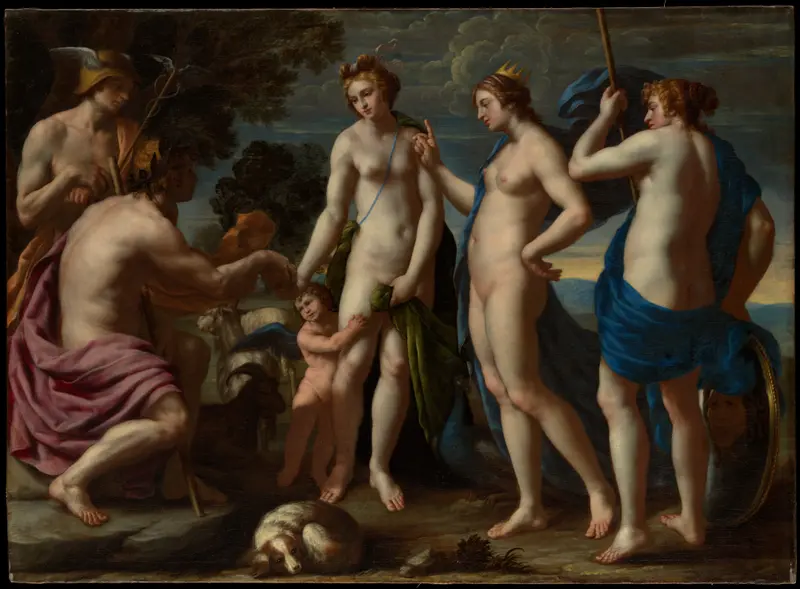
Judgment of Paris
Alessandro Turchi
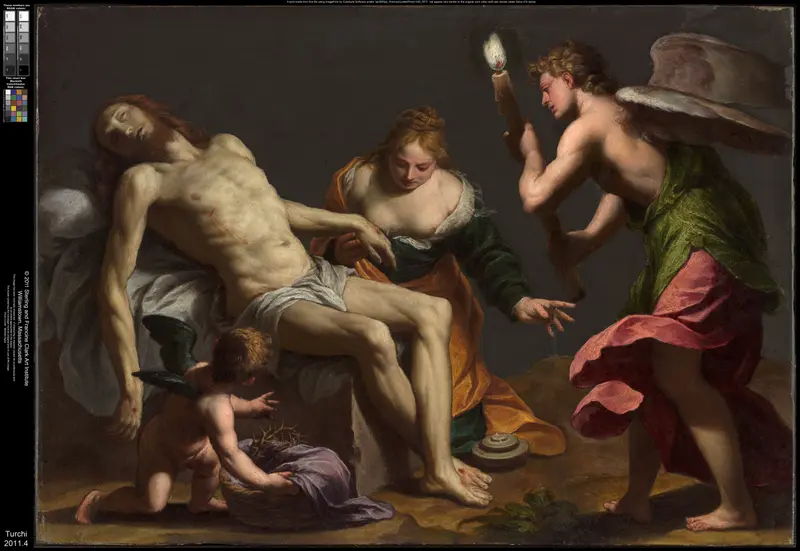
Lamentation over the Body of Christ
Alessandro Turchi
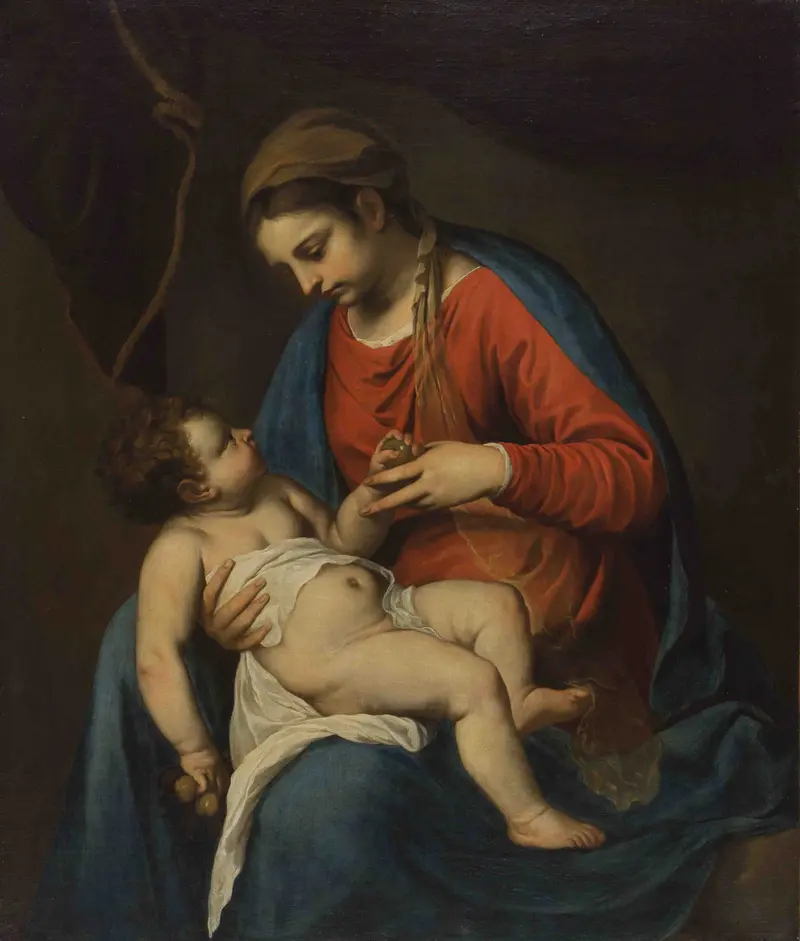
Maria with Child
Alessandro Turchi

Saint Peter visits Saint Agatha in her Prison
Alessandro Turchi
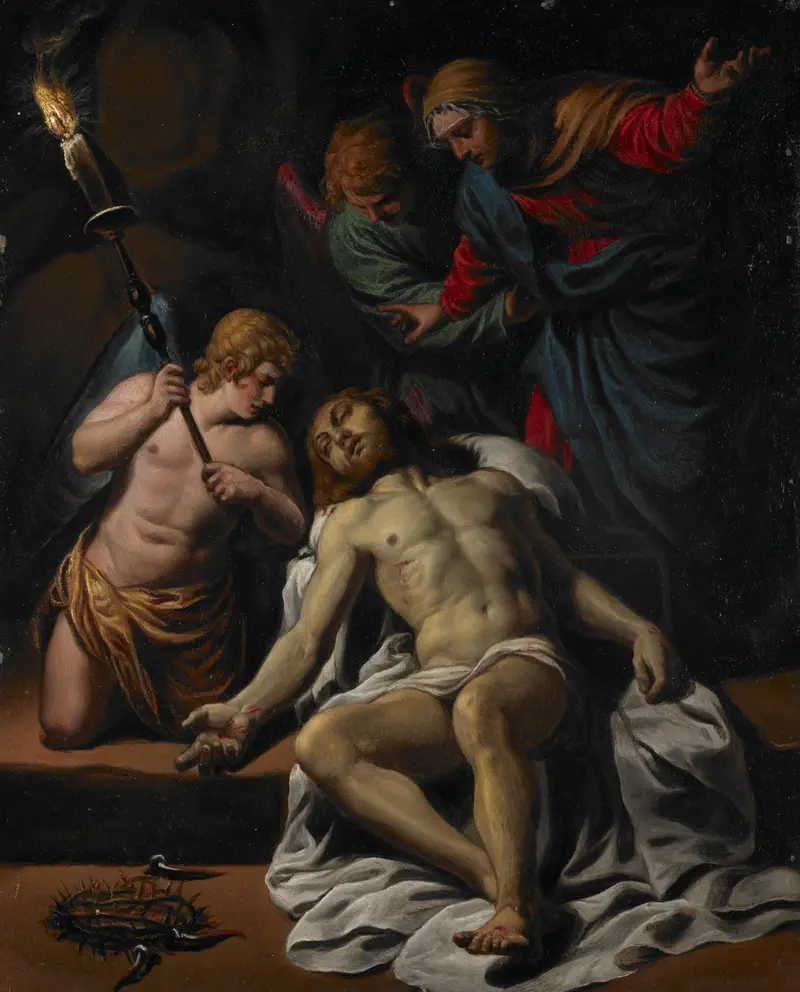
The Lamentation
Alessandro Turchi
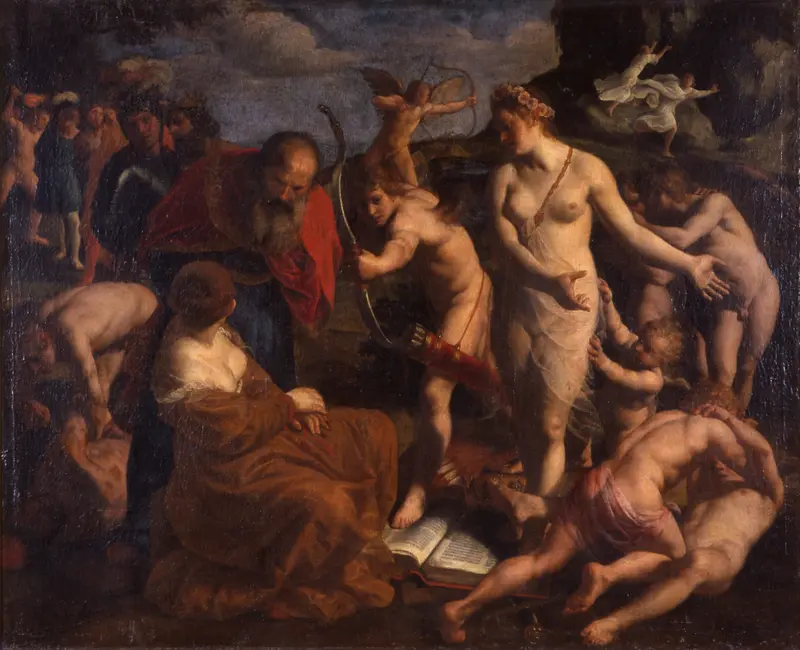
Allegory on the Power of Love ('Omnia Vincit Amor')
Alessandro Turchi
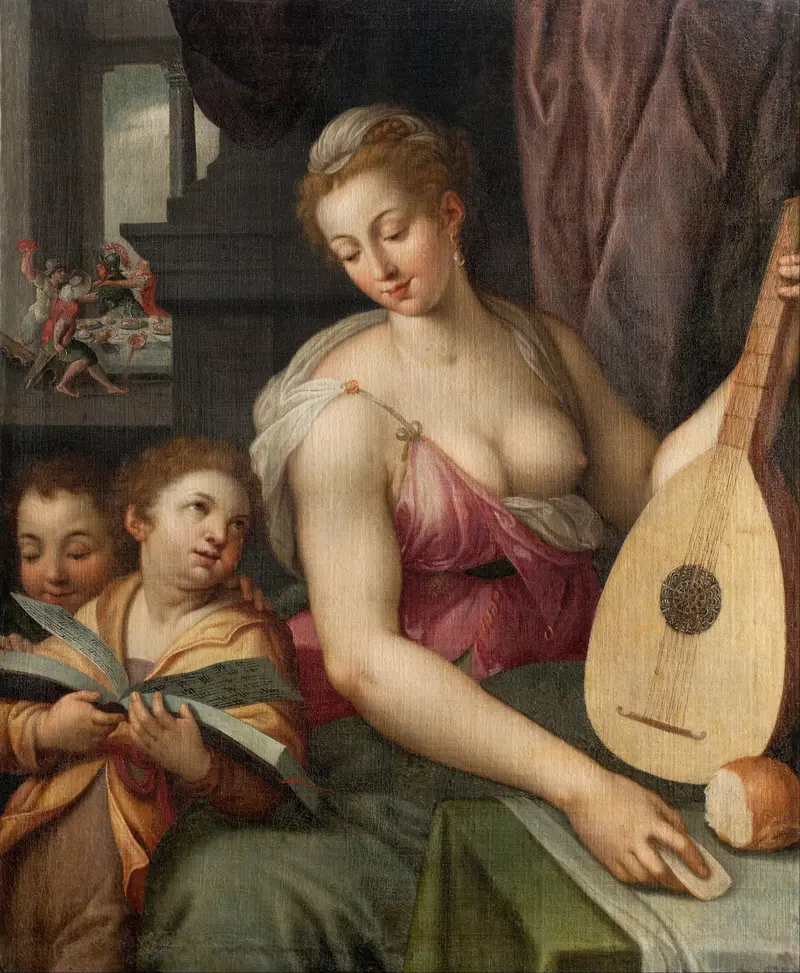
Allegory of Music
Alessandro Turchi
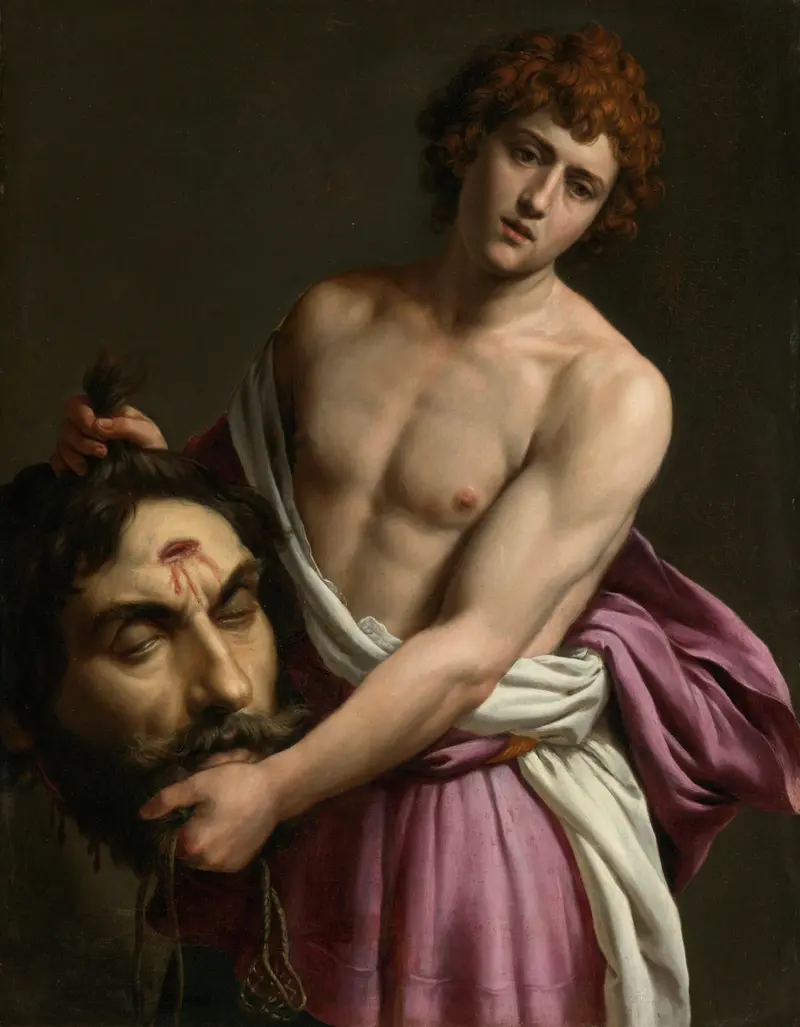
David with the Head of Goliath
Alessandro Turchi
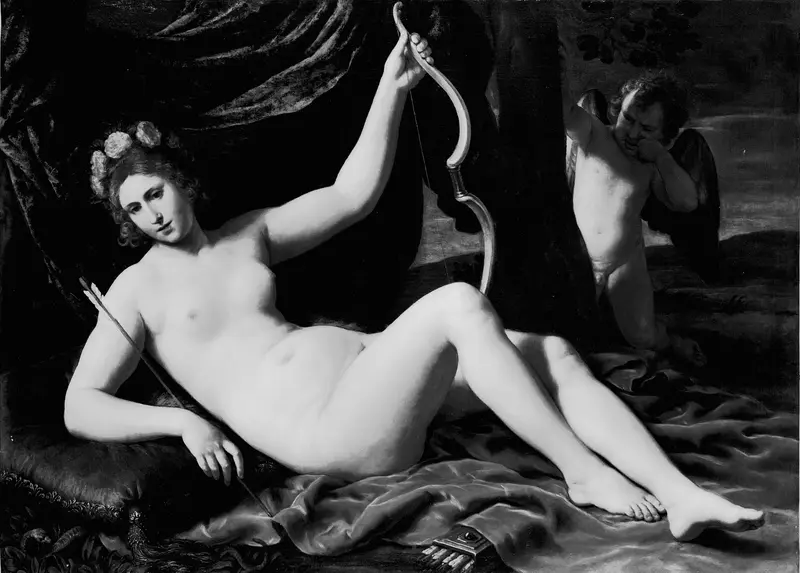
Venus and Cupid
Alessandro Turchi





