
Arlequin assis à la guitare (Harlequin Sitting with Guitar) — History & Facts
In Arlequin assis à la guitare, we see a seated Harlequin, a character often associated with the commedia dell'arte. The painting features a palette dominated by muted tones of blue, brown, and yellow, creating a harmonious yet dynamic composition. The Harlequin's face is partially obscured, emphasizing the mask-like quality of his character.
The guitar, rendered in geometric shapes, adds to the overall Cubist aesthetic. The painting is an example of Cubism, a movement that Juan Gris was instrumental in developing. The use of fragmented forms and overlapping planes allows the viewer to perceive multiple angles simultaneously. Gris employs a limited color palette, which enhances the structural elements of the composition.
The work is painted in oil on canvas, a common medium for artists of this period. Juan Gris was a Spanish painter known for his contributions to the Cubist movement alongside artists like Pablo Picasso. Arlequin assis à la guitare reflects Gris's unique style, which blends elements of both analytical and synthetic Cubism. An interesting fact about this work is that it captures the essence of the Harlequin character, symbolizing the duality of performance and reality.
This painting is part of the collection at the Museo del Prado in Spain.
More Artworks by Juan Gris
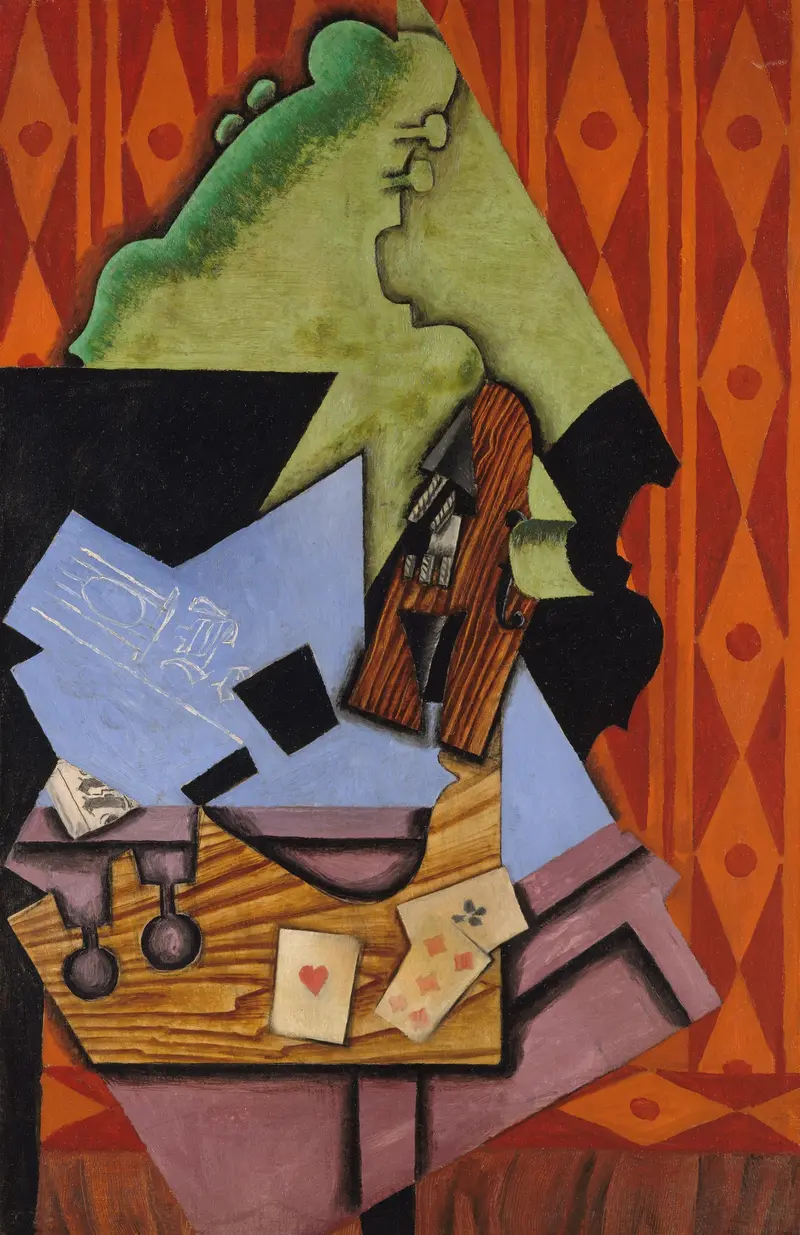
Violin and Playing Cards on a Table
Juan Gris

Portrait of Picasso
Juan Gris
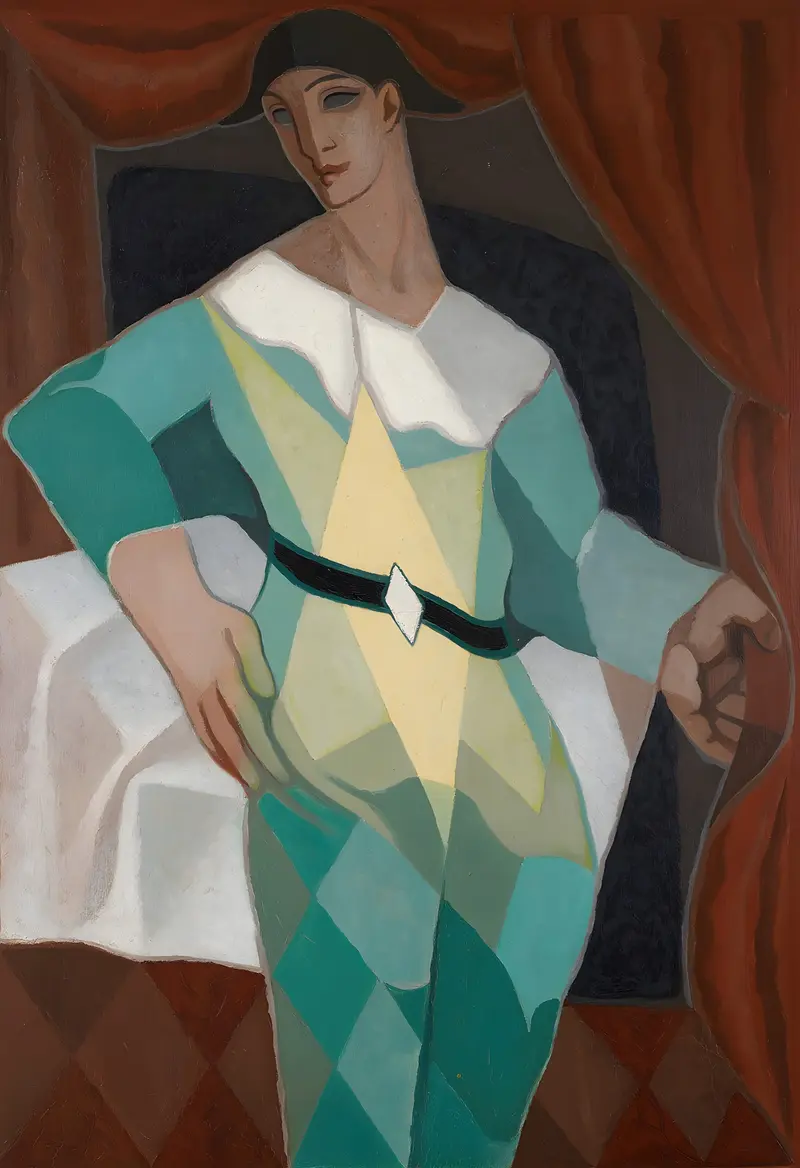
Arlequin
Juan Gris

A Guitar, Glasses and a Bottle
Juan Gris
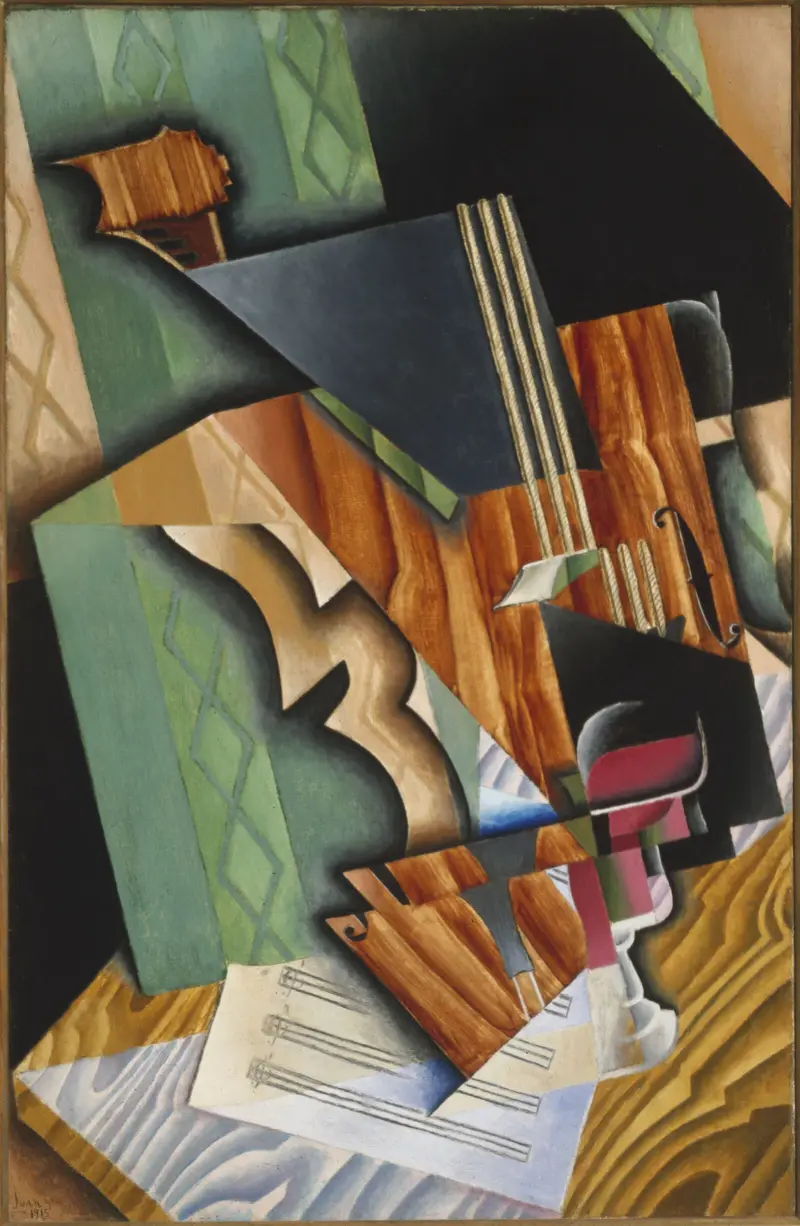
Violin and Glass
Juan Gris

Bottle and fruit bowl
Juan Gris
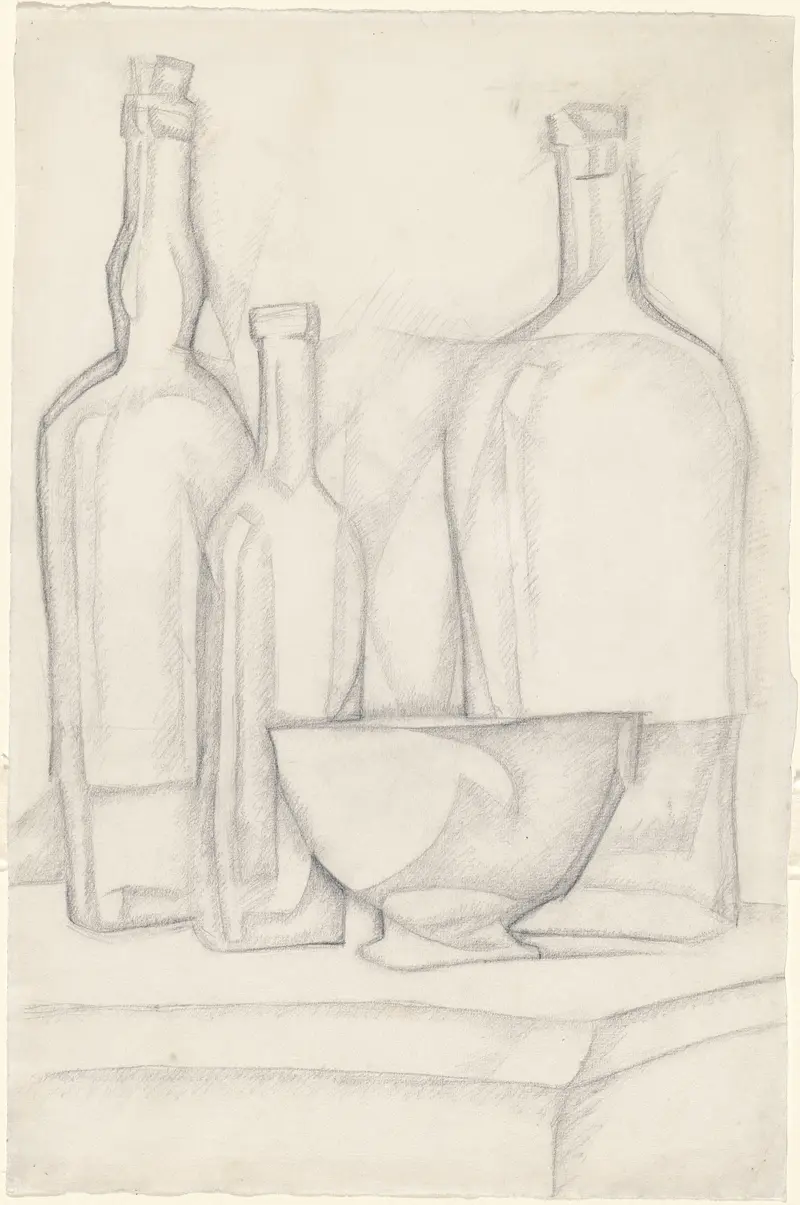
Bottles and Bowl
Juan Gris
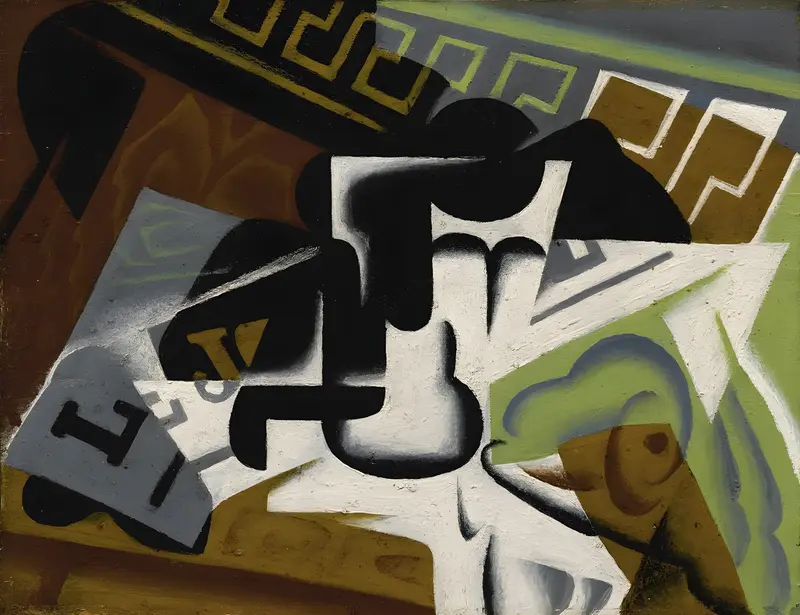
Journal et compotier
Juan Gris
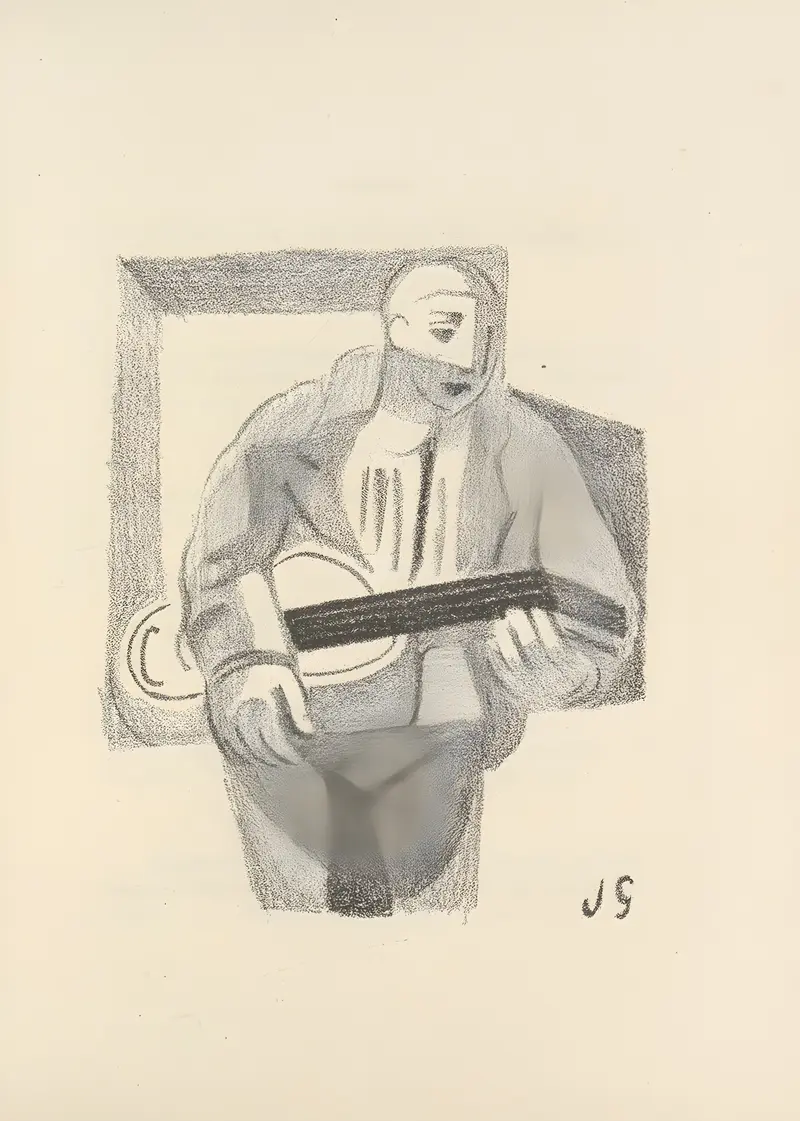
As a wife has a cow Pl.2
Juan Gris
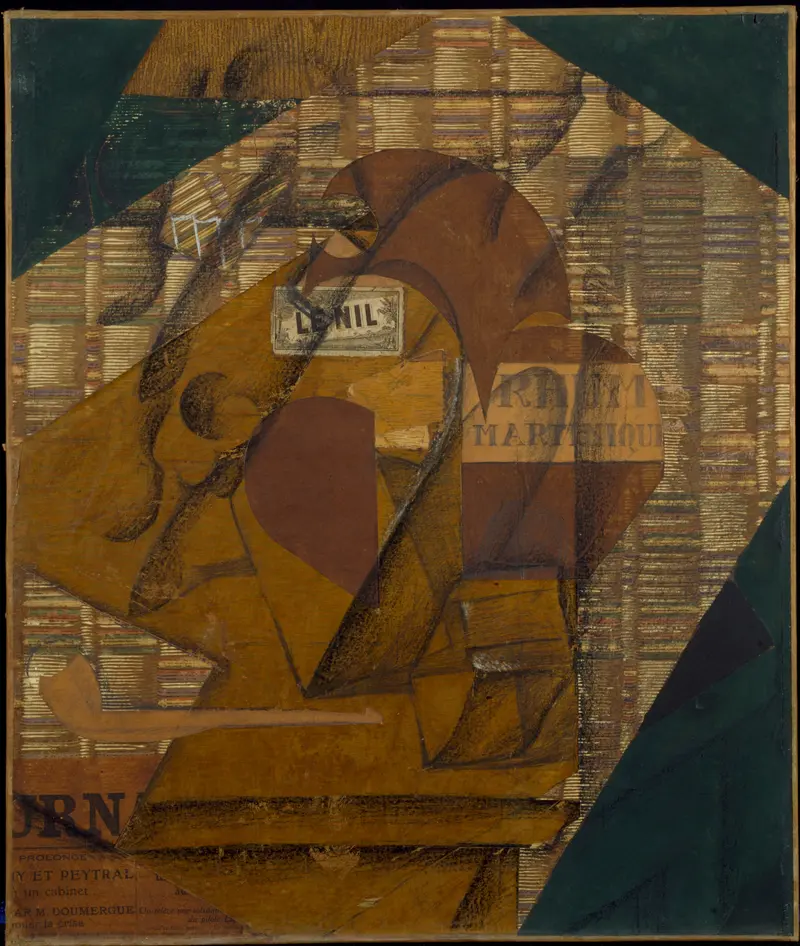
Bottle of Rum and Newspaper
Juan Gris



