
Arthur Segal: Man, Horse, Wagon — History & Facts
A single figure, a sturdy horse, and a wagon—Arthur Segal’s Man, Horse, Wagon from 1918 distills the chaos of the outside world into a scene at once familiar and strangely fractured. The image pulls the viewer in with its bold, blocky shapes and a palette that feels both earthy and electric. The man stands beside his horse, yet the forms are broken into facets, as if reality itself has been splintered and reassembled.
Light and shadow are rendered in abrupt planes, flattening the space and making every element press forward. The horse’s body, almost cubist in its geometry, anchors the composition, while the wagon’s wheels and shafts create a rhythm of circles and lines that lead the eye in restless loops. There is a sense of pause, of work interrupted, but also of the world shifting beneath the surface. Painted in 1918, this work stands at the crossroads of a Europe upended by war and artistic revolution.
Arthur Segal was among those who challenged academic traditions, experimenting with form and color to capture the uncertainty and energy of his era. The year marks the end of World War I, a time when artists across Europe were searching for new ways to represent a world that had changed irrevocably. Such scenes—of labor, of daily life—were common subjects, but here, Segal’s fractured style hints at the instability and hope of the period.
The painting’s presence in a modern collection today is a reminder that even the most ordinary moments can become sites of innovation and reflection. Look again, and the quiet drama of man, horse, and wagon becomes a window onto a world in transition.
More Artworks by Arthur Segal

Rotes Dach
Arthur Segal
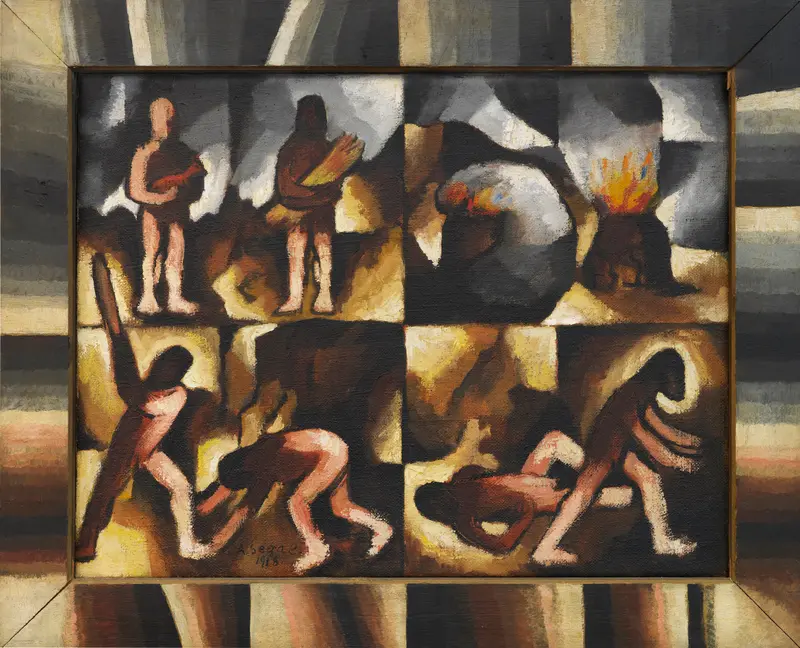
Kain und Abel (Zyklus Altes Testament)
Arthur Segal
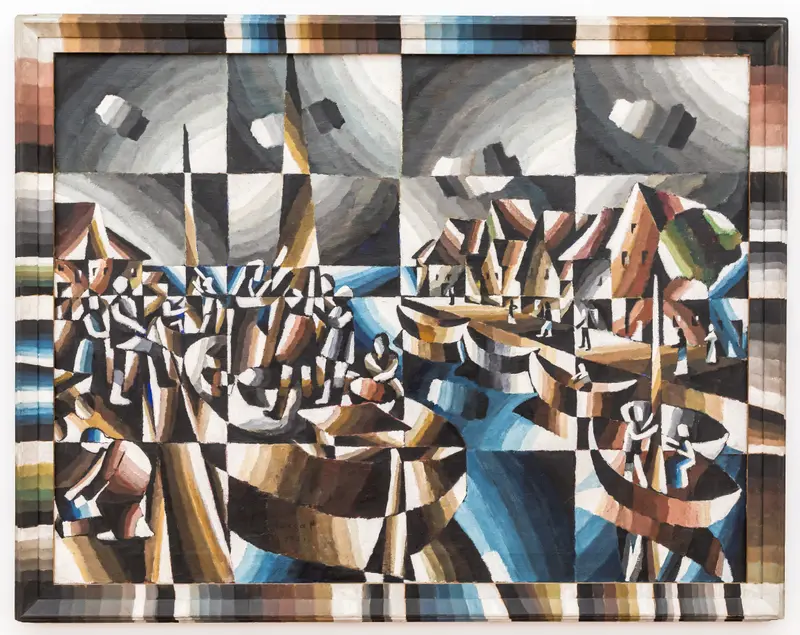
Der Hafen Museum Ludwig
Arthur Segal
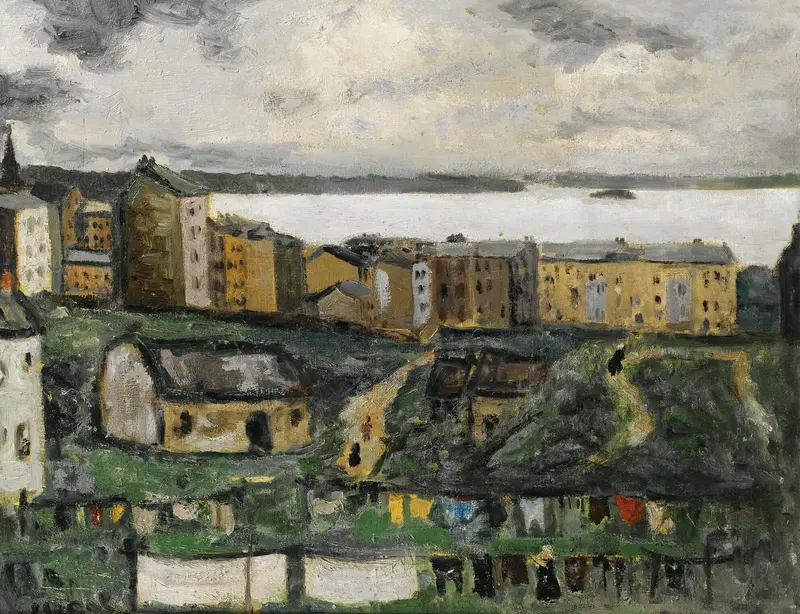
Village View
Arthur Segal
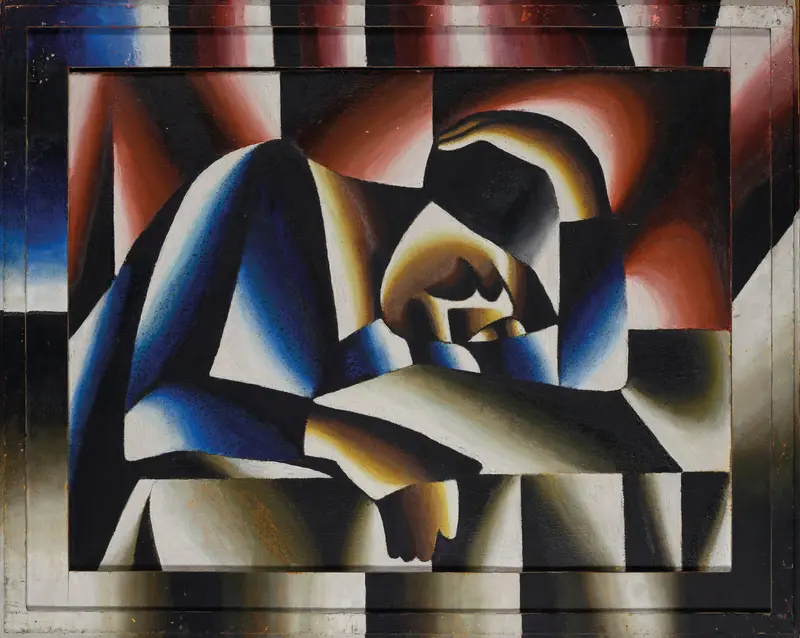
Sleeping woman
Arthur Segal
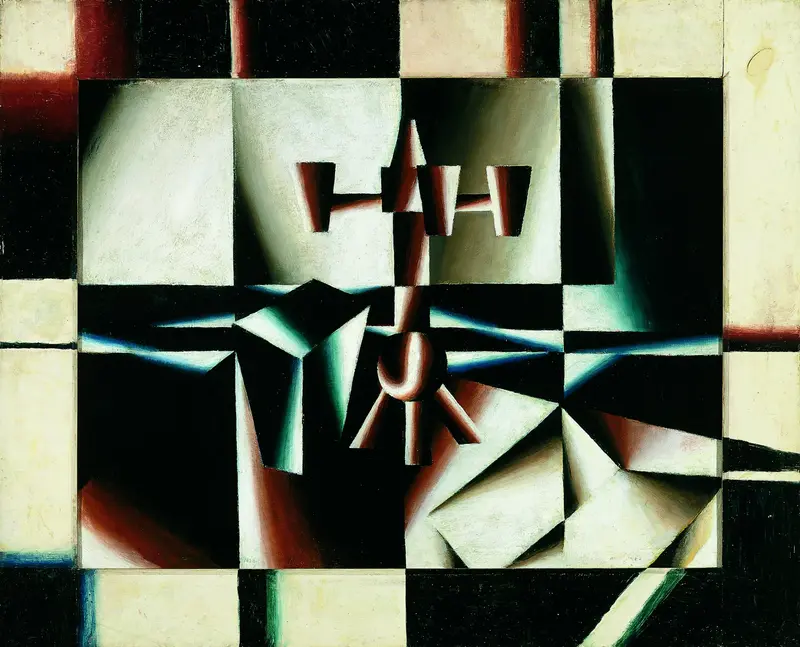
Still-Life with Candelabrum and Box
Arthur Segal
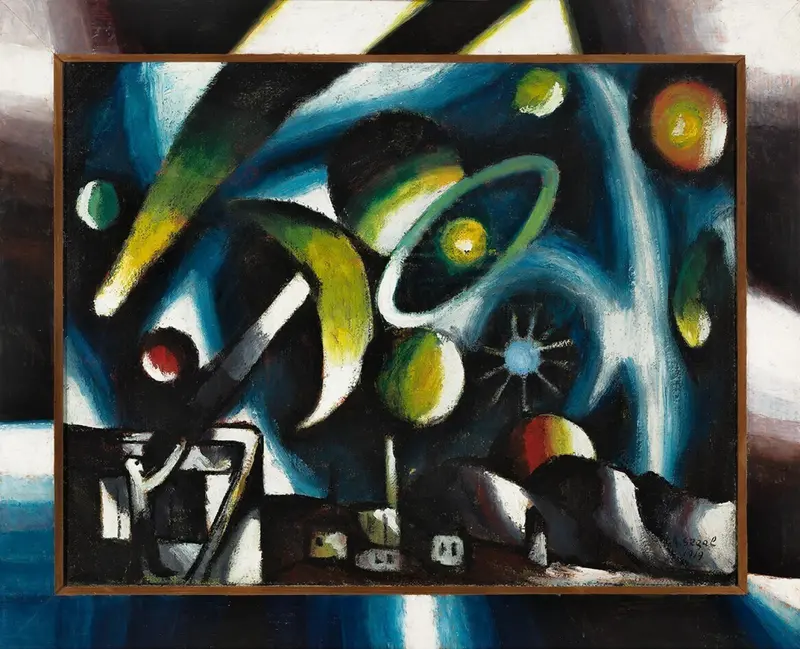
Der Astronom (Zyklus Arbeit)
Arthur Segal
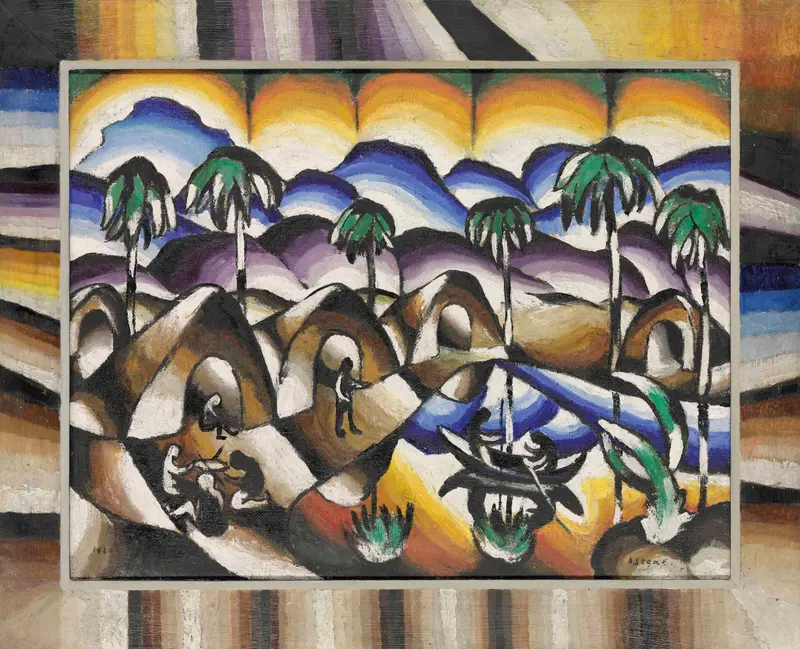
Ein Dorf
Arthur Segal
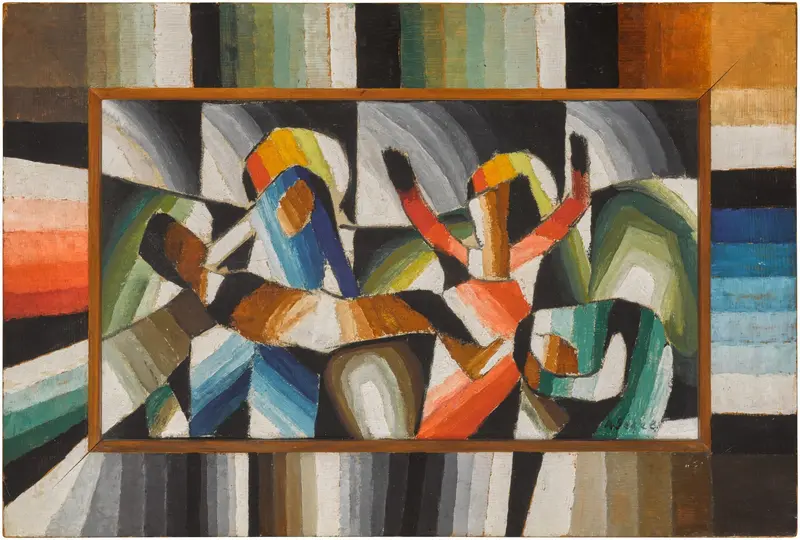
Pietà
Arthur Segal

Ein Tag
Arthur Segal
More Genre Scene Art

Banquet of the Officers of the St George Civic Guard
Frans Hals

Rembrandt and Saskia in the Scene of the Prodigal Son
Rembrandt van Rijn

Bal du moulin de la Galette
Pierre-Auguste Renoir

Quadrille at the Moulin Rouge
Henri de Toulouse-Lautrec

A Burial at Ornans
Gustave Courbet

When Will You Marry?
Paul Gauguin