Asari maastik — History & Facts
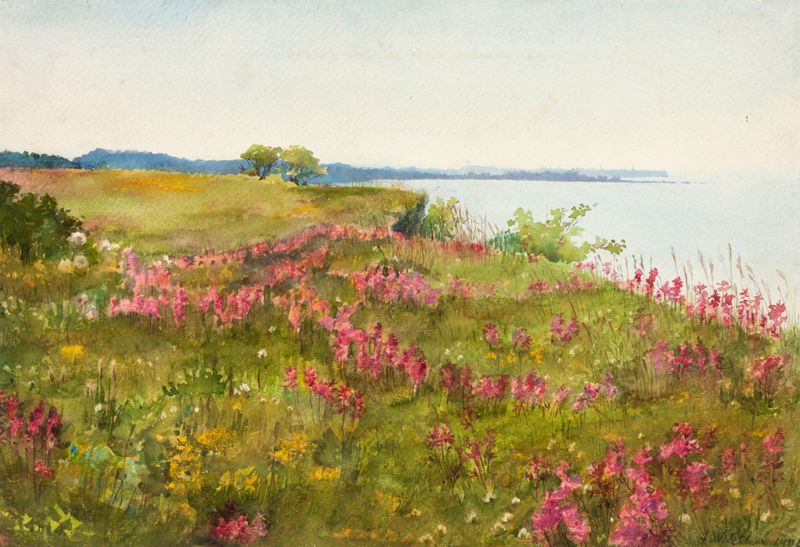
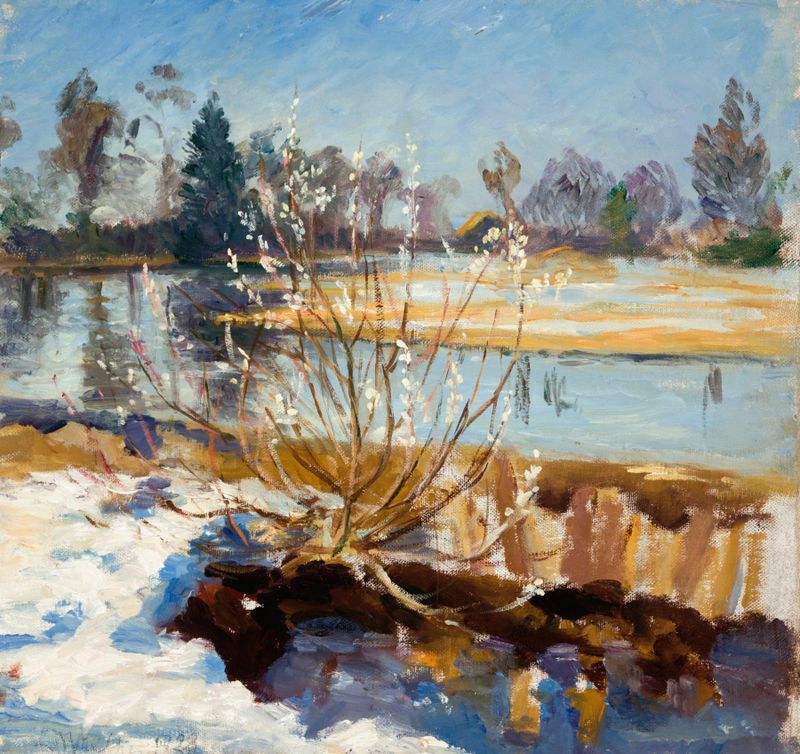
Could beauty survive in a century of chaos? In Asari maastik, the artist encapsulates a moment where nature’s resilience stands against the backdrop of human turmoil. Look to the center of the canvas, where vibrant greens surge forth, embodying lushness and life amidst an expanse of textured foliage. The brushwork brims with energy, while light dances upon the leaves, creating a shimmering veil that invites the viewer into this verdant paradise. The rich and deep blues of the surrounding sky contrast with the golden sun, intertwining the essence of tranquility and vitality within the composition. Yet, beneath the surface beauty lies a tension that speaks to the viewer’s soul.
The serene landscape, untouched and pristine, whispers of a longing for peace in a rapidly changing world. The juxtaposition of nature’s calm and the implicit chaos of the 19th century—a period marked by conflict and change—encourages a reflection on the dichotomy of existence: creation amidst destruction and the fleeting nature of beauty itself. Each brushstroke carries the weight of both hope and melancholy, urging us to consider our relationship with the world. Lilly Walther painted Asari maastik in 1896 while living in the thriving cultural landscape of Estonia, a time when nationalism was surging and artistic expression was evolving.
Influenced by the natural beauty surrounding her, she aimed to capture the essence of her homeland while reflecting the emotional currents of her era. This work emerged as a poignant reminder of nature's enduring spirit, even in times of uncertainty.