
Autumn forrest — History & Facts
What first catches the eye in Autumn forrest is the way the golden leaves seem to hover in the air, suspended between the viewer and the shadowy depths beyond. The brushwork is brisk, almost impatient, as if Akseli Gallen-Kallela wanted to seize the fleeting moment before autumn’s color faded into the gray of early winter. The composition draws you in: the orange foliage climbs vertically, threading through a haze of blue-green needles and smoky trunks, while a single sapling stands at the center—a quiet witness to the passing season.
The light is diffuse, filtering through layers of mist and branch, dissolving the boundaries between foreground and background and inviting the eye to wander. Painted in 1902, this small oil on canvas belongs to a time when artists across northern Europe were turning their gaze to the native landscape, searching for a visual language that could express both national identity and personal emotion. Gallen-Kallela, a leading figure in Finnish art, often found inspiration in the forests and lakes of his homeland—places that, for many, symbolized endurance and renewal. Works like this were rarely grand commissions; more often, they were painted for private contemplation or as studies for larger projects.
Today, Autumn forrest is held by Bukowskis, its modest scale and directness a reminder that history sometimes preserves its most intimate moments not in grand canvases, but in these quiet, searching glimpses of the world. Look again, and let your eye trace the path of color through the trees.
More Artworks by Akseli Gallen-Kallela
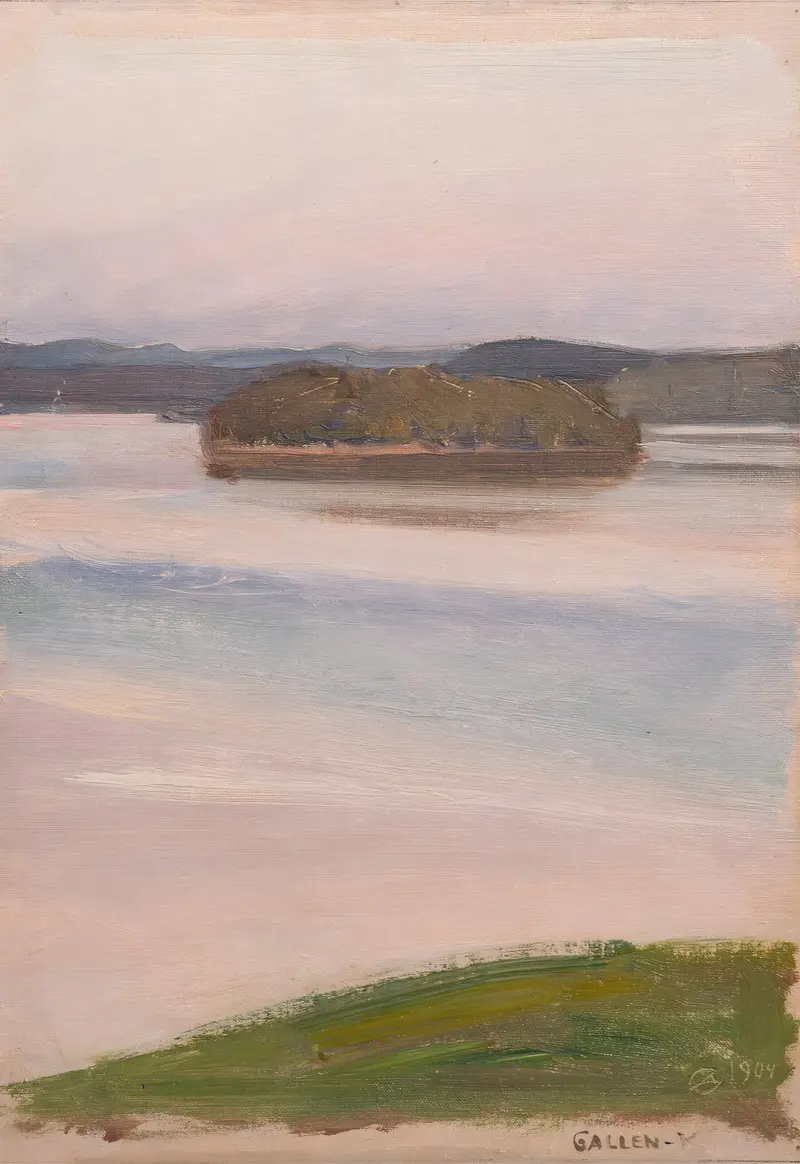
Lake Keitele
Akseli Gallen-Kallela
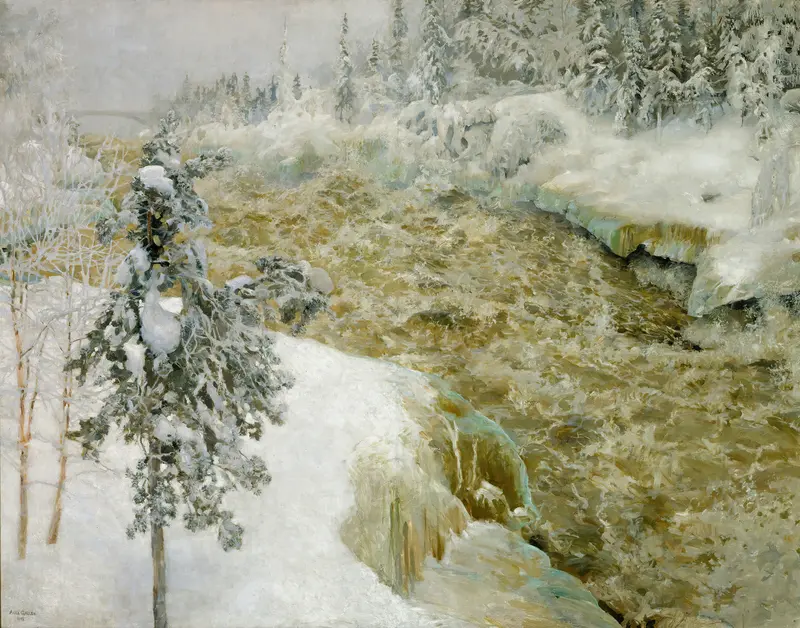
Imatra Falls in Snow ; Imatra in Winter
Akseli Gallen-Kallela
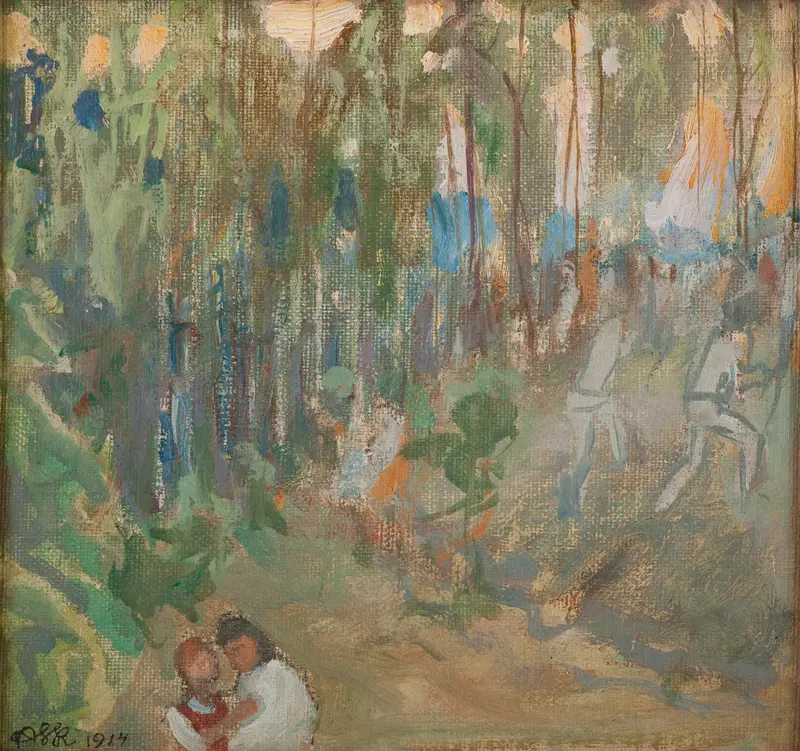
Vainovalkeat
Akseli Gallen-Kallela
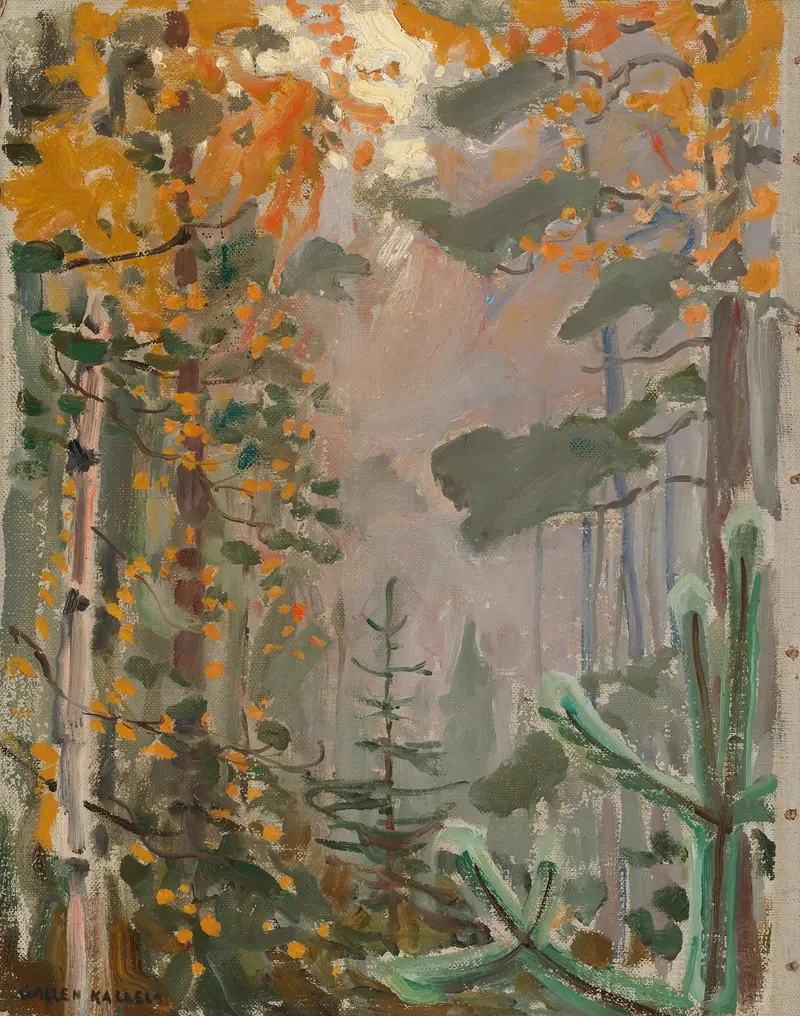
Autumn Landscape
Akseli Gallen-Kallela
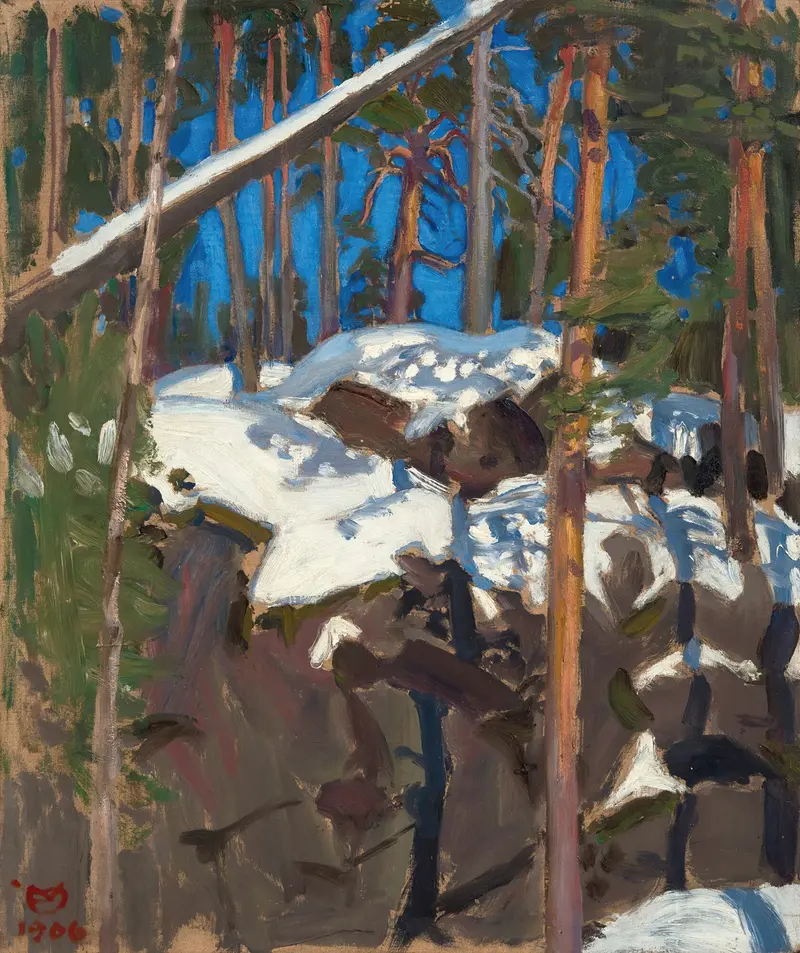
Spring Sun At Konginkangas
Akseli Gallen-Kallela
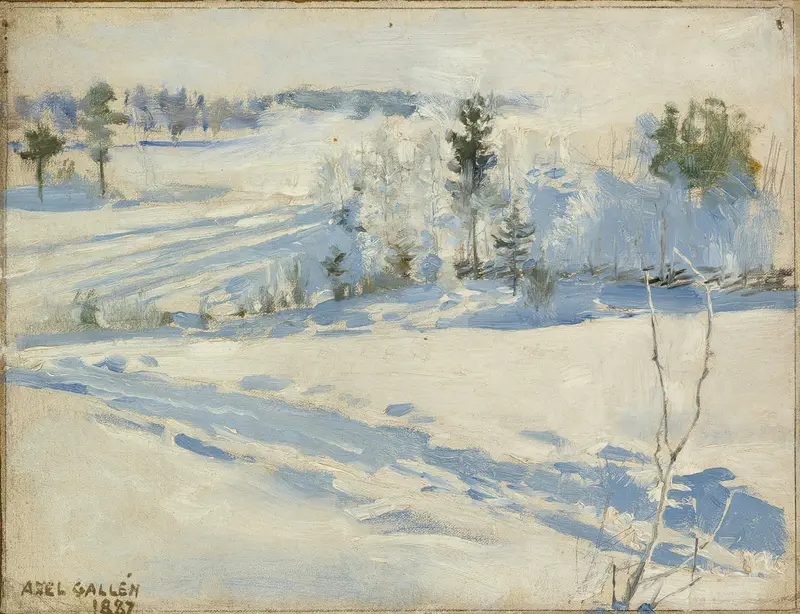
Winter Landscape
Akseli Gallen-Kallela

First Snow
Akseli Gallen-Kallela
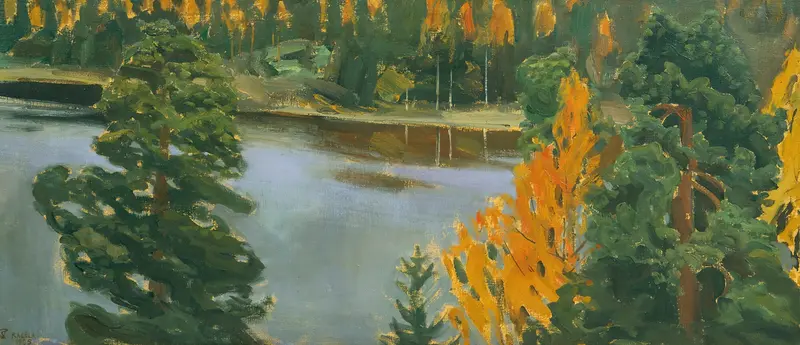
Lake View In Autumn
Akseli Gallen-Kallela
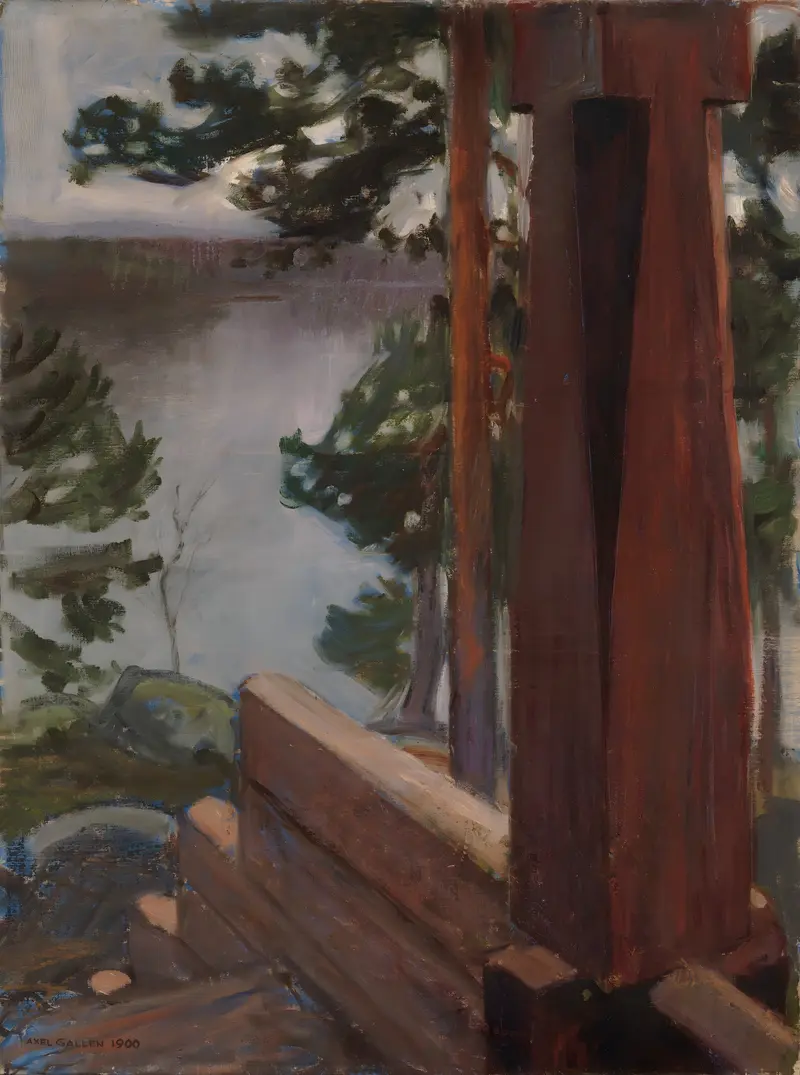
The Kalela Porch
Akseli Gallen-Kallela

Light Behind The Clouds
Akseli Gallen-Kallela
More Landscape Art

The Starry Night
Vincent van Gogh

View of Delft
Johannes Vermeer

Water Lilies
Claude Monet

The Grand Canal, Venice, looking north-west from the Ca' Corner to the Ca' Contarini degli Scrigni, with the campanile of Santa Maria della Carità
Canaletto

Windsor Castle
Canaletto

The Grand Canal looking North-East from the Palazzo Dolfin-Manin to the Rialto Bridge
Canaletto