
Autumn, the five crosses — History & Facts
The first thing to catch the eye in Autumn, the five crosses is the stark rhythm of those black posts, rising like sentinels against a shore of shifting stones and restless water. The scene draws you in with its sharp contrasts: the delicate, curling branches and ochre leaves seem to tremble against the heavy, upright lines. The light is cool and indirect, flattening the landscape and pushing the viewer’s attention toward the interplay of structure and wildness.
The border, patterned in earthy reds and whites, frames the image like a woven textile, hinting at the artist’s interest in design and tradition. The water, rendered in bands of gray and blue, recedes into a horizon that feels both near and unreachable, a reminder of the season’s turning. Painted in 1902, this work stands at the crossroads of Finnish symbolism and the broader European search for national identity at the turn of the century. Artists like Akseli Gallen-Kallela were fascinated by the landscapes and folk motifs of their homeland, often weaving myth and memory into scenes that appear at first glance almost abstract.
Such paintings were rarely made for grand salons; they were often commissioned by private patrons or created for exhibitions that celebrated local culture and craft. The presence of this piece in the Christie’s collection today is a testament to the enduring fascination with northern light and the quiet drama of autumn’s decline. Look again at those crosses and branches—the story here is one of survival, memory, and the silent marking of time.
More Artworks by Akseli Gallen-Kallela
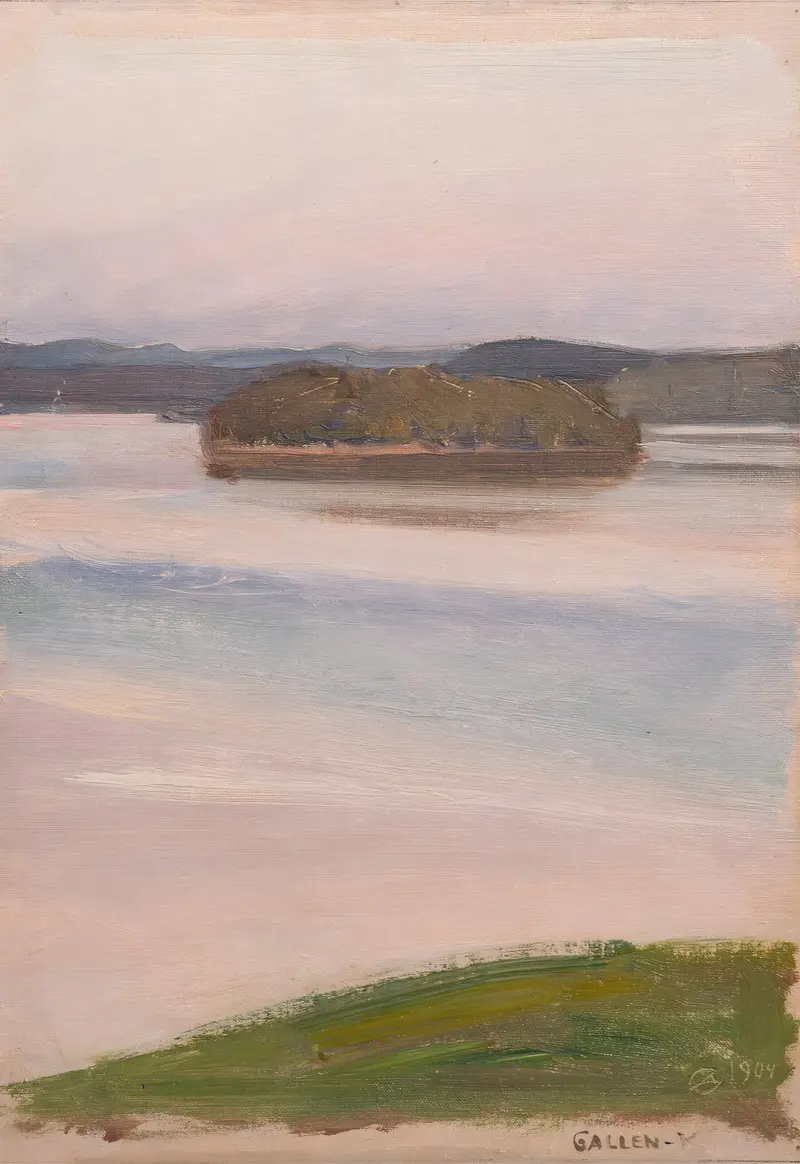
Lake Keitele
Akseli Gallen-Kallela
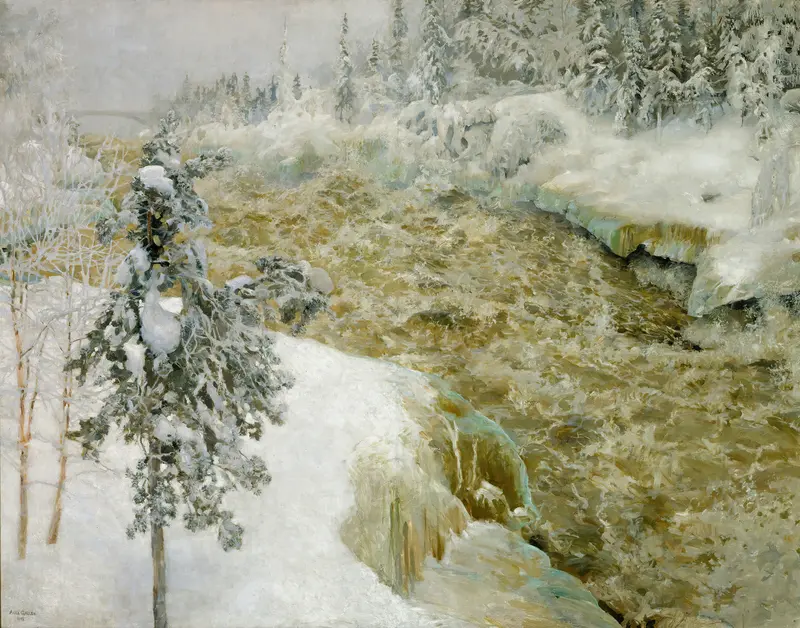
Imatra Falls in Snow ; Imatra in Winter
Akseli Gallen-Kallela
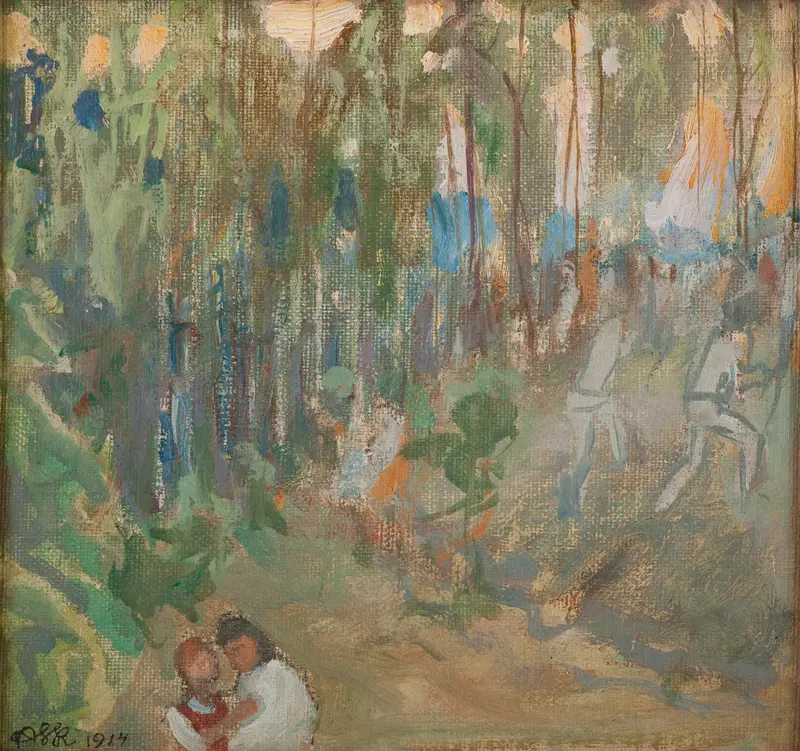
Vainovalkeat
Akseli Gallen-Kallela
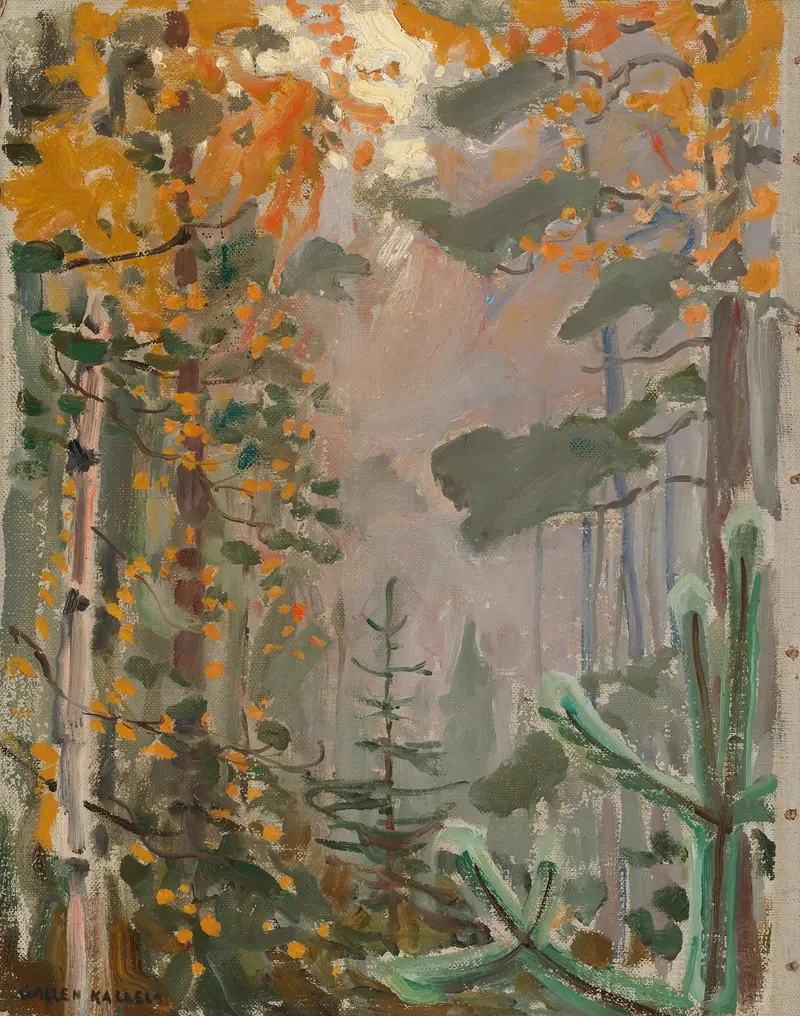
Autumn Landscape
Akseli Gallen-Kallela
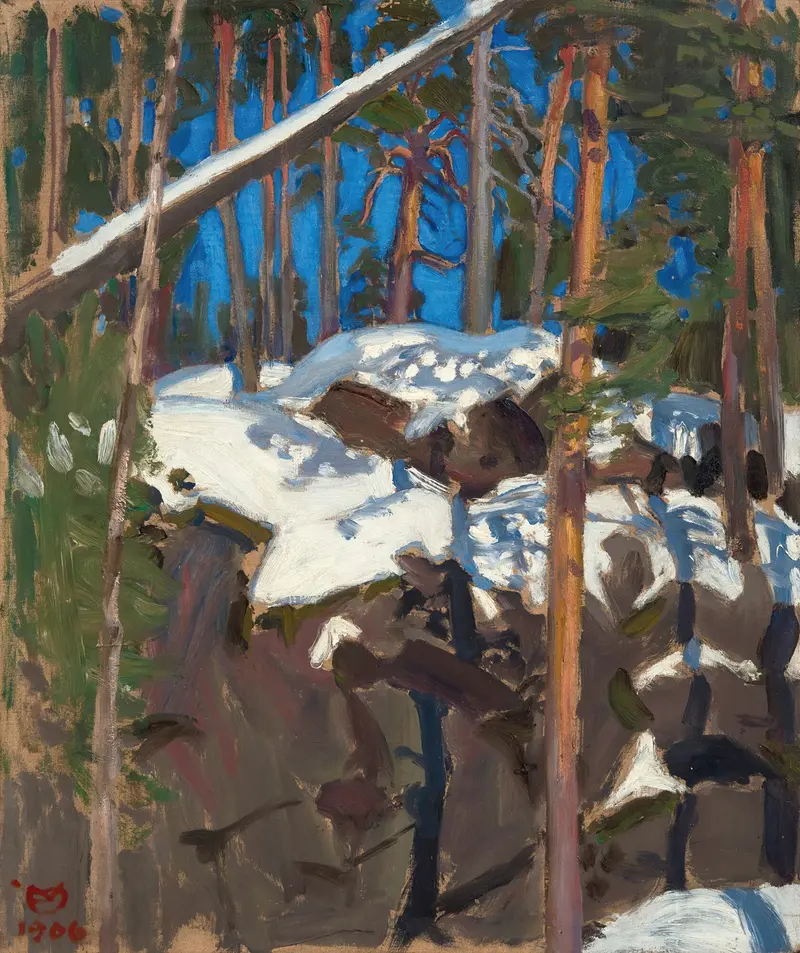
Spring Sun At Konginkangas
Akseli Gallen-Kallela
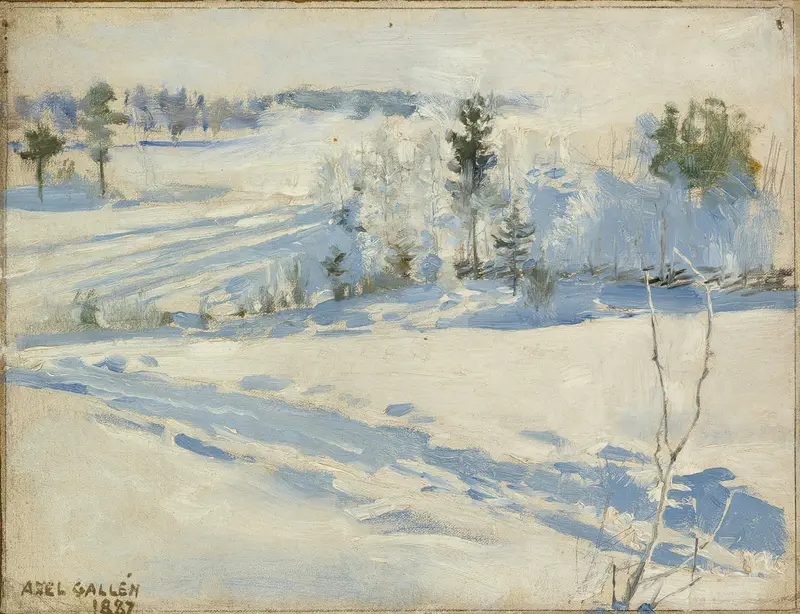
Winter Landscape
Akseli Gallen-Kallela

First Snow
Akseli Gallen-Kallela
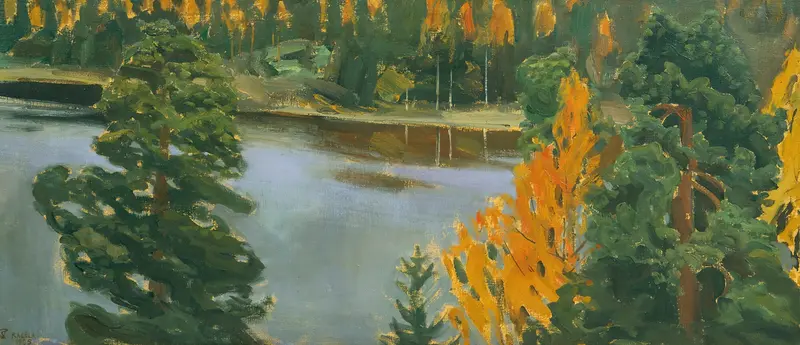
Lake View In Autumn
Akseli Gallen-Kallela
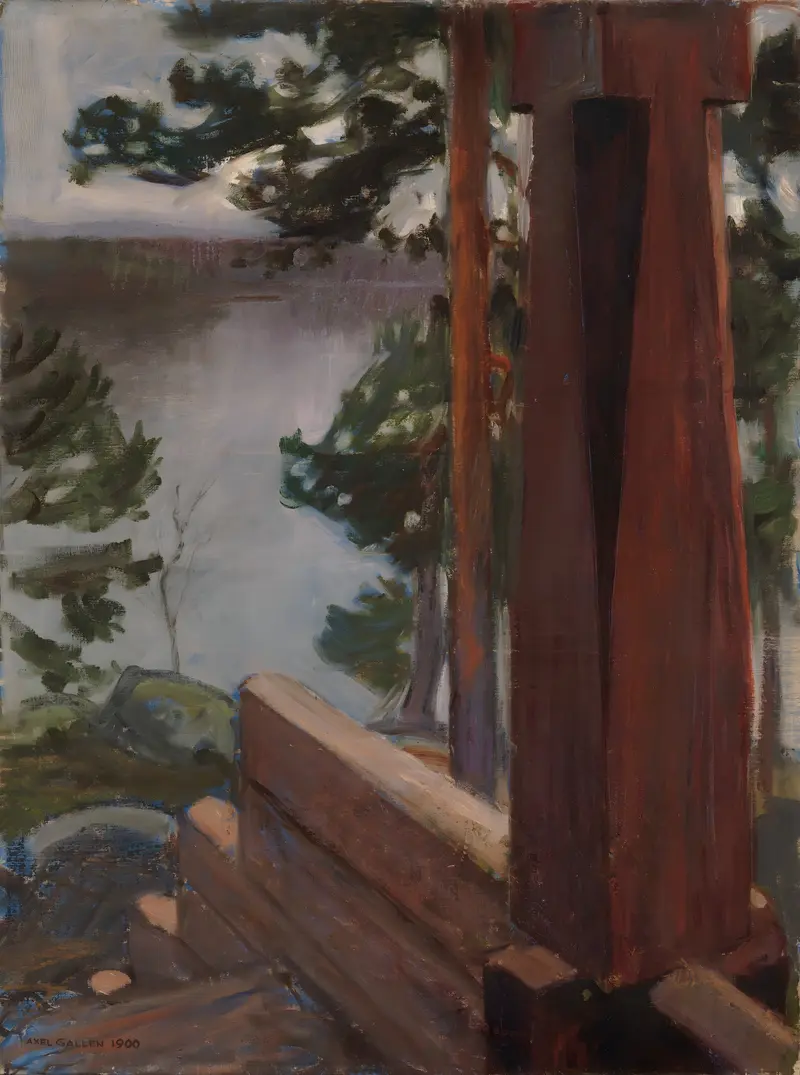
The Kalela Porch
Akseli Gallen-Kallela

Light Behind The Clouds
Akseli Gallen-Kallela
More Landscape Art

The Starry Night
Vincent van Gogh

View of Delft
Johannes Vermeer

Water Lilies
Claude Monet

The Grand Canal, Venice, looking north-west from the Ca' Corner to the Ca' Contarini degli Scrigni, with the campanile of Santa Maria della Carità
Canaletto

Windsor Castle
Canaletto

The Grand Canal looking North-East from the Palazzo Dolfin-Manin to the Rialto Bridge
Canaletto