
Bateaux de pêche sur une mer agitée ; Marine — History & Facts
A sky swollen with cloud dominates the scene, dwarfing the small, sturdy fishing boats as they press forward across a restless sea. The eye is drawn first to the nearest vessel, its sail taut, its prow cutting through the churning water—here, the painter’s brushwork turns the waves into a living, heaving surface. The low horizon grants the sky its grandeur, while the angled masts and billowing canvas suggest motion and the constant negotiation between human labor and nature’s unpredictability.
Look closely at the figures: they are not heroic, but intent, absorbed in their work, signaling the daily persistence of coastal life. The palette, cool and muted, lends a sense of brisk air and salt spray, while the light, breaking through the clouds, promises a moment of calm amid the effort. Painted in the 17th century, this marine scene belongs to a tradition that flourished in the Dutch Republic, where artists like Abraham van Beyeren found both patrons and inspiration in the maritime world. Such paintings were prized by a society whose wealth and identity were deeply tied to the sea—merchants, shipowners, and even civic leaders commissioned these works to celebrate their connection to commerce and the rhythms of daily life.
While history has kept few traces of this specific painting’s journey, its presence in the Joconde database anchors it within the broader story of Dutch marine art, a genre that captured both the pride and the vulnerability of a seafaring nation. Let your gaze linger on the horizon, and consider how much of the world’s history has been shaped by the wind, the water, and the will to cross them.
More Artworks by Abraham van Beyeren

Still Life
Abraham van Beyeren
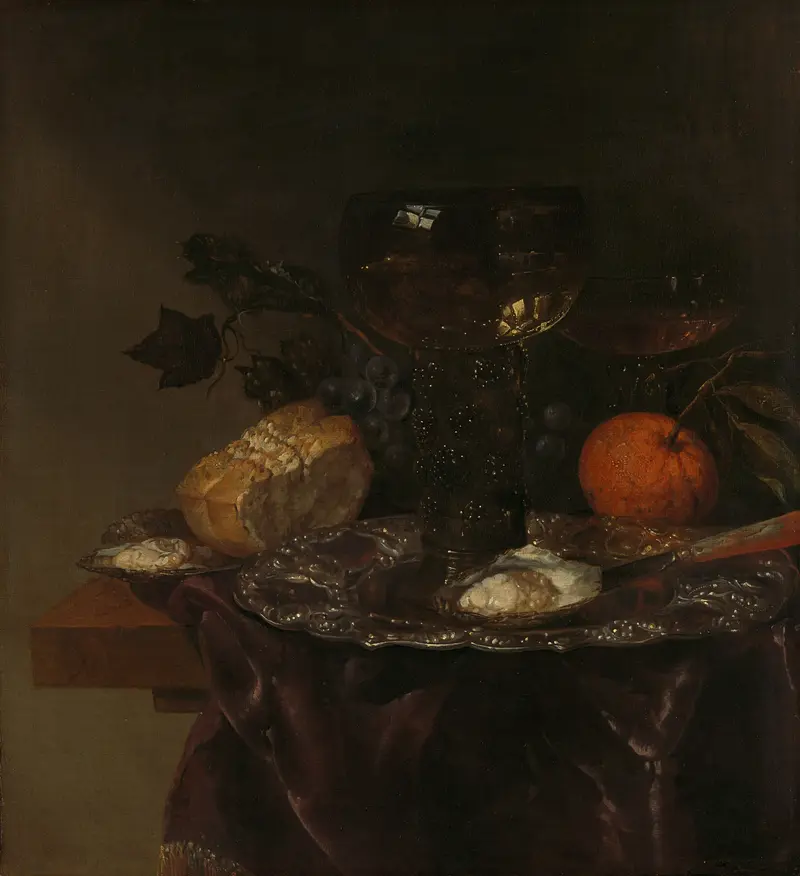
Still Life
Abraham van Beyeren
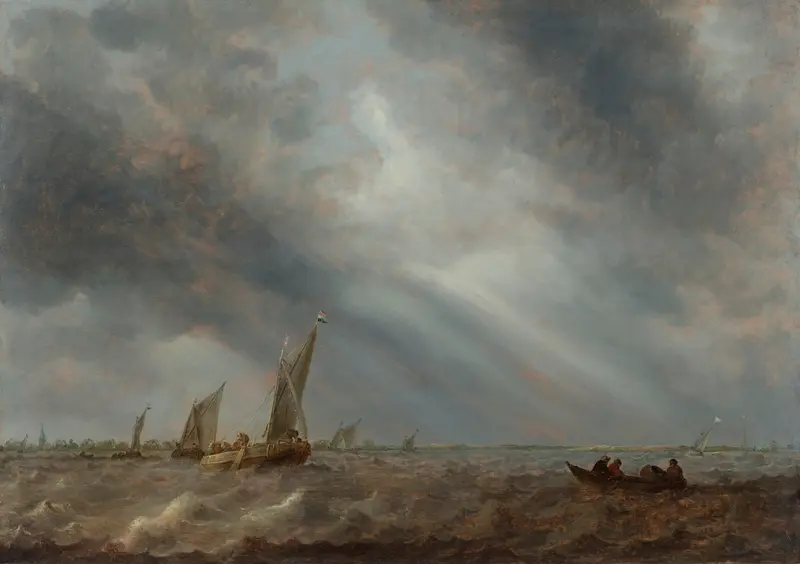
Various sailing vessels and a rowing boat with fishermen on choppy waters under a stormy sky
Abraham van Beyeren
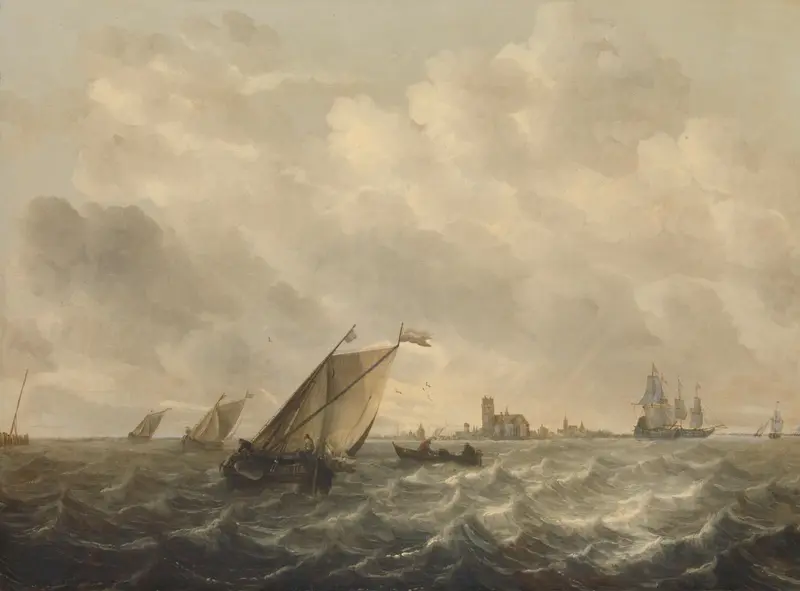
River View
Abraham van Beyeren
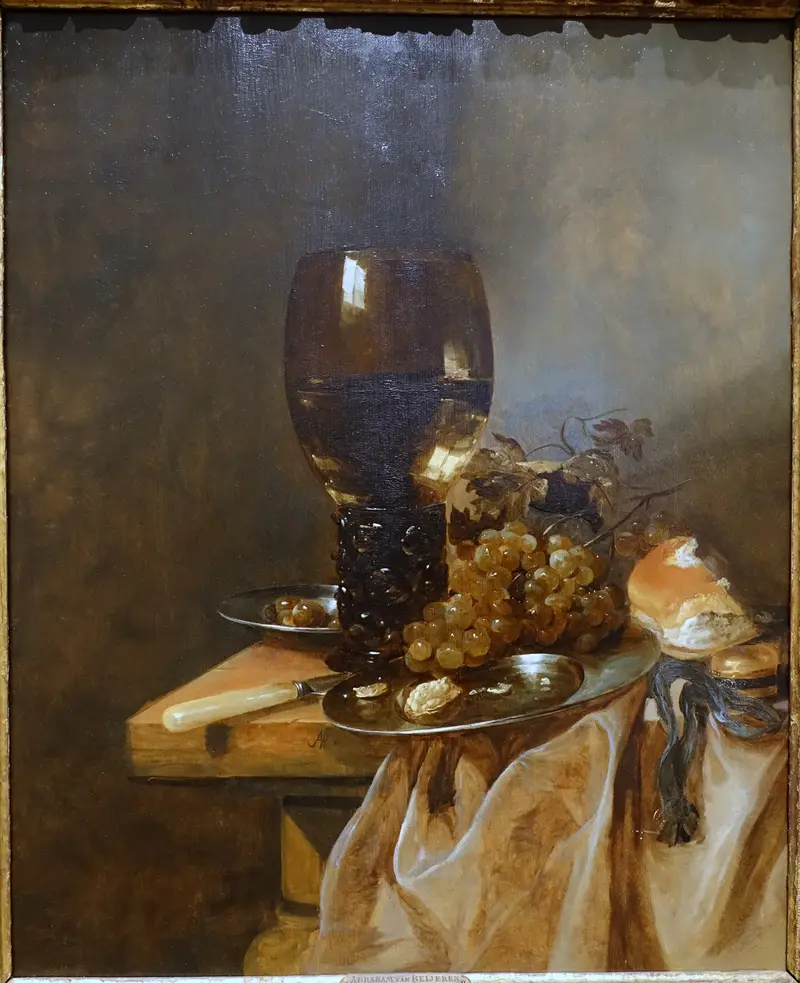
A Roemer with Grapes, a Pewter Plate and a Roll
Abraham van Beyeren
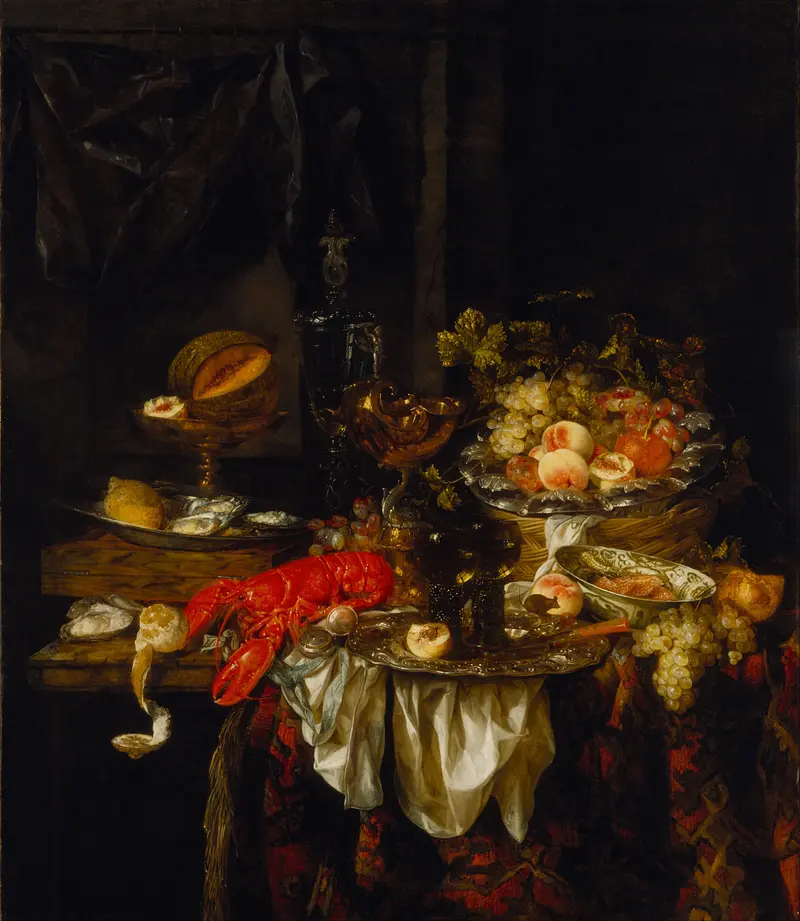
Banquet Still Life
Abraham van Beyeren
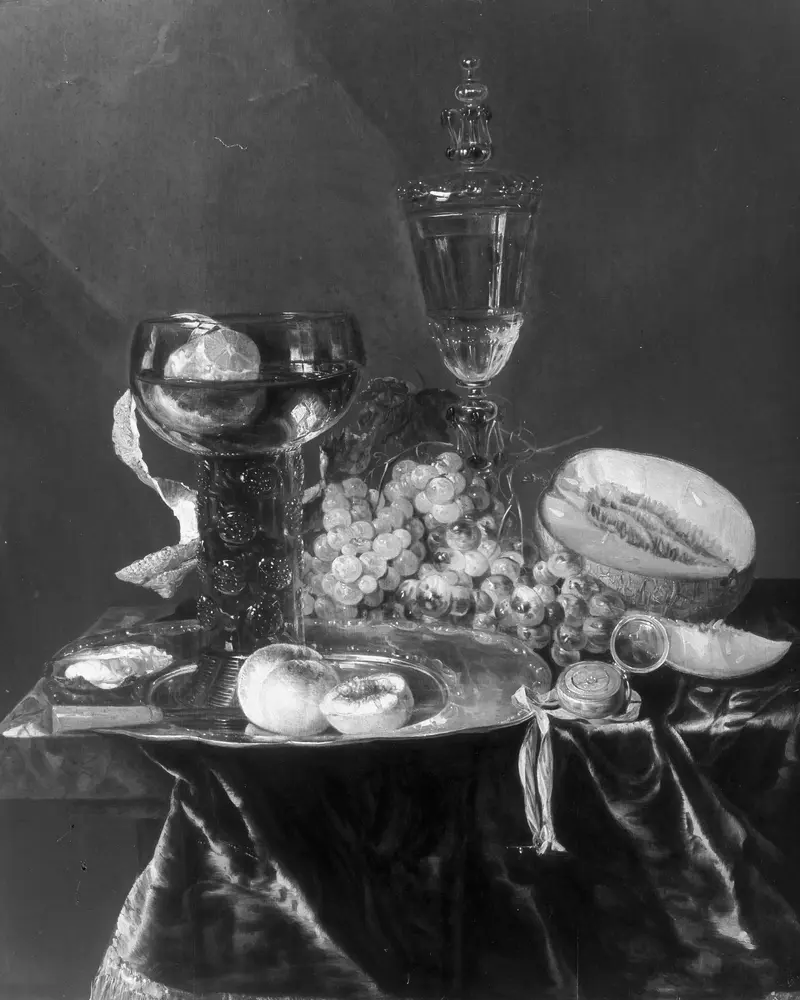
Still life with a glass lid goblet
Abraham van Beyeren
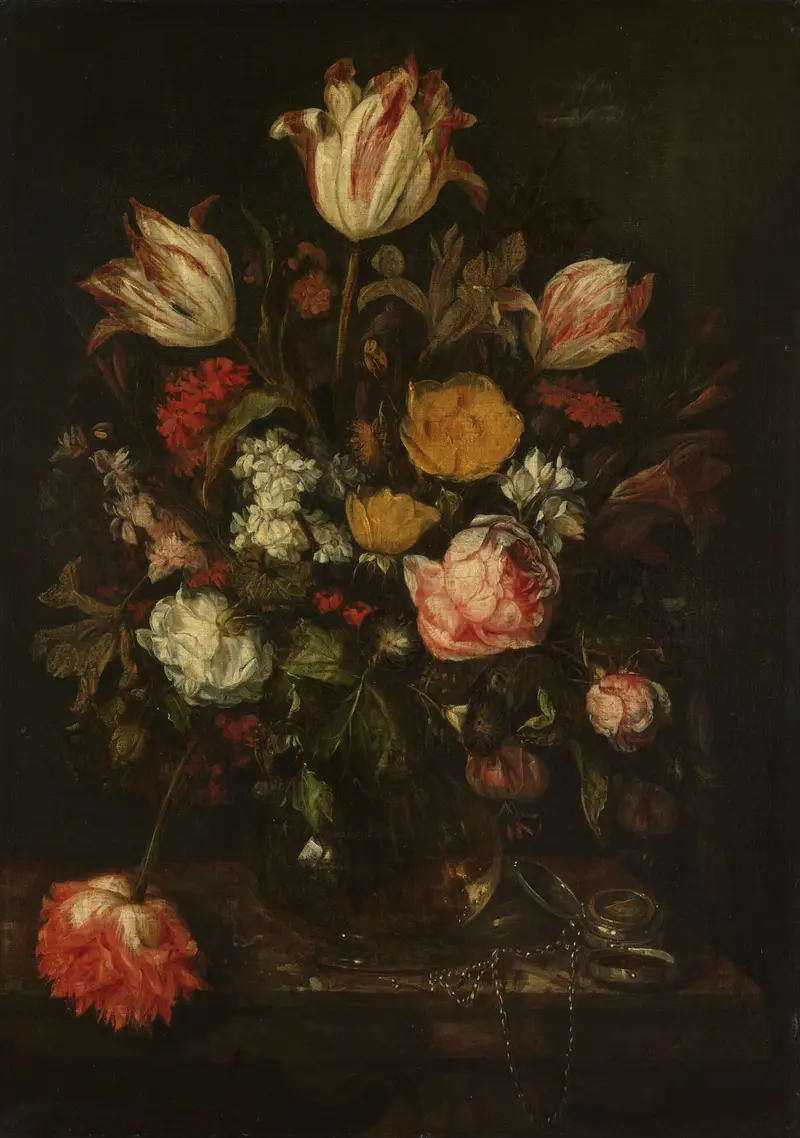
Still life with flowers
Abraham van Beyeren
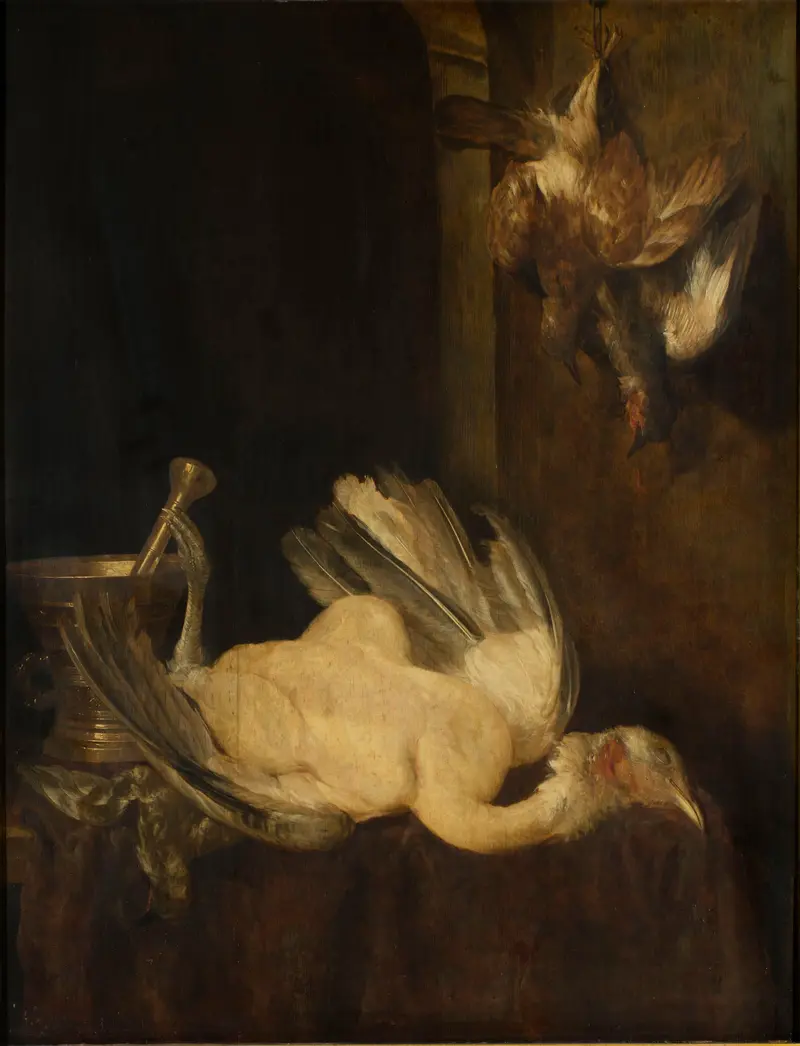
Still life with dead birds
Abraham van Beyeren
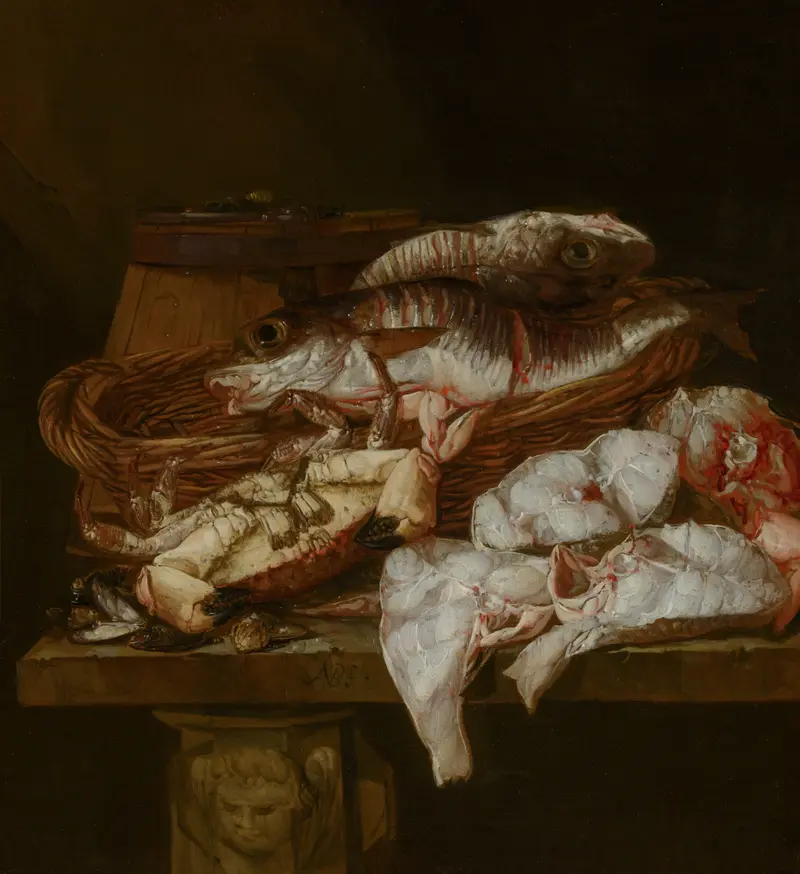
Still Life with Seafood
Abraham van Beyeren





