
Boats on the Shore at Calais — History & Facts
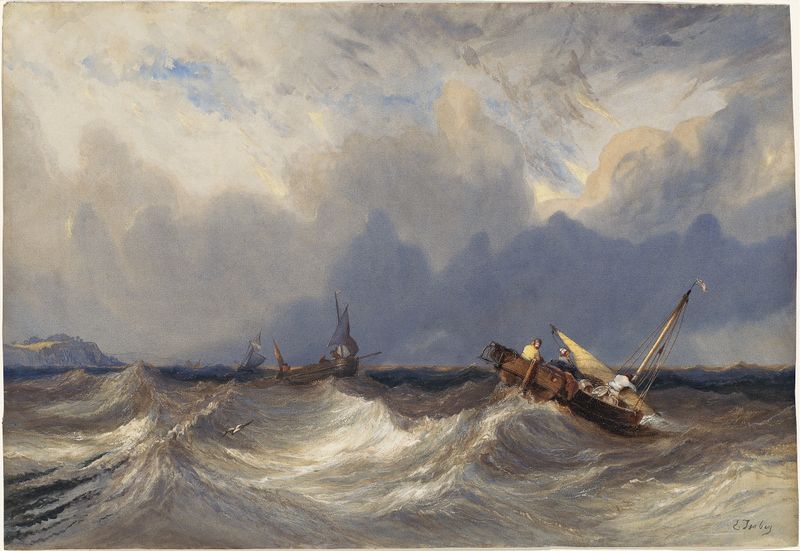
What secret hides in the quiet of the canvas? In Boats on the Shore at Calais, the stillness invites reflection, suggesting a momentary pause between the known and the unknown. Focus first on the gentle movement of the water at the lower edge, where pale blues intermingle with hints of golden sunlight. The boats, anchored yet alive, draw the eye upwards to the tranquil sky, where soft clouds float like whispers. Notice how the painter employs delicate strokes to capture the nuanced interplay between the boats and their environment, the colors blending harmoniously to evoke both a sense of peace and longing. Beneath the serene surface, there lies an emotional tension between land and sea, stability and freedom.
The grounded boats symbolize human endeavor, while the expansive horizon represents the infinite possibilities that lie beyond reach. This duality suggests a yearning for transcendence, a bridge between earthly existence and the vast unknown, encouraging viewers to contemplate their own desires for freedom and adventure. In 1851, Eugène Isabey painted this reflective piece during a period marked by significant artistic shifts in France. Emerging from the Romantic era, where emotion and nature reigned supreme, Isabey sought to capture the delicate balance between realism and idealism.
As he navigated through his personal exploration of landscapes, the work reflects his engagement with both the physical world and a deeper philosophical inquiry, characteristic of his time.
More Artworks by Eugène Isabey
Browse all →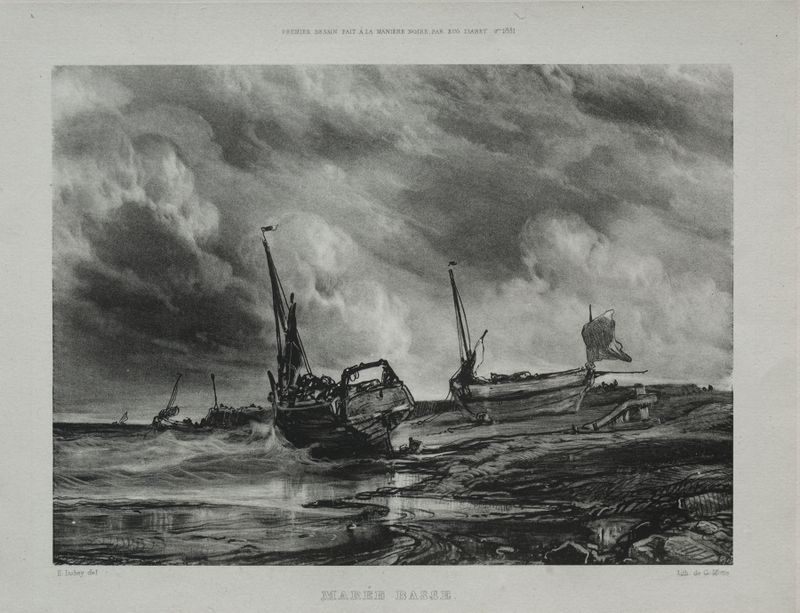
Marée basse
Eugène Isabey

Shipwreck
Eugène Isabey

Shipwreck
Eugène Isabey

The Wreck
Eugène Isabey
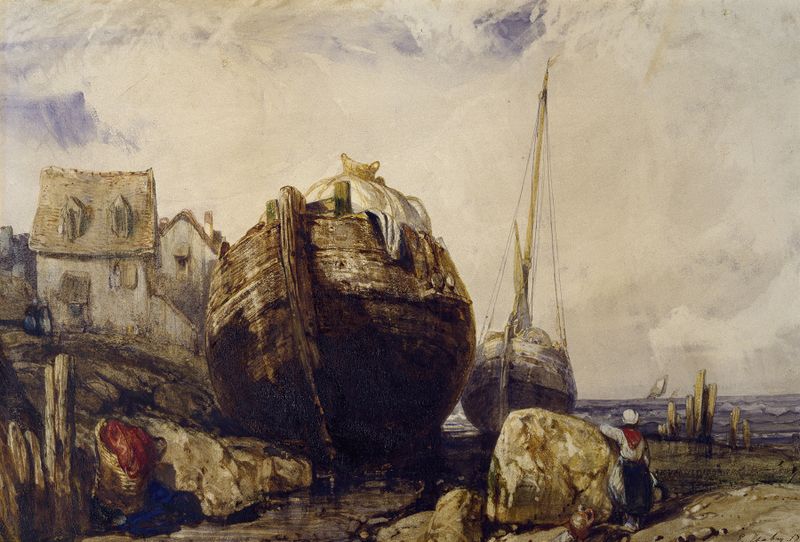
Fishing Boats
Eugène Isabey
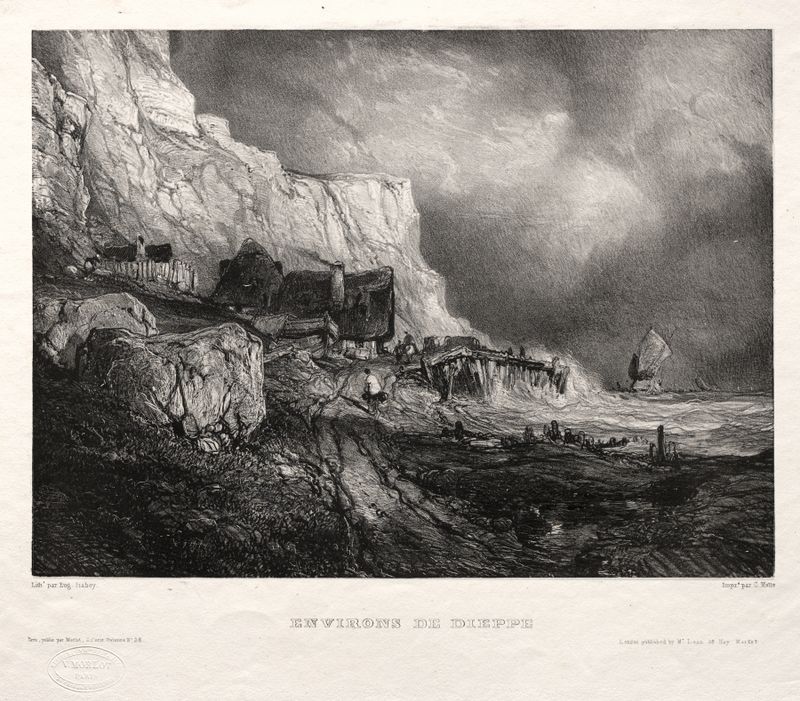
Environs de Dieppe
Eugène Isabey
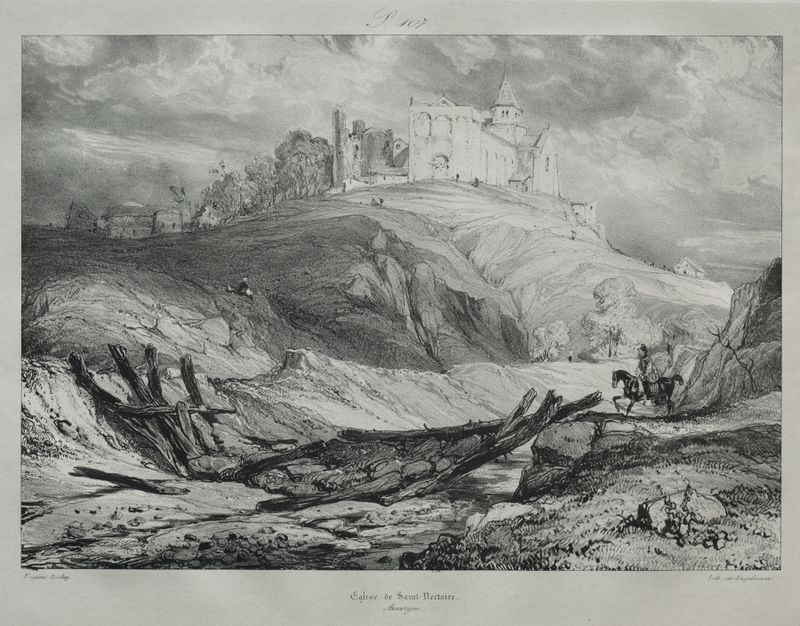
Église de St. Nectaire
Eugène Isabey

Fishing boat at the seaside
Eugène Isabey

Sunset on the Normandy Coast
Eugène Isabey
Fishing Boats Tossed before a Storm
Eugène Isabey





