
Boy Shooting with a Key — History & Facts
What draws the eye first is not the boy’s makeshift weapon, but the fierce concentration etched across his face—a moment of childhood so intent it becomes almost heroic. In Boy Shooting with a Key, Aleksander Kotsis captures a rural game elevated to high drama, as a barefoot child, sleeves rolled and brow furrowed, aims an old key as if it were a pistol. The light falls gently on his oversized shirt and bare feet, underscoring the roughness of country life, while the two other children—one peering out from behind a tree, the other crouched low in the grass—create a triangle of anticipation.
Even the sheep, half-glimpsed at the edge, seem drawn into the tension of the boy’s imaginary duel. The palette is warm, earthy, and forgiving, lending the scene a sense of remembered summer. Painted before 1863, this work belongs to a world where artists like Kotsis turned their gaze to the everyday lives of peasants and children, finding dignity and drama in the smallest gestures. In mid-19th-century Poland, such scenes were both a celebration and a subtle act of preservation, as rural traditions faced the pressures of modernization and political upheaval.
Boy Shooting with a Key now resides in the National Museum in Kraków, a quiet testament to a time when the countryside shaped both the dreams and the games of its youngest inhabitants. Look again at the boy’s determined stance, and you see not just a game, but the stubborn hope of youth.
More Artworks by Aleksander Kotsis

Trip in the Tatra Mountains
Aleksander Kotsis

Fair in Nowy Targ
Aleksander Kotsis
Pastoral Scene
Aleksander Kotsis
In the farmyard
Aleksander Kotsis
Haggling over a Calf
Aleksander Kotsis
Heads of Two Young Girls
Aleksander Kotsis
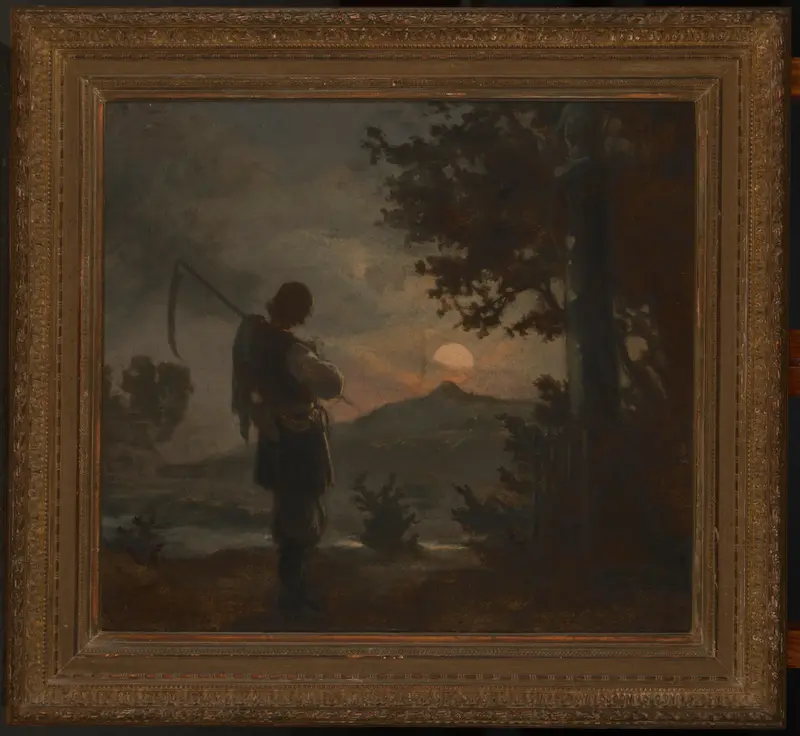
Haymaker
Aleksander Kotsis
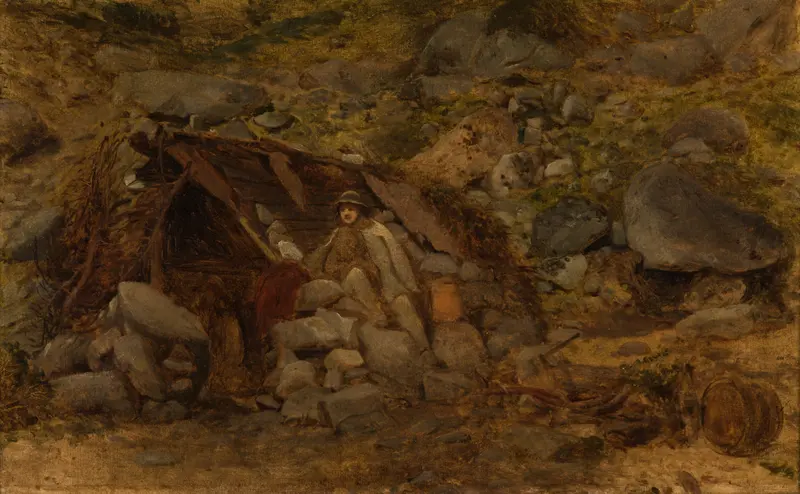
Highlander in Front of a Hut
Aleksander Kotsis
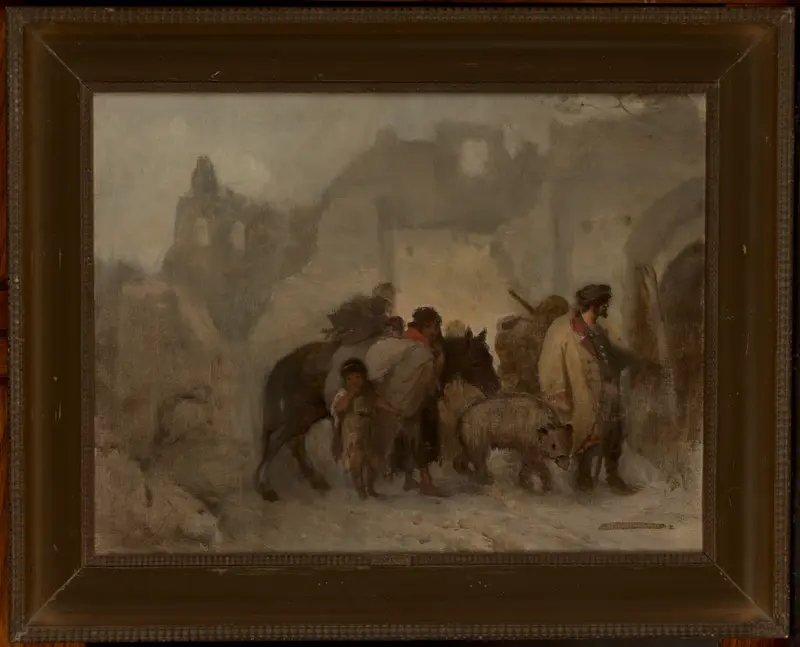
Gypsies
Aleksander Kotsis
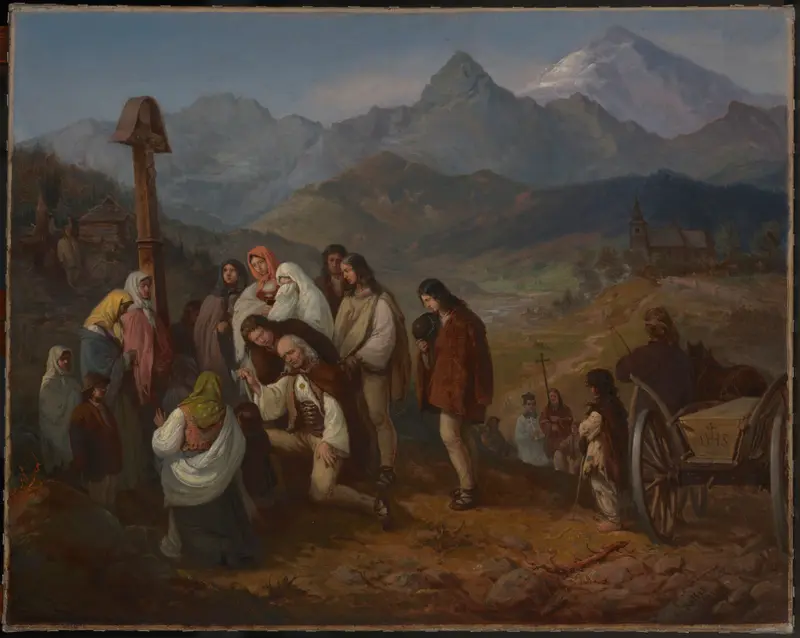
A Highlander's Funeral
Aleksander Kotsis
More Genre Scene Art

Banquet of the Officers of the St George Civic Guard
Frans Hals

Rembrandt and Saskia in the Scene of the Prodigal Son
Rembrandt van Rijn

Bal du moulin de la Galette
Pierre-Auguste Renoir

Quadrille at the Moulin Rouge
Henri de Toulouse-Lautrec

A Burial at Ornans
Gustave Courbet

When Will You Marry?
Paul Gauguin