Café in Paris — History & Facts
A violet hat, impossibly grand, sweeps across the foreground like a flourish of theater curtains, inviting the viewer into the swirl of a Parisian café at its most electric hour. The brushwork is urgent, almost impatient, as if the painter is racing to capture the pulse of conversation and color before it dissolves into memory. Faces are glimpsed in profile or half-shadow, hats and coats forming a mosaic of modern life, while the sign above—its letters only half legible—reminds us that this is a place of gathering, of ritual, of spectacle.
The light, warm and artificial, pools on the brims of hats and the curve of a cheek, suggesting the glow of gas lamps and the hum of voices rising over clinking glasses. Painted in 1909, Café in Paris belongs to a world where cafés were the unofficial salons of the avant-garde, and artists like Akseli Gallen-Kallela were drawn to the city’s restless energy. The loose, animated strokes echo the experiments of the Fauves and Post-Impressionists, who sought to capture not just appearances but the sensation of being present in a fleeting moment. This is not the Paris of grand boulevards or monuments, but of intimacy and chance encounters—a world where a feathered hat or a turned shoulder can become the focal point of an entire scene.
In this painting, history has kept few traces of the specific café or its patrons, but the sense of immediacy remains undimmed, urging us to linger and imagine the stories unfolding just beyond the edge of the canvas.
More Artworks by Akseli Gallen-Kallela
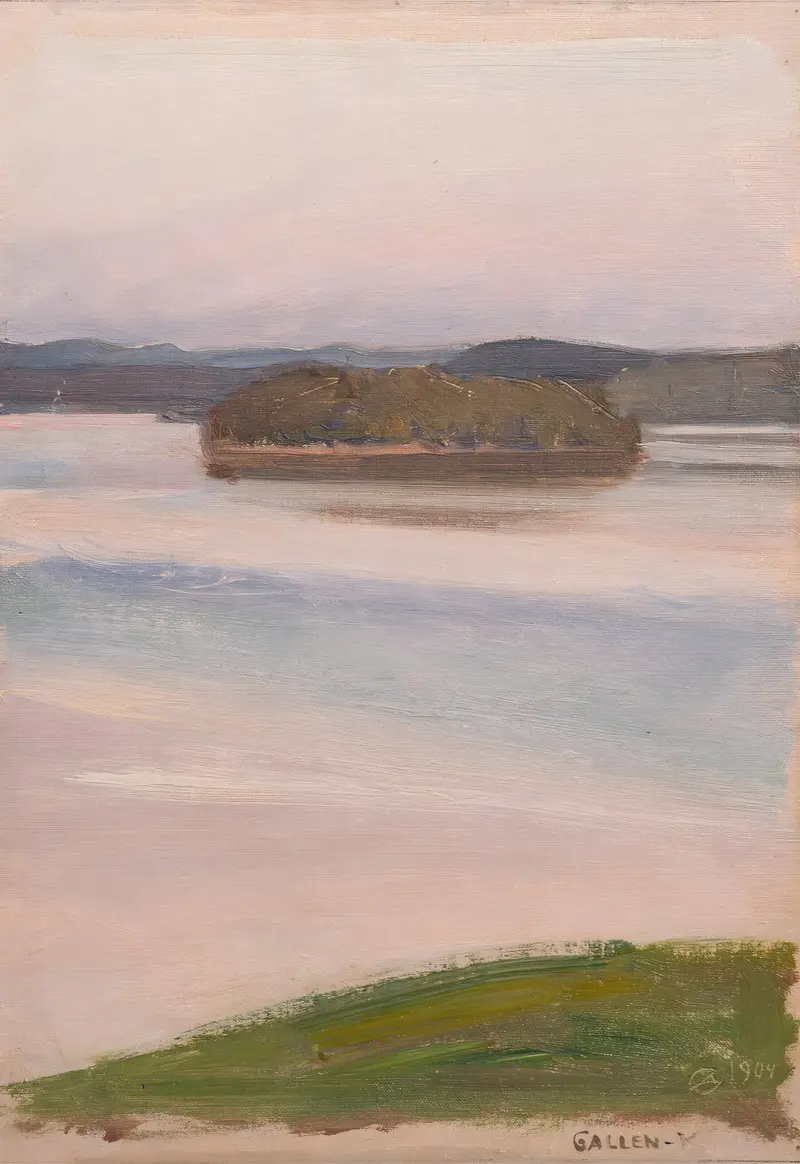
Lake Keitele
Akseli Gallen-Kallela
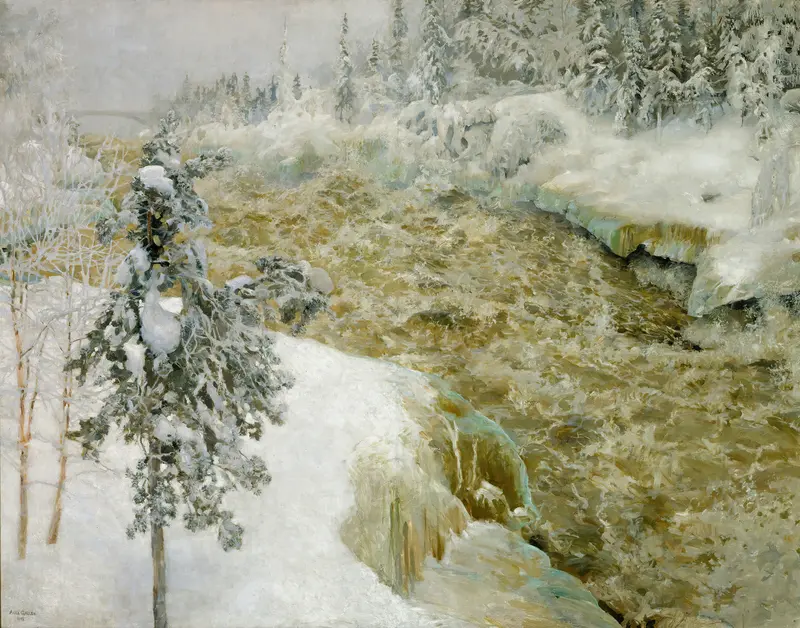
Imatra Falls in Snow ; Imatra in Winter
Akseli Gallen-Kallela
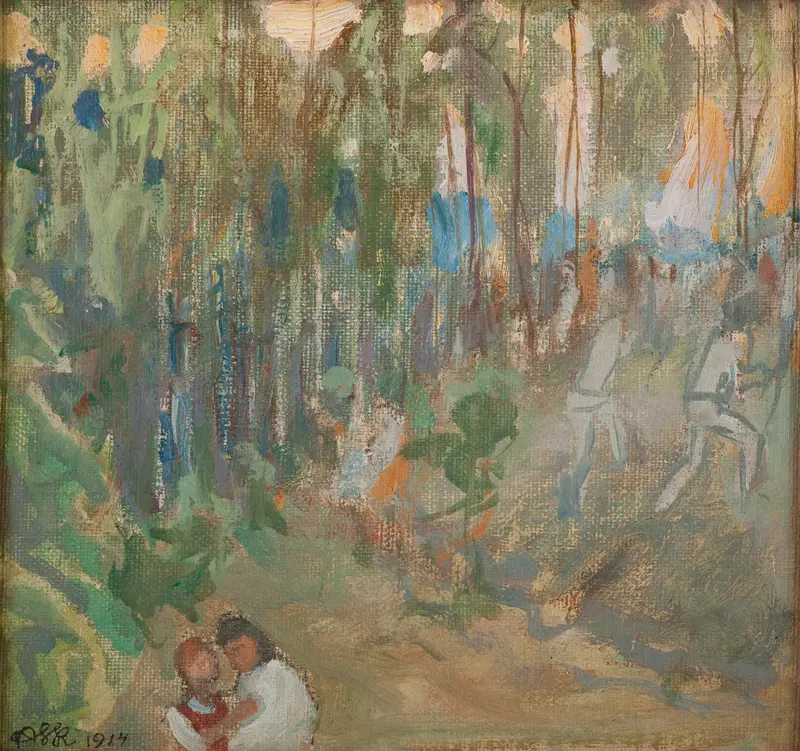
Vainovalkeat
Akseli Gallen-Kallela
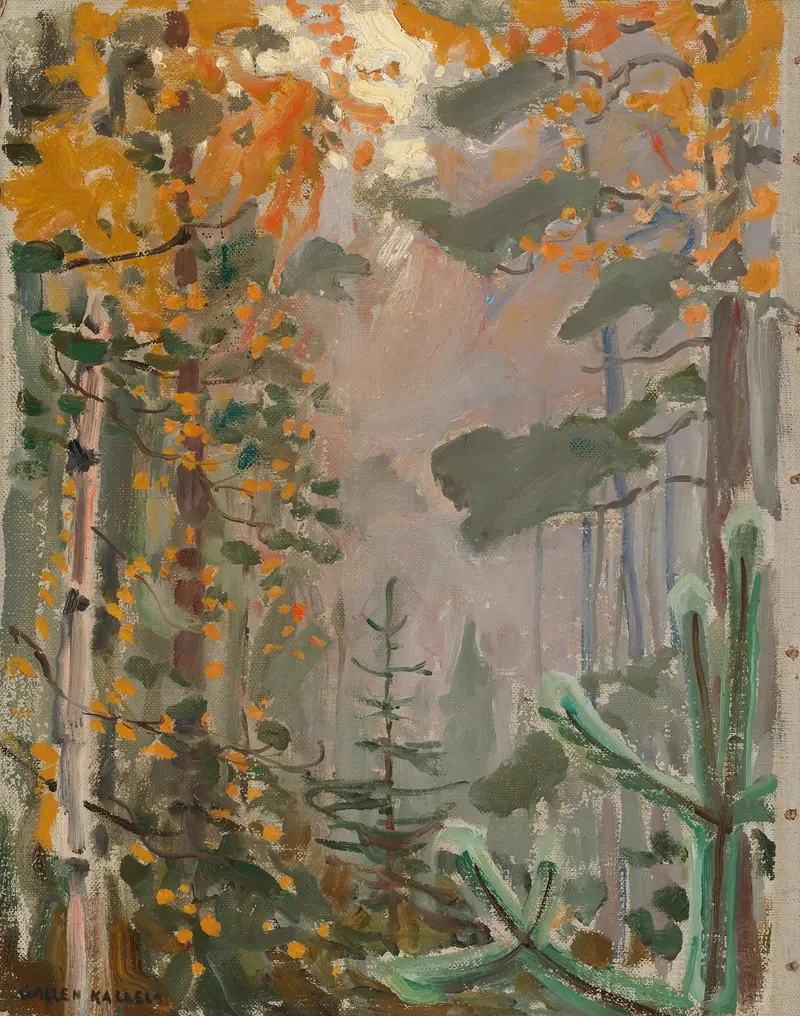
Autumn Landscape
Akseli Gallen-Kallela
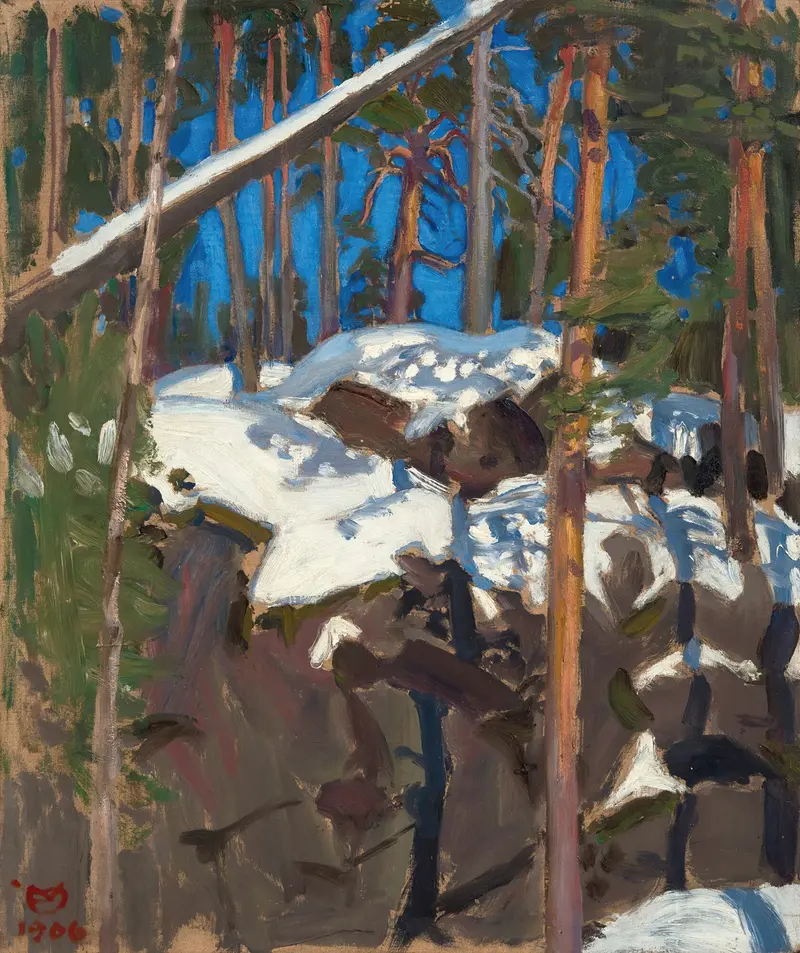
Spring Sun At Konginkangas
Akseli Gallen-Kallela
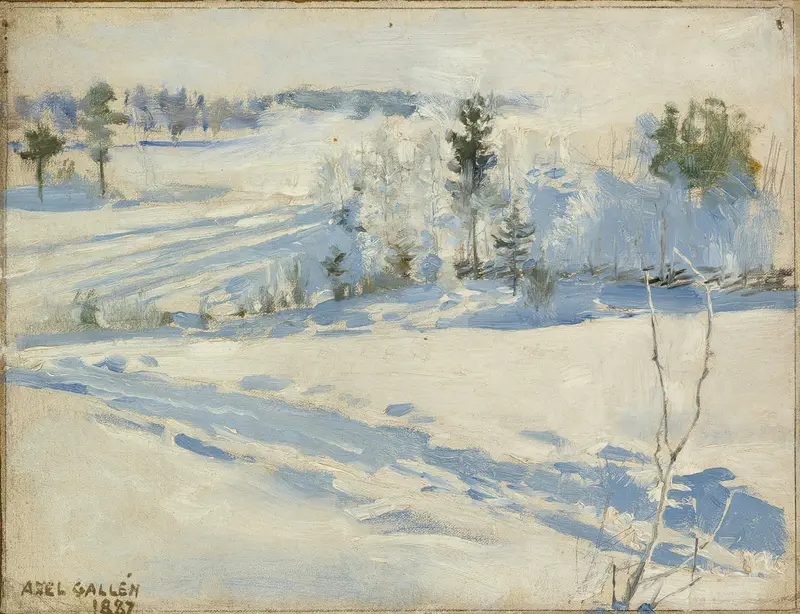
Winter Landscape
Akseli Gallen-Kallela

First Snow
Akseli Gallen-Kallela

Lake View In Autumn
Akseli Gallen-Kallela
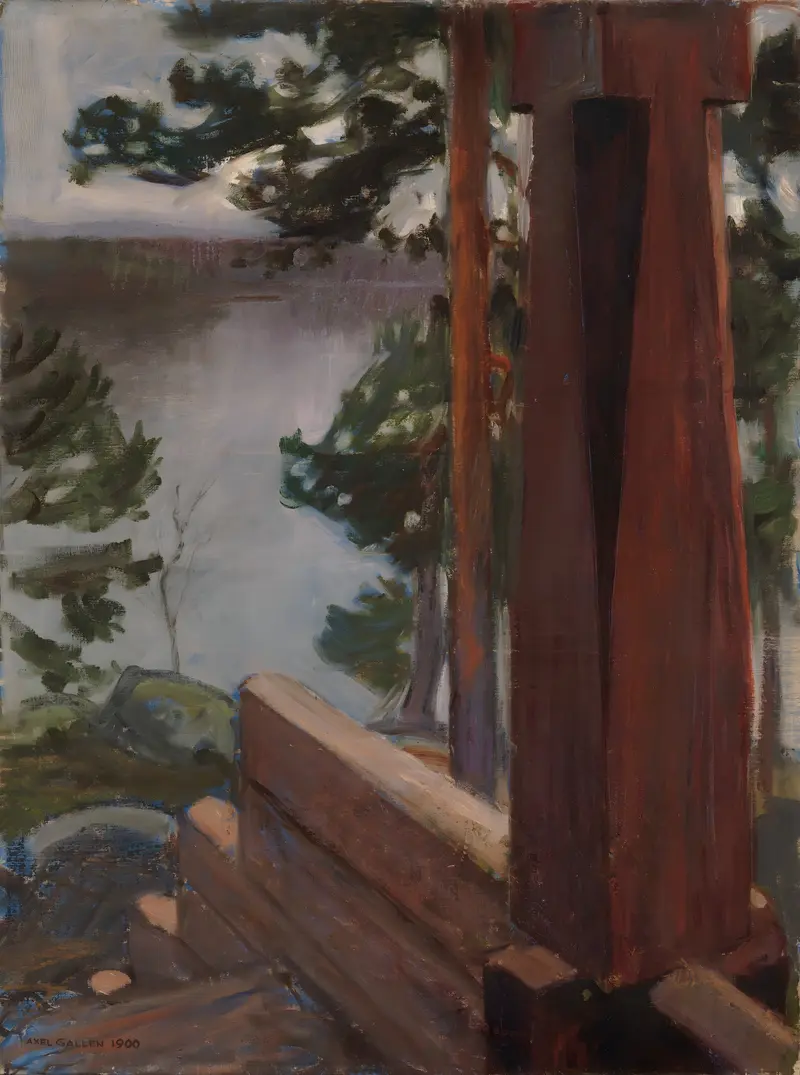
The Kalela Porch
Akseli Gallen-Kallela

Light Behind The Clouds
Akseli Gallen-Kallela