Chinese Ornament No. 1 — History & Facts
A single glance at Chinese Ornament No. 1 by Owen Jones is enough to set the eye wandering through a labyrinth of color and form. Every square on this chromolithograph bursts with its own logic—some strict and geometric, others playful and almost organic—inviting the viewer to trace their fingers along invisible threads of symmetry and repetition.
The palette is bright yet balanced, with reds, blues, and greens alternating in a rhythm that feels both deliberate and exuberant. Each pattern seems to hum with its own energy, as if the page itself is a chorus of voices drawn from distant palaces, temples, and textiles. The arrangement is not random: the careful sequencing of motifs guides the eye from the measured order of the top row to the more intricate, interlocking designs below, suggesting a journey from simplicity to complexity. This page comes from a world in which ornament was not mere decoration but a language—a world meticulously catalogued by Owen Jones in his influential 19th-century treatise on design.
Published in London and here preserved in a 1910 edition by B. Quaritch, the work reflects a Victorian fascination with the arts of distant cultures, especially as Western designers sought new inspiration amid the upheavals of industrialization. Such plates were intended as both reference and inspiration, bridging scholarship and practice for architects, craftsmen, and students.
While the specific history of this page is little recorded, its survival in the Polona Digital Library is a testament to the enduring appeal of pattern as a universal human impulse. Let your eye linger: there is always another path to follow in these interwoven lines.
More Artworks by Owen Jones

Greek Ornament No. 1
Owen Jones
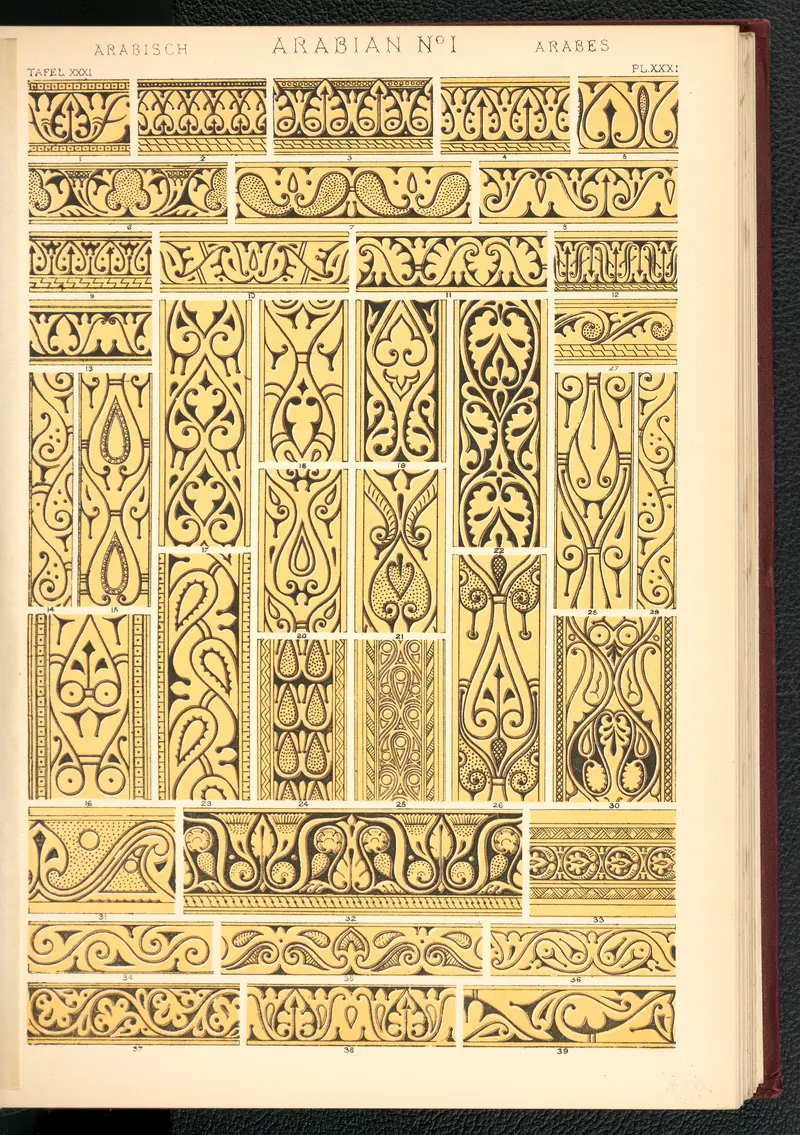
Arabian Ornament No. 1
Owen Jones
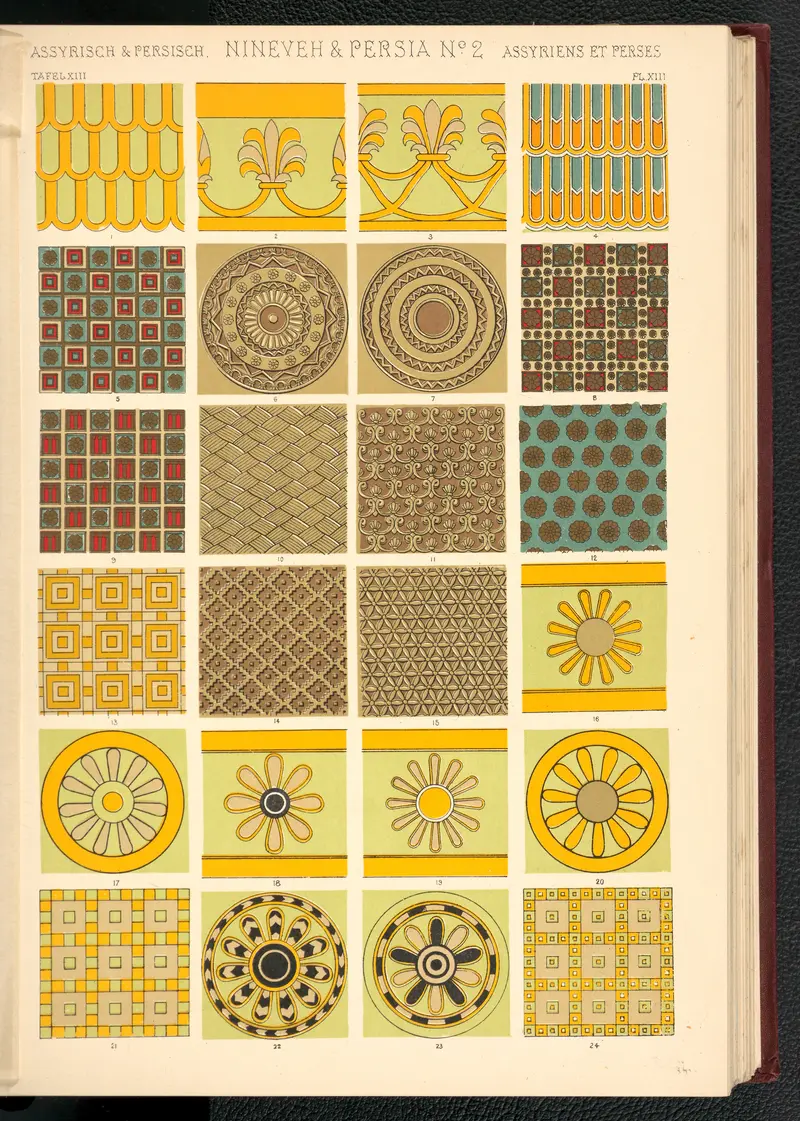
Assyrian Ornament No. 2
Owen Jones

Egyptian Ornament No. 3
Owen Jones
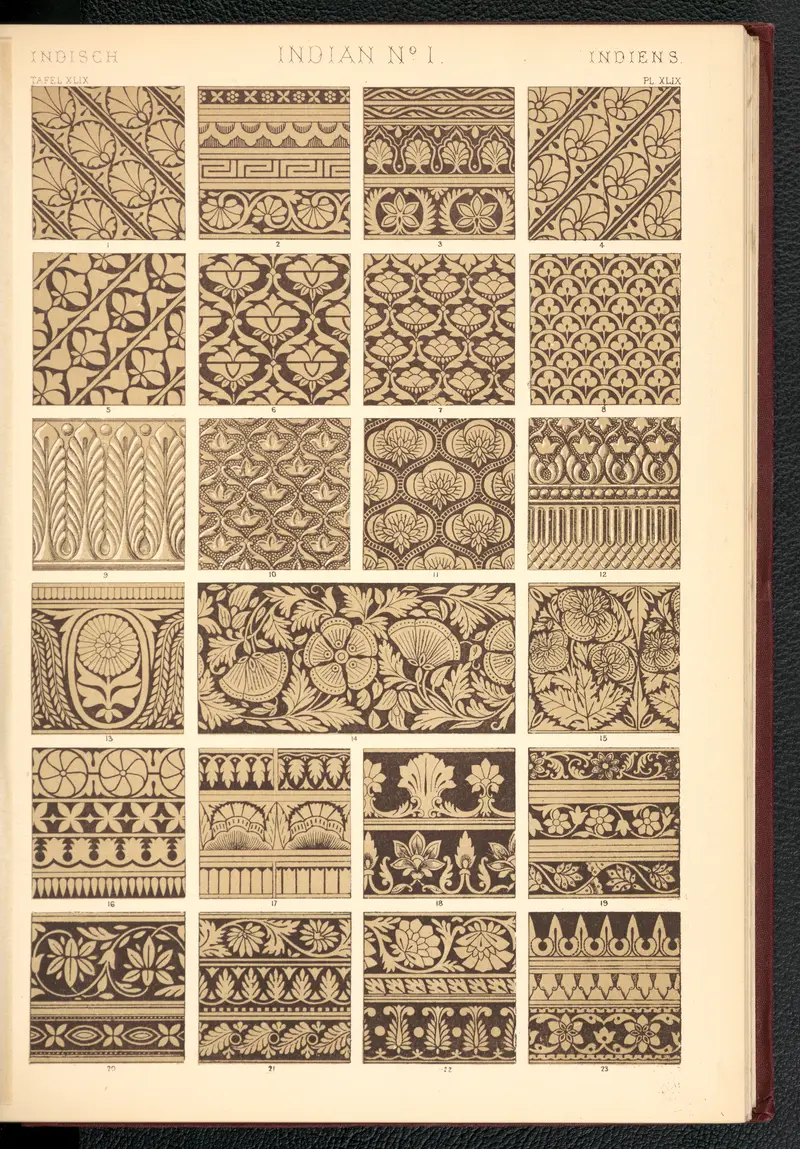
Indian Ornament No. 1
Owen Jones
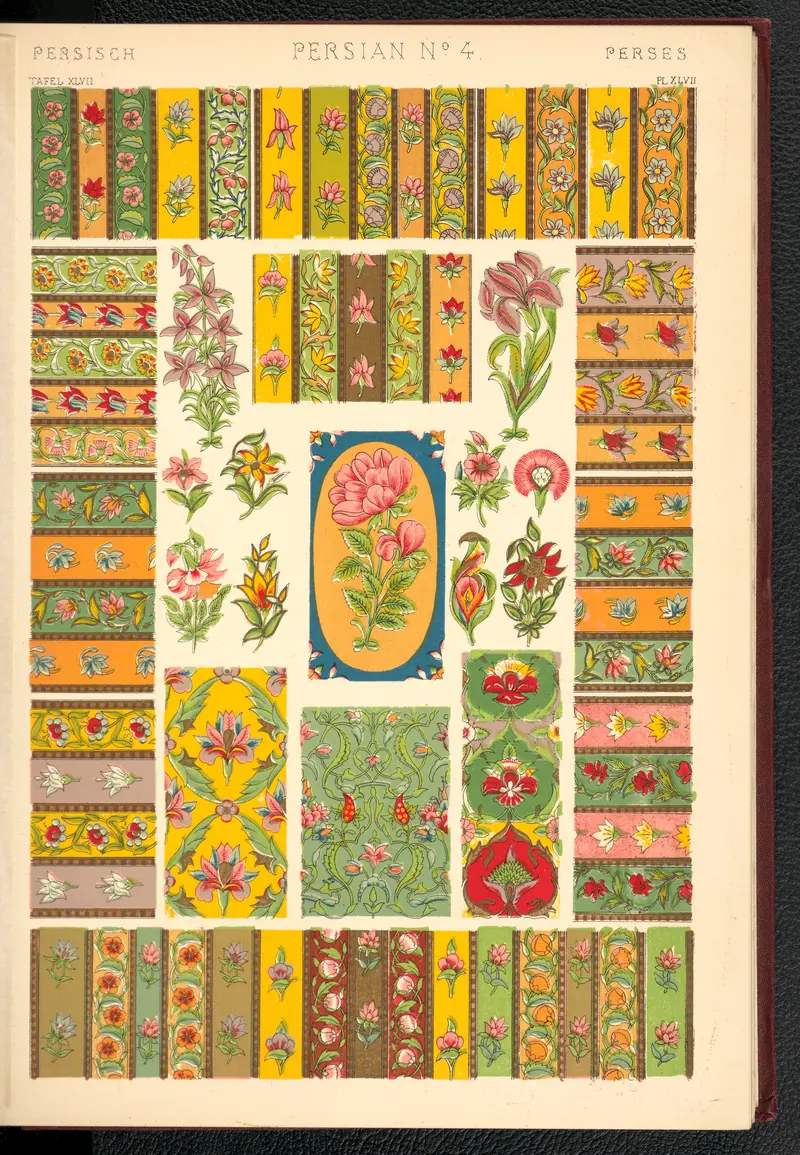
Persian Ornament No. 4
Owen Jones
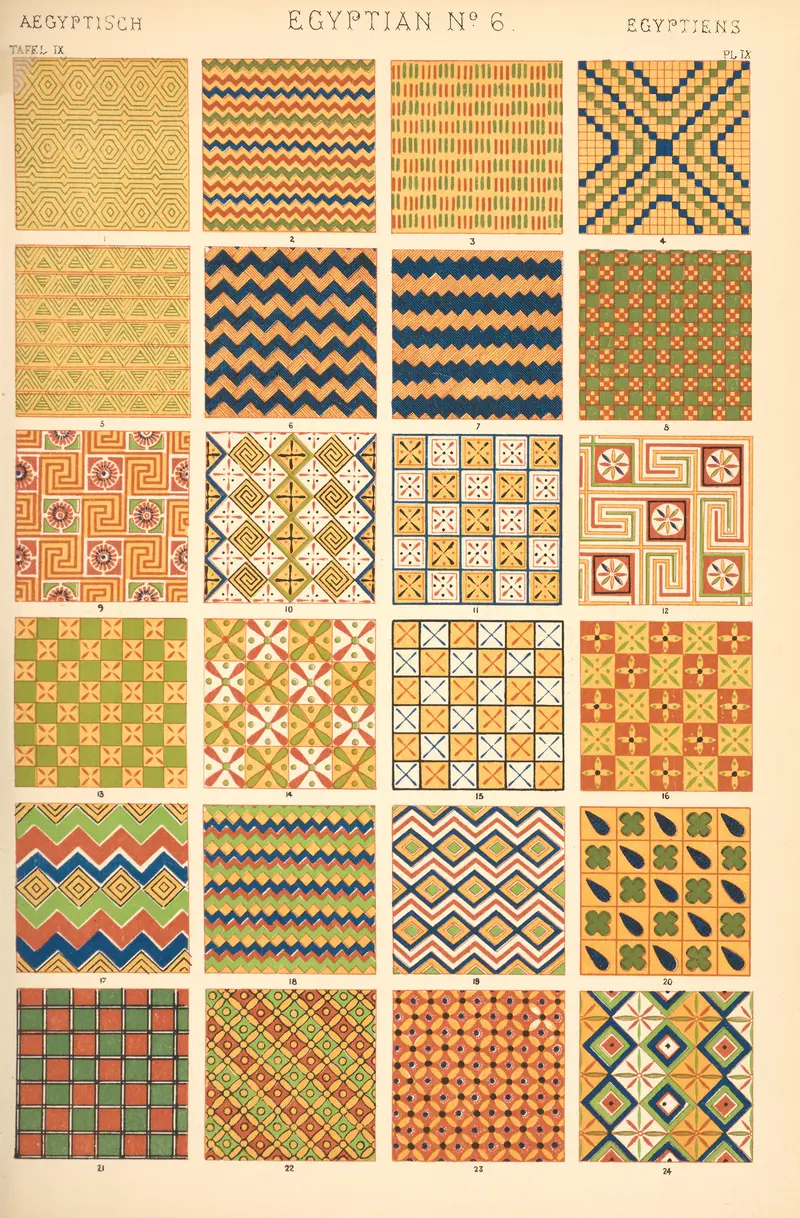
Egyptian Ornament No. 6
Owen Jones
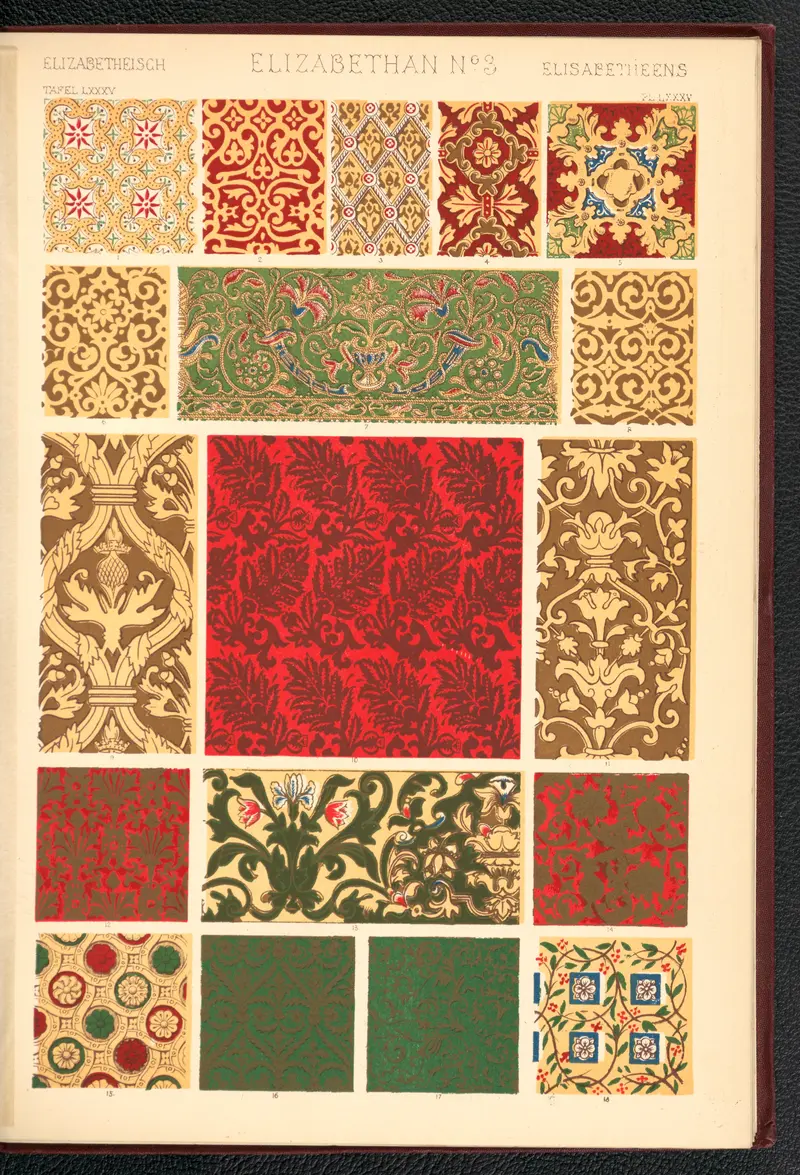
Elizabethan Ornament No. 3
Owen Jones
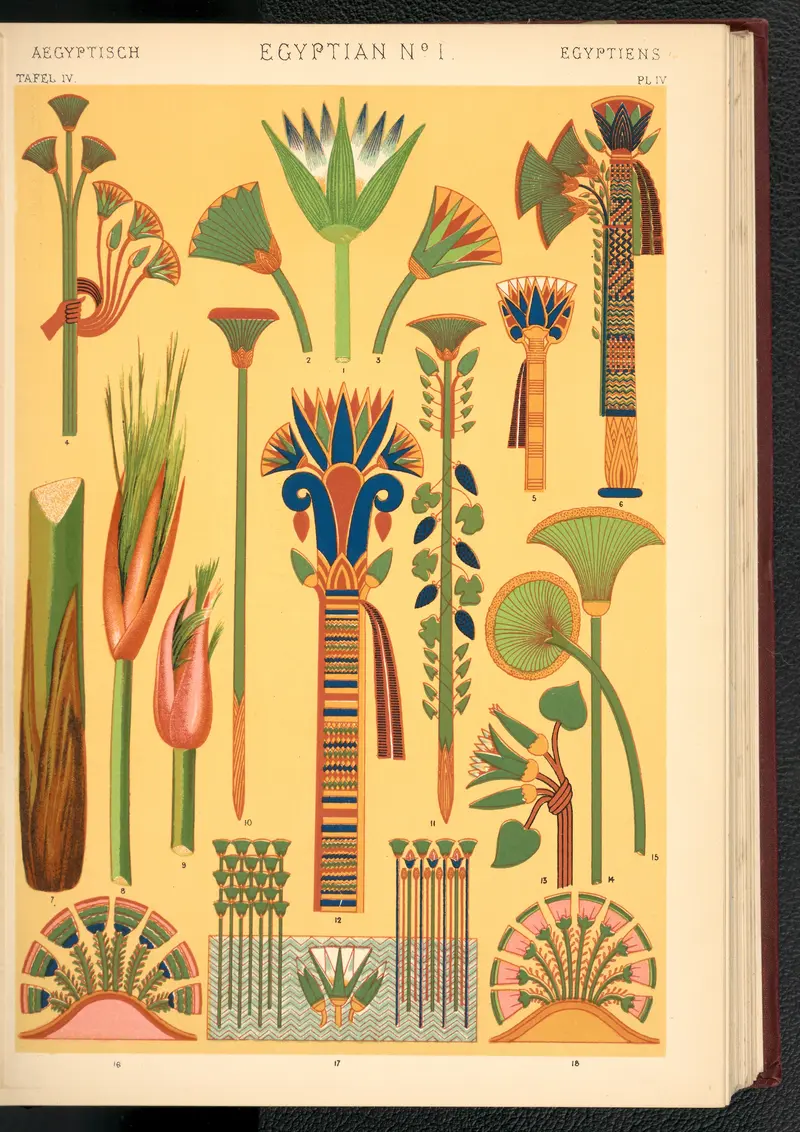
Egyptian Ornament No. 1
Owen Jones
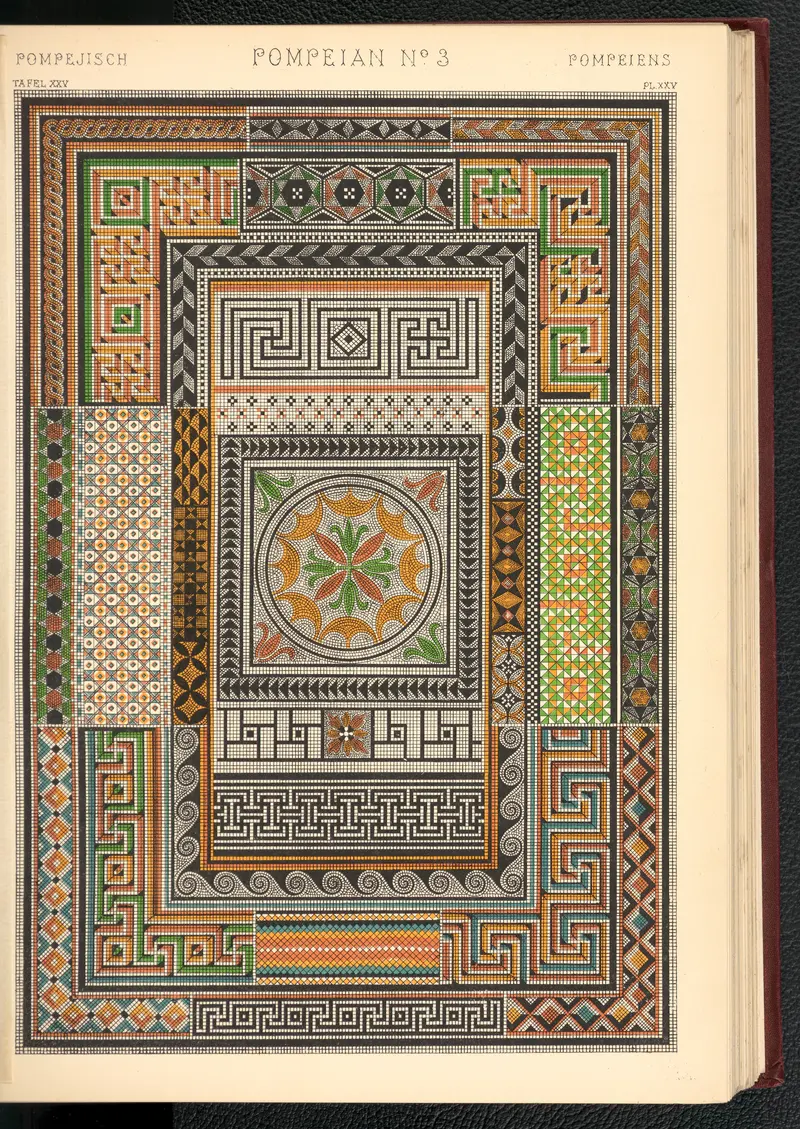
Pompeian Ornament No. 3
Owen Jones