Greek Ornament No. 1 — History & Facts
What first catches the eye in Greek Ornament No. 1 by Owen Jones is the hypnotic rhythm of line and color, a visual language that seems both ancient and utterly modern. Each band is a puzzle of interlocking geometry, the meander or “Greek key” repeating in endless variation—sometimes strict and unyielding, sometimes softened by a flourish or a sudden motif.
The palette, limited to ochres, reds, and blacks, leads the viewer’s gaze from one frieze to the next, echoing the sunbaked stones and painted walls of long-lost temples. Small surprises—a lion, a palmette, a leaping deer—interrupt the order, hinting at stories and meanings that once animated these patterns. This page belongs to a world where ornament was not mere decoration, but a bearer of meaning and identity. In the nineteenth century, designers and architects like Owen Jones turned to the past for inspiration, seeking out the grammar of ancient ornament to inform the new language of industrial design.
Published in London in 1910, this chromolithograph comes from a time when pattern books were prized tools for craftsmen and scholars alike, part of a broader movement to catalogue and revive the arts of earlier civilizations. The Polona Digital Library now preserves this work, a reminder that history’s patterns are never truly lost—only waiting for new eyes to trace their lines.
More Artworks by Owen Jones
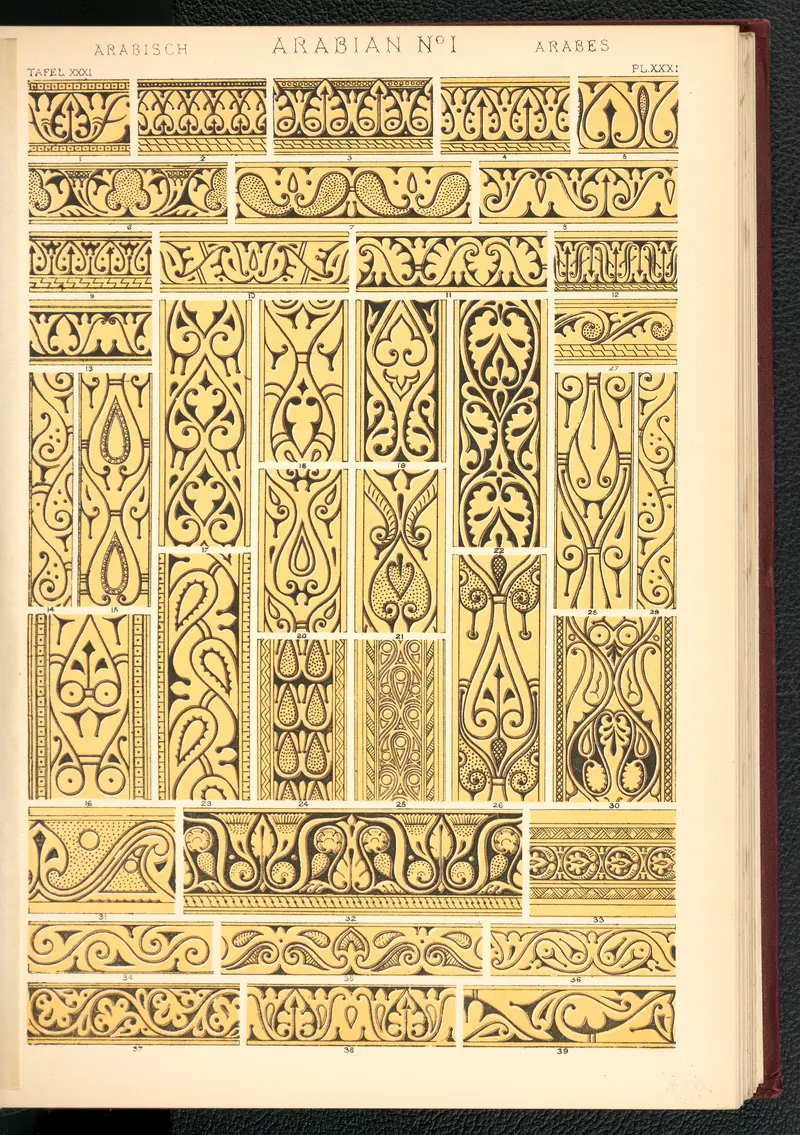
Arabian Ornament No. 1
Owen Jones
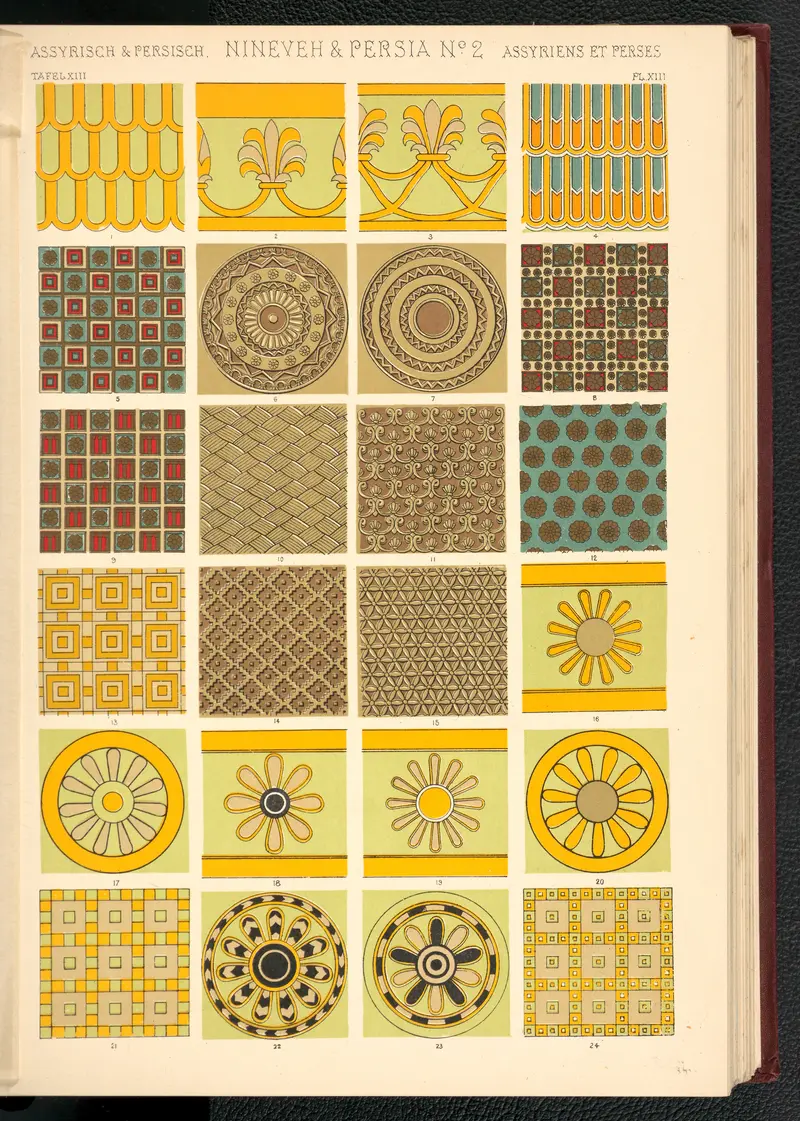
Assyrian Ornament No. 2
Owen Jones

Egyptian Ornament No. 3
Owen Jones
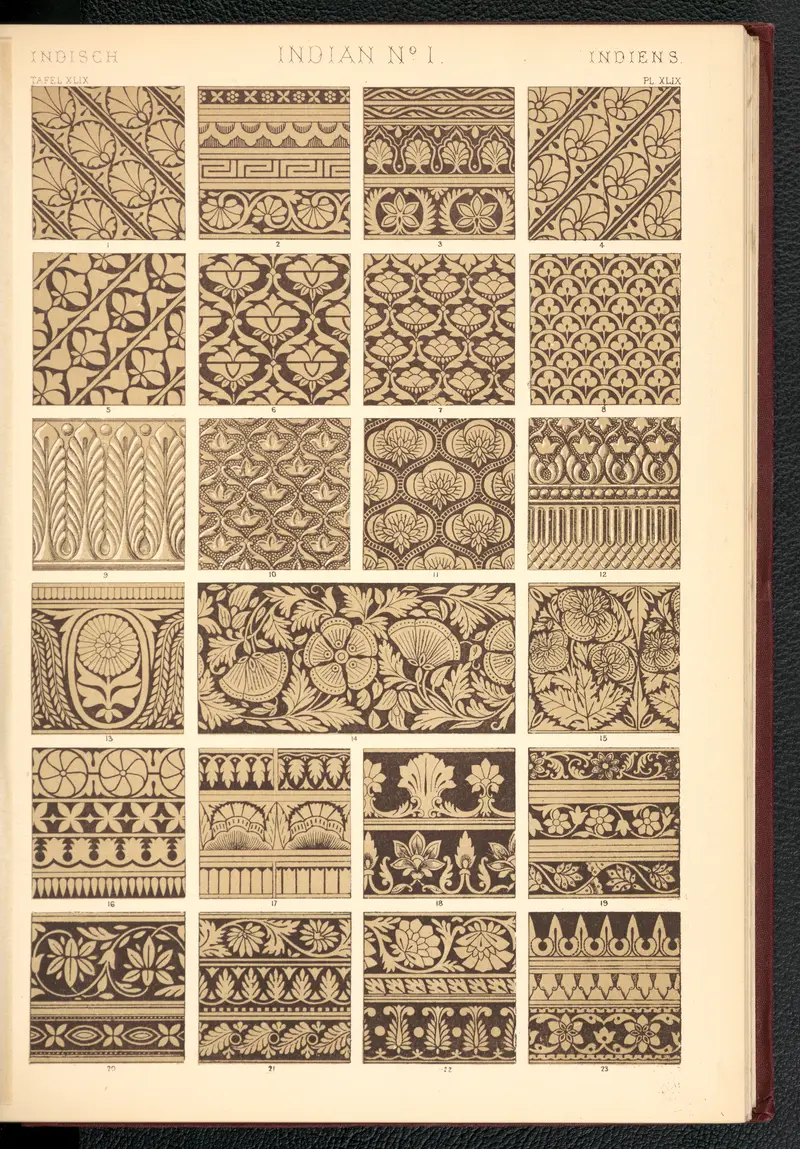
Indian Ornament No. 1
Owen Jones
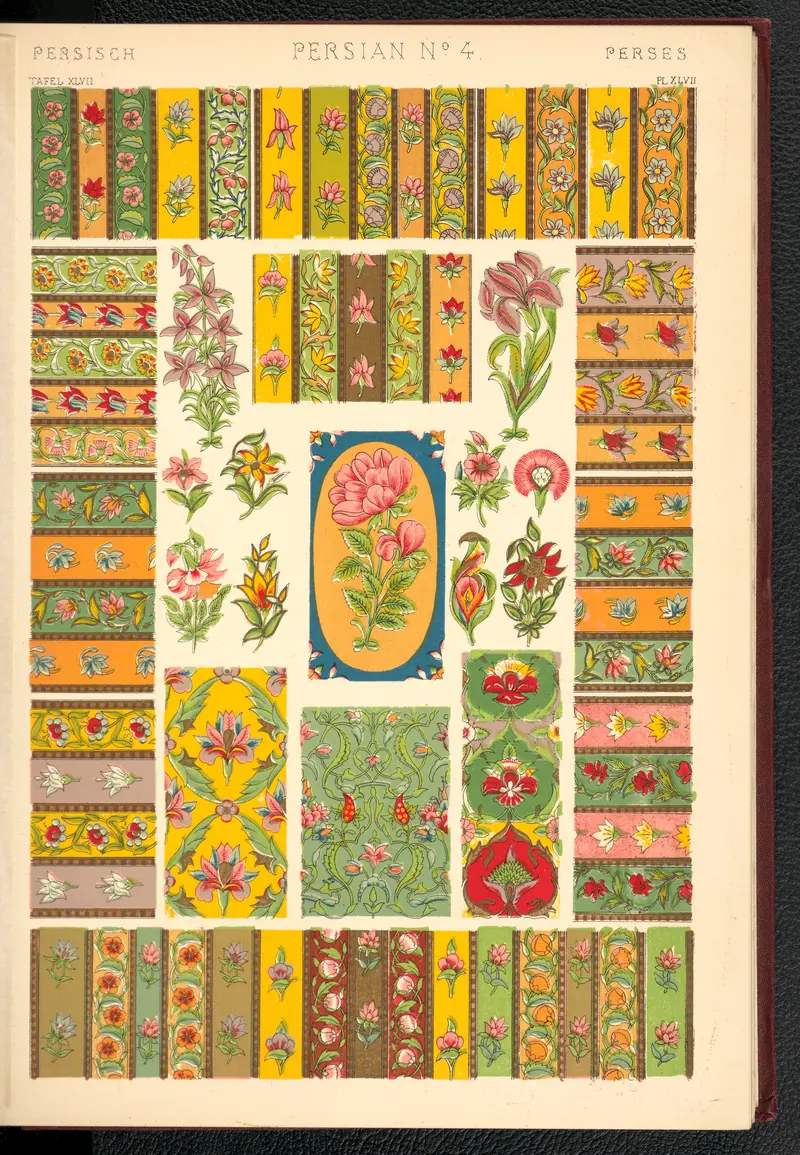
Persian Ornament No. 4
Owen Jones
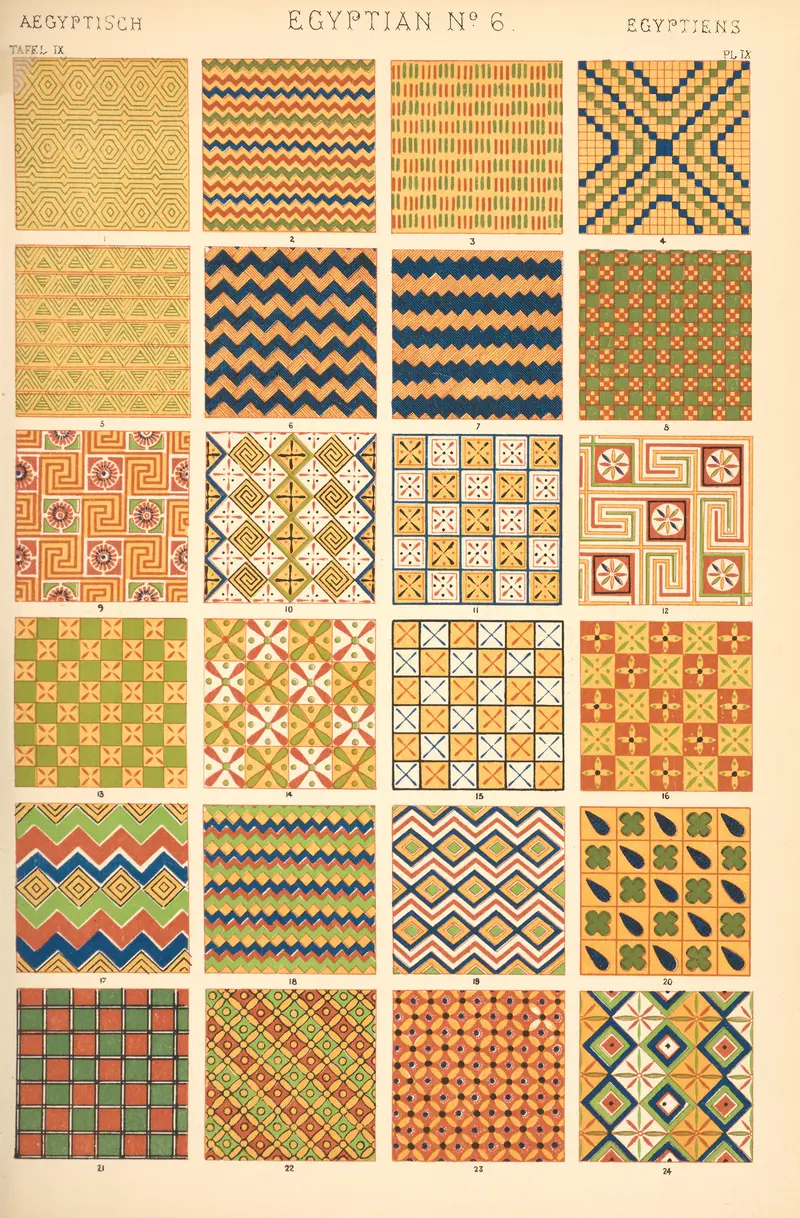
Egyptian Ornament No. 6
Owen Jones
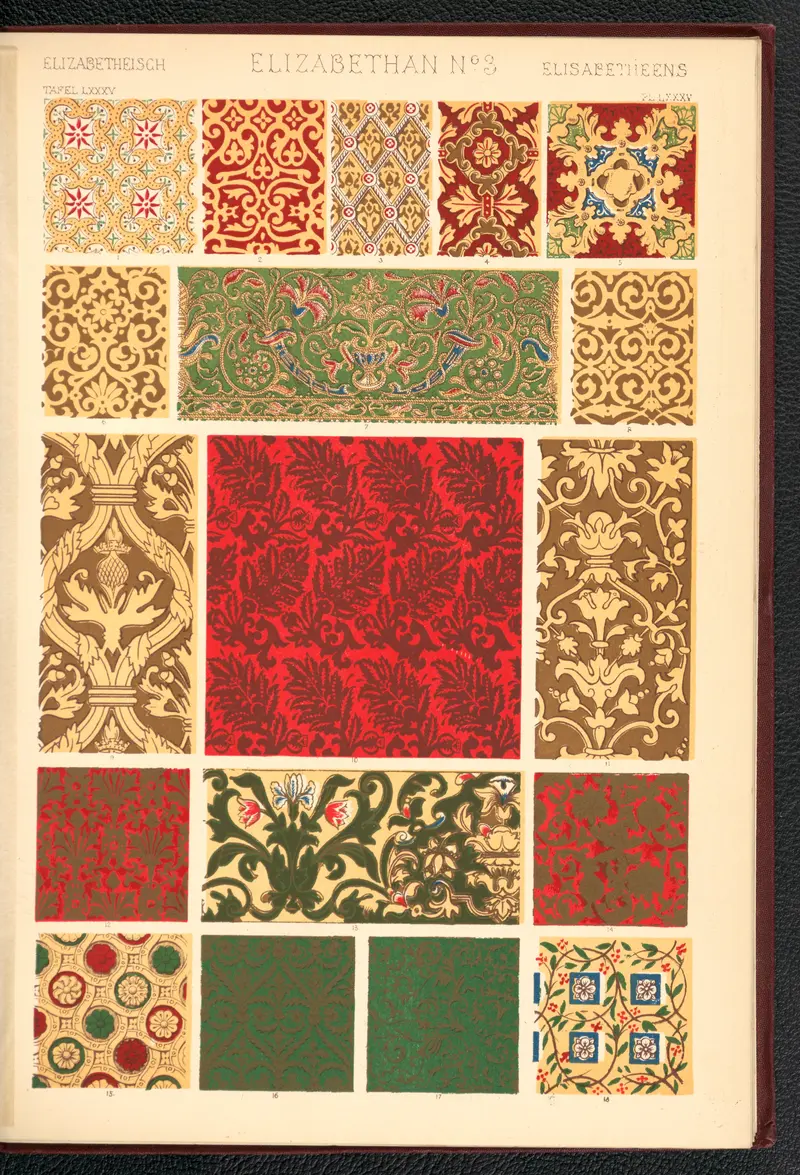
Elizabethan Ornament No. 3
Owen Jones
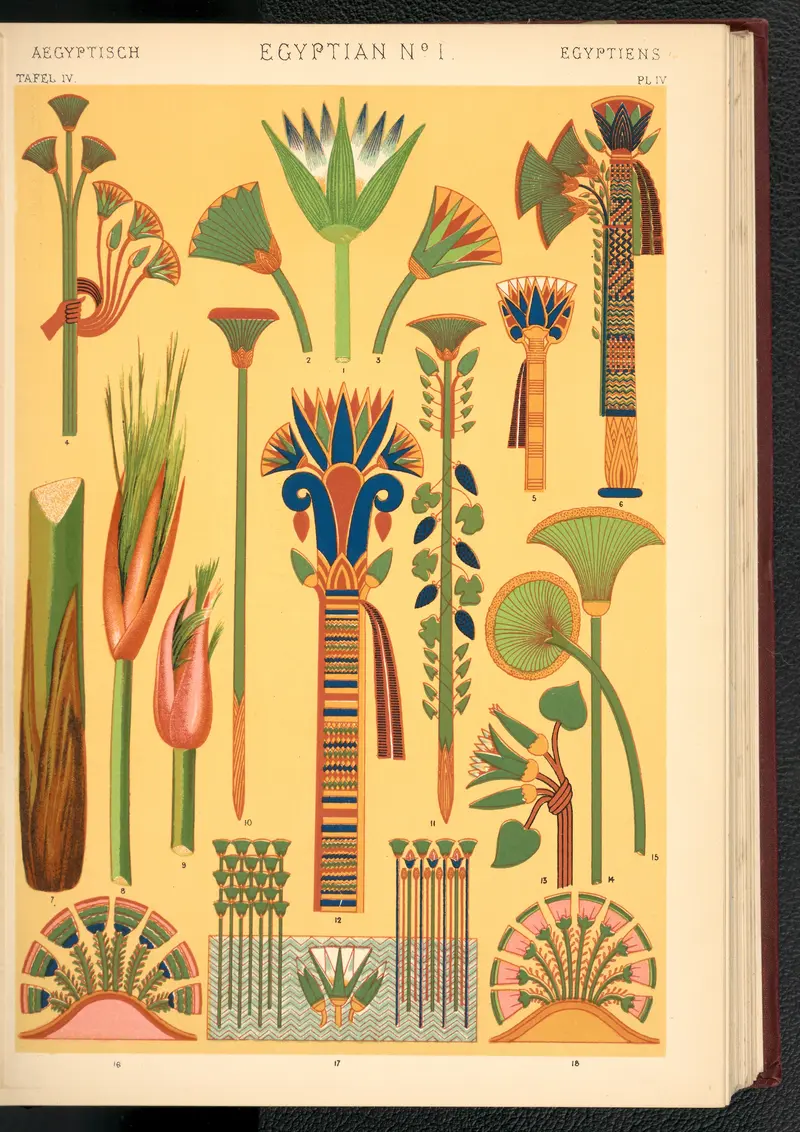
Egyptian Ornament No. 1
Owen Jones
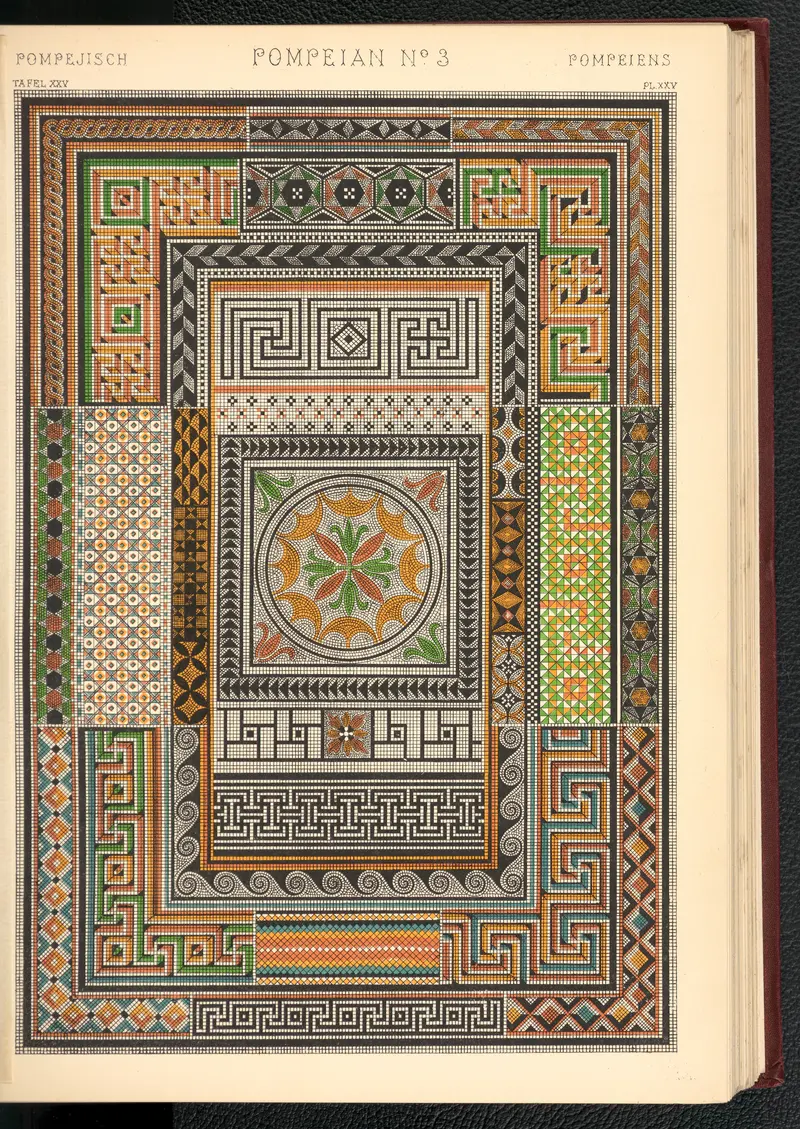
Pompeian Ornament No. 3
Owen Jones
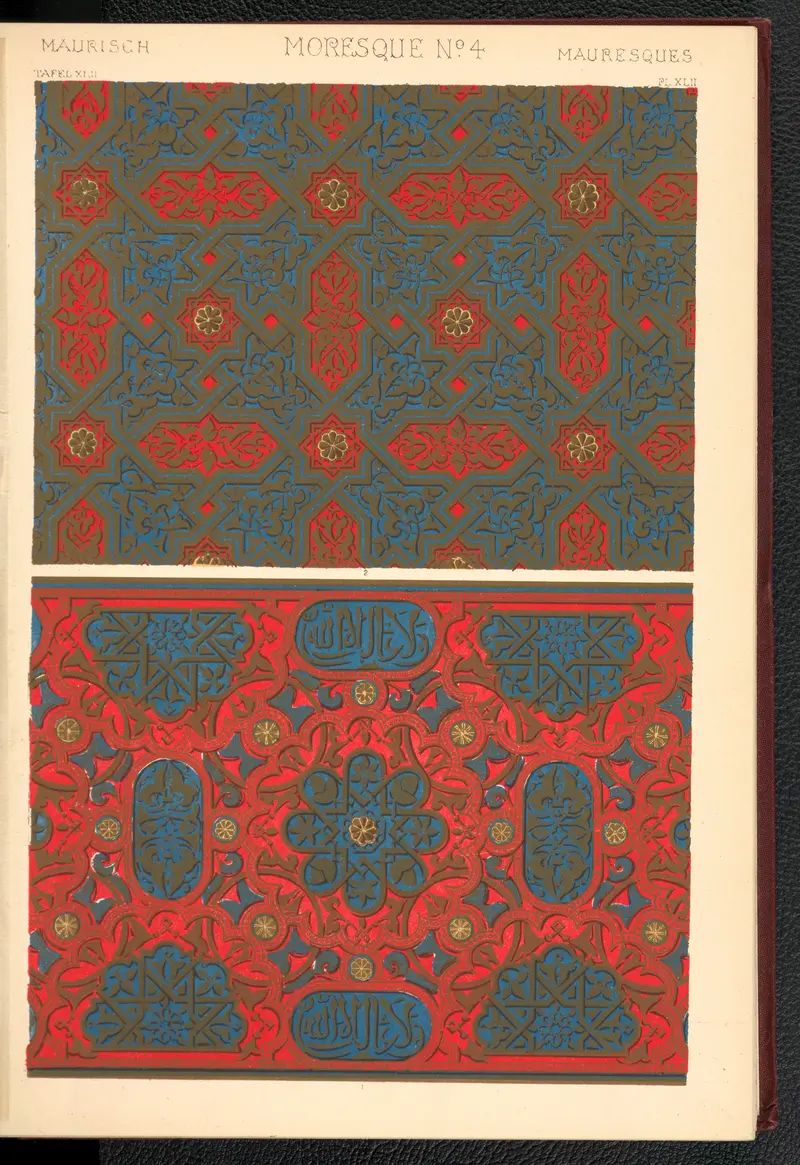
Moresque Ornament from the Alhambra No. 4
Owen Jones