Elizabethan Ornament No. 3 — History & Facts
A riot of pattern greets the eye in Elizabethan Ornament No. 3, each compartment a window into the restless inventiveness of the late sixteenth century. The page is a feast of symmetry and flourish: golds, crimsons, and greens jostle for attention, their forms twisting into acanthus leaves, stylized thistles, and intricate interlacings.
The central green band, alive with embroidered flowers and scrolling vines, draws your gaze first—its delicate blue and red blooms seem to hover above the surface, a reminder that ornament was once as prized as portraiture. Around it, blocks of damask red and gold pulse with the energy of repeating foliage, while the corners offer up their own miniature worlds of lattice and quatrefoil. This chromolithograph, printed in 1856 by Owen Jones, belongs to a moment when Victorian Britain looked backward to the Elizabethan age for inspiration and authority. Such plates were not merely decorative—they served as manuals for architects, designers, and craftsmen eager to revive and reinterpret the past.
The page comes from a larger compendium, preserved today in the Polona Digital Library, where each sheet acts as both a record and a challenge: what does it mean to inherit a visual language, and how might one speak it anew? The patterns here invite the viewer to imagine them on walls, textiles, or book covers, their forms echoing through centuries, waiting for a new hand to bring them to life again.
More Artworks by Owen Jones

Greek Ornament No. 1
Owen Jones
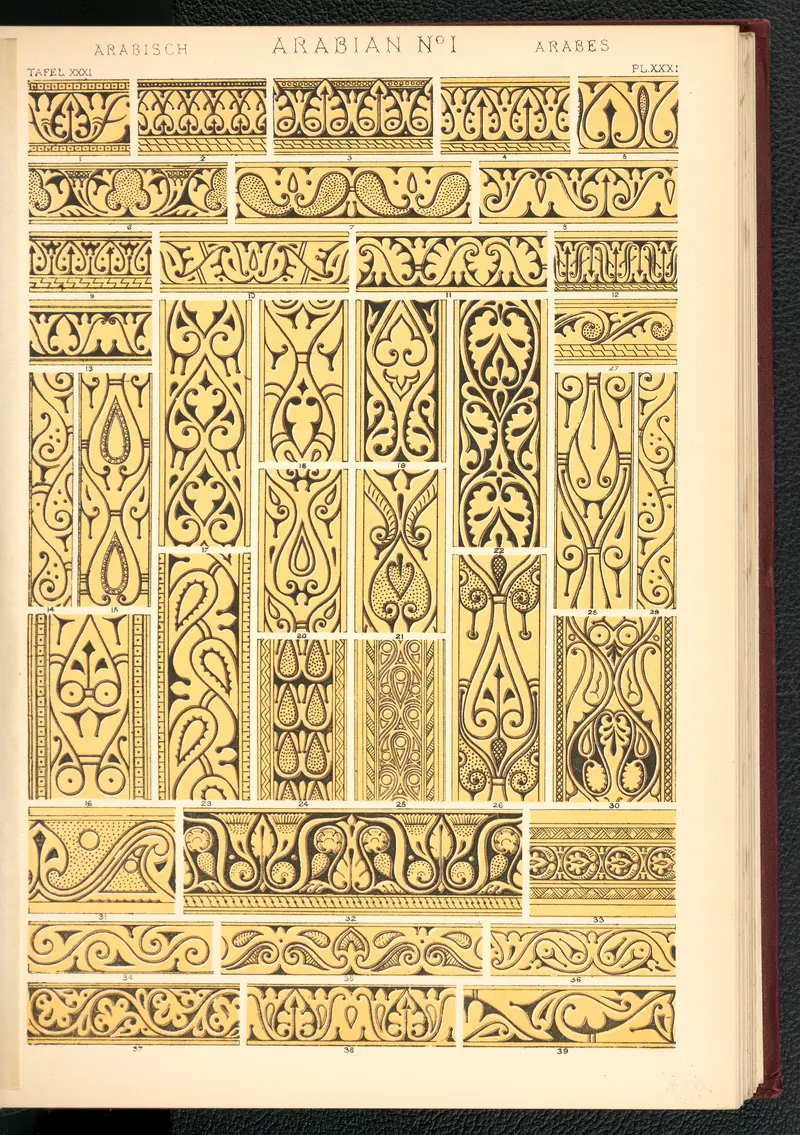
Arabian Ornament No. 1
Owen Jones
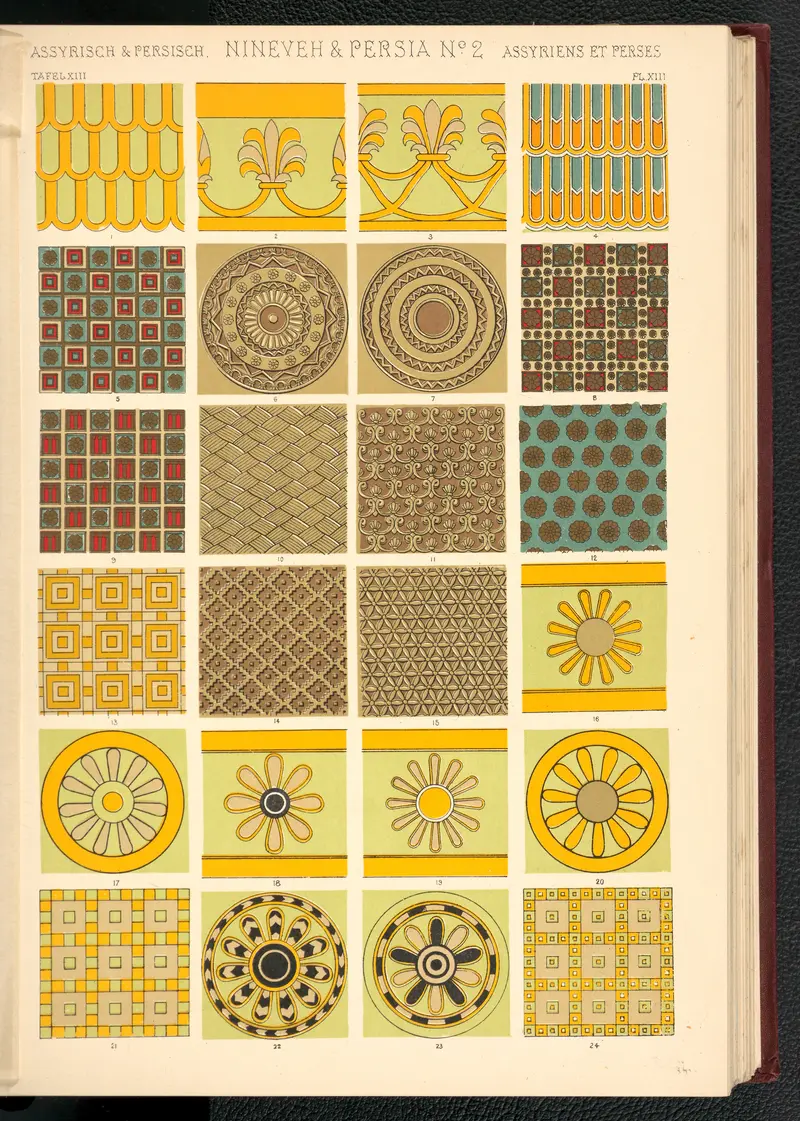
Assyrian Ornament No. 2
Owen Jones

Egyptian Ornament No. 3
Owen Jones
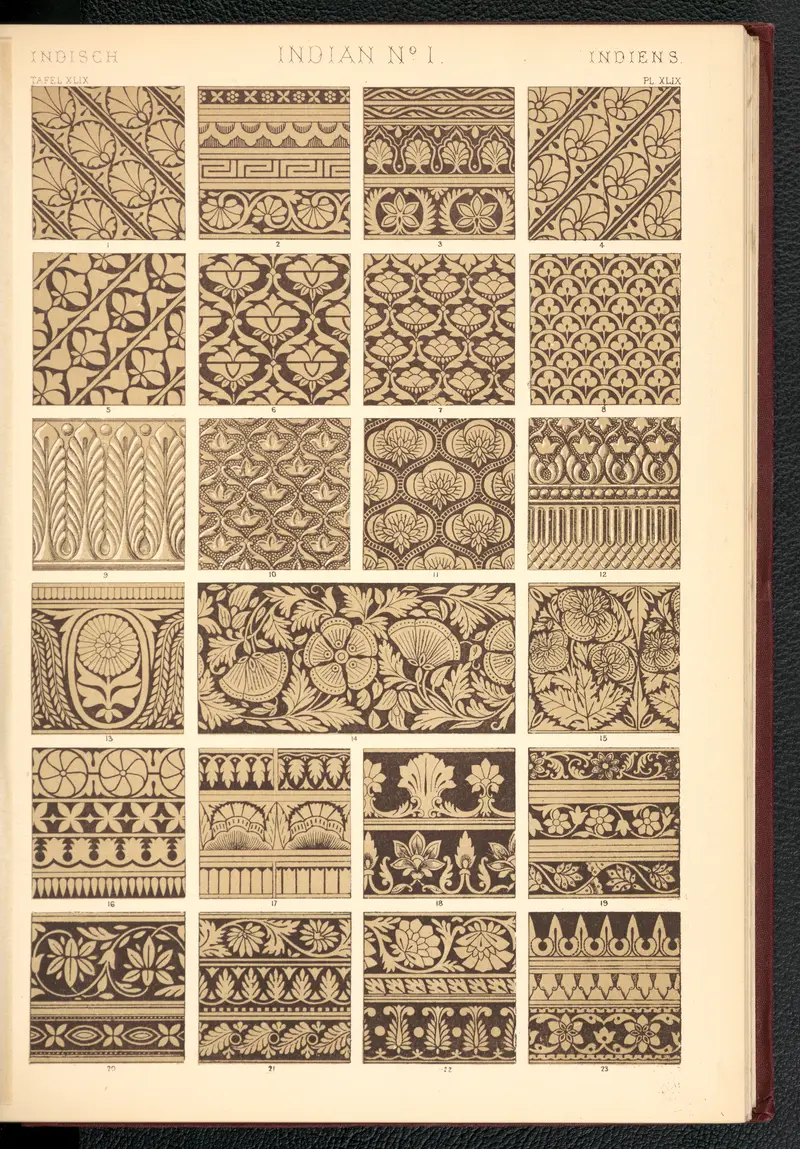
Indian Ornament No. 1
Owen Jones
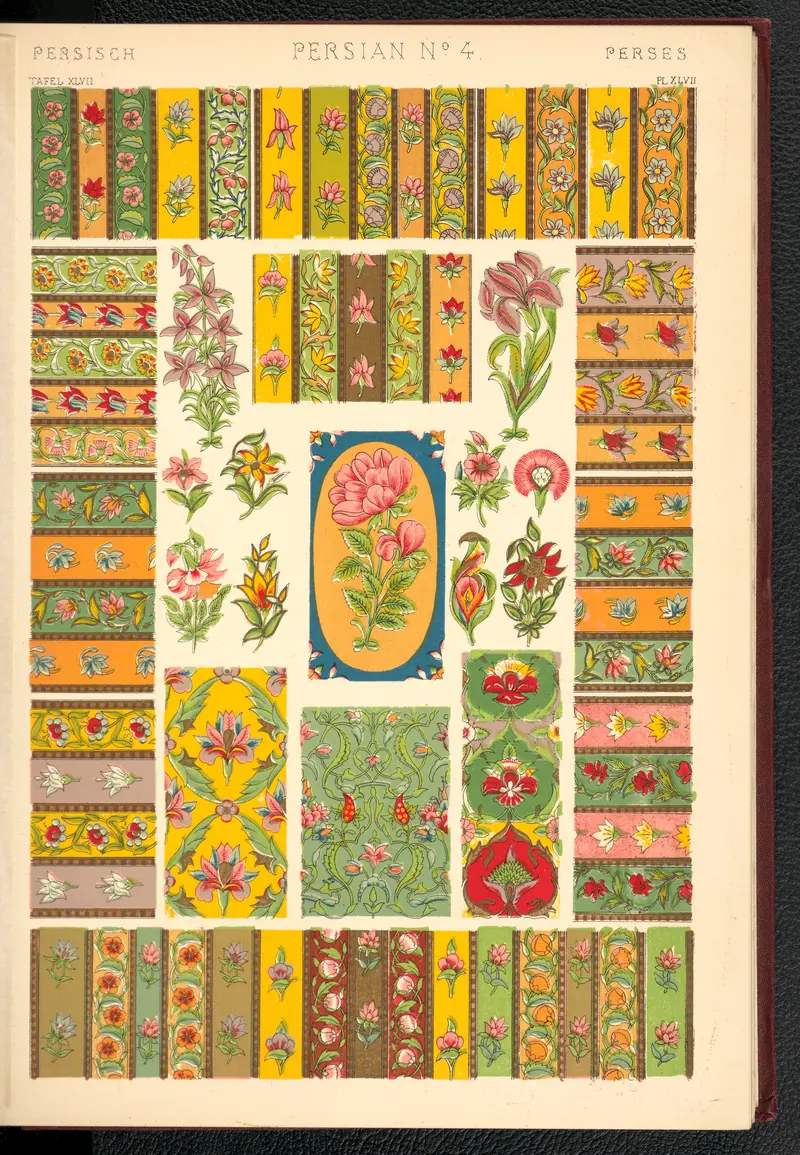
Persian Ornament No. 4
Owen Jones
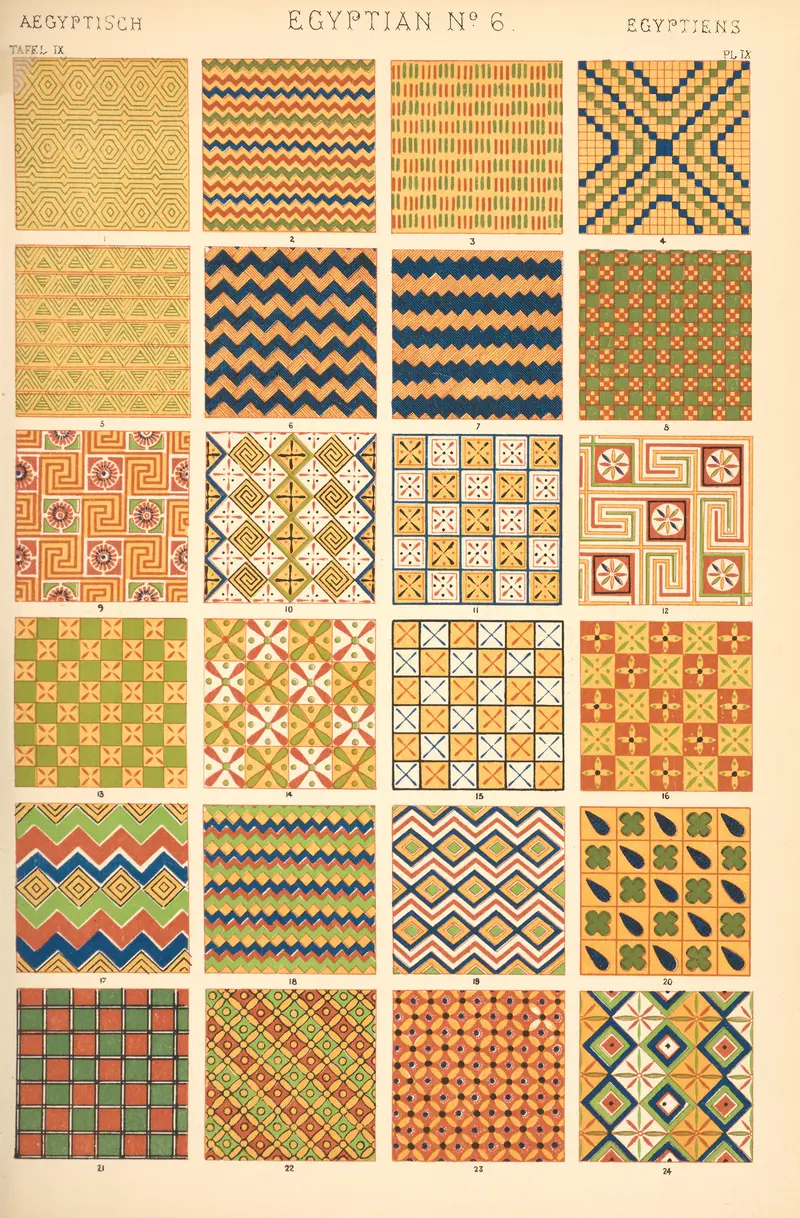
Egyptian Ornament No. 6
Owen Jones
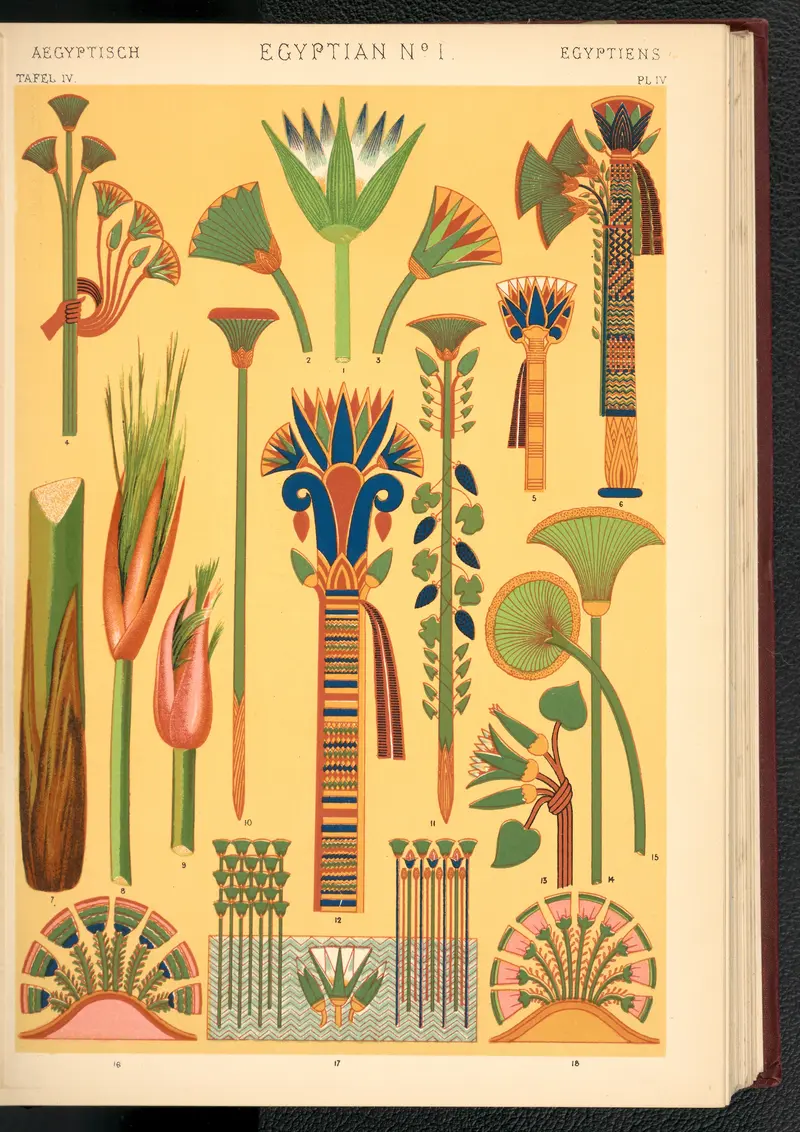
Egyptian Ornament No. 1
Owen Jones
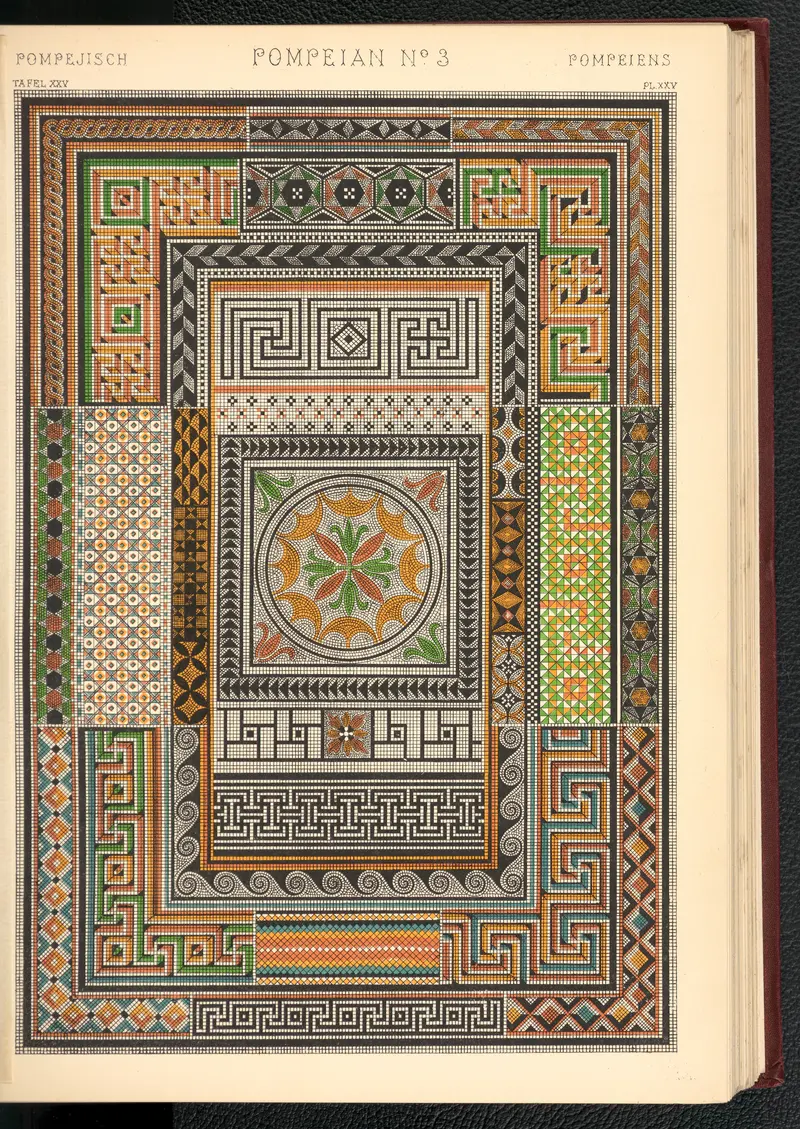
Pompeian Ornament No. 3
Owen Jones
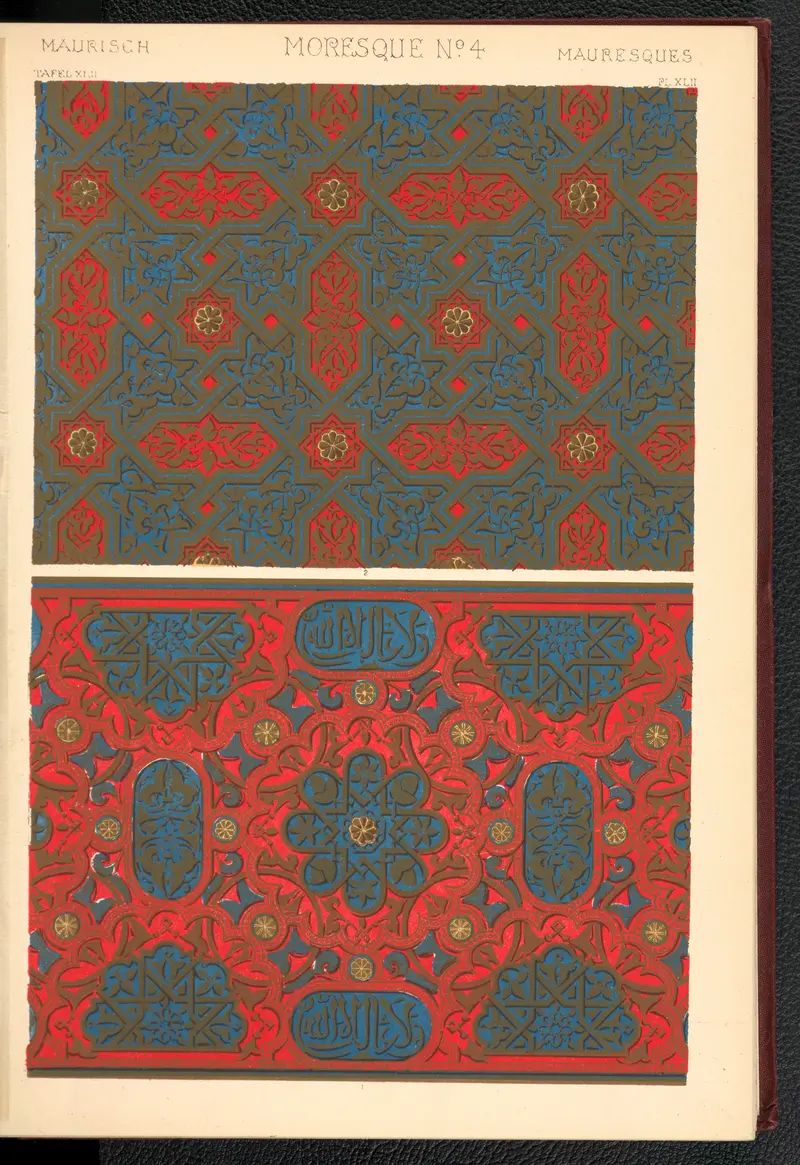
Moresque Ornament from the Alhambra No. 4
Owen Jones