Egyptian Ornament No. 1 — History & Facts
A page like this one from Egyptian Ornament No. 1 by Owen Jones is an invitation to see ancient Egypt through the eyes of the nineteenth-century designer—where every petal, stalk, and fan is a code to be deciphered. The crisp geometry and riot of color pull the viewer into a world where nature is never simply copied, but stylized and multiplied, each form echoing the next.
The papyrus and lotus motifs, with their rhythmic repetition and bold outlines, are not merely decorative: they signal a reverence for the cycles of life and the river that sustained Egyptian civilization. The flat, golden background pushes the forms forward, creating a sense of order and clarity, while the chromolithograph’s precision makes every detail sing with intent. This plate was published in London in 1910, but its roots reach back to Owen Jones’s pioneering work in the mid-1800s, when he sought to catalog and celebrate the world’s ornamental traditions. Such images were not made for idle admiration—they were teaching tools and sources of inspiration for architects, designers, and craftsmen hungry for new ideas in a rapidly industrializing world.
The Grammar of Ornament, from which this page comes, became a bible for the design reform movement, arguing that beauty could be found in the disciplined study of the past. Few traces remain of the individual hands who colored and printed each plate, but the legacy of these designs lives on in the patterns that still surface in everything from wallpaper to jewelry. Let your eye wander through this garden of stylized forms, and imagine how each motif might have once adorned a temple, a garment, or a book cover.
More Artworks by Owen Jones

Greek Ornament No. 1
Owen Jones
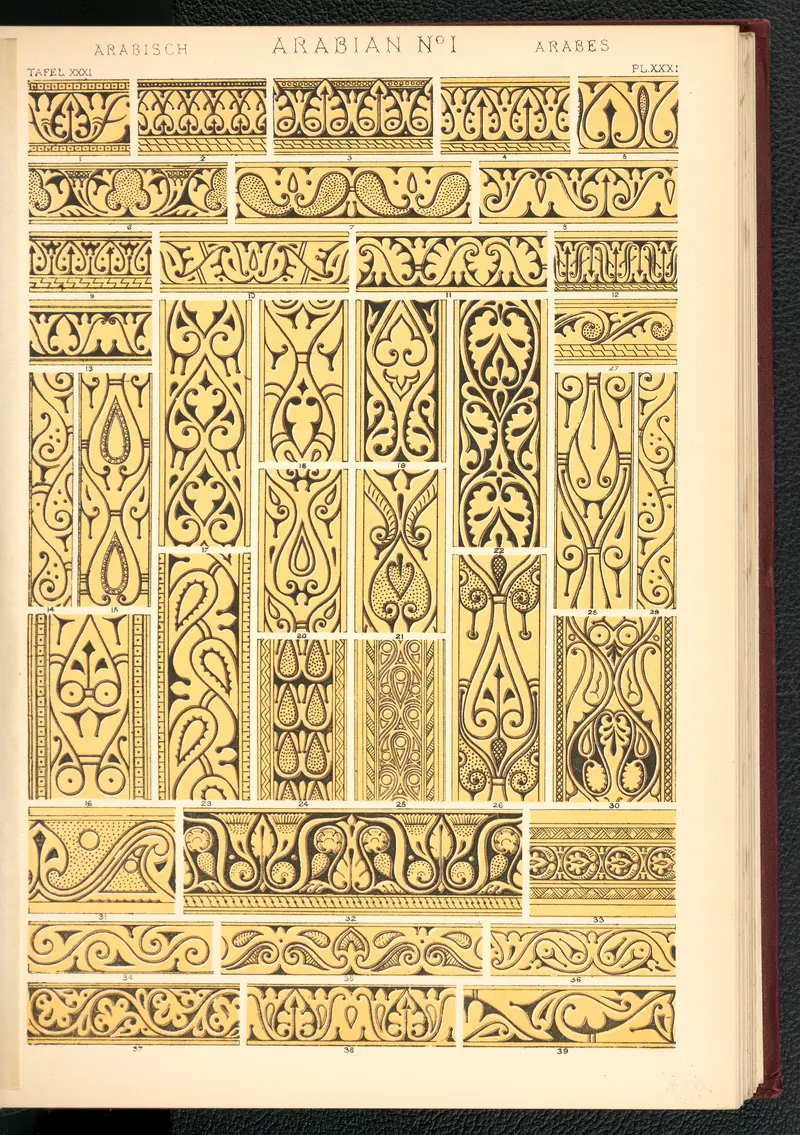
Arabian Ornament No. 1
Owen Jones
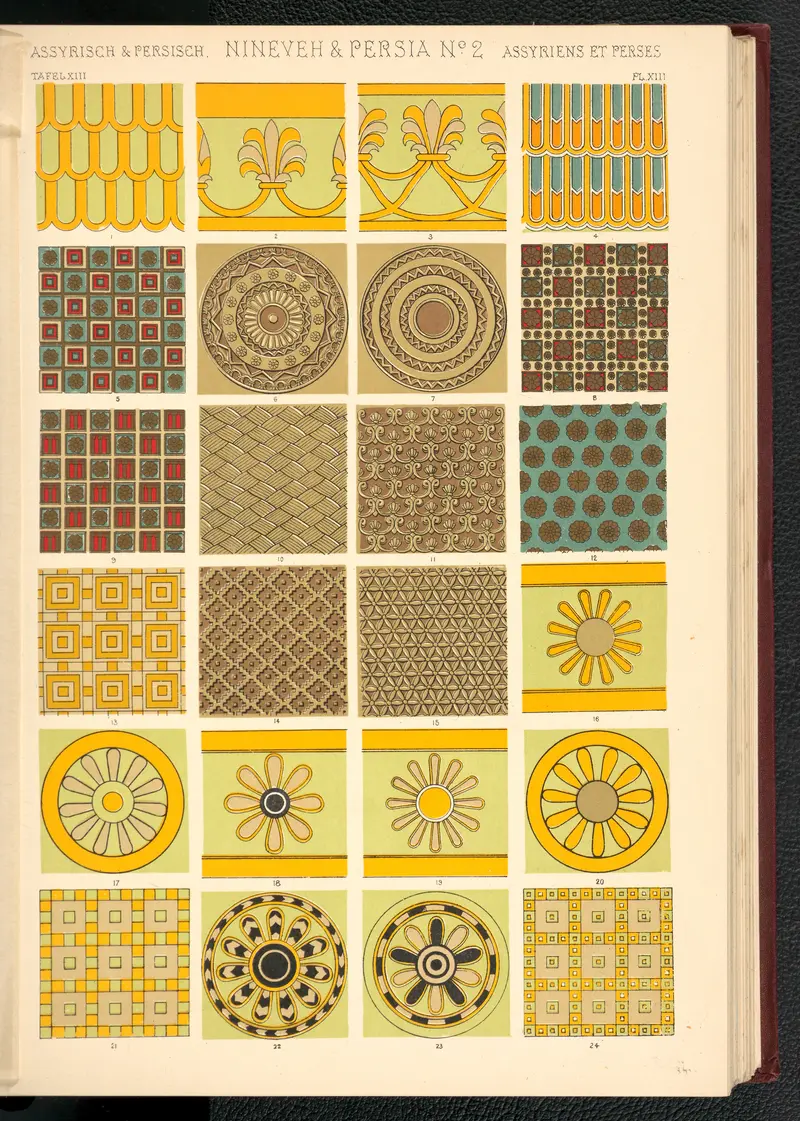
Assyrian Ornament No. 2
Owen Jones

Egyptian Ornament No. 3
Owen Jones
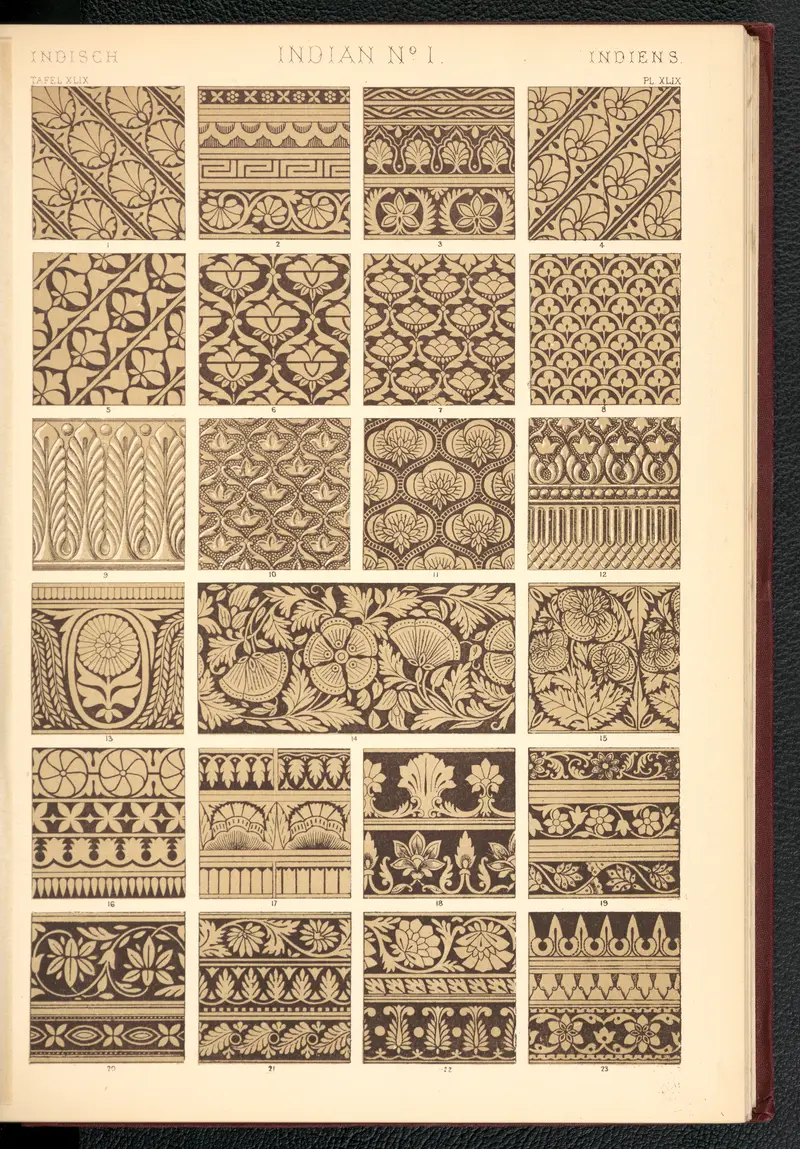
Indian Ornament No. 1
Owen Jones
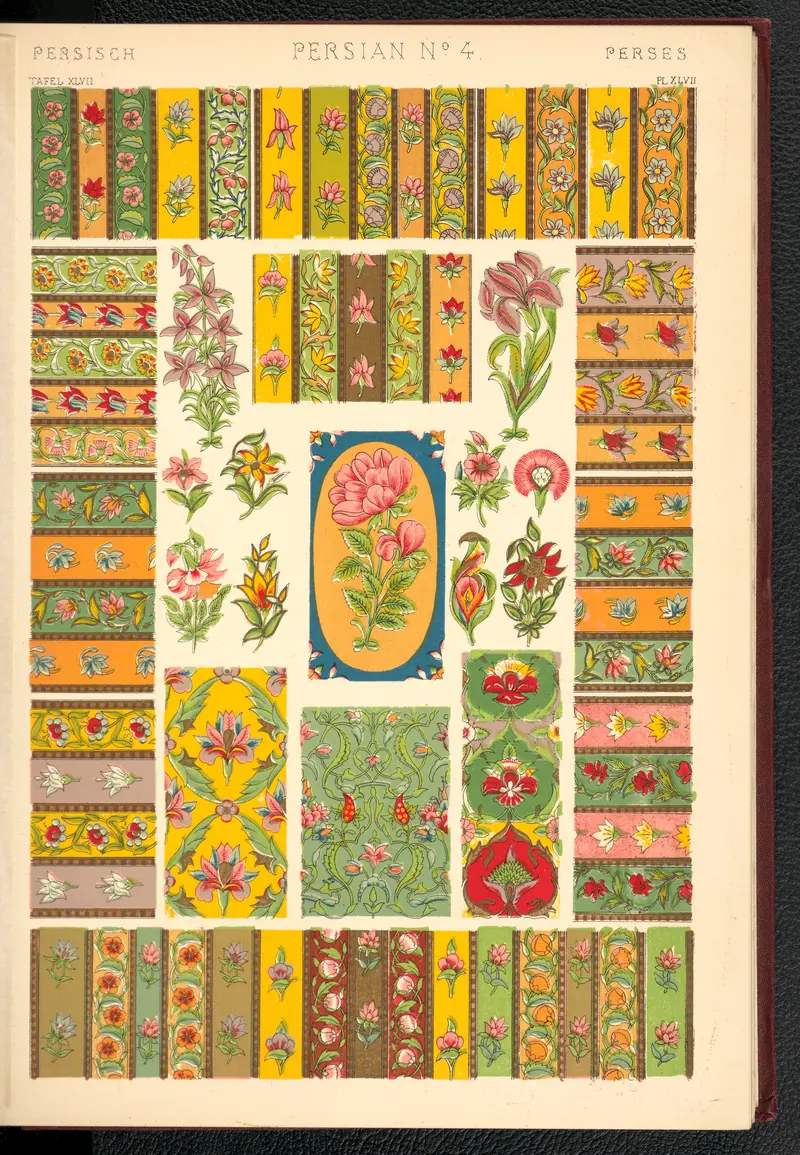
Persian Ornament No. 4
Owen Jones
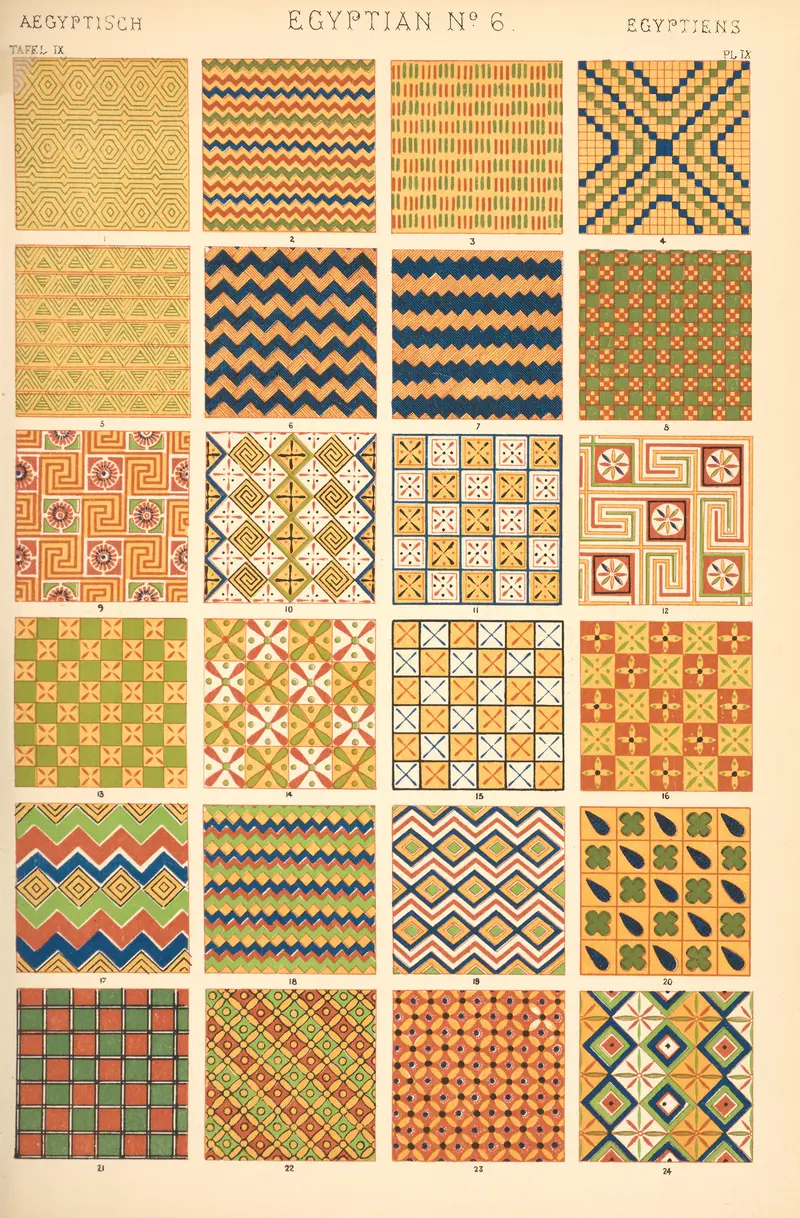
Egyptian Ornament No. 6
Owen Jones
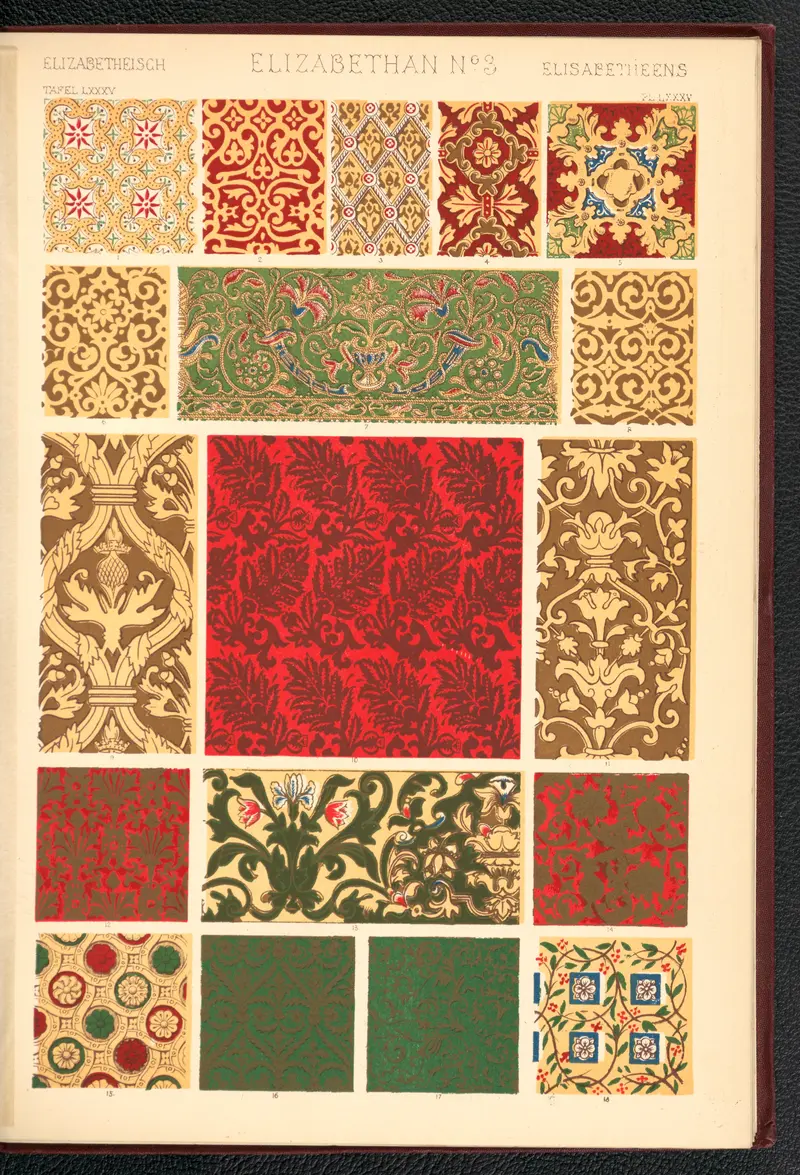
Elizabethan Ornament No. 3
Owen Jones
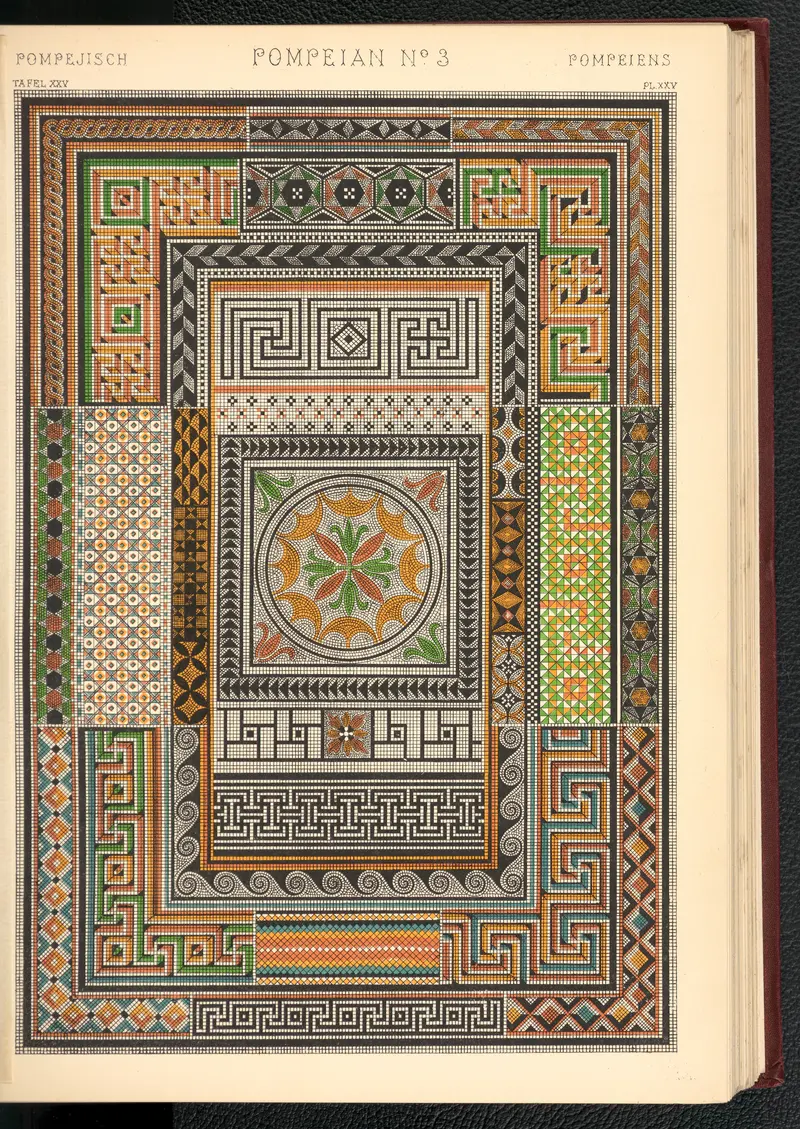
Pompeian Ornament No. 3
Owen Jones
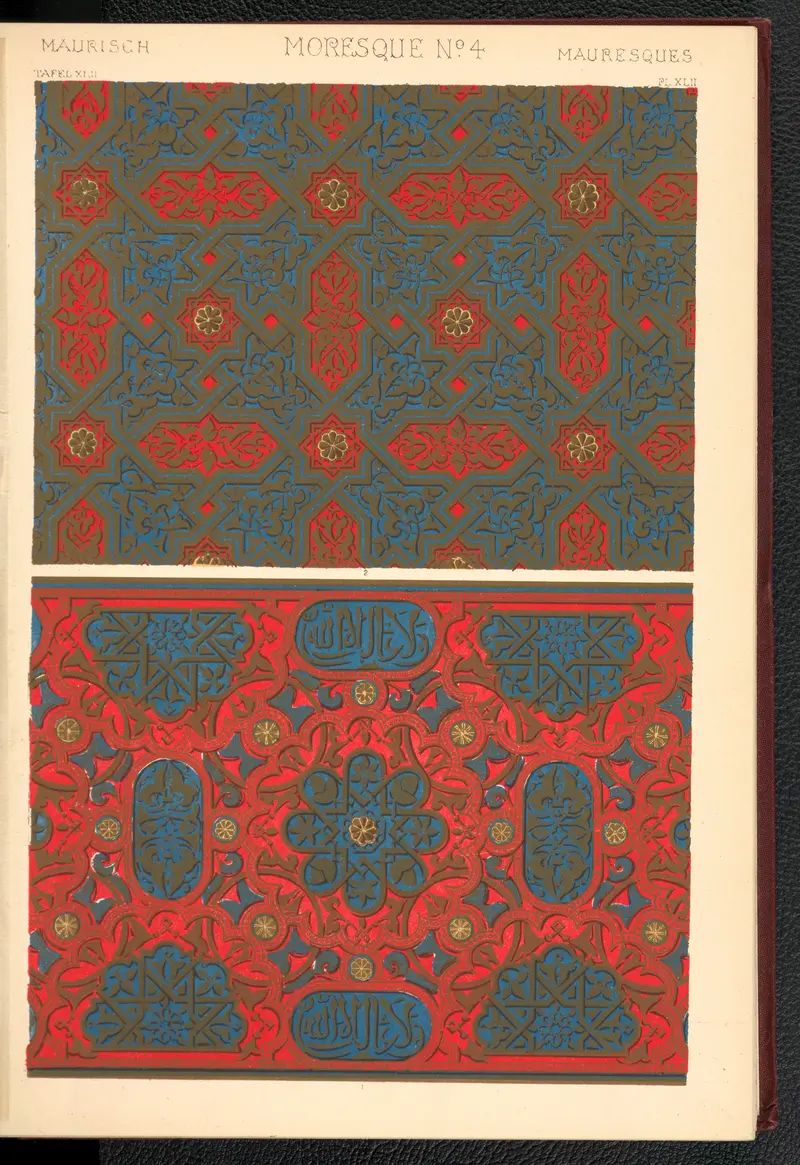
Moresque Ornament from the Alhambra No. 4
Owen Jones