
Christ and the Adulteress — History & Facts
In the mid-17th century, the subject of Christ and the adulteress was a lightning rod for theological debate and artistic innovation, and Tintoretto—one of Venice’s most restless imaginations—returned to it late in his career. While the exact date and commission for this version remain uncertain, it stands out among the many treatments of the theme for its dramatic compression and psychological tension. The story, drawn from the Gospel of John, was especially resonant in Counter-Reformation Venice, where questions of sin, mercy, and judgment were hotly contested.
Unlike earlier, more static depictions, Tintoretto’s interpretation brims with immediacy, as if the verdict might still hang in the air. At the heart of the scene, Christ bends to write in the dust as the accused woman stands, surrounded by a semicircle of accusers. The moment is taut: Christ’s gesture—his finger tracing words lost to history—signals both his refusal to condemn and his challenge to the crowd: “Let him who is without sin cast the first stone.” The woman, shrouded in light, is isolated by her vulnerability, while the men’s faces are riven with doubt and anger. The painting’s sharp contrasts of shadow and illumination draw the eye to Christ’s calm center, much as in Rembrandt’s later Christ and the Woman Taken in Adultery, though Tintoretto’s version is more kinetic, the figures almost tumbling into the viewer’s space. The provenance of this particular Christ and the Adulteress is uncertain, as is often the case with works attributed to Tintoretto and his prolific workshop.
No definitive record ties it to a specific Venetian patron or church, and the medium itself is debated among scholars. Nevertheless, the painting’s bold brushwork and dramatic lighting are hallmarks of Tintoretto’s late style, suggesting it was produced in the final decades of his life, when he was admired for his speed and daring. Today, it remains a testament to the enduring power of biblical narrative and the artist’s lifelong fascination with the theater of human conscience.
More Artworks by Tintoretto
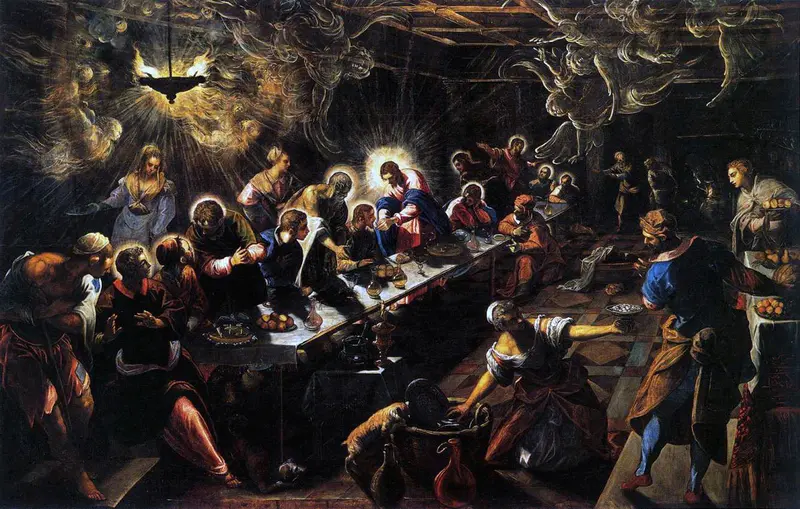
The Last Supper
Tintoretto
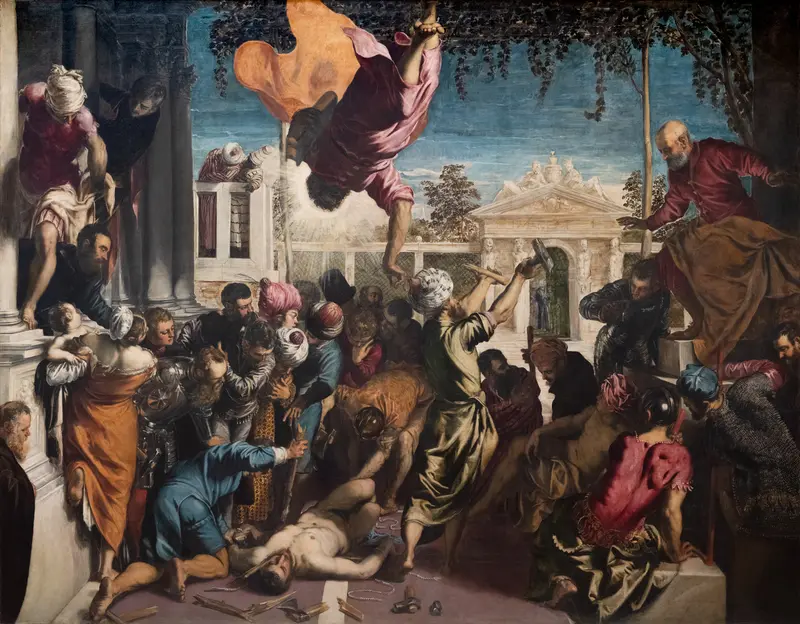
The Miracle of the Slave
Tintoretto
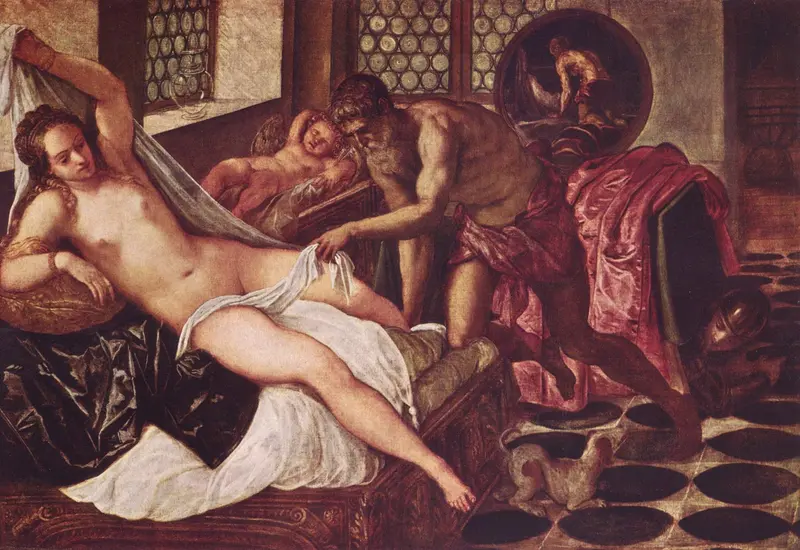
Venus and Mars Surprised by Vulcan
Tintoretto

Adoration of the Shepherds
Tintoretto
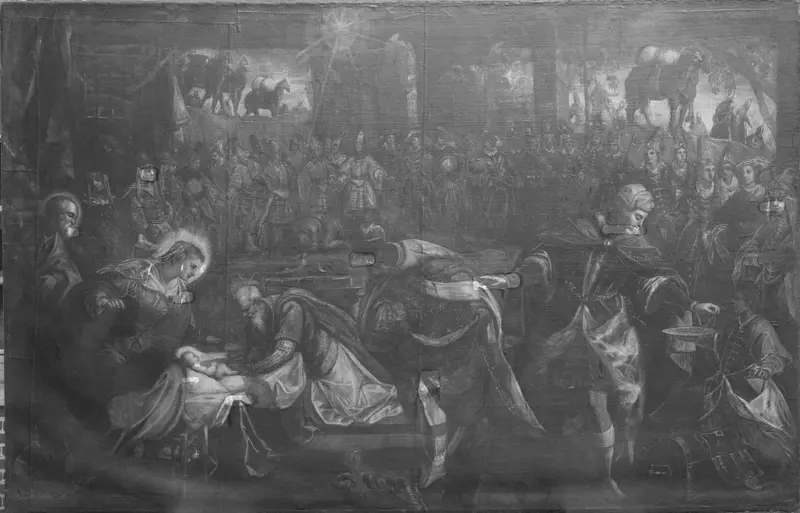
Adoration of the Magi
Tintoretto
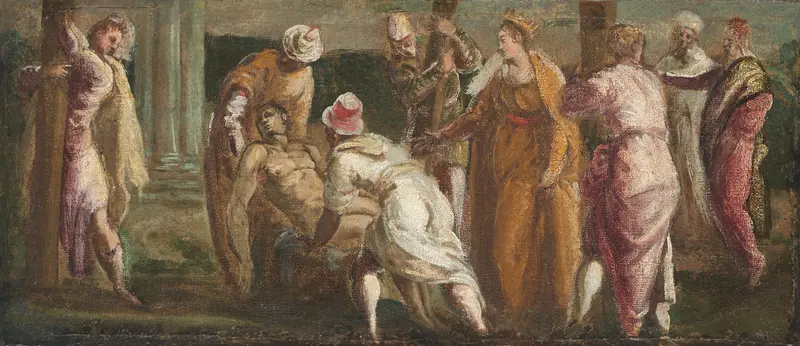
Saint Helen Testing the True Cross
Tintoretto
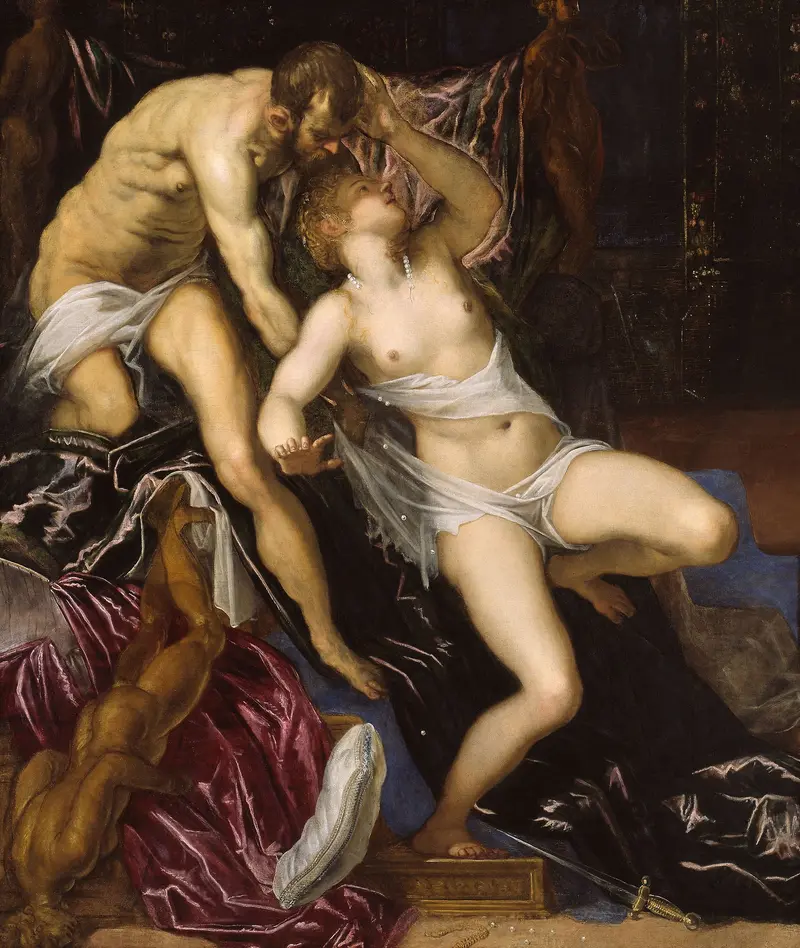
Tarquin and Lucretia
Tintoretto
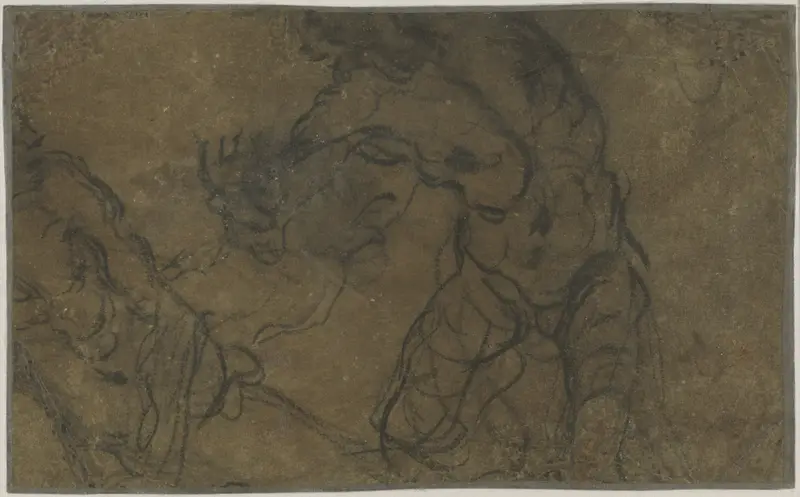
Two Male Figures in Motion (verso)
Tintoretto
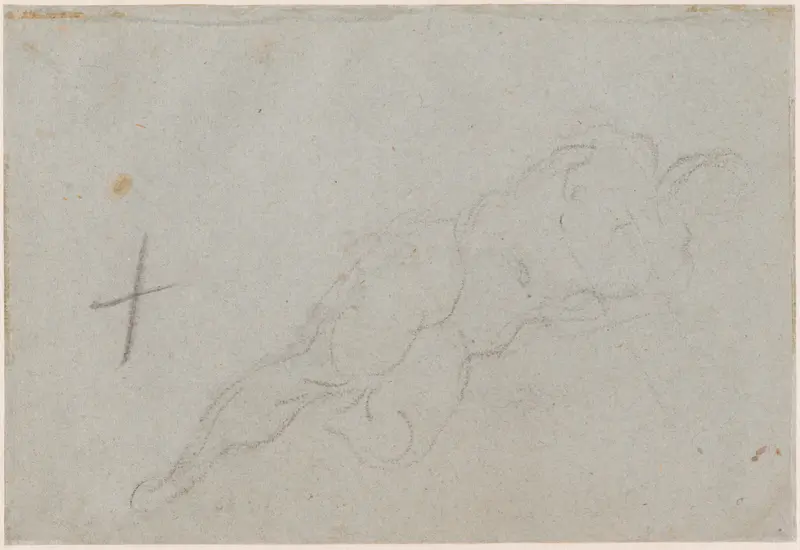
A Female Nude [verso]
Tintoretto
Veduta Kopra
Tintoretto





