
Christ and the Woman Taken in Adultery — History & Facts
When Nicolas Poussin painted Christ and the Woman Taken in Adultery in 1653, he was already renowned as the leading French painter in Rome, but this work stands out for another reason: it is one of the rare times he tackled a New Testament subject so late in his career, after decades devoted to myth and the Old Testament. The painting was commissioned by the Duc de Créquy, French ambassador to the Holy See, who wanted a picture that would speak to both justice and mercy. This commission placed Poussin at the heart of a diplomatic and religious conversation, as France and Rome negotiated their complex relationship.
The painting's journey through private collections before entering the public eye has left its provenance somewhat shadowed, adding an air of mystery to its early years. The scene unfolds at the very moment when Christ, confronted by the scribes and Pharisees, responds to their demand for judgment on the accused woman. With his hand poised to write in the dust, Christ’s calm, downward gaze contrasts with the agitation of the accusers, whose gestures and faces are taut with expectation and accusation. The woman, draped in pale robes, stands at the center, her vulnerability heightened by the stark light that isolates her from the crowd.
Poussin’s careful arrangement of figures, reminiscent of classical reliefs, directs the viewer’s eye to the silent exchange between Christ and the woman. Unlike Rembrandt’s treatment of the same subject, where emotion and shadow dominate, Poussin chooses clarity and order, making the moral lesson as legible as the figures themselves. After its completion, Christ and the Woman Taken in Adultery passed through several hands, including prominent French collectors, before being acquired by a major European museum in the 19th century. The medium remains a subject of debate—most likely oil on canvas, as was Poussin’s practice, though some have speculated about a panel support.
The painting’s restrained drama and classical composition mark it as a late work, reflecting Poussin’s mature style, where narrative clarity and moral gravity take precedence over theatricality. Today, it is recognized as a testament to Poussin’s enduring engagement with the moral questions of his time, and his ability to translate them into visual form.
More Artworks by Nicolas Poussin

Spring
Nicolas Poussin
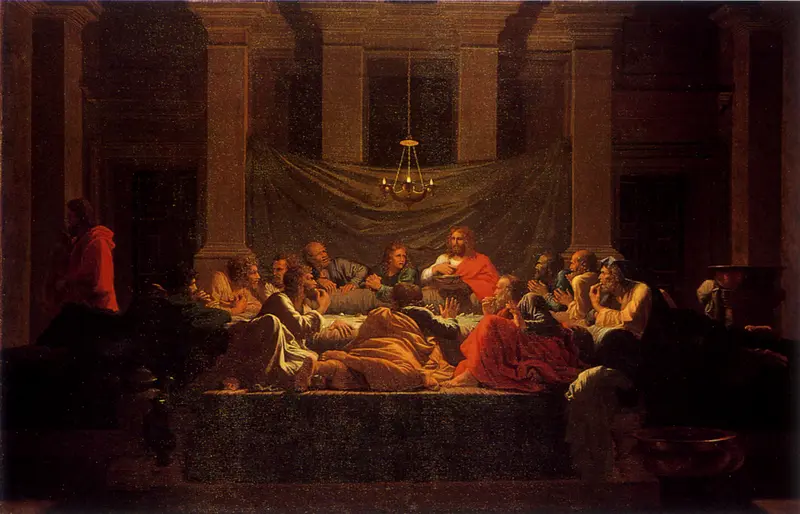
The Sacrament of the Holy Eucharist
Nicolas Poussin
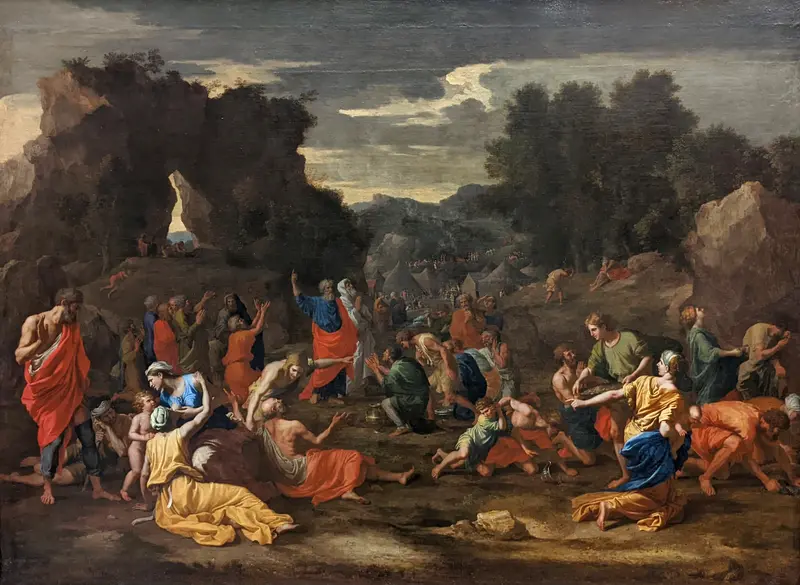
The Israelites gathering Manna in the Desert
Nicolas Poussin
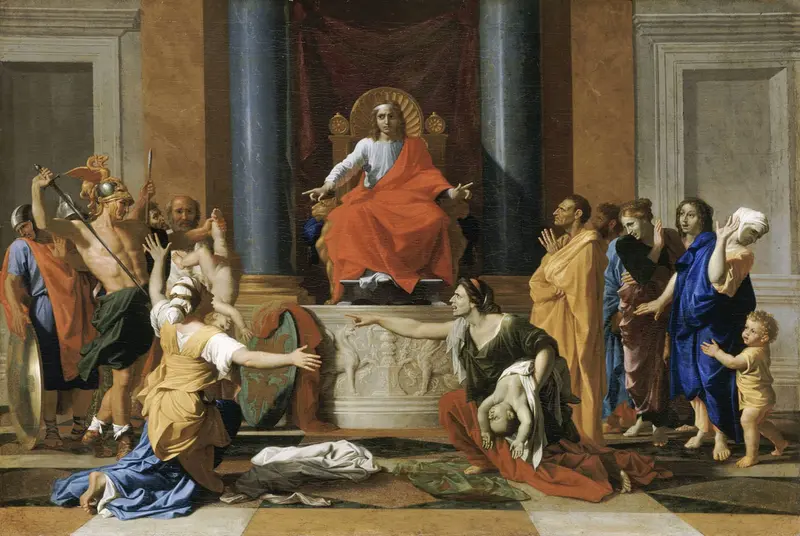
The Judgment of Solomon
Nicolas Poussin
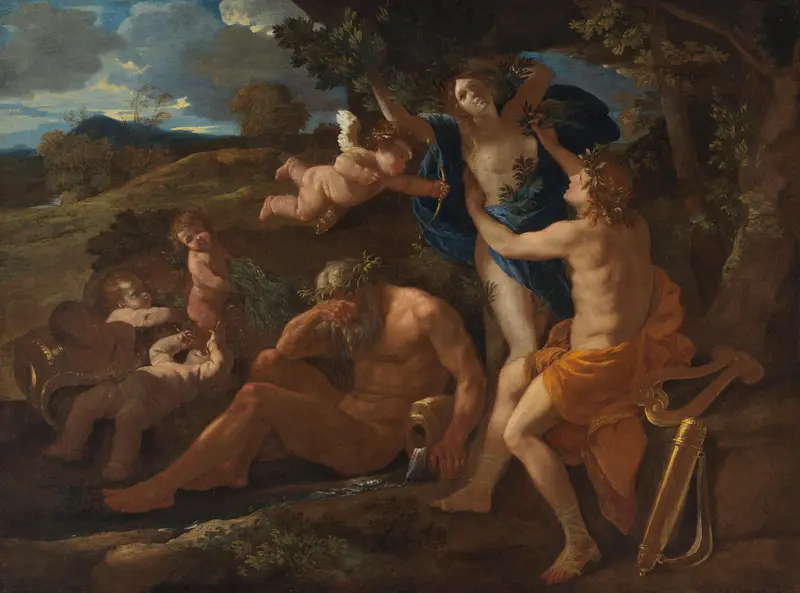
Apollo and Daphne
Nicolas Poussin

The Nurture of Jupiter
Nicolas Poussin

Ordination
Nicolas Poussin
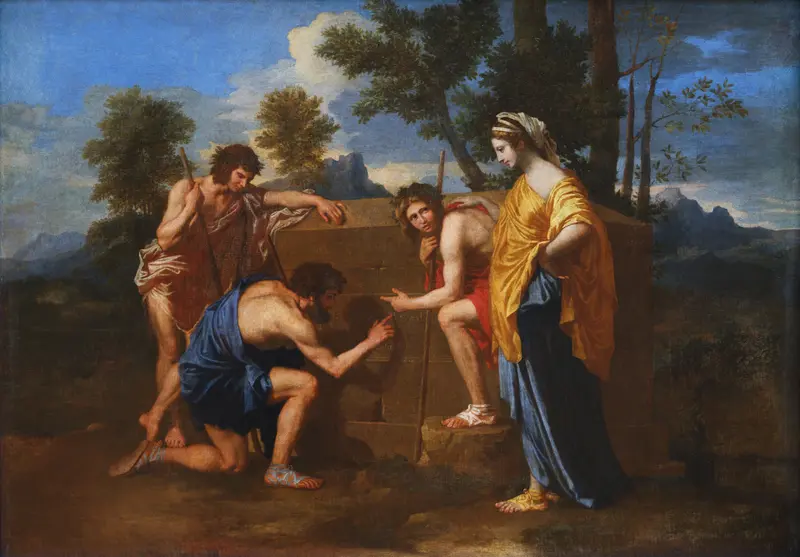
Et in Arcadia ego
Nicolas Poussin
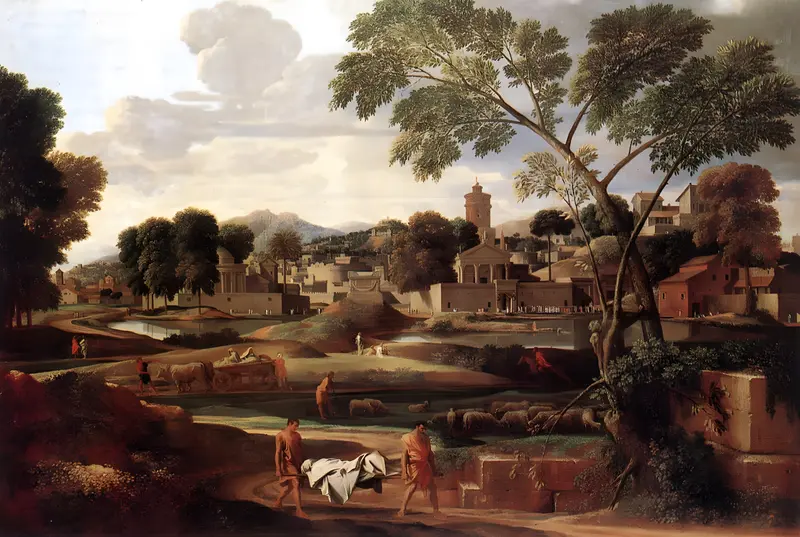
The Funeral of Phocion
Nicolas Poussin
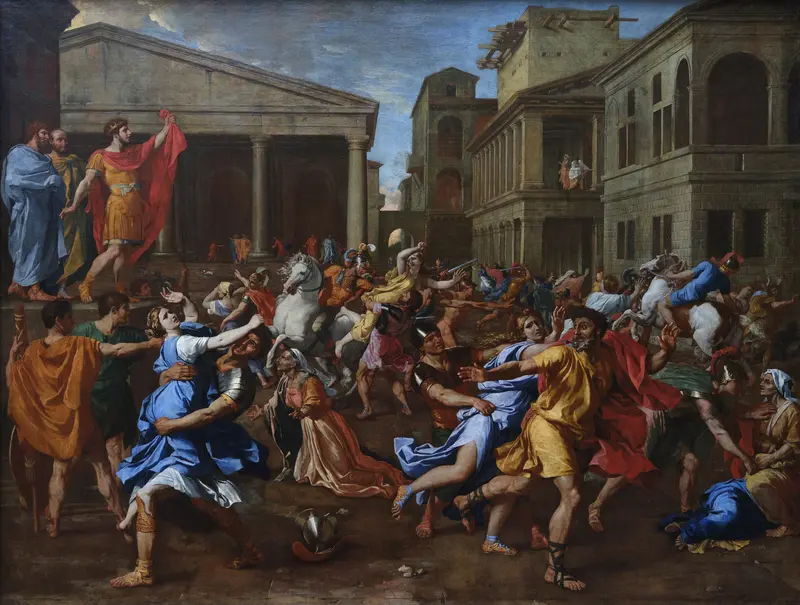
The Rape of the Sabine Women
Nicolas Poussin





