
Christ in the House of Mary and Martha — History & Facts
In the final year of his life, William Blake turned once more to the stories of the Gospels, producing Christ in the House of Mary and Martha in 1827. This was the same year Blake passed away, and the work stands among his last completed religious images, created as his health declined but his visionary imagination remained undimmed. The painting’s medium is uncertain, adding to its air of mystery, and it is one of only a handful of late biblical scenes Blake made for his own contemplation rather than on commission.
Scholars note that Blake’s late works are marked by an intense personal symbolism, making each piece a kind of spiritual testament. The scene springs from the Gospel of Luke, where Christ visits the sisters Mary and Martha. Martha, busy with household tasks, appeals to Jesus to ask Mary—who sits rapt at his feet—to help her. Blake captures the charged moment of Martha’s complaint: Christ, luminous at the center, raises a gentle hand, his gesture both a blessing and a lesson.
Mary kneels, absorbed, while Martha stands with a bowl, her face a study in frustration and longing. The light falls most strongly on Mary and Christ, underscoring the priority of spiritual attentiveness over daily worries. Unlike Johannes Vermeer’s Christ in the House of Martha and Mary, which emphasizes domestic realism, Blake’s vision is stripped of setting, focusing instead on the psychological drama and the radiance of the figures. The physical history of Christ in the House of Mary and Martha is obscure; no contemporary record details its first owner or exhibition.
Like many of Blake’s late religious paintings, it may have remained in the artist’s possession at his death, passed quietly among friends or collectors of his visionary art. Today, the work is valued as a rare example of Blake’s late spiritual meditations, revealing the fusion of text and image that defined his singular style. Its uncertain medium and provenance only heighten its fascination for scholars, who see in it both a summation of Blake’s lifelong themes and a final, private testament of faith.
More Artworks by William Blake
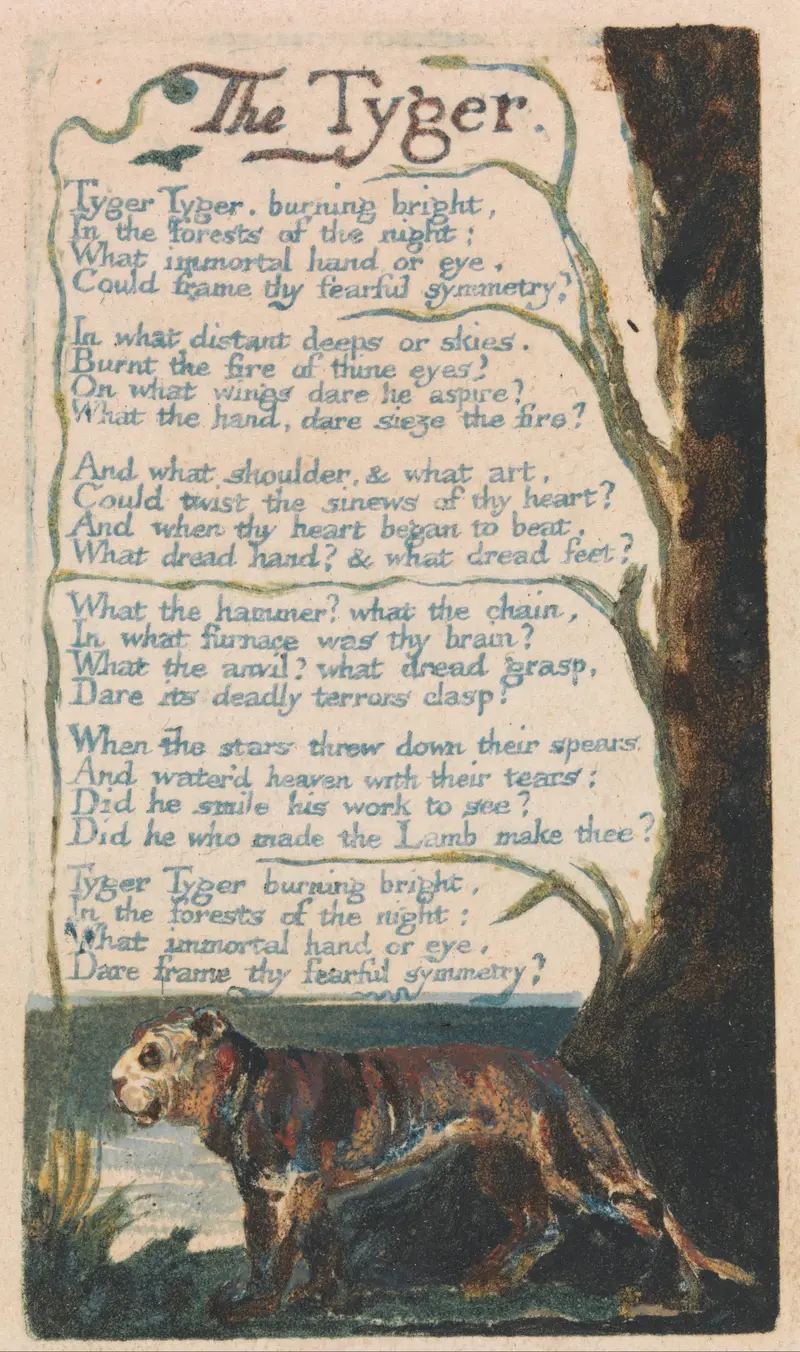
The Tyger
William Blake

Christ Blessing
William Blake
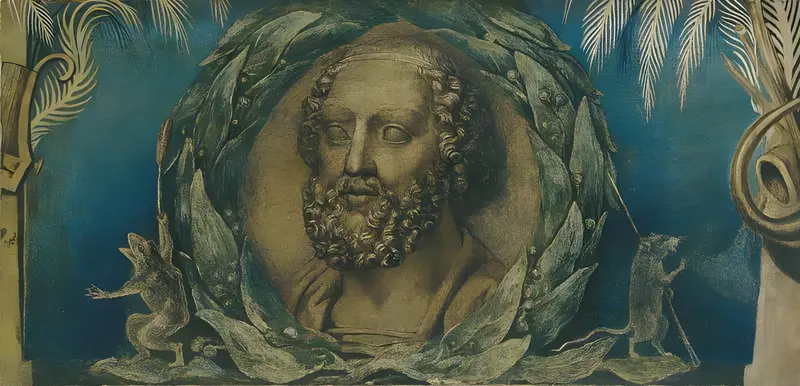
Homer
William Blake
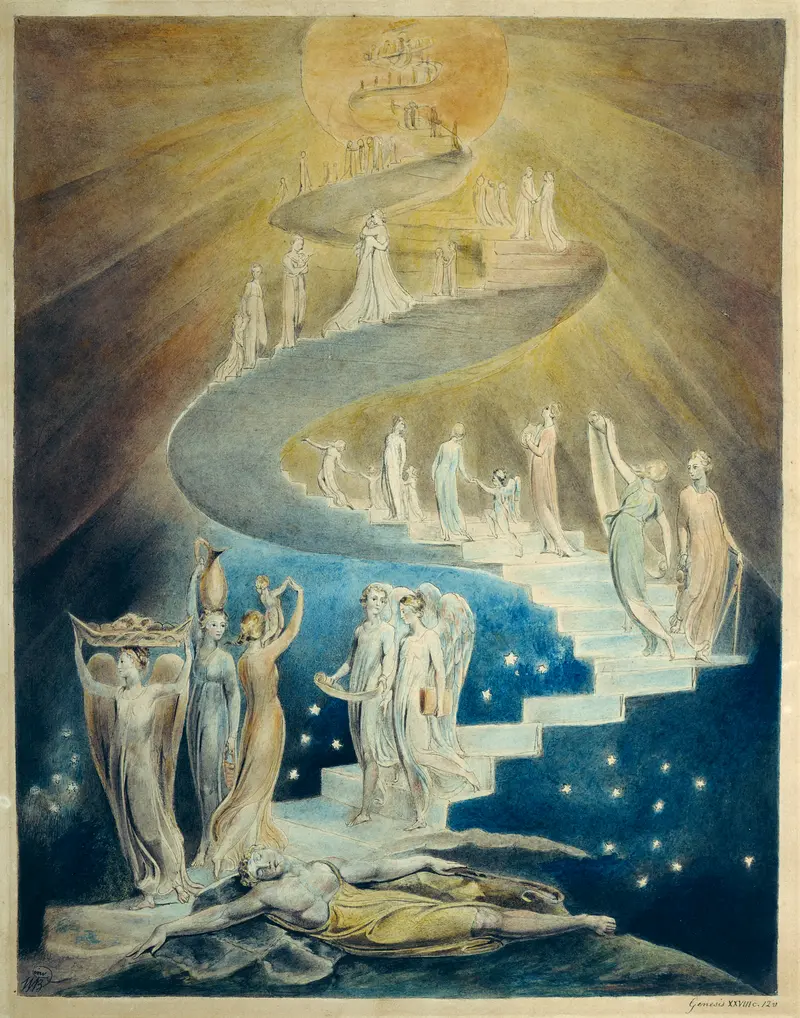
Jacob's Ladder
William Blake
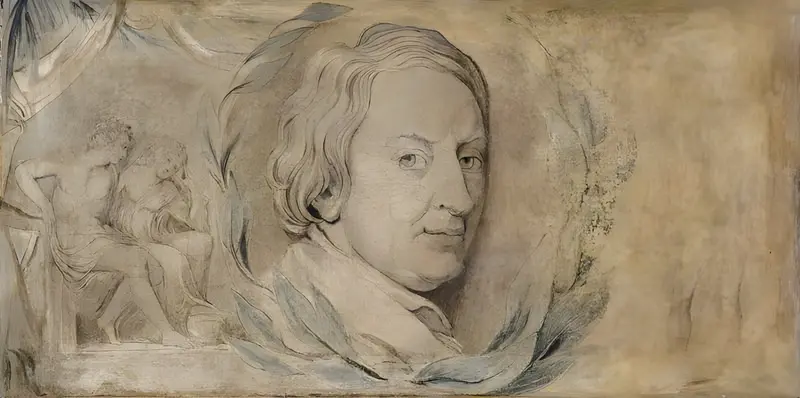
John Dryden (1631–1700)
William Blake
Landscape near Felpham
William Blake
Sacrifice of Job
William Blake
Christ's Entry into Jerusalem
William Blake
The Ancient of Days
William Blake
Adam Naming the Beasts
William Blake





