
Death of the Virgin — History & Facts
When Giotto di Bondone painted Death of the Virgin around 1310, he was already celebrated for transforming how the sacred was seen. What makes this work especially remarkable is that it stands among the earliest known depictions of the Virgin Mary's death in Western art that dares to show raw human grief—at a time when most artists still clung to stylized, symbolic gestures. The painting’s emotional realism marked a sharp break from the Italo-Byzantine tradition, and its influence would ripple through generations of artists who sought to bring biblical stories closer to everyday experience. The scene unfolds at the Virgin’s final moments, surrounded by the apostles, who crowd around her bed in visible sorrow.
Giotto’s figures are not stiff icons but individuals, each expressing loss through gesture and gaze: one apostle clutches the Virgin’s hand, another buries his face in his robe. Christ stands above her, holding a tiny, luminous figure—the soul of Mary—wrapped in white, a medieval symbol for the passage from earthly life to heaven. The golden background, a holdover from Byzantine art, contrasts with the weight and volume of Giotto’s figures, anchoring the divine in the world of flesh and grief.
Compared to earlier versions, such as those by Duccio, Giotto’s apostles are not mere witnesses but participants in a deeply human drama. The precise history of Death of the Virgin as an object is still shrouded in some uncertainty. Its original location is lost to time, though scholars believe it was likely part of a larger altarpiece, possibly commissioned for a Florentine church. Over centuries, panels like this one were often separated, traded, or altered, and this work’s journey is no exception—its medium, too, remains a subject of scholarly debate.
Today, it stands as a rare survivor of the early 14th century, a testament to Giotto’s revolutionary vision and a touchstone for the birth of naturalism in European painting.
More Artworks by Giotto di Bondone
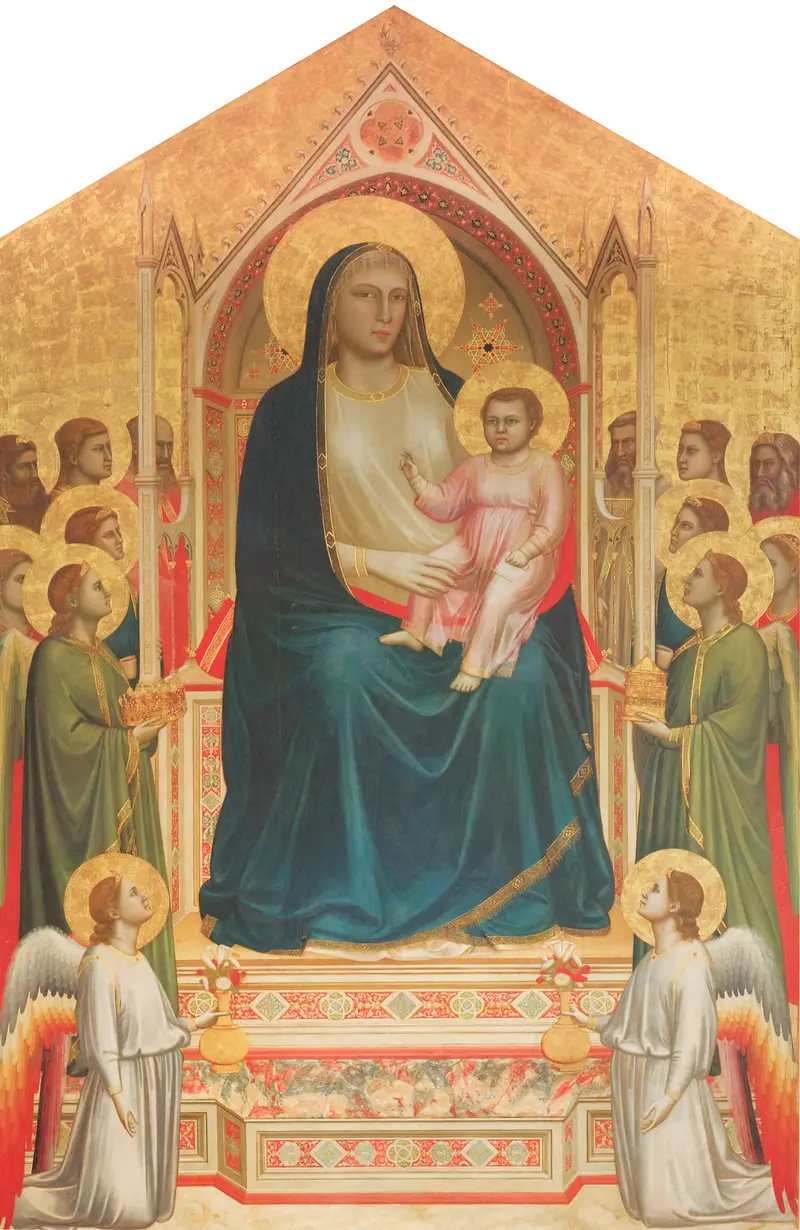
Ognissanti Madonna
Giotto di Bondone
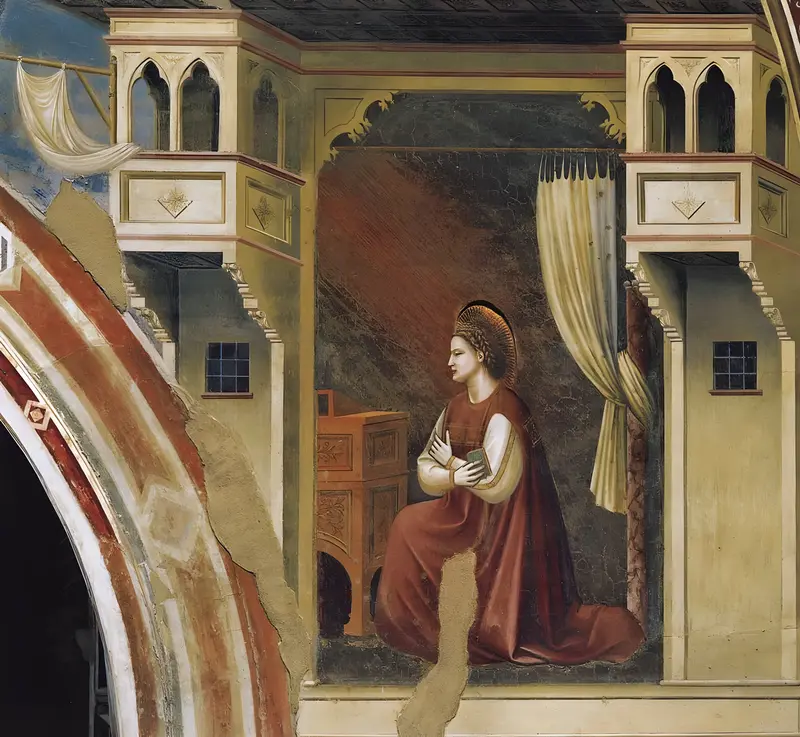
The Virgin of the Annunciation
Giotto di Bondone
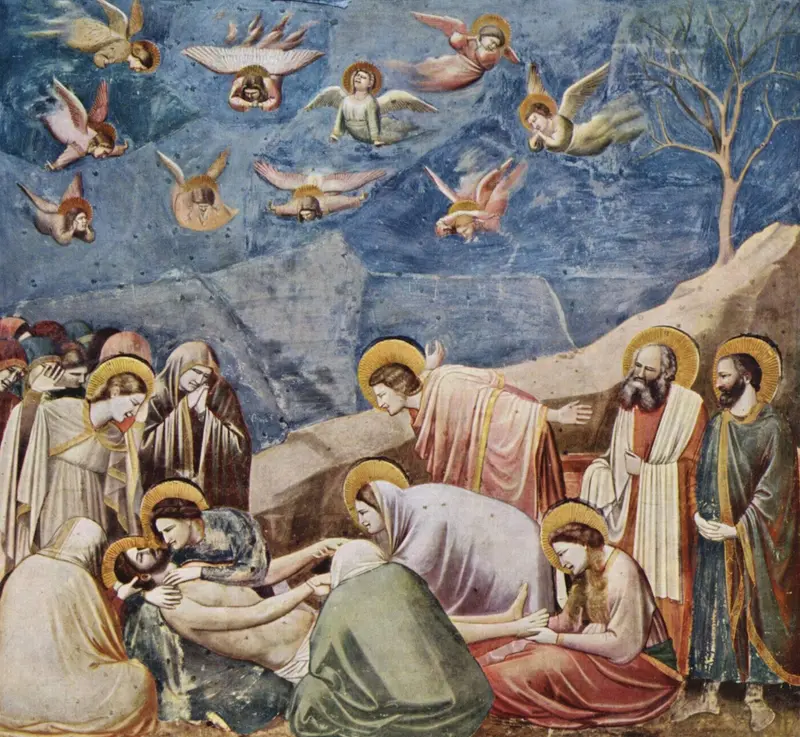
Lamentation (The Mourning of Christ)
Giotto di Bondone
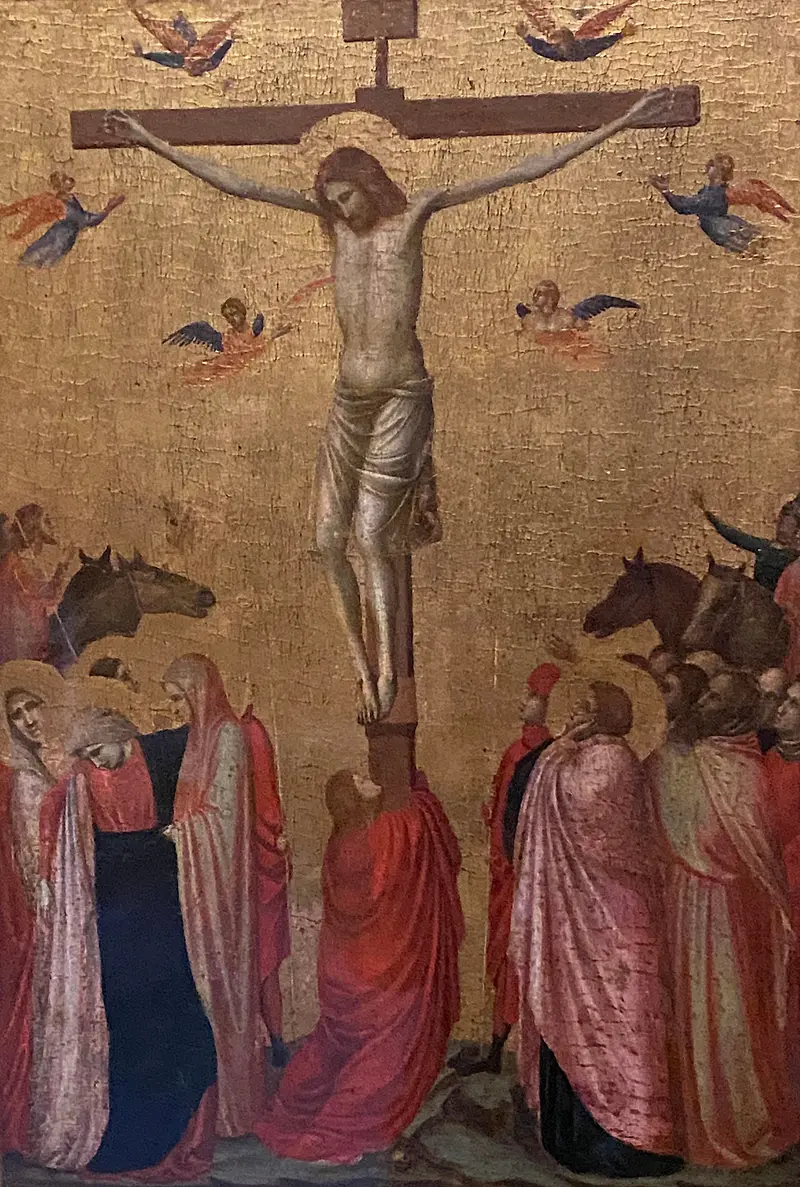
Crucifixion of Strasbourg
Giotto di Bondone
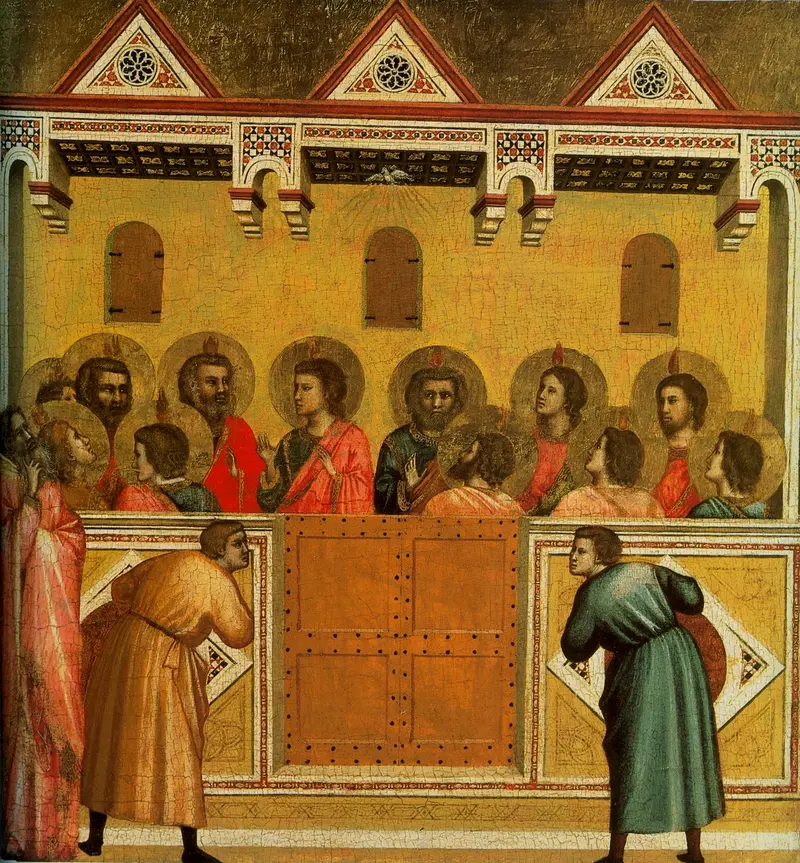
Pentecost
Giotto di Bondone
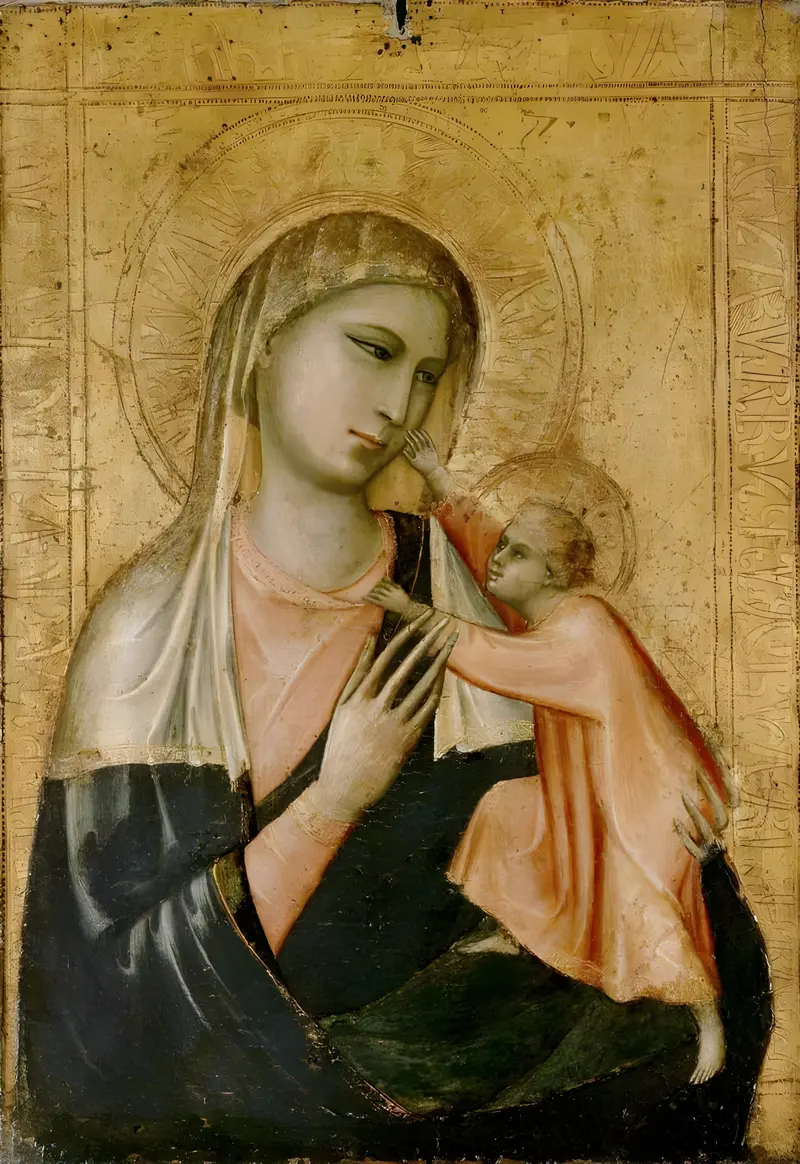
The Virgin and Child
Giotto di Bondone
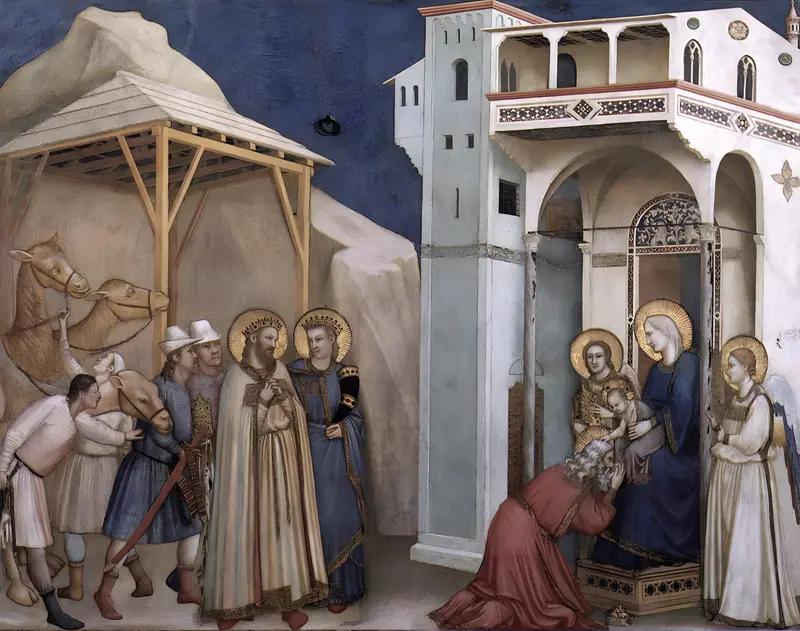
Anbetung der Könige
Giotto di Bondone
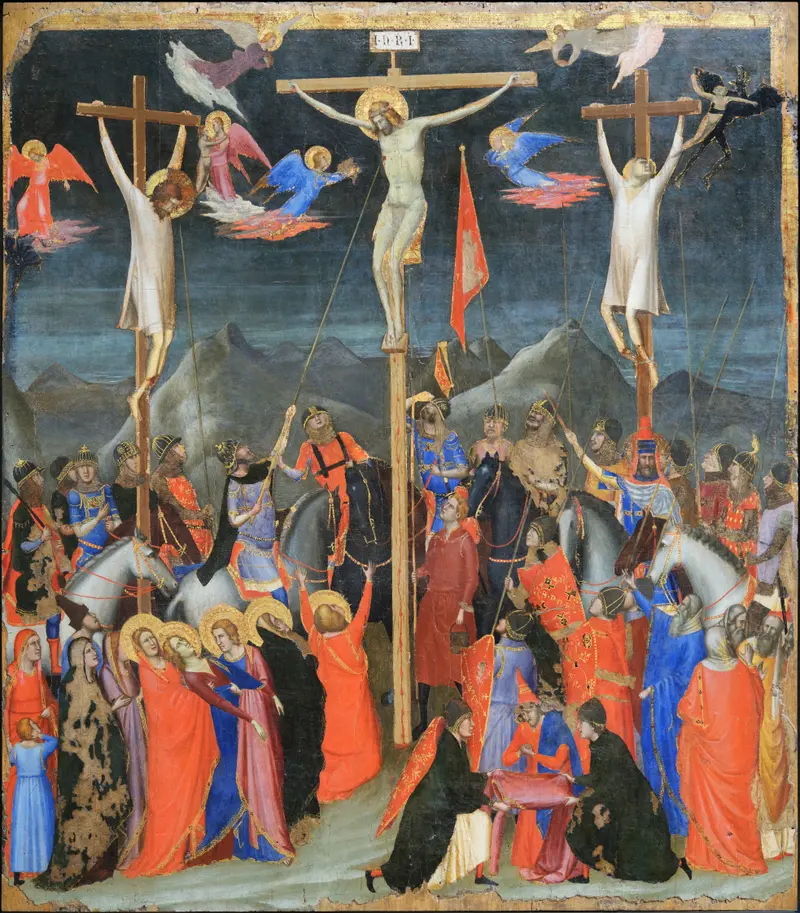
Crucifixion
Giotto di Bondone
The Visitation
Giotto di Bondone
Bologna Polyptych
Giotto di Bondone





