
Die Puppenmutter — History & Facts
No other painting by Felix Schlesinger is so widely reproduced in children's books and postcards as Die Puppenmutter, a testament to its enduring popularity in the late nineteenth and early twentieth centuries. Its title, which translates as "The Doll's Mother," hints at the sentimental genre scenes that made Schlesinger's reputation in German-speaking Europe. While the exact date and circumstances of its creation remain uncertain, the work is frequently cited in period catalogues as a quintessential example of Schlesinger's gentle humor and keen observation of childhood. At the center of Die Puppenmutter, a young girl cradles her doll with the gravity of a real mother, her small hands arranged with careful tenderness.
Around her, younger siblings or friends look on, some with curiosity, others with amusement, as if taking part in an impromptu lesson in domestic responsibility. The scattered toys and soft daylight filtering through the window create a world that is both intimate and ordinary, capturing a fleeting moment of childhood imitation. This scene recalls the domestic genre tradition of Johann Georg Meyer von Bremen, yet Schlesinger's touch is lighter, focusing more on the playfulness and innocence of the children rather than the moral undertones often found in similar works. Though the precise provenance of Die Puppenmutter is unclear, paintings of this type were typically destined for the homes of the rising middle class, who favored sentimental depictions of family life.
Schlesinger himself was active in Hamburg and Berlin, and his works circulated widely through prints and reproductions, making his images familiar well beyond their original settings. Today, the painting survives as a beloved example of nineteenth-century German genre painting, its popularity undimmed by the passage of time, though the original canvas's current location is not definitively known.
More Artworks by Felix Schlesinger

Fleißige Helfer in der Küche
Felix Schlesinger

Die Zeitungslektüre
Felix Schlesinger
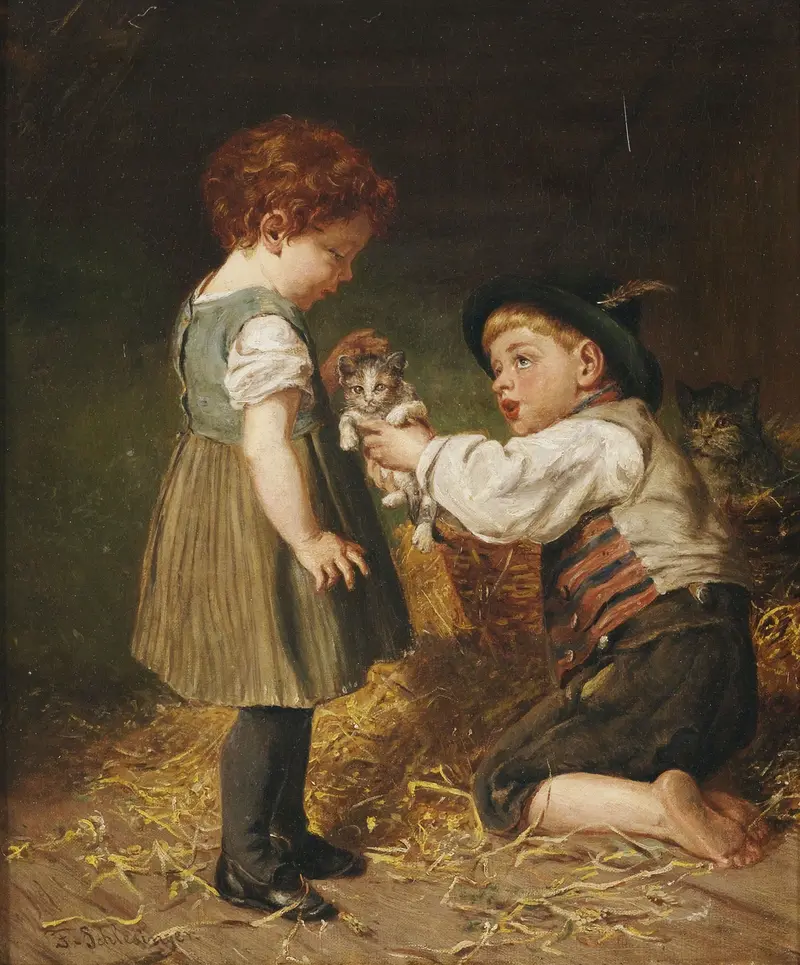
Zwei Kinder mit Kätzchen im Stall
Felix Schlesinger
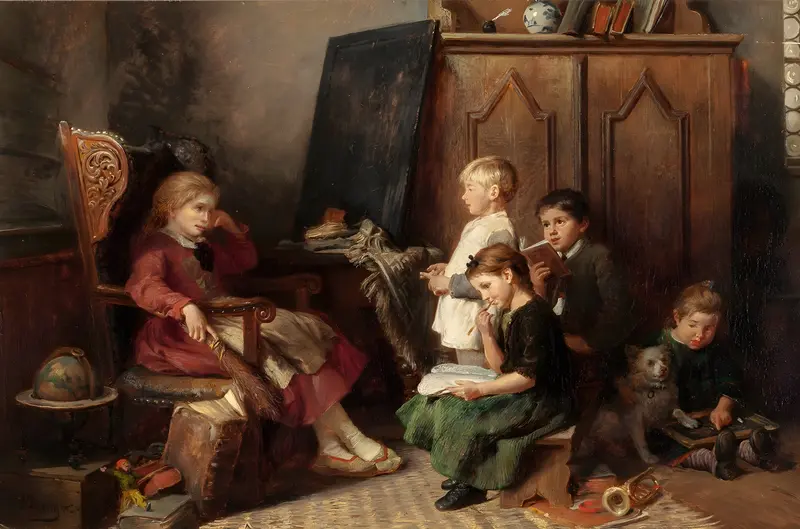
Children Reading
Felix Schlesinger
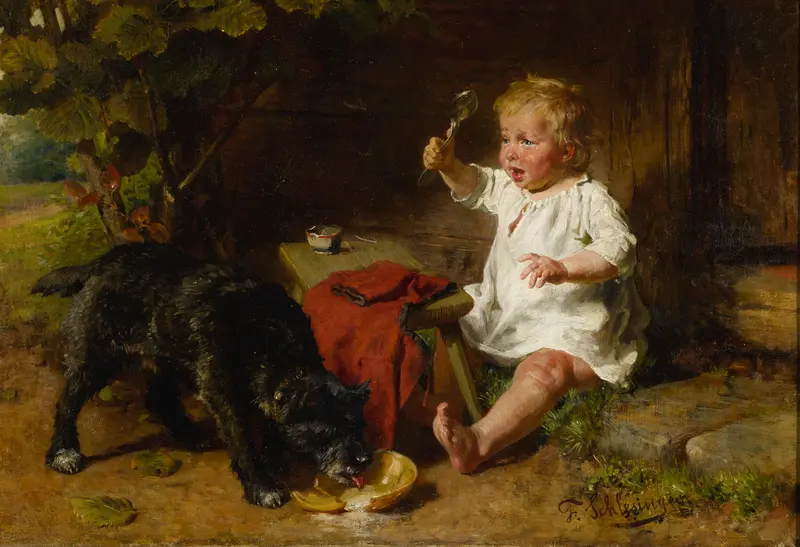
A Shared Meal
Felix Schlesinger
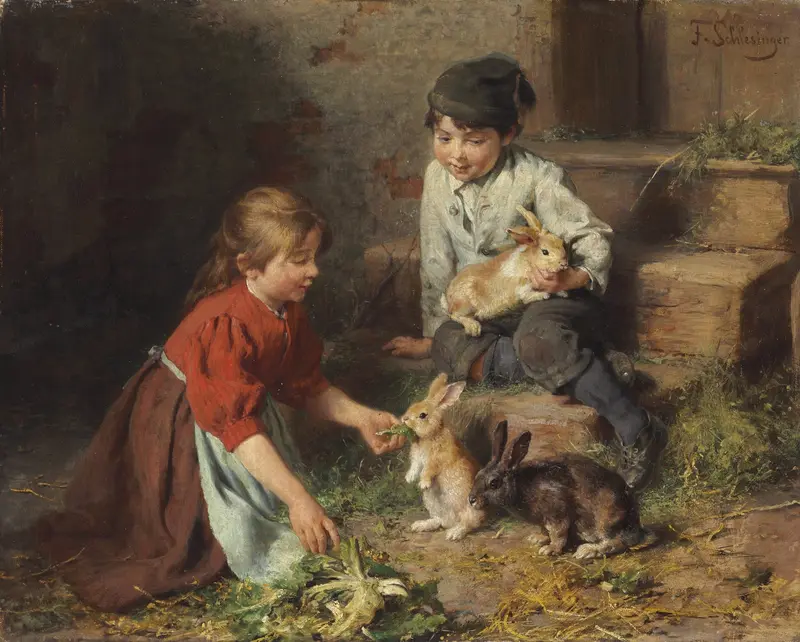
Fütterung Der Kaninchen
Felix Schlesinger
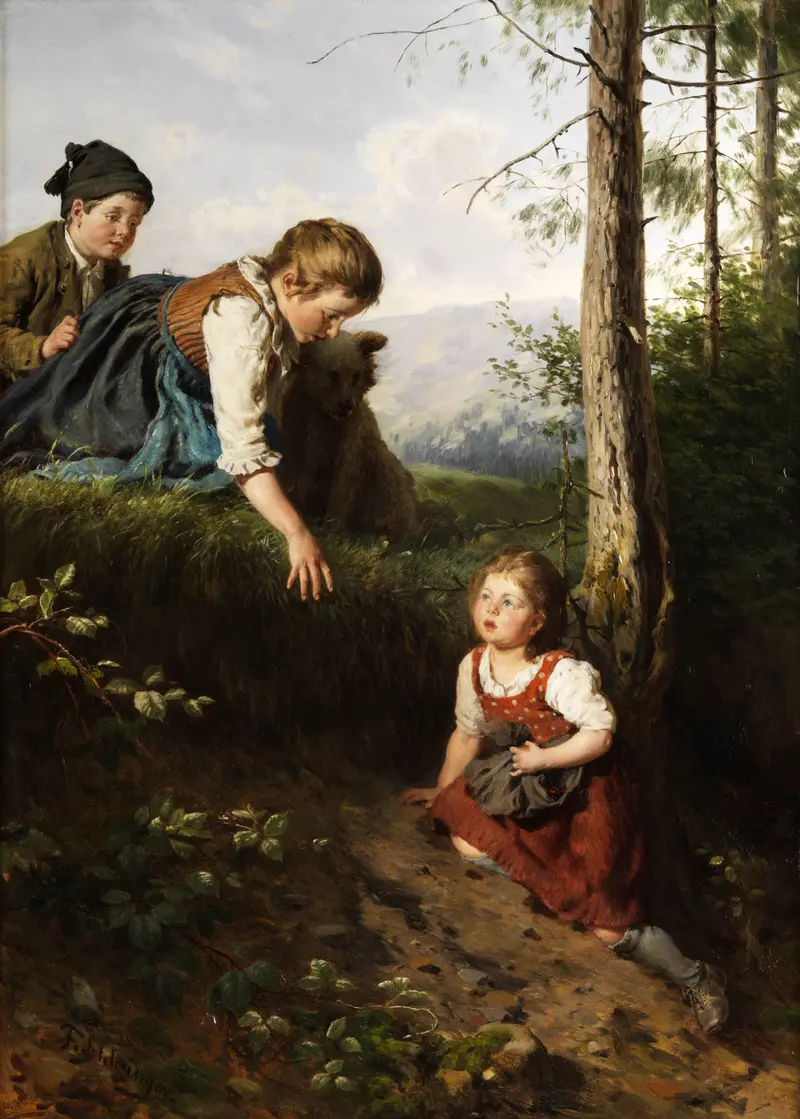
Drei Kinder im Wald beim Beerenpflücken
Felix Schlesinger
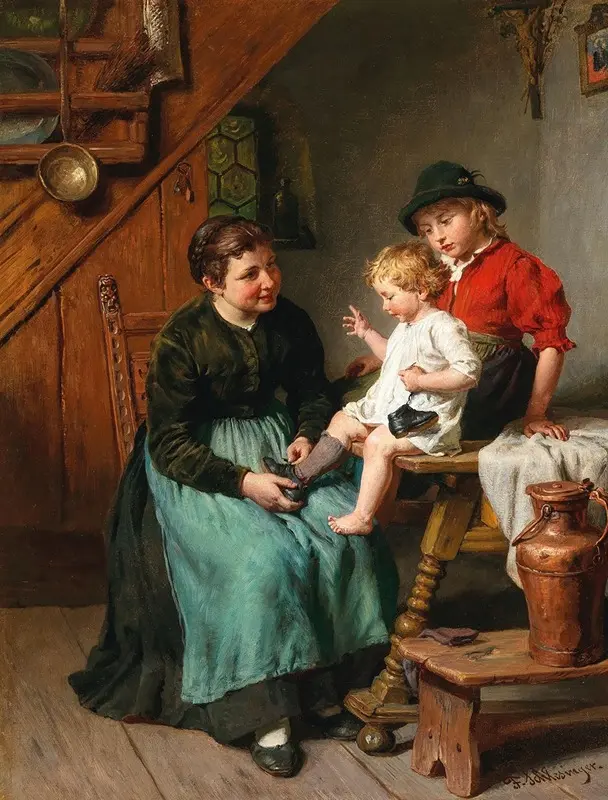
The First Shoe
Felix Schlesinger
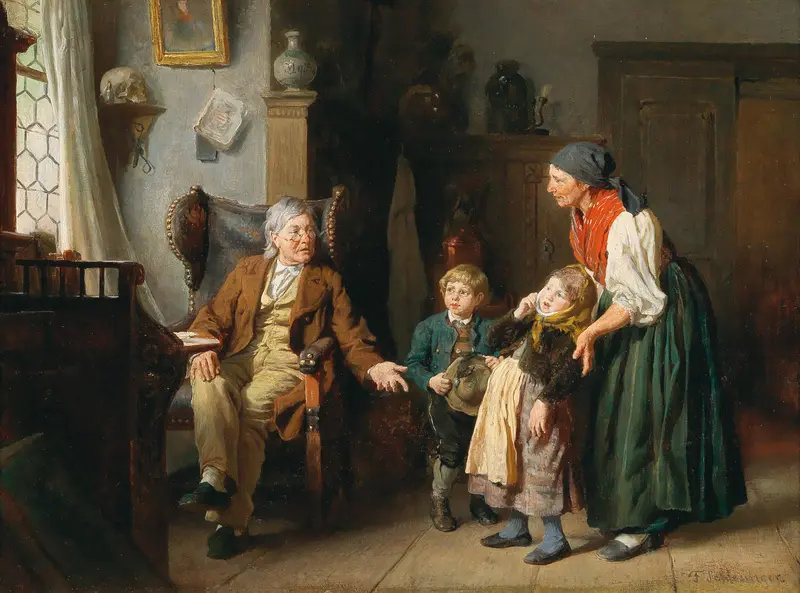
The village doctor
Felix Schlesinger
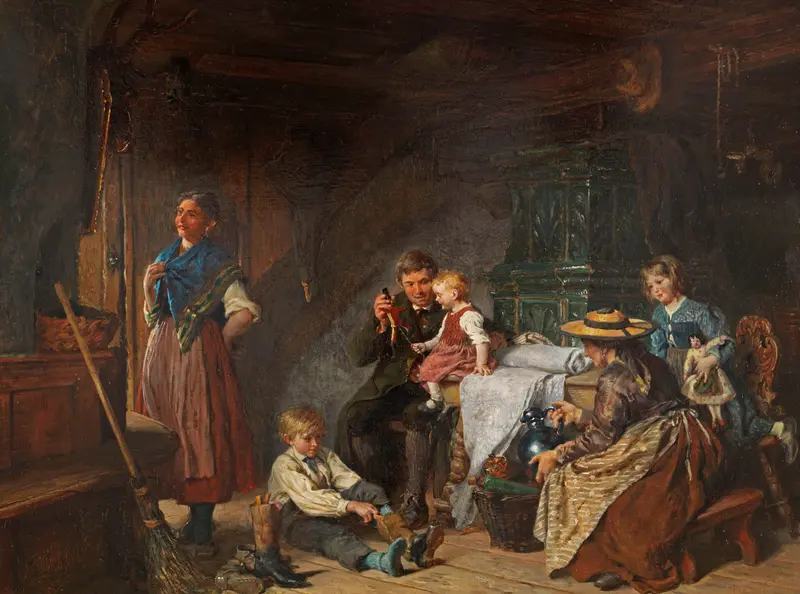
Familienszene
Felix Schlesinger
More Genre Scene Art

Banquet of the Officers of the St George Civic Guard
Frans Hals

Rembrandt and Saskia in the Scene of the Prodigal Son
Rembrandt van Rijn

Bal du moulin de la Galette
Pierre-Auguste Renoir

Quadrille at the Moulin Rouge
Henri de Toulouse-Lautrec

A Burial at Ornans
Gustave Courbet

When Will You Marry?
Paul Gauguin